Welcome to Della Galton’s website

Author: Della Galton

The Wednesday Writing Spot – Getting Ideas – Guest Post from Patsy Collins

This week on the Wednesday Writing Spot, I am delighted to welcome writer, Patsy Collins, who is talking about where she gets her ideas from and her fabulous new short story collection, which is called Up The Garden Path. It’s lovely to have you here, Patsy. Now it’s over to you…
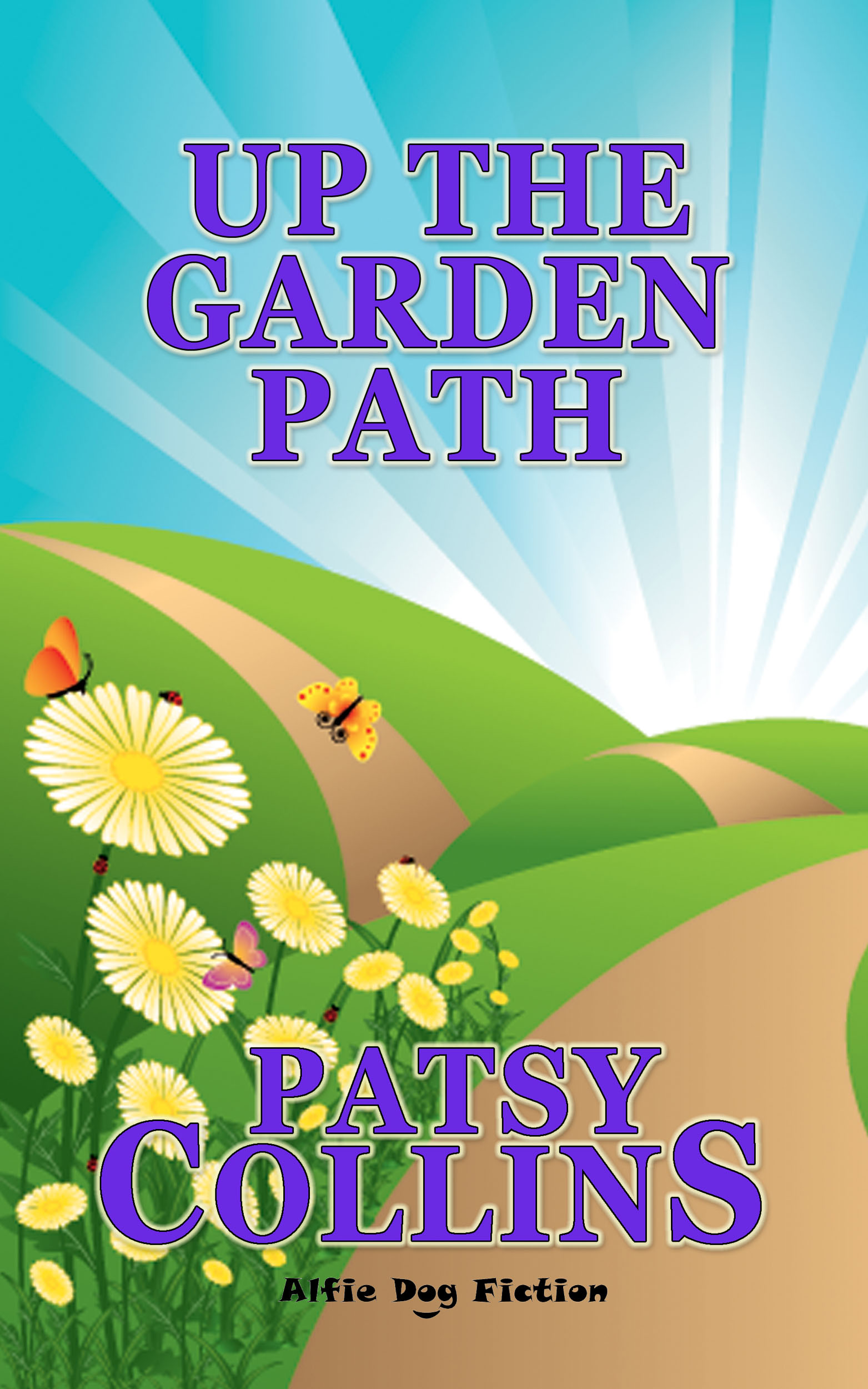
As writers we are often asked where we get our ideas from. It seems such a reasonable question but it’s very hard to give a satisfactory answer. Each writer will get their inspiration in a different way to that of their colleagues and they’ll probably draw on a number of resources. Ideas are everywhere you see. That’s both good and bad. We don’t have to wait for the ideas shop to open, but those little story sparks don’t come neatly labelled ‘romance novel suggestion’ or ‘ghost story premise’ so we need to train ourselves to spot them.

My new short story collection contains twenty four short stories and each is the result of a different stimulus. It’s a bit like picking wild mushrooms, really. If you want nice, safe mushrooms you need to know what they look like or you’ll end up with something toxic, or hallucinogenic or bitter. Of course if you actually want to poison someone you’ll need to be on the lookout for something different (pale gills and skinny stalks are a good sign in this case). ‘Write what you know’ is good advice. That’s what I did for ‘A Piece of Pink Ribbon’ which is set on a farm and ‘Coming Home’ which is about separation when someone is away at sea. It also explains why all the stories in the collection have a horticultural theme – I’m nearly as keen on gardening as eating cake. Real life events can be a great source of story ideas, but the truth often needs adapting. Weirdly when we write something strange, funny or touching that really happened it often doesn’t feel believable. ‘Watchdog’ is based on a real event (although not one which happened to me) but to make it work I had to change reality. Whenever I come across an unusual name eg ‘Mrs Dalrymple’ overhear an interesting comment such as ‘Your Granddad is Stuck Up a Tree Again’ or want revenge on an annoying boss (‘Blooming Talent’) I make a note in a computer file. Sometimes the prompt is as simple as the smell of ‘Strawberry Jam’ and at others it’s as complex as family politics (I’m admitting nothing!). It doesn’t matter where the ideas come from, it’s what you do with them that counts. I hope you like what I’ve done with those which resulted in ‘Up the Garden Path’. The book is available here – or here.
The Wednesday Writing Spot – Plotting the longer Short Story

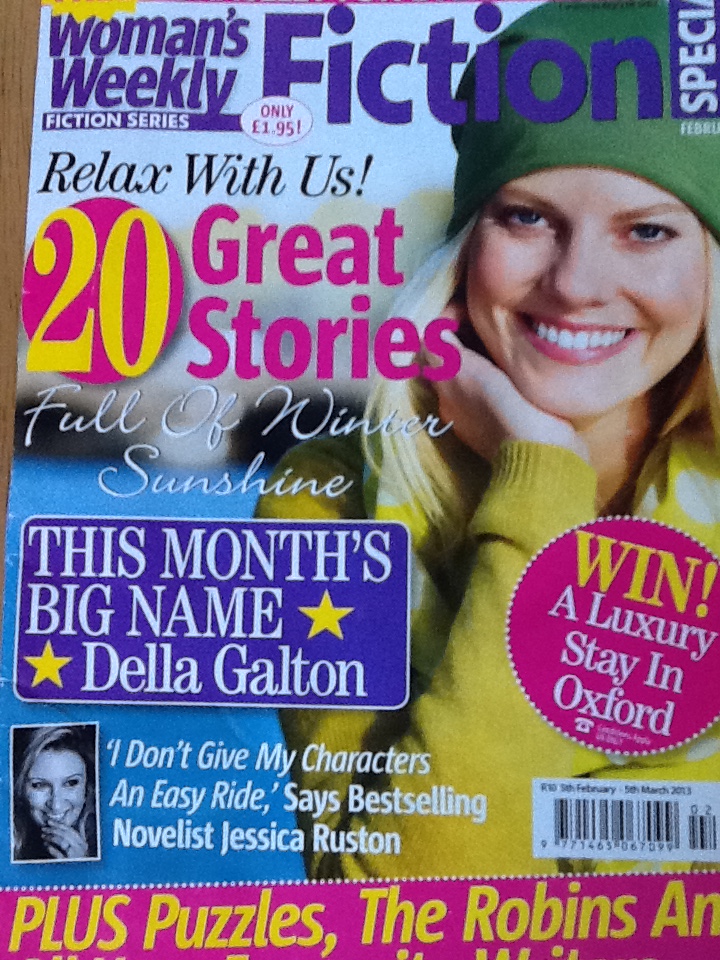
Plotting was the bane of my life when I started writing. It still trips me up now occasionally, particularly when I’m changing lengths, for example from 1000 to 2000 words. So here are some tips for writing the longer short story.  They are very popular in fiction specials.

This advice also works well when trying to reduce your longer stories to short ones. Just reverse it.

What’s the difference between 1000 words and 2000 words in plot terms?

There is not as much difference between the two as I thought when I first started writing.  I assumed that if I needed one or two main characters with a problem to solve in a 1000 word story, then I’d probably need more characters and more of a problem for a 2000 or 3000 word story.

I soon discovered that this was not the case. You won’t necessarily need more characters or more plot for a longer short story, but you will need more development of both.  This is usually achieved by writing more scenes.

Very short stories

In a 1000 word short story you won’t have room for more than a couple of scenes, probably three at the most and that might be pushing it.  We will probably join your character at the point of change or conflict. For example, let’s assume your character is worried about a forthcoming appointment she has the following day. Your story might go something like this:

Scene one

Your character is discussing her worries with friend or partner.

Scene two

Your character goes for the appointment.

Scene three

Resolution and possibly a twist.

If you did follow the format above for a 1000 word short story, then you’d have to make your scenes extremely short – you’d have just over 300 words to devote to each one.

If you had more space to play with, you might also have a flashback of exactly why your character was so worried about her forthcoming appointment. Your story might then go something like this:

Scene one

Your character is discussing her worries with friend or partner.

Scene two

Flashback in your character’s viewpoint to show a previous occasion when she had to go to an appointment and it didn’t work out – hence meaning the stakes for today are higher and we (hopefully) care about it more.

Scene three

Your character at the appointment.

Scene four

Resolution and twist

The number of characters and the plotline are the same, but the story is longer and has more depth because we have more development of both.

This helped me so much when I first got it. Hope it helps you too.  And if you’d like any more advice on writing short stories, please check out my two writing guides. How to Write and Sell Short Stories published by Accent Press and The Short Story Writers’ Toolshed published by Soundhaven.com

Getting Very Excited about my Book Launch this Saturday

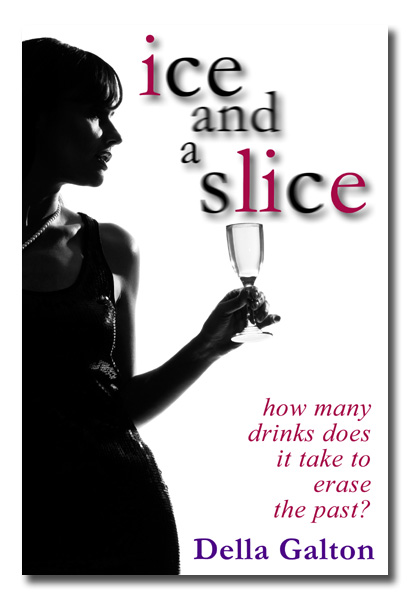
I have been banging on about this for weeks on Facebook and Twitter, but just in case you’ve been away on Mars, or you don’t use Facebook and Twitter, I wanted to mention one more time that my book launch for Ice and a Slice is this Saturday. And you are very welcome to come along.

I’m so excited. By the time you read this, I will have no grey hairs left and also might even have extra long eyelashes. 🙂

Why I wrote Ice and a Slice

I have alcoholism in my family – my father is a recovering alcoholic – so it’s an issue I’m familiar with. But I didn’t want to write a dark book about it. Or not too dark anyway.  I also wanted to write about it from a woman’s perspective.  There are lots of novels that are written about alcoholism, from a woman’s perspective, but fewer that are written about women who are alcoholics themselves.

What it’s about

Ice and a Slice is the story of Sarah-Jane, (SJ to her friends) who discovers she can’t stop drinking.  On the surface her life is fine. She is happily married to Tom (well at least she thinks she is – he works away so much she doesn’t often see him).  She’s also fallen out with her sister and they no longer speak. But SJ is determined to sort that out one day.

At least her best friend, Tania, is on her side, although lately Tania is increasingly preoccupied with her own (secret) problems.  SJ feels very alone sometimes and quite scared, but it’s not as though she’s an alcoholic, is it? She doesn’t keep a bottle of vodka by her bed. She doesn’t even drink every day – well not till the evening anyway.    

It isn’t until she seeks the help of Kit, the hunky guy at the addiction centre, that she realises things may have got a little more out of hand than she thinks. 

SJ is by far the most three dimensional character I’ve ever created. I fell in love with her from the very first chapter.  Mostly I think because she is so flawed and so human.  And yes, she is based on someone I’m close to – although I’m not telling you who J  But one of the reasons that I love this novel  so much – and I don’t say that lightly, I’m the biggest self critic around – is because it’s the one in which I think I found my true voice.

I didn’t realise it was going to happen.  In fact, after so many years of writing, I thought I’d already found my voice – and I think I have as far as short stories go – but novels are different, aren’t they?  The canvas is bigger, the pace is different – everything is different. Although I loved writing my first two novels, Passing Shadows and Helter Skelter, writing Ice and a Slice was like being in another dimension.  It was easy to write – the words flowed out of me – I didn’t have to plan what SJ would say – she just said it. Being inside her head felt like putting on a second skin.  It was an amazing feeling.  And I’ve had some amazing reactions to this novel.   Since it came out for Kindle at the end of March it’s had 26 five star reviews on Amazon.co.uk and 3 five star reviews on Amazon.com. I’ve pasted the most recent one below. Not because I want to blow my own trumpet, but because I feel humbled that Ice has touched people enough to say such lovely things about it.

I’ve always loved Della Galton’s short stories and I have to say Ice and a Slice is a writing triumph as a novel. I loved the characters and I can honestly say from when I started reading it I could not put it down – even to go and get a G & T with ice and a slice! This is a book you must not miss.

Bookworm

My book launch for Ice and a Slice is being held on Saturday 13 July at the Red Lion Pub in Sturminster Marshall. I will be there signing books between 11 and 4. If you’d like to come along I’d be delighted to see you.

If you’d prefer to read the digital version you can borrow it for free if you’re an Amazon Prime customer. Or buy it for £1.94 (less than the price of a glass of Chardonnay) by clicking here.

Thank you for reading.

Della Galton x

The Wednesday Writing Spot – Plotting the Short Story

Plotting a short story is something that many writers, both new and experienced, find difficult.  I include myself in this.  It is not always easy, and I say not always, because occasionally we all have those magical days when it is.

For the days when it isn’t, I have outlined some techniques below that should hopefully help.

Starting from Scratch

Give your character a dilemma to solve. Preferably make it the sort of dilemma that will force your character to re-evaluate his life or his attitudes.  In this way he will have changed before the end of the story.

Be as nasty as you like.  The tougher the problem that your character has to face, the more drama you’ll be able to create.

Make sure the resolution to the dilemma is credible, but also make it as unexpected as you can.  This is the tricky bit.  Knowing you have to provide a resolution to the story before you start can be very off putting for some writers (it is for me!).

Starting Halfway through

Now, this might sound strange, but I find this is by far the easiest way to plot.  By starting halfway through I am saying that you should just start writing.  Certainly give your character a dilemma to solve, but don’t worry about the rest.

For example :  I once sold a story  of 1000 words called The Best Laid Plans, which I’d started the previous year and got stuck on.  My original idea was as follows:

The story opens with Katie in bed in hospital on her 25th wedding anniversary, which is not quite how she planned to spend it. Since she married Paul most of their anniversary plans have gone wrong. On bad days she thinks they’re jinxed and on good days she thanks her lucky stars they ever got this far. This was a light hearted story and the humour was provided by flashback (the story is in Katie’s viewpoint) to previous disastrous anniversaries.

I got stuck at the 750 word point, which I frequently do.  I couldn’t think how to resolve this story.   This is where the plotting bits come in.  Because the story is already half written, there are only so many options.

  1. They could have a late anniversary celebration which could go wrong
  2. As above, but it doesn’t go wrong.
  3. They could split up (not very satisfactory for Woman’s Weekly)
  4. They could decide not to celebrate on the actual day itself, but at other times in the year, after all a marriage isn’t about just one day a year.

I stopped here because I’d found my solution.  I used a mixture of number 1, 2 and 4.

Plotting is actually just a chain of events that leads your character to a satisfactory resolution and that resolution will largely be determined by market.

Problems Finishing

When you’re stuck on a resolution – this is another problem I have frequently, then I suggest you ask yourself the following questions:

  1. What is it that I am actually trying to say?
  2. What is this story about?

The Best Laid Plans was a humorous story, designed to entertain, but it did have a serious underlying message – a universal truth, if you like.   A wedding anniversary is the day that couples celebrate on, but the other 364 days of their marriage were just as important.  They could also laugh about the things that went wrong.

The answer is in what you’ve already written

The seeds you’ve sown early in the story will provide you with the ending.  Look at what you’ve set up carefully and then explore every possible option.  One of them will be the right one.

The Title

Another quite useful thing I’ve learned is that the title should underline the theme, as in The Best Laid Plans – so if you are the type of writer who knows the title before they begin, then this can be very helpful.

And if you’d like any more advice on writing short stories, please check out my two writing guides. How to Write and Sell Short Stories published by Accent Press and The Short Story Writers’ Toolshed published by Soundhaven.com

Next week we’ll look at plotting the longer short story.

Happy writing.

Media Tart

Writers just write books, don’t they? Nope – not these days. Writing them is just the beginning. Then we have to blog, facebook, tweet, go on the radio, get interviewed by journalists and write features about them too. And if you have more than one book out at a time you have to do all this ten times more. So much for being a shy and retiring writer. You need at least a dozen other faces too. The week before last I was interviewed by Hot Radio about How to Eat Loads and Stay Slim. The interview is now on our page. I only just had the chance to listen to it. I was quite impressed. I am renowned for making a mess of radio interviews, especially live ones. On one memorable occasion when being interviewed about my How to Write and Sell Short Stories, I told the interviewer that it was selling much better than my novels and when she asked why, I replied – wait for it – perhaps my novels were rubbish. Not a good move 🙁  How to Write and Sell Short Stories is No 1 in one of its categories, I just noticed. Hey, maybe I’m getting better at publicity!

Another time on live radio I got so carried away talking about writing that I entirely forgot to mention the name of the book I was promoting – Short Story to Novel – How to Move On.

Hmmm, isn’t the rule of being interviewed that you slip in the title as often as you possibly can. Not leave it out altogether!

However, I must be getting better. The interview on Hot Radio is good. I sound like I know what I’m doing. Maybe it’s true that practice makes perfect! I actually sound quite entertaining 🙂 If you’d like to listen to it please click here.

Last week, I was also interviewed by the Daily Echo about Ice and a Slice and how I started writing – their photographer is coming on Monday to take pictures. Deciding what to wear is going to take up quite a bit of my weekend 🙂 I’ll post a link when that one is out.

A couple of weeks ago, I wrote a feature for 4Dorset about How to Eat Loads and Stay Slim, which includes a recipe for summer desserts.  The link to that one is here.

Mind you, it’s a lot easier to get it right when you actually have time to sit and write the darn thing and you’re not just having questions fired at you, live on radio!

Anyway, the point of all this rambling was to mention the fact that you don’t just need to be a writer these days. You need to be a radio star, blogger, facebooker, tweeter, and be up for having your photo taking on  a Monday Morning.  Hmm – not quite what I signed up for!

The Wednesday Writing Spot. Tips on Winning Short Story Competitions

This is the first of four posts about various aspects of short story writing, which will go out over the next four Wednesdays, in my new Wednesday Writing Spot. I hope they are helpful.

I have spent a fair bit of time judging short story competitions, and I have been asked to judge two more this year, I’m judging the short story award for the Wells Festival of Literature, more details here and also the H E Bates Short Story Competition, more details here so I thought it would be a good plan if we started with some tips on winning competitions.

So what do I look for when I judge a competition?  How exactly do stories lift themselves to the top of the pile?

These elements are in no particular order.

A good title

This helps attract my attention although if the story doesn’t work – it won’t be enough on its own.

Good writing

This always attracts my attention. And by good writing, I mean that the story is well crafted. There will be good sentence construction, no clichés or tired lines. There will be an intriguing opening, probably a few particularly good lines – I often point out examples of these in my individual comments, if I’m doing critiques too.

The story works

This means that the whole story has to work – from beginning to end.  There must be a good strong premise, which is developed throughout the story and the ending must be satisfactory. By satisfactory I mean that it should work for that story. It should tie up with the beginning without being predictable. It shouldn’t be obscure or too obvious.

Originality

It helps if I haven’t seen the plot line before – this is tricky because I’ve seen hundreds. If I have seen it before it helps if there is a new angle – maybe humour, or a different structure.

Believable characters

They must be believable and not cardboard cut outs.  Characterisation is probably one of the most important things in a short story – or any story, come to that.  If I get the sense that these characters could actually exist that is a great start. In many of the stories I read I find that the characters are not fully developed, which means that often they are not quite believable.

Character motivation

This is strongly tied up with believable characters. Would they really do that?  Ask yourself when you are creating a character if their actions are likely. If a character’s actions strike me as unbelievable I tend to lose interest in the story. Characters can do unlikely things in a story, but you have to make me believe they would do them.

Emotional involvement

Again this is strongly tied up with believable characters and character motivation. Am I involved with these characters? Do I care what happens to them, or are they so insipid and unbelievable that I’m not that bothered? The acid test here, is do you care about them? Really care, I mean? Are you moved when you write about them or are they just a means to get your plot on the page?

An intriguing plot/dilemma

Do I want to keep reading? Is there enough of a hook which starts at the beginning and draws me through. It’s quite hard to do this in a short story, but if you can do it, you are likely to succeed.

Good dialogue

It’s hard to achieve but good dialogue (where everyone doesn’t speak in exactly the same way) goes a long way to making characters believable.

An unusual setting

The more competitions I judge the more I think that this is important. An unusual well drawn setting can make your story stand out from the rest.

A point

Yes, stories should be entertaining but they should also have a point.  This is a fact I overlooked when I first started writing short stories.  Think about your story’s overall message. Is there one? Or are you just writing about an incident that is actually quite slight – and may have been amusing when you thought about it, but isn’t really enough to hold a reader’s interest?  Stories that are too slight can come across as anecdotal.

Good presentation, grammar etc

This is not the be all and end all. If you have written an excellent story and it’s badly presented you may still get placed. (If the judge sees your story) But bear in mind you probably won’t get past the first reader in a national competition.

Something very important to remember

When you enter a competition where there are hundreds of entries and only three or so prizes the initial readers will be looking for a reason to throw your story out of the pile. Don’t give them one.

And, one last thing, most entries arrive on the deadline in a competition. This is fine, as long as you haven’t written it the day before in a panic because if you have, then you won’t have had a proper cooling off period in which to edit it. Write your story in good time, then put it aside for a week or so, then edit it. You are much more likely to produce a polished piece of work.

Good luck.

And if you’d like any more advice on writing short stories, please check out my two writing guides. How to Write and Sell Short Stories published by Accent Press and The Short Story Writers’ Toolshed published by Soundhaven.com

Next week we will take a look at story arcs.

PS Below is the update on entries received so far for the Wells Festival of Literature Competition.

Total On-line Entries so far this year:

Poetry: 17
Short Stories: 29
Crime Novels: 4

We have also received a similar number of entries using the traditional pen and paper method.

Guest Post – Peter Jones – Seven things you can do with a paperback that you can’t do with a kindle!

A few words today from Peter Jones my esteemed co-author, about our latest book 🙂

And do please go along to his new look website to find out about more of his work.

 I’m delighted to announce that as promised the paperback edition of How To Eat Loads And Stay Slim is now available from amazon (.co.uk | .com) – or from your favourite bookstore (get them to order it in; ISBN: 978-1490318844).

The paperback has a number of advantages over it’s ebook and audio cousins. Here’s just a few…

  1. Unlike the audio and ebook, you can’t ‘switch it off’. It sits there as a constant reminder of the promise you made yourself on the first action point, and the smart-eating principals within.
  2. You can write in it! Which means you can jot down notes as you go along, check off the action points you’ve done, and on page 180 put a ‘tick’ next to the stars you’ve earned.
  3. You can spill food and drink on it and it still works (useful if you’re propping it up on the kitchen worktop whilst trying out a recipe).
  4. It’s sand proof (good for the beach).
  5. And bath proof. Sort of.
  6. You can use it to temporarily prop up wonky table legs in restaurants.
  7. And once you’re gorgeously slender and no longer need it you can sell it, give it to your friends, or donate it to charity – all without a lot of technical messing about or worrying about ‘DRM’ (digital rights management – like you wanted to know that)

Right now the paperback is a mere £6.74 or $8.99 (depending on whether amazon (.co.uk | .com) have shaved a few pence off the price), and as summer’s either here or just around the corner why not use this an an opportunity to change the way you look at food, and take a few steps towards a slimmer you.


If you won a copy of the paperback in our recent promo, it’ll be on its way to you by the end of the week.

Thanks so much, Peter, some very good points, and here is one last slightly tongue in cheek reason to buy the paperback from me:

A paperback makes a much better fly swatter in the garden than a kindle – so what are you waiting for 🙂


Apple and Ginger Clafouti – a summer virtually fat free dessert!

About time we had some food on this blog, so here’s my recipe for…

Apple and Ginger Clafouti

(serves 8 – or two very hungry eat-loadsers – one slice shown in picture)


Preparation time – about 15 mins (not including cooking)

Ingredients

4 – 5 medium sized cooking apples

500g fat free fromage frais (I use Tesco light choices Natural Normandy Fromage Frais)

4 eggs

5 tbs artificial sweetener – plus sweetener for apple (to taste)

Ginger root – inch or so finely chopped (or ground ginger)

Nutmeg (pinch)

Cinnamon (pinch)

4 Cloves

Vanilla pod or dash of vanilla essence

2 or 3 tbs of water


Method

Preheat oven to 150 degrees C/Gas mark 2.

Peel apples and slice into saucepan (discard cores) Add sweetener to taste, 4 cloves, nutmeg, cinnamon, half the ginger, water to stop sticking. Then simmer gently on hob until apples soft.

Meanwhile, beat together the eggs, fromage frais, 5 tbs of sweetener. Add the remainder of the chopped ginger, the vanilla pod if using or vanilla essence.

Spread softened apples over a large flan dish (remove the 4 cloves if you prefer not to bite into them later). Then cover apples with fromage frais mix and bake for 45 to 55 minutes. Keep an eye on it – I find this can burn quite easily once it’s nearly cooked. When it is cooked it will feel spongy and the edges will have started to brown.

You can serve this dessert hot or cold – each are equally yummy, and you can also wear a halo whilst eating it. It is very low fat and delicious.  NB In the picture ours is shown with a dusting of icing sugar – this is not essential, and will detract from its angelic properties :). There are lots of ways of eating loads and staying slim in our book, How to Eat Loads and Stay Slim.

Goals, writing a bestseller and the law of attraction

If you are a regular follower of my blog you will know I’m quite keen on goals. I set goals for my writing: I set annual goals, which get broken down into weekly, monthly and daily goals. I come from a managerial background. Before I was writing full time I worked with targets both for myself and my staff.  (I wish I had staff now, ones that did housework and cooked dinner, sigh…). And goals transfer well to writing. They keep me motivated and help me to plan my work.

Today I was talking to Helen, a very wise, and very good friend of mine, about one of her favourite subjects, the law of attraction. If you haven’t heard of this before, it is the process of attracting things, people, money, and – well virtually anything you like really – into your life, effortlessly.

“You could do it,” Helen said, with a huge smile. “What would you like to attract into your life right now?”

“What I would like most,” I said, after a few minutes thought – OK, three seconds thought – “Is for my novel, Ice and a Slice, to be a bestseller.”

“Right,” she said, “You’ve just taken the first step. You’ve thought about what you would like.”

“How many steps are there?” I asked.

“Four,” she informed me cheerily.

So step one: Think about what you would like to happen. 

“What’s step two?” I asked.

“Form a clear intention about exactly what that means. Write it down.”

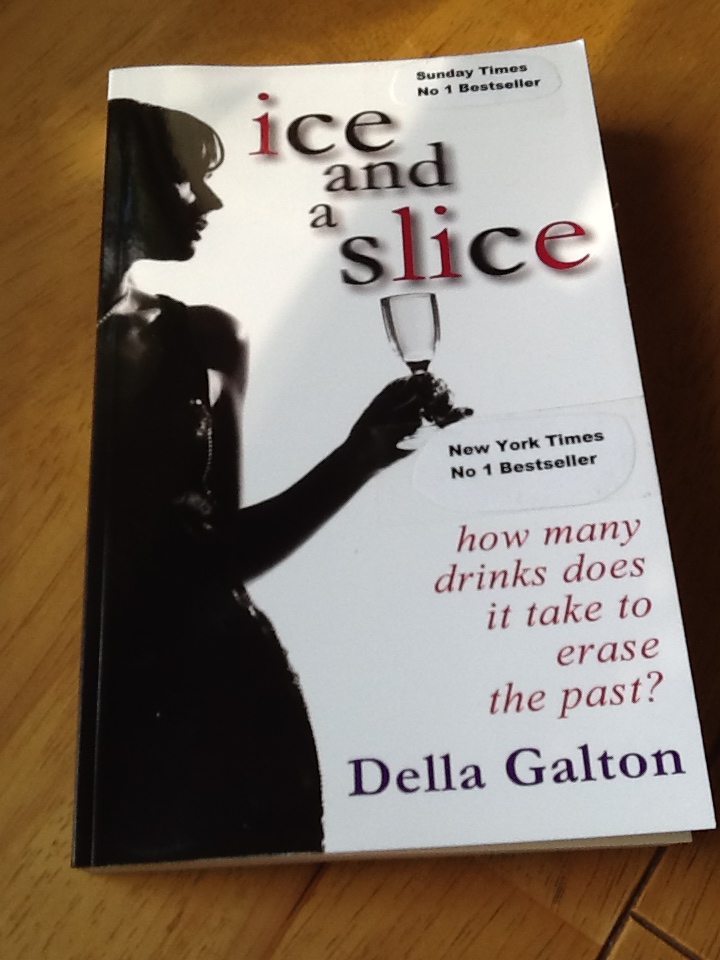
I had a think.  “Hmmm, well, I think I would like Ice and a Slice to be on the New York Times Bestseller List, oh and it would be quite nice if it was a Sunday Times Bestseller too. That would be pretty cool.”

Step two: Be specific. Identify a very clear goal and write it down somewhere you will see it often.

I thought it might be quite a fine plan to write it on the cover of my novel. Which was excellent fun. I recommend this. See picture.

“Step three,” Helen continued, “Is to take action.  Think about your goal (what it actually means) and then identify the actions you need to take to make your goal happen.”

Step three: Take Action.

That was pretty easy. If I want my novel to be a bestseller I need to sell a lot of copies. How exactly do I go about that? Well, I need to tell people about it for starters. Ideally, it would be good if I could get an advert on prime time television – in between the first and second half of Corrie would be excellent, or maybe Britain’s Got Talent.  However, I think this may require slightly more of a budget than I’ve got at my disposal 🙂

So what’s Plan B?

I can tell people about it.  Hence this blog – well you are reading it aren’t you?  Did I mention that Ice and a Slice is now out in paperback and it’s available here. You may find your copy doesn’t have quite the same cover as the copy above, but it’s close. It’s also available for Kindle enabled devices here.

“So is step four, to sit back and watch your plan, come to fruition?” I asked Helen with a wink.

“No, it is not,” she said, wagging a finger. “Step four is a ‘results step’ you are right there, but it does not involve sitting around doing nothing.” (I had a feeling that would be the case!)

“As you continue to carry out the actions that will make your goal a reality you will grow both personally and spiritually. But you must persevere. You must carry out these actions with passion. You must never, ever give up. It is in the process of action, action and more action that you will grow spiritually, and you will also inspire other people.”

Step four: Persevere. Never give up, which will result in both personal spiritual growth and will also inspire other people.

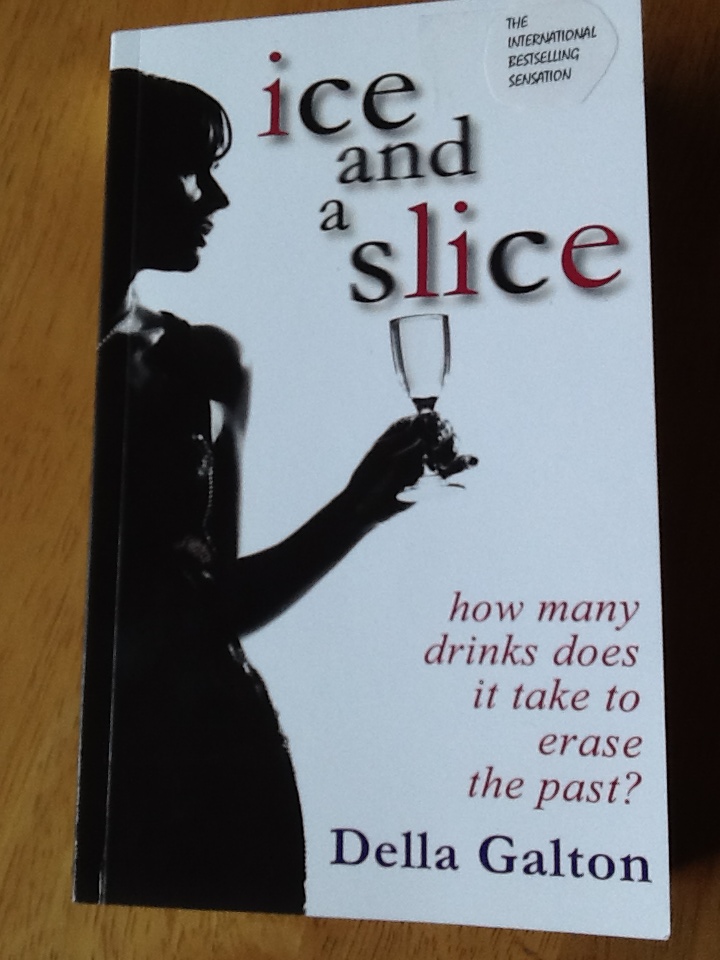
I decided to have another go at the cover. Just to be sure – this one’s slightly different. Check out the top right hand corner. I really do recommend you do this with your own bestseller projects by the way.  It’s excellent fun.

Does it work? I have no idea. But I have a great deal of respect for my friend, Helen.

Watch this space!

What I can confirm, however, is that if you are feeling low about anything, whether it is writing related or anything else, trying these four steps really does cheer you up. So it’s worth doing it just for that reason. I would really love to hear your thoughts. Please do comment.

Virtually Fat Free – and Virtually Free to buy the book – if you’re very quick!

What do you think of this for a ‘virtually fat free’ dessert?  It’s one of the recipes from the How to Eat Loads and Stay Slim how to eat loads and stay slim.com. I thought you might like a sneak preview. Please do go and check out the others when you have a spare moment.

Fruit Kebabs with Stawberry Coulis and Chocolate Dip – serves four

These are quite impressive for a deliciously light summer afternoon dessert – when you have guests coming.

Ready in about thirty minutes (not including chilling dips)

For the kebabs

  • 10 or so strawberries
  • 2 bananas
  • 1 lime
  • Dusting of icing sugar to serve
  • Mint leaves to garnish

 For the coulis

  • 225 g (9 oz) of strawberries
  • 1 orange (2 tangerines work well too)
  • 1 – 2 tsps artificial sweetener

For the chocolate dip

  • 1 pot of natural fat free yoghurt (I use Total 0 per cent)
  • 1 heaped teaspoon of Nutella or any other chocolate spread (but not so heaped you can get the whole jar on it). It’s easier if the Nutella isn’t too cold.

NB Prepare the coulis and chocolate dip first so they can be refrigerated.

Method

For the Coulis

Hull and roughly chop strawberries. Grate orange zest and squeeze orange. Put all the coulis ingredients into a blender and blitz till smooth. Chill. (That’s the coulis, not you. Though by all means chill too if you want to)

For the chocolate dip

Mix together yoghurt and Nutella vey well, then return to fridge to chill. (tiny strips of lime can be used for garnish – if you don’t have any mint handy).

For skewers – do them just prior to eating

Hull and chop the strawberries, peel the bananas and cut into chunks. Grate the lime zest, cut the lime in half and squeeze out juice. Thread strawberries and bananas alternately on to skewers, sprinkle with lime juice and zest, and then dust with icing sugar.

Very yummy and so virtuous you can put your halo on while you are eating them 🙂

And this is the book that inspired this recipe and quite a few others – some are in the book itself, and the ones that aren’t are on our website – or will be shortly.  In the meantime, if you’d like to know more about How to Eat Loads and Stay Slim, and how to get it for very little – or in some formats free – keep reading.

It’s here! From today (the 25th of May 2013) How To Eat Loads and Stay Slim is available for all kindle enabled devices from amazon (.co.uk | .com), AND as an audio download from audible (.co.uk | .com).

Get the ebook for just 99p (or 99c)

As you read this we’re hoping that the UK will be bathed in glorious sunshine – but regardless of whether the summer has finally decided to put in an appearance, the ebook edition is available for a mere 99p, for the duration of the bank holiday weekend. Come Tuesday morning the price goes back up! Get it now!

A FREE kindle reader app is available for all smartphones, computers and tablets from amazon (.co.uk | .com)

Get the audio for FREE

If you prefer to read with your ears there’s always the audio edition, narrated by your authors. This too is available from today.

(If you’re new to audible, and in the UK, you can get it for free. Just use this link, follow the instructions and search for  ’How To Eat Loads And Stay Slim’.)

You can read more about Della’s experience of recording the book here.

Get the paperback for FREE (if you’re really quick)

The paperback edition will be available in just a couple of weeks – early June we hope – also from amazon.  But the first five people who leave us a favourable review on amazon, for either of the editions that are there now, will get a paperback, signed by both of us, for FREE, when it comes out.

(We’re going to be really strict about this though; your review must be visible on amazon.co.uk or amazon.com, AND you have to be amongst the first five people to let us know. Don’t wait for the paperback to become available – leave your review today)


How To Eat Loads And Stay Slim will be available for the nook, the kobo, the sony e-reader, iBooks, and other e-reading apps and devices very soon. 


Tell your friends!

© Della Galton All rights reserved.
Powered by Cloudbase Media