
Welcome to Della Galton’s website

Author: Della Galton

To Plot or Not

When you write a novel, one of the first decisions you need to make is how you are going to undertake to write it.  Will you

a)  Plan out each chapter in detail so that you know exactly what is going to happen from beginning to end.

Or

b) Simply place your characters in a difficult situation and see what they do to resolve it, hence allowing the plot to evolve through the actions of the characters.

These are the two extremes and you might decide to do a little of both, but there are advantages and disadvantages of both working methods and it might help to know them before you start.

The planned approach – Advantages

A detailed plot will cut down your writing time considerably because you will always know exactly what you are going to write next.

You are also unlikely to get stuck or run out of steam halfway through.

Planning in detail means that you can also keep an eye on the structure as you work.  You will probably know how many words each scene will take and so can keep an eye on balance as you write.  I.e. make sure that one or two characters don’t run away with the action.

Planning also means that you don’t have to write the novel in chronological order.  You know what is going to happen, for example, two thirds of the way through, so therefore, you could, if you wished, write that bit first.

Disadavantages

If you know exactly what is going to happen all the way through your novel, there is a danger that you might become bored and stop writing it.

There is also a danger that you might write all the exciting scenes first and leave the slower scenes until later – with the same result.

The Unplanned Approach – Advantages

There is nothing more exciting when writing than not knowing what your characters are going to do or say next, so you might well end up with some unexpected twists and turns of the plot that are less likely to come from a strictly planned approach.

Disadvantages

There is a very real danger that you will get stuck because your characters have been backed into a corner from which there is no way out.

On a similar note, you might find that you get about halfway through your novel and find that you have run out plot.

If this happens, then you can often put it down to one of two reasons.

a)      You didn’t have enough plot in the first place.

b)      You haven’t developed the plot you already have.

Want to know more? Come along to How to Write Your First Novel on Saturday 13th April, in Bournemouth. Cost, just £35.00. Please email me if you’d like any more details.
 

Author voice – finding yours.

Voice

This is a word that is often bandied about by critics and writing tutors alike. But what does it actually mean?

It’s a hard thing to define. For me, it means the way that a novel is written: style comes close, but it’s a little bit more than style, it has to do with the author and how they come across. Although, these days, not many novelists, directly address the reader, ‘and that, dear reader, is how the story begins,’ the author is of course there. No matter how hidden they are, their presence shines through between the lines, and this is how it should be. Otherwise all novels would feel the same -they would have a text book style.

How do you develop voice?

I think this comes with practice. When we begin to write we often model ourselves on our favourite authors. We unconsciously (or not) emulate their style. This rarely works. It’s better to develop your own style. And as writers grow more confident, that is generally what happens.

The more you write, the more your own individual voice will emerge. We all write in a way that instinctively feels comfortable to us and I think that this is what becomes our voice.

It’s difficult to decide if your own writing has a voice, but anyone who regularly reads your work will be able to tell you. In my writing classes we have regular writing competitions. To make it fair, students enter these anonymously by putting their stories in a folder on my desk, but after being with a class for a while and listening to their work read out, I find I can identify certain entries, because the authors have a very strong voice.

Three words that sum up Voice

If I had to pick three words that sum up voice, I would say: passion; honesty; and language. When you write your first draft let it all hang out. Don’t edit yourself, be passionate, be messy. But also be truthful. Our writing, our creativity, comes from deep within us. Get in touch with your inner truth. Be aware of the language you use. Be aware of how you actually say things. What words are really you? In this way, I think you will find your own voice.

Voice is what makes readers care about your work (or not). Voice is what makes them want to read on.

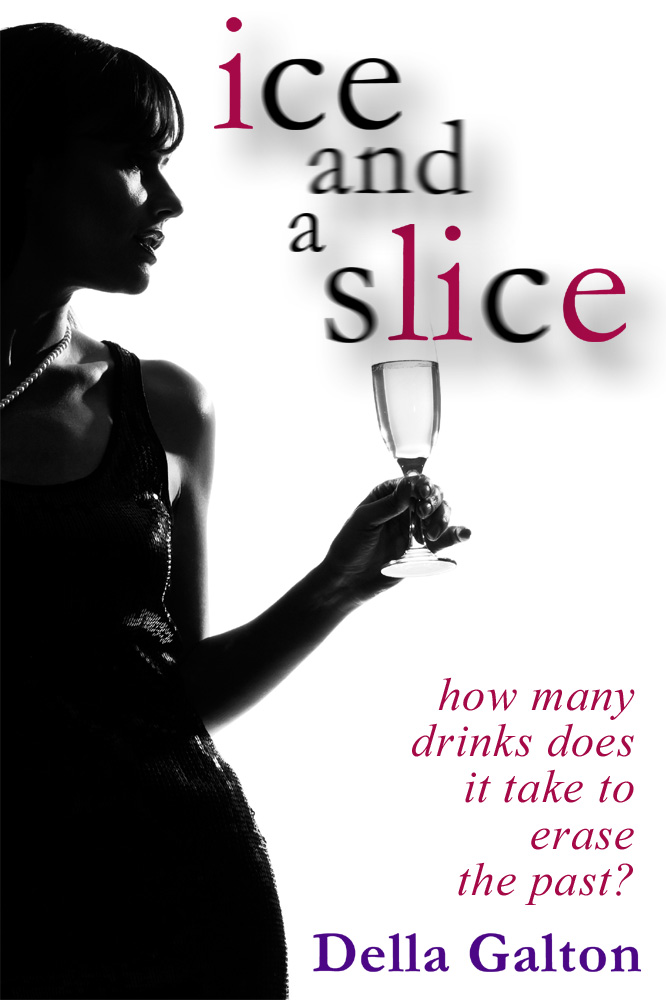
Below is an extract from my new novel, Ice and a Slice – well you didn’t think you were going to get away with me not mentioning it, did you?  One of the things that helped when I was writing it was finding the character’s voice early on. And her voice became the novel’s voice.

Ice and a Slice

The terrifying part was pressing the button on the intercom system beside the grimy frosted-glass door. Before that she could have been any other office worker on the busy Soho street with nothing more important on her mind than where to go for lunch: Daddy Donkey for a burrito or Malletti for a slice of pizza? Oh, what she would have given to have been making a choice like that.

She could still run away. Phone up later and say she’d been ill or had to work. She probably needn’t even phone. These kinds of places must get loads of people who made appointments and didn’t turn up. No doubt they were used to it.

Her legs were too rubbery to run anywhere. She glanced over her shoulder. No one was paying her the slightest attention. Thank God. Her outfit, overloud floral leggings and her hideously expensive Monsoon jacket, red for confidence, had been a mistake. She should have worn a wig and dark glasses and one of those great big overcoats so no one knew whether she was male or female. On second thoughts, that would have attracted a fair bit of attention in the June heat – everyone else was in summer suits or mini dresses. A few hundred yards away two bare-chested council workers had coned off a section of kerb and were digging up the road. The faint smell of tar mingled with traffic fumes on the summer air.

Taking a deep breath, she stabbed at the intercom button, which she missed first time because her fingers were shaking. Now she was committed – please let them open the door quickly before someone she knew strolled by and spotted her.

If you did happen to want to buy the book – a mere £1.94 for Kindle, you could always click here 🙂


Ice and a Slice

You know when authors tell you, ‘this is the novel I always wanted to write?’  Well Ice and a Slice is mine. Ice and a Slice is the novel I always wanted to write.

I’ve landed myself two agents on the strength of it. Both of them helped me to make it better, particularly my current agent, Becky Bagnell, from the Lindsay Literary Agency,  and I am very grateful.

Ice and a Slice is about friendship, it’s about beating the odds and it’s about love.  The heroine, Sarah Jane, is deeply flawed and deeply human and I love her to bits.

Sarah Jane thinks everything is just great.  Her family is great, her marriage is great, her life is great. But Sarah Jane has a secret that is eating her up – life isn’t quite as great as she’d like to believe. She is in denial about her family, her marriage and her life. But most of all she is in denial about her drinking.

Her best friend, Tanya, has much worse problems. Sarah-Jane is determined to help her out with them – just as soon as she’s convinced Kit, the very nice man at the addiction clinic, that she’s perfectly fine.

She is perfectly fine, isn’t she?

There’s a lot of me in this novel.  There’s a lot of truth in it. It’s the novel where I finally found my voice. I hope that one day I’ll write another novel as good as this one.

I hope, also, that you’ll love reading Ice and a Slice as much as I loved writing it.

Available now for Kindle. Paperback coming soon.

Buy at amazon.CO.UK: here
Buy at amazon.COM: here

Click here to see the Facebook page

Click here to follow Sarah Jane on Twitter 

Social Media to promote your books – does it work?

Write a blog, set up a Facebook page, get a website, Join Twitter, Join Linked-In, and all the other social media sites out there.  Get a public profile. Get a platform. This is what we are told we must do if we want to sell books.

Does it work? If we manage to fit all this in (whilst also writing the books in the first place) will we have lots of sales?

And more to the point what does doing all this stuff actually mean? Do we go on Facebook and Twitter and endlessly mention our books? (yawn!) What do you do when you see yet another new book on your Facebook timeline or your Twitter feed? Do you  instantly download it? Maybe if it’s free and looks good, you do. Or do you just move on to something more interesting?

My latest novel, Ice and a Slice (what do you think of the cover by the way?) is about to come out. Initially it will be released as an ebook in a week or so. I may tell you this again!

However, I am experimenting with different approaches to marketing. For instance, SJ, my main character, has her own Twitter account. Mornings or afternoons are best to talk to her as she’ll be sober then. But evenings might be quite good fun if you don’t want a serious conversation!

You’ll find her on Twitter as Sarah Jane in denial @SarahJaneCrosse

Please do go along and say hello.

SJ also has her own Facebook page at Ice and a Slice

I would love to know your thoughts on using social media creatively 🙂


Getting the Grip Factor

Have you ever been in a writing group and listening to a manuscript – possibly read out by one of your very good friends – and then realised that you’ve stopped listening. That you have drifted off partway through? That you have missed a chunk. Have you ever felt relieved that they’ve stopped reading? No?

Don’t lie. I know you have. So have I. And then I’ve felt guilty. And then I’ve decided it must be because I’m tired, or it’s been a long day, or because I’m stressed. Or because I’m distracted. In short, I’ve decided it must be my fault.

But what if it isn’t my fault? What if it’s their fault?

Here’s another question for you? Have you ever been in a writing group and listening to a manuscript – possibly read out by someone you don’t care for too much – you weren’t really paying that much attention. And suddenly you find that you’re gripped. You’re listening. You don’t want them to stop. You are disappointed when they do stop. You want more.

Whose fault is that? This is an easier question to answer, isn’t it. It’s their fault. The writer’s. Clearly they have written something that’s good. They have the X factor, the hook, the read-on-ability factor – whatever you want to call it.

I realised recently that this whole question of whether it’s easy to listen – or not – is a very good gauge of how good something is. If I’m gripped, chances are the story/writing is good, If I’m not gripped, well it isn’t.

So has your writing got the Grip-Factor or the Switch Off Factor?

Your friends won’t tell you the truth. So here is a light hearted look at how to tell.

How to tell if your writing has the Switch Off Factor

People are fidgeting, texting, writing notes, playing on their iPad, looking glazed over.

People have fallen asleep and are snoring.

People sigh when you finish – with relief.

There is utter silence in the room – everyone has left.

How to tell if your writing has the Grip Factor

There is utter silence in the room – everyone is hanging on to your every word.

People sigh when you finish – with frustration because they want more.


And yes, I’m being very lighthearted here, but it’s food for thought, isn’t it. Check out your audiences’ reactions next time you read 🙂

If you want to get the Grip Factor – when it comes to short story writing. There are still places on my day course next Saturday 9 March. How to Write and Sell Short Stories.

More details for How to Write and Sell Short Stories


Market Research – it’s a bore, but if you want to sell more!

Market research is a lot simpler than it sounds. If you want to sell short stories then you need to find out who buys them and what they are looking for.

Do research your market before sending anything. Read several stories in the magazine or other market you intend to write for.  I find it helps to tear them out and lay them side by side.  It’s much easier to see style, length of sentences and the language used.

The age of your market’s readership is very important.  Your story should reflect the interests of your target reader.  Adverts are a very good indicator.

Check to see if your editor prefers first or third person viewpoint.  Do they take male viewpoint, double viewpoint, narrative viewpoint?   In my experience most editors do have a preference.

Try to be different without going outside the parameters.

Don’t send more than one story in the same envelope.  A My Weekly editor once told me that if she receives two or three stories in an envelope from the same author, she will automatically grade them in order of merit and if she is going to buy, will buy the best one.  The stories would have to be outstanding for her to buy more.

By all means send more than one story to a magazine, but not in the same envelope and not at the same time.  A week or so between each one is about right.  Having several stories out at a time lessens the pain of rejection.

Keep records so that you know where your work is, date sent etc.  I decide before sending a story out for the first time, exactly where it will be going for the first few markets. I sell 40% of my work first time out.  Overall, I sell approximately 94% of the stories that I write.  If I gave up after the first time out, I wouldn’t be able to make a living.

If a story comes back from the first market you try, it may well need re-writing for market number two.  People’s Friend and Take A Break have very different requirements.

Rewrite, particularly if an editor comments.

There are various levels of rejection slip.  A plain compliments slip from the editor with nothing written on it is probably about the worst.  If you are getting close, many fiction editors will tell you. D C Thomson editors often send out what they call a “see more” letter, i.e., we would like to see more of your work.  If you get one of these letters, follow it up with a new story as soon as possible.

Up your game – come on my How to Write and Sell Short Story course on Saturday 9 March in Bournemouth. Details on the courses page of this website. Why not email me for more details.

The only way to avoid rejections is the also the only way to avoid success.  Do not send anything at all.  That way you can proudly tell everyone that you haven’t a single rejection in your cupboard.  For the record, I have hundreds. I have never met a successful writer who hasn’t.  Good Luck.


Tips on Dialogue

As we know dialogue in fiction – or non fiction – has several functions:

It characterises, i.e. it shows the reader what our characters are like.

It moves the plot along, i.e. it helps to unfold the story.

It adds pace by breaking up the narrative.

It should do these things while sounding very natural, and this in itself can be quite a skill.  It’s very tempting to put chunks of information into dialogue that don’t sound natural.

Example one

Karen sat back in her chair and looked at her friend, Annie. “So how does it feel now that your eighteen-year-old boy, Jack, has left home to go to university,” she asked.

“It doesn’t feel very good to be honest,” Annie replied. “I feel as though the house is too big for me. It would be better if Charlie hadn’t run off with his much younger blonde secretary six months ago.”

Karen sighed. “Yes, it must be very hard for you suddenly having a four bedroom house all to yourself and I guess you aren’t as rich as you used to be either now that you have lost your well paid job at the bookmakers.”

This dialogue is certainly moving the plot along at a rapid pace, but does it sound real?  Would these two women really speak like this to each other?  Would they say these things? How could this section of dialogue be improved?

Try writing it again conveying the same information but making it sound more natural.

Watch out for dialogue tags. It’s not always necessary to use the words, he said, she said etc.  It’s also not necessary to vary the speech very often. This can make dialogue sound unnatural too.

Technically

Dialogue should be indented. Every time a new person speaks they should have a new line. Quotation marks go outside the punctuation.


So what is a short story then?

This is a question I regularly get asked by students. I was doing a talk at a writers’ group in Bournemouth on Monday evening and it came up again.  I know I have my own definition, it’s one I’ve refined and honed over the years, and it’s this:

A short story is a piece of writing where a character has a problem, which is resolved by the end in an unexpected way, preferably by the character’s own endeavours.  During the process the character is changed in some way.

There does not have to be a twist, but the problem can’t be resolved so simply that there was never really a story.

I don’t really think about this definition when I’m writing a story, but what I do find interesting is this. If I’m struggling with a story that isn’t working, it’s usually because one of these elements is missing.  Perhaps there is no problem, for example. Or perhaps it’s resolved by someone else, or perhaps the resolution is too obvious.

There are other definitions, other elements, like themes and universal truths that come into play, but this definition has stood me in very good stead.

If you want to know more my next two courses are about short story writing

Write a short story in a weekend takes place at Fishguard 15th – 17 February

http://www.writersholiday.net/fishguard.htm

I’m also teaching How to Write and Sell Short Stories in Bournemouth on Saturday 9 March, 13.

http://www.dellagalton.co.uk/?page_id=31

Do men write erotica – or is it a closed shop?

One of the letters I recently received for my Dear Della page was from a guy asking if erotica was a closed shop to men. He’d noticed that many erotica writers were female.

Interesting question – I know what he means. However, who writes what can be somewhat misleading in this field as practically everyone has a pseudonym.

In my experience from working as an editor for Xcite Books I’d say this is one of the fields where male and female writers are fairly evenly spread.  In some of the niche markets there are actually more male writers than female. However, it’s actually quite hard to identify authors because so many of them use a pseudonym. These are often changed to reflect the type of erotica, for example, a woman writing for a gay market might well use a male pseudonym and a man writing lesbian erotica often uses a female pseudonym.

So no – this market is definitely not a closed shop for men.

If you would like to know more about writing erotica – whether you are male or female, please do check out my day course on How to Write and Sell Erotica on 2 February. More details here http://www.dellagalton.co.uk/?page_id=31

Tell your friends!

© Della Galton All rights reserved.
Powered by Cloudbase Media