Welcome to Della Galton’s website

Author: Della Galton

Three Questions I Get Asked About Short Stories

Q How do I make my stories less predictable? Particularly if I’m using a common theme, for example, romance? What can be done to stop the reader from working out that the boy and girl who meet at the beginning of the story are not inevitably going to end up in each other’s arms?

A I agree that writing a romantic short story for a magazine is one of the hardest genres to crack, for exactly the reasons you state.  Here are some tips that I hope may help.

While the romance is likely to be a little bit predictable, other aspects of the story needn’t be.  You might want to try a unique setting. I’ve sold more than one story which featured a romance set somewhere unusual, for example, an ice hotel.

You can also experiment with viewpoint. It’s a common misconception to think that romances need to be told solely from the female perspective. They don’t. A romance told from the male perspective, or possibly even a child’s perspective (providing it isn’t the child having the romance) can work just as well and make your story a little different. You might also want to consider dual viewpoint, a romance told from both the hero and the heroine’s viewpoint. I’ve sold a few of these too.

The romance needn’t be your main plot line either.  It could actually be a subplot. Perhaps consider writing a family story, where the romance is relevant to more than one generation or a cozy crime story where the romance underlays the solving of a crime.

Also, don’t forget that it’s possible for the writing itself to be predictable. The use of language and a slightly different style can give romance a new freshness. As can a slightly different structure, i.e. a monologue or diary format.

Q My short stories seem a little dull. What can I do about this?

A If it’s the characters, make them a little quirky. Try giving them conflicting traits, for example, a traffic warden, who ices cakes as a hobby. Or a single parent who is a famous session musician.

If it’s the story that’s dull, try a universal truth. What is your story actually about? In my experience the best stories are ones that highlight some aspect of the human condition. Perhaps an unusual one, for example, children can often teach us more than we can teach them. Or, not all sweet little old ladies are sweet.

Q What is a short story?

A Never forget that a short story is not just a sequence of events. It should have a beginning, a middle and an end.  It will probably feature one central character with a problem that must be resolved (by the central character) in a way that is neither predictable nor contrived.  Not easy! The main character should also have undergone some kind of change. Maybe they have become a better person – or a worse one?

NB My weekly classes are held on Thursday Evenings, 7-9 and Friday Mornings, 10-12 at Kinson Community Centre, Millhams Road, Kinson. Email me if you’d like more details, or leave a message on this post.

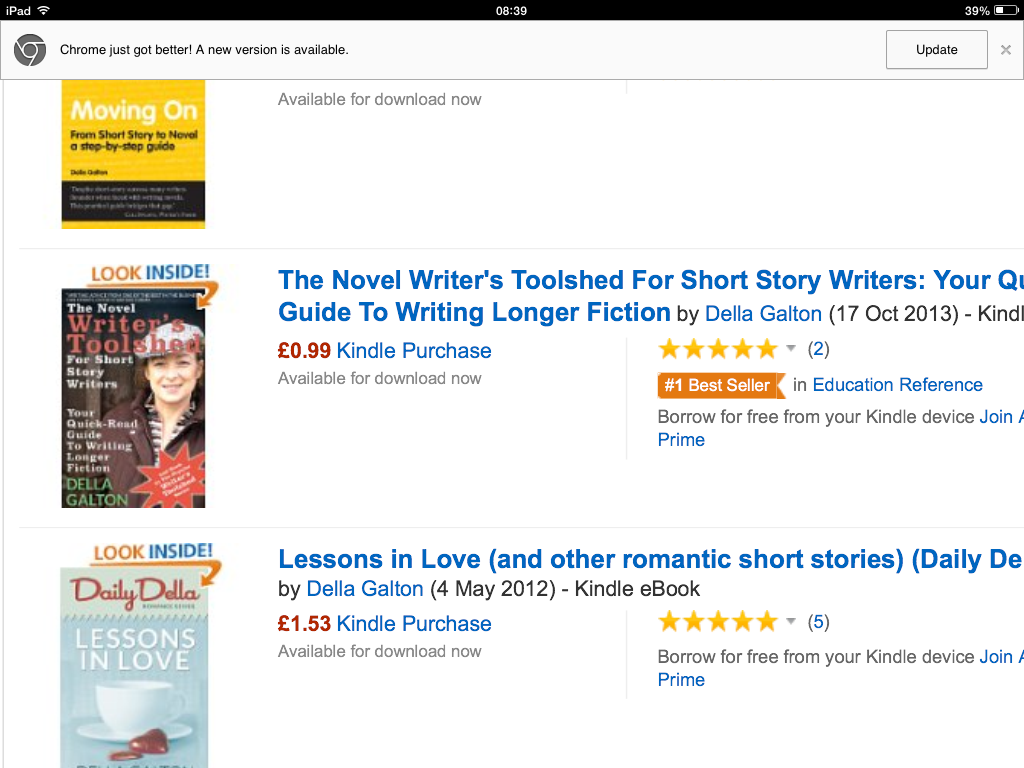
If you would like to know more about writing, two of my writing books, The Short Story Writer’s Toolshed and The Novel Writer’s Toolshed are currently 99p on Amazon if you have a kindle or a kindle app.

The New Year’s Resolution every writer will keep

It’s that time of year again, isn’t it? We set a New Year’s resolution – this year we are going to write the novel, write every day, submit ten short stories a month to magazines. Will we keep them? Well, some of us will. But not many. Why not?

Perhaps because we are already over committed? Perhaps we don’t have time – however much we’d like to have it – to write that much. If you set yourself a ‘big’ resolution and you start to fail. Chances are you’ll give up, and feel guilty too.

Here is a resolution you will keep. No, it’s not eat more cake – although that is one of mine actually!

It is to begin a piece of writing. That is all. Just begin.

If you have time to read this blog, you have time to do this. Right now. Or maybe that should be write now!  There are three simple steps. They require seven minutes of your time.

Step one: Look at the prompts below.

Step two: Set the timer on your watch/phone/ or clock for six minutes.

Step three: Write an opening paragraph for ONE of the prompts.

Prompt one

Incorporate the following three words into a first paragraph. Rain, cupcake, crash.

Prompt two

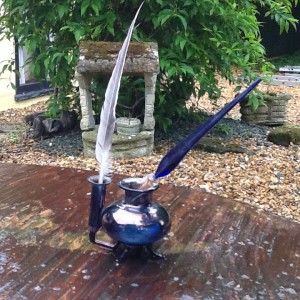
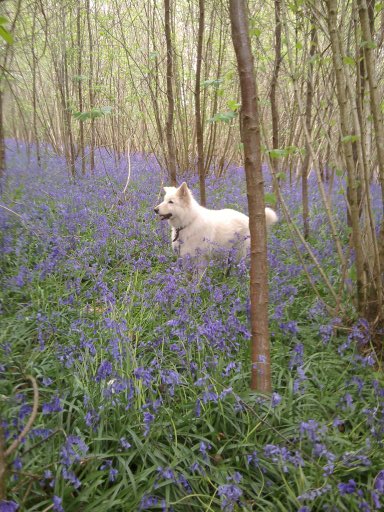
Use this picture to inspire your first paragraph. Stop reading and do it now.


Everyone done that? Congratulations. You have kept a New Year Resolution. It was that simple.

You have begun. You are a writer. What you do next is up to you. Do you continue to write or go and do the housework/play on Social Media/watch a television program? Maybe you could write a bit more instead of doing one of these things. Housework is overrated anyway. It doesn’t matter what you do next. You have completed a New Year resolution. You have begun.

Maybe you’ll finish the piece you started. Of course you’ll finish. You are a writer, aren’t you?

NB My weekly classes are held on Thursday Evenings, 7-9 and Friday Mornings, 10-12 at Kinson Community Centre, Millhams Road, Kinson. Email me if you’d like more details, or leave a message on this post.

If you would like to know more about writing, two of my writing books, The Short Story Writer’s Toolshed and The Novel Writer’s Toolshed are currently 99p on Amazon if you have a kindle or a kindle app.
Happy New Year. And Happy Writing.


How much editing should I do?

I thought it might be helpful to reproduce a few of the questions I’ve been asked about writing in my Dear Della column in Writers’ Forum over the last year. So here is the first:

Q How much editing should I do? The writers group I belong to has conflicting opinions. Some people say three drafts for a short story is plenty and others say you need to do much more than this. I’m getting confused. Is there an optimum amount?

A There isn’t a hard and fast rule. I think it depends on the way you write and possibly also on what type of writing you do as both of these things will affect the quality of your first draft.  I know some writers whose first draft is little more than notes. Their second draft might be to turn their notes into a piece of readable prose with a structure and their third to polish.  How many drafts you need to do depends on how finished your first draft is – which may also depend on the speed you write it. Perhaps the kind of editing you do is more important than the amount of times you do it.

Personally when it comes to short fiction I do the following:

Draft one – get it on paper. I would finish a short story in its entirety before I do too much editing. I write directly on to a computer so I would also edit out basic mistakes as I notice them. I prefer my first drafts to make a bit of sense.

Draft two – I would go through and make sure the story actually works – i.e. does it have a strong enough beginning, middle and end? Are the plot/characters believable? Is it suitable for its intended market? In the case of a feature this would be the same, but I would be more interested in checking that I’d got my points across in an accessible and interesting way.

Draft three – I would do a more detailed check for things like repetition of words/sentences. I would check continuity, e.g. make sure I haven’t changed a character’s name or eye colour halfway through.

Draft four – I would do the nitty-gritty, proof reading draft – i.e. check spelling, grammar, punctuation, missing words and layout.

One very important thing I also do is to leave a ‘cooling off’ period of as long as possible, but at least three days, between draft two and draft three.  This is because it’s much easier to edit your work and see repetition and obvious mistakes when there has been a cooling off period.  I would also recommend that if you do any substantial rewriting after you have proof read a piece, that you do the proof reading stage again. Most mistakes you see in final drafts are the result of changes being made after the proof reading stage.

For more on writing you might like my book, The Short Story Writer’s Toolshed.If you buy the ebook before January 1st you won’t have to pay 20 % VAT. 

The Toolshed Collection

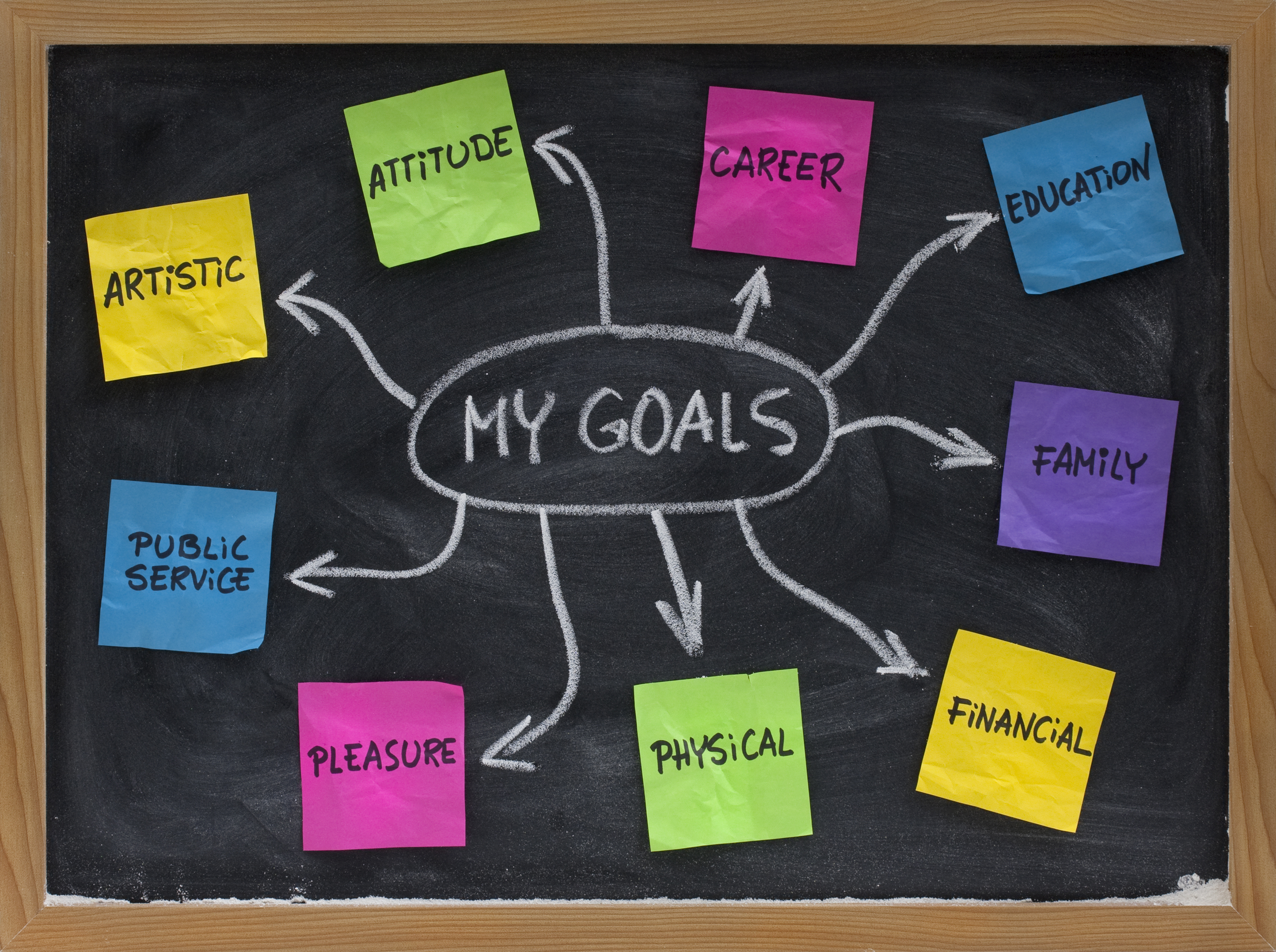
Five ways to progress your writing – or other stuff in your life!

As you might know if you follow my blog regularly I’m very goal orientated. Before I was a full time writer I was a Customer Services Manager for Bournemouth & West Hampshire Water and worked in a very goal orientated industry.

So I like strategies that involve goals. I have to give credit to the motivational speaker, Jack Canfield, for this strategy though. It’s very simple and extremely effective. I use it often.

Step One – Establish goal

First you need to establish a primary goal you want to achieve i.e. write a novel, sell  four short stories in a month, make your novel a best seller (I like the last one – might as well aim high!).

Step Two – Work out what you can do to progress it 

Then every day before you do anything else you write down five things that will help you to achieve that goal. They should be small things. See example.

Step Three – Do the small things

Then you do them. They need to be a priority. Do them before you do anything else.

Step Four – Repeat daily until your goal is achieved.

You carry this out until your goal is achieved. How long that is obviously depends on what your goal is. if it’s a big goal you may be looking at doing this for a year or more. So this takes commitment and staying power. But then so does everything else about being a writer!

But blimey, the results are fantastic. Incidentally, the five things do not have to be massive. We all need to be realistic – we all have jobs, families, social lives i.e. a lot of other things to do in a day. The point is that instead of just dreaming about it – you take steps to move your goal forward.

Here’s an example of how it works in practice.  Back in 2013 I set a goal to get my novel, Ice and a Slice on the Sunday Times Best Seller list. As I said earlier, I like to aim high.  Here are a couple of days actual examples of the five things I did to promote it.

Five a Day Promo for Ice and a Slice

July 10th

  1. Set up twitter page for my main character.
  2. Do five PR tweets that will help publicise.
  3. Follow five new relevant tweeters.
  4. Write a blog.
  5. Find a book review site.

July 11th

  1. Do five PR tweets that will help publicise.
  2. Follow five new relevant tweeters.
  3. Ask book review site if they’ll review.
  4. Set up a Facebook author page.
  5. Edit my blog and publish.

As you can see some of these tasks take longer than others. Some of them are actually the same each day. You need to be realistic. On some days, if I was very busy, my five things would literally be nothing more than five tweets. The point is that I did something – every single day – to progress this goal.

So….did Ice and a Slice get on to the Sunday Times Best Seller List? Not yet. But…. its sales have exceeded my wildest dreams. (It’s the best selling book I have out there at the moment – and some of my books do sell very well)

And I haven’t given up yet!

You can do this for anything. I’ve also used it to lose weight and get fitter. To sell more stories abroad and to decorate my entire house!

Try it and see. It really works.

And if you haven’t read Ice and a Slice yet – people tell me it is rather good.

Please click here to see if they’re right 🙂

Happy Writing!

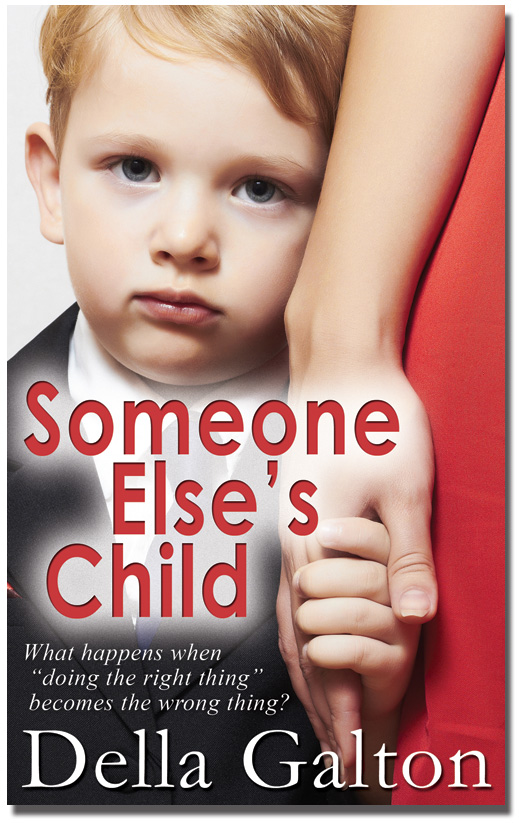
Someone Else’s Child

My new novella, Someone Else’s Child, recently hit the virtual shelves. Here’s the first chapter just in case you fancy a read. I like this little book – it was one of the first longer stories I ever wrote and there is a lot of me in it. It’s about friendship and about upbringings and about loving children that aren’t yours. And I cried when I wrote parts of it so I think it’s pretty emotional.  Please do let me know what you think.

Chapter One

Jo has been my best friend for as long as I can remember.

We have totally different backgrounds, Jo was brought up in a children’s home and my mother had a chain of hotels, but somehow we clicked right from the beginning. Perhaps, because for different reasons, we both felt isolated as children. Jo didn’t have any parents, and mine were absent most of the time. My mother, because the only thing she was truly passionate about was her business, and my father because he couldn’t cope with this fact and had left when I was small to marry a more ‘ordinary’ woman.

Jo and I aren’t alike in looks either. Jo is olive skinned, dark haired and curvy and I’ve always been what she calls a skinny blonde. I’m not skinny – well not these days anyway – and my hair is the kind of white blond that no one could envy because it comes with pale eyelashes and skin that burns at the first hint of sunlight. Looks-wise, I’d swap with Jo any day.

One of my most vivid childhood memories is of playing with Jo on the grass verge outside the Barrington Hall Hotel, which was where I lived at the time. The hotel was at the end of an unmade road, but only cars visiting us ever used it, and I was allowed to play out there unsupervised. My mother wouldn’t have been too happy if she’d known who I was playing with – she didn’t approve of Jo – but she wasn’t likely to find out, she was busy doing one of the endless things she did in the hotel.

Anyway, the sun was shining and Jo and I were stretched out on our backs. Jo was chewing a blade of grass, her face thoughtful, but as I glanced at her, she spat it out and sat up.

“So, are we going to do this blood sister thing then, Lainey? Did you get the stuff?”

I was really Elaine, and she was really Joanne – but those names were for other people. To each other we’d always been Lainey and Jo.

We’d been planning to become blood sisters for a while, but now the day was finally here I was a little bit scared. Not that I was going to admit to this, of course.

I nodded and sat up too and fished in my pocket. “I didn’t know whether scissors would work, so I got some of Mum’s needles from the sewing box as well.” I unwrapped the nail scissors and then more carefully a little pack of needles from the tissue paper. “Otherwise I could get a knife from the kitchen drawer.”

“No, the needles should work.” Jo’s eyes were alight with expectation. “Get one out. Don’t drop it.”

“I’m not going to drop it.” I slid one out and held it between my finger and thumb. I could hardly feel it, but it glinted silver in the morning sun. “Do you think it’ll hurt?” I stabbed it cautiously into the back of my hand.

“Nah. Not like that. You have to prick your thumb. That’s what they did in my book. Give it here.”

I handed it over obediently, watching with apprehension as Jo stabbed her thumb. She had to do it a couple of times because at first the skin just broke without bleeding, but then finally she got a drop of blood on the fleshy bit.

“Did it hurt much?” I asked, doing my best to sound casual.

“Nah. Come on. Hurry up and do yours. I’ll squeeze a bit more blood out.” I took the needle carefully. There was a trembly feeling in the pit of my stomach. This had been Jo’s idea, a way of proving that we were best friends who would never be separated, blood sisters for ever and ever. Not that I had to prove it, I knew it anyway, but it had been important to Jo so I’d gone along with it.

“Are you sure it doesn’t hurt?”

“Just get on with it. And hurry up. I’m bleeding to death waiting for you.”

We both giggled and it broke the tension. I pricked my thumb. It stung, but aware of her gaze, I pushed the needle a bit harder. A red bead appeared and for a moment I couldn’t take my eyes off it. My stomach was crunching and churning and the sun was hot on the back of my neck and I thought I might be sick.

“Right then.” Jo wriggled a bit closer and we pressed thumbs together. “Blood sisters for ever.”

“Friends for ever.” We gazed into each other’s eyes. “Even when we grow up and have kids of our own, we’ll still be best friends, won’t we?”

Jo nodded solemnly. “No one will ever come between us.”

I nodded too. “Never, ever, ever.”


If you’d like to read on for less than the price of a cup of coffee please click here. Thank you.

12 Attributes Every Writer Needs

Have you ever wondered what attributes you might need to be a full time writer? Well, here’s a tongue in cheek list of 12 attributes every full time writer needs:
  1. Creativity.
  2. Persistence.
  3. An endless supply of patience.
  4. A second income. (or the ability to exist on next to nothing.)
  5. The ability to bounce back.
  6. The ability to be polite and professional at all times. ( to editors and reviewers)
  7. A good supply of chocolate – and/or wine.
  8. The ability to bounce back.
  9. Stubbornness.
  10. Tolerance.
  11. A sense of humour.
  12. The ability to bounce back.
Oh and did I mention the need to be cheeky? Ice and a Slice is 99p today by the way. Just saying 🙂

Ten Stories NOT to send to Woman’s Weekly

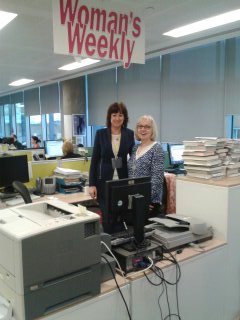
Woman’s Weekly at Blue Fin Buildings

I was lucky enough to be teaching with the very lovely Gaynor Davies at Woman’s Weekly last Monday. Here are a list of stories she currently does NOT WANT because a) they have too many already or b) they’d been done to death. So PLEASE DON’T DO THESE. hot off the press.

  1. Stories about weddings.
  2. Stories about funerals.
  3. Stories about women finding themselves by doing a bungee jump (who’d have thunk it!)
  4. Woman looking after neighbour’s cat/dog/budgie and coincidentally finding the man of her dreams! (Damn!)
  5. You think it’s a child’s first day at school (told from viewpoint of mum) but it’s actually a man leaving a woman. (that’s one I haven’t even thought of!!!).
  6. Retired husband getting under wife’s feet.
  7. Stories about adoption – mother finding child or child finding mother.
  8. Stories about infidelity – how many actual endings are there? Either she forgives him or she doesn’t.
  9. Stories in letter format. Or any other story structure that you have sold them a few times. (It was good the first time – but not quite so original on the third outing!).
  10. Children persuading elderly parents to downsize.

So what else is left? We asked Gaynor this. Here’s what she said. Stories about people, warm stories, quirky stories, believable stories. Stories with ends that do not read like the punchline to a joke. Maybe a bit of something sensual – but still within the Woman’s Weekly boundaries. These can stretch further than you think.

They  are always short of 1000 words (900-1000) and 2000 words (1800 to 2000) and also 8000 words for the Fiction Specials. Happy Writing.


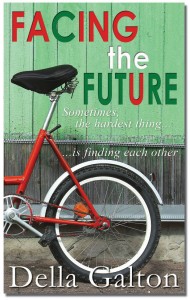
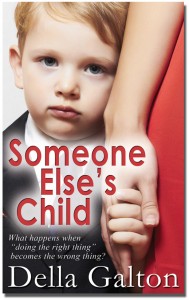
And did I mention I have two new novellas out – both previously published as Serials for Woman’s Weekly – in case you’d like a feel for what they DO like 🙂

Someone Else’s Child. Click here for a closer look.

Facing The Future. Click here for a closer look.

My novel, Ice and a Slice, is also on promotion from November 1st. 99p for a full length novel. Click here for a closer look.
Thank you for reading.

What Do Your Short Story characters Look Like?

Characterisation is the means by which you make your fictional characters appear to be real people. It is probably the most important part of any piece of fiction. If the reader doesn’t care about your character, he or she won’t read on.

Your characters reveal their personalities in much the same way as real people
i.e. via what they look like, what they do and say and what they feel.

Appearance
It’s not usually necessary to describe your character at length in a short story (unless their appearance is critical to the plot). All of the following examples come from 1000 word stories. The briefest touches can bring a character to life.

Example one (A City Girl at Heart – People’s Friend)
‘So…how are you settling in?’ I asked Andy when he phoned me the weekend after he’d moved into the cottage.
‘Fine, thanks. Absolutely fine.’
I sensed a note of unease beneath his cheery words. ‘But..?’ I prompted.
‘I keep hitting my head on doorways.’

Example two (Brief Encounter – Woman’s Weekly)
Jonathon wasn’t her usual type. He wore his hair in a ponytail. He wasn’t over tall, but he had big hands and feet, there was a comforting solidity about him. She could imagine herself snuggled up and protected in his arms.
“I build racing cars for a living,” he’d told her as they’d gone through all the polite introductions stuff. “How about you?”
“I’m a nurse. I probably treat people who’ve injured themselves in your cars.”

As you can see, these are very brief physical descriptions, but they are enough to brush stroke a character’s appearance. We know Andy is tall. Jonathan has long hair and is big boned.

But now for a story where appearance is critical to the plot.

Example Three (Mirror Mirror – Take A Break)
“I look fat in it, don’t I?”
Kath could clearly hear the girl’s voice in the next cubicle along. She was talking to her friend, another teenager. Kath had seen them coming in to the changing rooms earlier, both tall and leggy and beautiful.
But not as confident as they looked, she thought now, as she glanced appraisingly in the mirror of her own cubicle. Now she’d taken her top off she could see the slight bulge over her waistband and the tops of her arms weren’t as trim as they’d been only a couple of years ago. She gave a wry little smile.
‘You don’t know what you’ve got till it’s gone.’ Never was there a truer saying than that.

(Extract taken from later in Mirror Mirror)
Kath slipped the dress over her head and smoothed its cashmere softness down over her ample hips. It was Granny Smith green.
She could probably pass as an apple crumble in her Granny Smith dress with her newly highlighted hair. She giggled. A couple of weeks ago she’d have tugged the dress off and found something more staid, more fitting of her middle aged self, but that was a couple of weeks ago.
Everything had changed since yesterday.
For a moment she let her eyes linger on the perfect symmetry of her breasts. Earlier on she’d bought a new bra from Marks and Sparks. She got measured up because she hadn’t bought one for ages. There had been a time when she’d thought she might not need to buy a bra ever again.

Ah, so now we know why Kath’s appearance is important, why we had so much of it – the theme of the story relies on it. She has just had the All Clear from breast cancer and she is celebrating her body still being whole.

But you can see the difference, both in the amount and the focus of description needed.

Thank you for reading. For more tips on characterisation, please see my book, The Short Story Writer’s Toolshed. Currently on sale at Amazon for just 99p.

Naming Characters – Wednesday Writing Spot

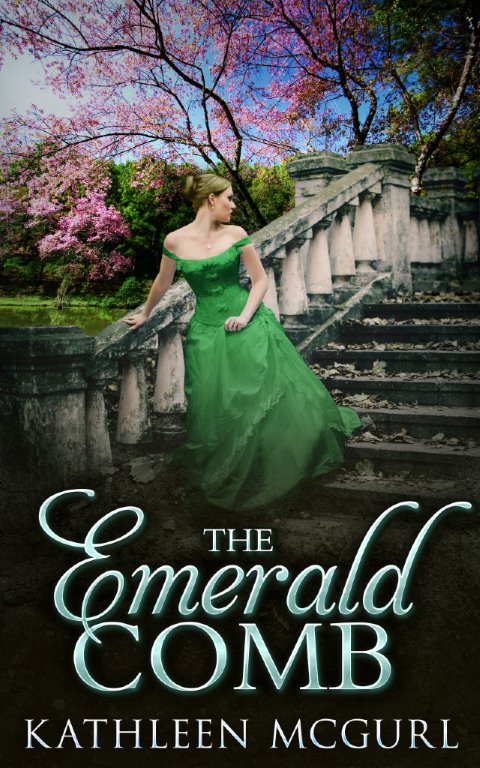
For this week’s Wednesday Writing Spot – sorry there hasn’t been one for a while – I would like to welcome my good friend and fellow author, Kath McGurl, who many of you will know from her fabulous Womag blog. She is talking about naming characters – something we all need to do – and how she went about it for her new novel, The Emerald Comb. Fascinating stuff. Over to you, Kath 🙂

‘Character names are so important. They have to be right for the period you’re writing about and right for the character. And personally, I find I can’t get to know my characters properly until I have found the best name for them.

So how do writers decide on names? For first names, some writers use baby name books, or websites which show the most popular names in given years. A good tip for historical writers is to consider the names of the royal family of the period you’re writing about. You can bet that after King George III and Queen Caroline named one of their daughters Augusta, that there were plenty of other little Augustas born in the following few years.

Surnames can be more tricky. You could flick through the phone directory for inspiration. Or, as my favourite writing spot is beside my bookcases, do what I do – browse the names of authors on book spines and pick one of those.

In my book The Emerald Comb, Katie researches her family tree. I needed her ancestors to have an unusual surname that she would easily be able to trace, and I picked ‘St Clair’. Katie was born Catherine St Clair – a name which I think has a nice ring to it. She married, and became in her own words, plain old Katie Smith. Her husband Simon is not at all interested in his family background, so I gave him the genealogist’s nightmare surname: Smith.

One of the main characters in the historical strand of the story is Bartholomew St Clair. I have no idea where the name Bartholomew came from, but I know that I woke up one morning thinking with that name in my head and I knew it was right for him.

Another thing to consider when naming characters is whether their name suits their personality. For Georgia Holland I needed a soft, rounded, pretty name. Whereas for Agnes Cutter I wanted something sharper, spikier.

A writer may want to give the reader an impression of their character just from the name. Charles Dickens was a master at this – the teacher Mr Gradgrind, the miser Ebenezer Scrooge, the conceited Mr Pumblechook, kind and jolly Polly Toodle. These names all fit the characters so well that hardly any description is necessary. The Emerald Comb contains a minor character named Mrs Oliphant, and I hope the reader pictures her as a rather large lady, just from her name.

When my children were born, in each case I had names ready for them as soon as they arrived. I hated to think they’d be in the world for even a single hour without a name. I feel the same about my characters. I can’t begin writing until I know what they’re called, and once named, I never change them. It’s part of their identity, and the main theme of The Emerald Comb is identity. So the names must be right from the start.

What’s the most memorable character name you’ve come across in fiction?’

Many thanks, Kath, and congratulations on the publication of The Emerald Comb. Please do check out Kath’s website and her new novel. Isn’t it a fabulous cover.

Website: http://kathleenmcgurl.com/

Twitter: @KathMcGurl

Facebook: https://www.facebook.com/KathleenMcGurl

The Emerald Comb: http://www.amazon.co.uk/The-Emerald-Comb-Kathleen-McGurl-ebook/dp/B00N1XRS3K


How Many Books Will I Sell On Amazon?

I get asked lots of questions about this subject via my Dear Della page in Writers’ Forum. So I thought it might be interesting to reproduce a recent letter on my blog.

Q I am about to publish my first novel, an historical romance, on Amazon kindle. I know this is probably a difficult question to answer but how many copies can I reasonably expect to sell? There seems to be a shroud of mystery over the whole business of copies sold.  Most authors I know are very tight lipped about it. What would be realistic?

A This is another one of those million dollar questions.  How many copies you sell will probably depend to a large extent on how many people know it’s there, i.e. how much publicity you do.  You are right – the whole business of numbers of self- published (and traditionally published) books sold is shrouded in mystery and the only truly accurate way of finding out figures is by asking people who will tell you the truth.

Other than that, you are probably aware that Amazon rankings are partly based on book sales.  No one except Amazon knows exactly how the rankings work but a book will move up the rankings when copies are sold. However, I have noticed that as few as two or three sales can propel a book from having a very low ranking of say, 480,000 to an exalted 65,000. I am not a mathematician, but this would imply that several hundred thousand books listed on Amazon simply don’t sell any copies at all. I

There is a rather interesting website that uses Amazon’s ranking to guesstimate book sales. If you visit www.novelrank.com you can track any book listed on Amazon over a given period, for example, the last month, the last week etc. Novel Rank uses a calculation based on movement in the Amazon ranking to guess the number of sales. I know from experience that it’s quite an accurate guess, especially when sales are few and far between. The more copies of a book that are sold, the less accurate Novel Rank is able to be, its figures get more conservative, not more optimistic. Which is great if you are with a traditional publisher because you tend to be nicely surprised when your royalty cheque arrives.

Novel Rank is not able to supply historical data. So if you start tracking a book today, you can only view its sales from this point on. But it’s a worthwhile tool to know about.

My book, The Novel Writer’s Toolshed sold 30 copies in a day to become a Number One Best Seller in one of its categories.

This little book, which outlines the differences between short stories and novels in detail is just 99p until Thursday. Click here to check it out.


Tell your friends!

© Della Galton All rights reserved.
Powered by Cloudbase Media