Welcome to Della Galton’s website

How to Judge a Short Story Competition

Firstly, apologies from me! I haven’t written a blog for too long. I’ve been writing a novel and it was all consuming. It’s now winging its way to publishers via my agent, who loved it. So fingers crossed.

More on that soon. But here’s a question that came through to Dear Della recently, which might be of interest to you.

Q: I have been asked to judge a short story competition, having been a winner more than once in previous years.  I am thrilled to be asked, but also nervous.  Do you have a set criterion when you judge short story competitions yourself?

A: Yes I do.  The following is my own personal criterion for judging a short story competiton.

  1. Is it a short story and not just an extract or anecdote?
  2. Does it begin well – was I hooked?
  3. Are the characters believable and convincing?
  4. Do I care about the story or do I get to the end and think, ‘so what!’?
  5. Is the dialogue realistic and/or convincing?
  6. Does the plot work or is it contrived and/or predictable?
  7. Is the ending satisfying or does it tail off or feel contrived or predictable?
  8. Does the title add to the story?
  9. Is the pace right or does it feel rushed or drawn out?
  10. Does this story have the X Factor?

As you can see most of my points are measurable.  They will encompass factors like quality of writing, language and grammar. Number 10 is the one I use when I am trying to decide on a winner.  If a story has the X Factor it can sometimes be forgiven other minor faults. It’s difficult to pin down whether a story has the X Factor. They are the ones that send a shiver down my spine – or prompt me to say, ‘Wow.’  I wish I’d written that.  They might be clever or funny or poignant. And yes it’s a personal thing – one judge’s X factor may be another judge’s ‘not in a million years.’ But that is what makes a judge unique.

Have you ever judged a competition? I’d love to know your top tips.

Also on the subject of short stories – my next course is on Saturday 23 June, 2018 in Bournemouth.

Write a Short Story in a Day.

Venue: Kinson Community Centre.

Cost: £45

Please email me for further details.

Last but not least, you can unsubscribe from this email at any time by pressing the unsubscribe button or emailing me and I will unsubscribe you.  Many thanks for reading.

All best wishes

Della


Writing a Winning Opening Paragraph. Three Top Tips.

Last week I was lucky enough to be teaching at the Writers’ Summer School at Swanwick in Derbyshire. Beautiful place if you haven’t been there. One of my courses was about winning writing competitions. Just for fun we had an opening paragraph competition, which was won by Tony Greenfield. He was kind enough to let me reproduce his winning paragraph.

But first, here are my three top tips for writing an excellent opening paragraph.

  1. The paragraph must have a good hook – and be intriguing enough to make a judge want to read on.
  2. The writing must be original and strong.
  3. We need to care about the character.

Many Congratulations to Tony for getting all of these things right – in a ten minute workshop, I might add. And many thanks to everyone else who entered. There were 50 entries. There wasn’t a bad one among them.

Here is Tony’s winning paragraph:

Eulogies can be wrong

Thank you for coming to my funeral last week. Hundreds of people were there but the only two I knew were you and George. I knew George was there because he spoke a eulogy. He said many good things about my life. My life, he said, had been ordered and planned to succeed. He was wrong. I always ran from plans.


Tips on Entering Writing Competitions – Wednesday Writing Spot

I recently judged the H E Bates Short Story Competition, organised by the Northampton Writers Group. Morgen Bailey is the chair and for today’s Wednesday Writing Spot I’m delighted to welcome Morgen to my blog to give us her tips on entering writing competitions. Over to you, Morgen 🙂

Tips on entering Writing Competitions

Competitions are a great inspiration and not only get me writing something new (certainly for the themed ones) but even if I don’t get anywhere, I still have the story to do something else with, like submitting to women’s magazines here in the UK (although it’s more advisable to write specifically for their markets) or self-publishing to add to my collection of eBooks.

I’d love to give you advice that will guarantee a competition win but it won’t. Sorry about that. There are two reasons for this:

    1. You will never know how the judge will feel when he / she reads your story. He / she could be going through an acrimonious divorce and your divorce story is a painful reminder. I know, judges shouldn’t be personally involved in your writing but that’s the thing with fiction (and non-fiction of course); readers get emotionally involved – you should want them to, and if they do, it means your story ‘works’.
    2.  You will never know whom you’re up against. Yours could be a fantastic story – the best of twenty about unrequited love – but that’s it, it’s one of many on the same theme. It would have more chance of the judge seeing it if it’s the best but it’s the story about a pink tutu-wearing green alien they remember. I’m not saying to write something so way out that you run the risk of… erm, alienating the non-science-fiction-loving judge, but your story needs to ‘pop’. If you’re going to pick a well-worn theme – it is said, after all, that there are only seven plots – you need to find a new angle.

The most important thing? Read the guidelines. I can’t stress that enough. If they want a maximum of 2,000 words, don’t send them 3,000 or even 2,010 (or a 45-line poem when they only want 40). I’ve just finished judging the first ever NLG Flash Fiction Competition and had to disqualify one story because it was 610 words (max 500). We have Word, so we have a word counter – it’s easy to check and catch you out. Your story may be the best thing since sliced granary but no one will know because they won’t get to read it. I didn’t read the 610-word story, although I might go back out of curiosity.

Another usual pre-requisite is to not send a story (or poem) that has been published (online counts as published) or won / shortlisted in another competition. Another NLG story was disqualified because the author notified us saying he / she had submitted the story in error because it had gained second place in another competition. Ironically, it was also my second-place, so my third became second and another story became my third, and eleventh now highly commended. I don’t know who submitted the story (because I’m Head Judge – only our Secretary knows so it’s fair) but editors and judges remember those authors who do such things, so don’t. Keep a list. File your story in a particular folder. Be organised.

Another must is spell and grammar check. It sounds obvious but I spotted a ‘tine’ instead of ‘time’ in one piece and it lost a point because it was a careless error. Unless you’re writing a new story the day before the deadline, give yourself plenty of notice. Write the piece at least a week (the earlier the better) before you have to send it in, leave it for a day (preferably more) then edit it. Read your story out loud – it will sound different to how it sounds in your head and you will spot errors easier (especially if it’s been a while since you wrote / read it last).

Don’t leave it until the last minute. It’s very tempting to send in your story the day the competition ends just in case you want to make any last minute alterations, or so the judge might remember it coming in, but the organisers appreciate it if you’re early. It makes their job easier, as they can send the stories out to the judge/s in batches rather than in one go.

If the competition has a theme, stick to it. If they want a story set in the London Underground, don’t think you’re being clever by setting it in the Paris Metro or New York Subway, unless you’ve come from / are going to the London Underground. Last year’s H.E. Bates competition had (for the first time in its 20-year+ history) a theme; ‘A Walk at Midnight’, and we had a couple of stories which didn’t include a walk or set, at any point in the story, at midnight.

Choose a snappy title. Don’t be lazy and call it The Journey (a title of an old story of mine which I’ve since renamed No White Left). You can certainly use it as a working title but then a phrase might leap out at you when you’re writing it. I write a short story a day for my blog’s 5pm Fiction slot and it’s often what happens to me.

Research your judge. If he or she writes romance, the chances are s/he’d favour a love story over a slasher horror. If it’s the best thing they’ve ever read then you could still do well but again you’re running a risk. With most competitions, the Head Judge (the name advertised) will only see a selection of the stories, so even if you write to their taste, if the competition panel (often a writing group) don’t like it then it will never reach Mr / Mrs Famous Writer. ‘Named’ judges’ time costs money and most competitions can’t afford to pay a famous (or even semi-famous) author to sift through hundreds of entries.

So you want to make your story (or poem) as good as it can be to get through all those people and make the last one go “wow”. You never know it could even be me.

Morgen Bailey

morgen@morgenbailey.com

http://morgenbailey.wordpress.com

http://icanbuildyourwritingblog.wordpress.com


Thank you very much, Morgen, for being my guest today. Some very useful tips :


H E Bates Short Story Competition. Winners and Presentation

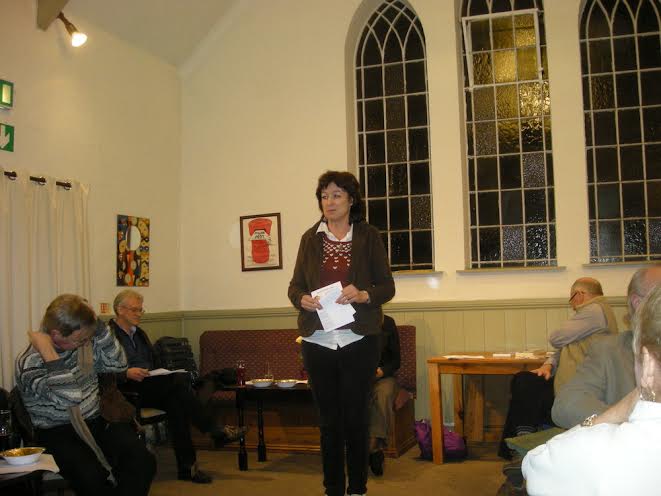
I was honoured to be asked to judge the 2013 H E Bates Short Story Competition, and last Friday 17th January I presented the prizes to the winners, which was both humbling (I wish I’d written some of those stories) and nerve racking (I had to do a short talk too). By the way, do these two gentlemen in the foreground and on the right of the photo look as though they are asleep? I’m sure I didn’t “hold forth” for that long!

So without further ado, here are the results and a brief summary of why I chose them.

Adult Section
1st prize: Last Tango in Space by Anne Corlett
2nd prize: Ancient Wing by Tracy Fells
3rd prize: Make Mine Mythical by Rosa Johnson

Under 18s
1st prize:Something In The Mist by Katie Bunting

Best short story written by a Northamptonshire writer:
Memories Through My Grandfather’s Eyes by Dave Martin

Why did I choose these stories? There were different reasons, but… they all had the X Factor. I’ve gone into a bit more detail below:

Memories Through my Grandfather’s Eyes was both warm and poignant and a lovely portrayal of an ordinary family.

Something In The Mist was both gripping and full of insight and I was impressed by the author’s grasp of storytelling and structure. It was in male viewpoint and I was even more impressed when I discovered the author was female.

Make Mine Mythical was very funny and had brilliant characterisation and dialogue.

Ancient Wing  was original, unusual, and beautifully written.  Tracy managed to make me love the ‘at first’ unsympathetic main character – well done.

Last Tango In Space was fabulous. I cried when I read it. I cried again when Anne read it out on Friday.  It was about an older couple on the first manned trip to Mars. Written in diary form, it was both amusing and deeply moving and ended with a fabulous universal truth. Thank you Anne for writing this. I wish I’d written it myself. I can give you no higher compliment.

Well done to all the winners of this incredibly hard to judge competition.

Thank you to everyone who entered.


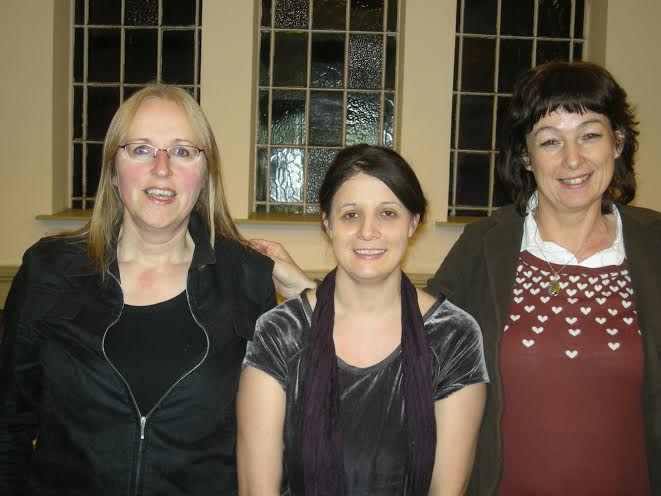
And here is Anne Corlett, winner of the H E Bates, with Morgen Bailey, Chair of the Northampton Writer’s Group, and myself.


The Wednesday Writing Spot – Writing Competitions – an insider’s view

On this week’s Wednesday Writing Spot I am delighted to welcome the lovely Morgen Bailey, who has generously agreed to give us an insider’s view of what goes on behind the scenes in the judging of writing competitions.

Based in Northamptonshire, England, Morgen Bailey (“Morgen with an E”) is a prolific blogger, podcaster, editor / critiquer, tutor, speaker, Chair of NWG (which runs the annual H.E. Bates Short Story Competition), freelance author of numerous short stories, novels, articles, and dabbler of poetry. Like her, her blog, http://morgenbailey.wordpress.com, is consumed by all things literary and she loves chatting with other writers and readers. Her email is morgen@morgenbailey.com.

Over to you, Morgen…

I’m involved in three writing competitions:

So I’ll be talking today about my insider’s view.

How competitions work

H.E. Bates (run by Northampton Writers Group, of which I am Chair) – deadline 4th November 2013

  • Our Competition Secretary, Nick, receives the (national and international) submissions by email and post. He catalogues each one, giving them a number. He then prints off the emailed ones, adds them to the posted, and divides them into batches of c.25, bringing them to the writing group where each person has a pile at a time (Nick and I read / score them all). We score them, give them back and he collates them then selects the top ten which goes off to the Head Judge (who, in 2013, is the prolific short story author, ‘how to’ writer and novelist Della Galton, previously crime novelist Stephen Booth and in 2011 romance writer Katie Fforde) who picks his / her top three. These are then announced (and prizes awarded) at a ceremony in Northampton the following January, along with a Northamptonshire winner (if not the same as the Top 3) and an under 18.

NLG Poetry Competition (run by Northampton Literature Group, of which I am Acting Chair) – currently on hold for 2013

  • I have little involvement in this other than being a member of NLG and (fellow dog-walker with the organiser) but in a similar fashion to the H.E. Bates, submissions are received in to one person, Pat, who collates and documents them. She, however, sends them all to the judges (there was one for free-verse and rhyming poetry, and another for humorous) who pick their favourites whom are awarded at a ceremony later in the year.

NLG Flash Fiction Competition – new for 2013 (deadline was 30th June)

  • It was my idea to hold a flash fiction competition in place of the poetry competition (which the poetry circle decided to put on hold due to finances and Pat wanting a well-deserved break). The word limit was set at 500 words making it easier / quicker for us to read than 1,000 words which some competitions allow, and until recently I had for my blog’s Flash Fiction Fridaysslot. It was an email-only which came into a dedicated email address accessible only by our Secretary / Treasurer, Brenda, who catalogued them and sent them out to myself and two other members of the group. I have already submitted her my scores (including three 10/10s and seven 9.5s) so Brenda will collate the other two sets of scores and send me the overall top ten for me, as Head Judge, to pick my top ten (if they don’t match mine) which will be listed / announced on our websites (see below).

Money

  • Some writers resent paying to enter competitions, often preferring to submit to magazines / online publications for a chance to be paid. I can’t say I blame them but, unless they’re sponsored, competition organisers invariably have to charge – how else do they give you prize money and pay the judges (plus admin costs such as advertising, postage etc.)?
  • The H.E. Bates competition fee is £4 per story, £10 for three. Expenses include the judge fee, administration and prize ceremony.
  • The NLG Poetry competition fee was £3 per poem, £10 for four (£3.50 / £10.60 if paid online by PayPal). The prize fund was £1200 and the judges were paid several hundreds of pounds each because they were judging all the entries. A huge outlay, and one that resulted, not unexpectedly, in a loss, so has been put on hold for the time being.
  • The NLG flash fiction competition fee was £2 entry, £5 for three (PayPal only). The only expense (because I gave my time for free) is the prize money (£75 / £35 / £15). There will be no ceremony but the top three will be published in full on the NLG website and my website (http://morgenbailey.wordpress.com), and seven Highly Commended listed (author name and story title only so they can be submitted elsewhere).
  • You may (or may not) be surprised to learn that none of the three competitions I’m involved in made a profit this time round (making a small, considerable loss or breaking even). This could be to do with the economic climate or that there are lots of competitions out there – more clash with the June NLG competitions, less so with the November H.E. Bates. Who knows? We do it because we enjoy it and want to help writers write and get noticed. Getting anywhere in a competition is something to add to your CV.

Tips

  • Read the guidelines. I can’t stress that enough.
  • Stick to within the maximum word / line count. You’ll be disqualified if you don’t.
  • Make your story unique. Apart from a fresh twist on one of the (supposed) seven plots out there, don’t send us a story that has already been published (even online) or certainly that has been placed in another competition and therefore published in some format (listed as Highly Commended with just your name and title is OK). Keep a list. File your story in a particular folder. Be organised.
  • Choose a memorable title. My favourite competition entry (which sadly didn’t make the top 10) to the H.E. Bates Short Story Competition 2011 was ‘The Bus Driver Who Stopped And Then Didn’t’ (the author actually won the 2012 competition with another story, so he persevered). It sticks in my brain, which a title of ‘The Bus Driver’ probably wouldn’t have done.
  • Don’t write to shock. Not many of us like reading about vomiting or guts spilling out – my apologies if you’re just eating while reading this, but that sort of proves my point.
  • Spell and grammar check. Read it out loud. It helps. A lot. I start a story with 10 out of 10 and knock marks off for avoidable mistakes, especially those that the computer’s checker would have highlighted.

So you want to make your story (or poem) as good as it can be to get through all those people and make the last one (me in some cases) go “wow”.

Morgen Bailey

morgen@morgenbailey.com

http://morgenbailey.wordpress.com

http://icanbuildyourwritingblog.wordpress.com

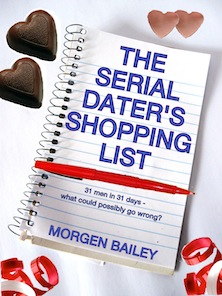
Thanks so much, Morgen. Incidentally, I happen to know that Morgen’s latest novel, The Serial Dater’s Shopping List,  is available for just 77p. You can buy it by clicking here


The Wednesday Writing Spot. Tips on Winning Short Story Competitions

This is the first of four posts about various aspects of short story writing, which will go out over the next four Wednesdays, in my new Wednesday Writing Spot. I hope they are helpful.

I have spent a fair bit of time judging short story competitions, and I have been asked to judge two more this year, I’m judging the short story award for the Wells Festival of Literature, more details here and also the H E Bates Short Story Competition, more details here so I thought it would be a good plan if we started with some tips on winning competitions.
So what do I look for when I judge a competition?  How exactly do stories lift themselves to the top of the pile?

These elements are in no particular order.

A good title

This helps attract my attention although if the story doesn’t work – it won’t be enough on its own.

Good writing

This always attracts my attention. And by good writing, I mean that the story is well crafted. There will be good sentence construction, no clichés or tired lines. There will be an intriguing opening, probably a few particularly good lines – I often point out examples of these in my individual comments, if I’m doing critiques too.

The story works

This means that the whole story has to work – from beginning to end.  There must be a good strong premise, which is developed throughout the story and the ending must be satisfactory. By satisfactory I mean that it should work for that story. It should tie up with the beginning without being predictable. It shouldn’t be obscure or too obvious.

Originality

It helps if I haven’t seen the plot line before – this is tricky because I’ve seen hundreds. If I have seen it before it helps if there is a new angle – maybe humour, or a different structure.

Believable characters

They must be believable and not cardboard cut outs.  Characterisation is probably one of the most important things in a short story – or any story, come to that.  If I get the sense that these characters could actually exist that is a great start. In many of the stories I read I find that the characters are not fully developed, which means that often they are not quite believable.

Character motivation

This is strongly tied up with believable characters. Would they really do that?  Ask yourself when you are creating a character if their actions are likely. If a character’s actions strike me as unbelievable I tend to lose interest in the story. Characters can do unlikely things in a story, but you have to make me believe they would do them.

Emotional involvement

Again this is strongly tied up with believable characters and character motivation. Am I involved with these characters? Do I care what happens to them, or are they so insipid and unbelievable that I’m not that bothered? The acid test here, is do you care about them? Really care, I mean? Are you moved when you write about them or are they just a means to get your plot on the page?

An intriguing plot/dilemma

Do I want to keep reading? Is there enough of a hook which starts at the beginning and draws me through. It’s quite hard to do this in a short story, but if you can do it, you are likely to succeed.

Good dialogue

It’s hard to achieve but good dialogue (where everyone doesn’t speak in exactly the same way) goes a long way to making characters believable.

An unusual setting

The more competitions I judge the more I think that this is important. An unusual well drawn setting can make your story stand out from the rest.

A point

Yes, stories should be entertaining but they should also have a point.  This is a fact I overlooked when I first started writing short stories.  Think about your story’s overall message. Is there one? Or are you just writing about an incident that is actually quite slight – and may have been amusing when you thought about it, but isn’t really enough to hold a reader’s interest?  Stories that are too slight can come across as anecdotal.

Good presentation, grammar etc

This is not the be all and end all. If you have written an excellent story and it’s badly presented you may still get placed. (If the judge sees your story) But bear in mind you probably won’t get past the first reader in a national competition.

Something very important to remember

When you enter a competition where there are hundreds of entries and only three or so prizes the initial readers will be looking for a reason to throw your story out of the pile. Don’t give them one.

And, one last thing, most entries arrive on the deadline in a competition. This is fine, as long as you haven’t written it the day before in a panic because if you have, then you won’t have had a proper cooling off period in which to edit it. Write your story in good time, then put it aside for a week or so, then edit it. You are much more likely to produce a polished piece of work.

Good luck.

And if you’d like any more advice on writing short stories, please check out my two writing guides. How to Write and Sell Short Stories published by Accent Press and The Short Story Writers’ Toolshed published by Soundhaven.com

Next week we will take a look at story arcs.

PS Below is the update on entries received so far for the Wells Festival of Literature Competition.

Total On-line Entries so far this year:

Poetry: 17
Short Stories: 29
Crime Novels: 4

We have also received a similar number of entries using the traditional pen and paper method.
How To Get An Original Idea

One of the things short story competition judges bemoan the most is that they hardly ever see an original story, or a really original idea.   Yet being original is one of the fastest ways to get into the shortlist.  Providing you can also write well, of course!

Is there actually such a thing as an original idea?

Maybe not.  But there are a lot of things you can do to make your story stand out from the crowd. Especially if the competition has a theme.  Here are my tips for finding an idea that’s different:

For the purpose of this exercise we’ll assume the theme of our imaginary competition is Loss.

So the first thing you should do is to write down all the ideas that spring to mind when you think of the theme loss.  These are mine. Some of them might be yours too.

Loss of job

Loss of spouse

Loss of child

Loss of house

Loss of pet

Loss of life

Loss of bag

There is a good chance that everyone else will think of these ideas too, so unless you have a really original slant, move on and list some more.

Loss of limb, finger, toe, eye

Loss of liberty

Loss of memory

Maybe we’re getting a few ideas that are a bit more lateral.  But let’s go on.

Loss of an identity (Alzheimer’s or another reason)

Loss of a parrot – or another unusual pet, think snake or hippo, or how about something mystical, a unicorn

Loss of a generation

Loss of a culture

Loss of a precious artefact

Hopefully there won’t be many stories with the above losses and I’m sure you can think of lots more. But let’s make it a bit more unusual.

What if you used a different structure as well? What if you used a diary structure, for example. I read a brilliant story recently (in a competition I was judging) where the author had used a diary structure, but, just as in the Time Traveller’s Wife the dates weren’t chronological.

Or you could tell your story entirely through taste, or smell, or perhaps dual viewpoint.

Or you could link the scenes with the same setting, for example the sea.

The diary story won the competition I was judging by the way!

Food for thought!

And the winner of the 250 word Flash Fiction Competition is…..

The New Year Resolution That Went Wrong by Karla Brecon

You don’t look too clever, Trace?

Don’t feel it, Marge.

What happened to you?

Last year’s New Year’s Resolution, that’s what!

Which was?

Just say no.  And I did.  To everything.

Everything?

Yep!

What, cigs?

Yeah.

Drinks?

Yeah.

Food?

Yeah.  Fetched me up in here, it did, in the end.

Dehydrated I expect?

Yep.

And anorexic?

Yep.

Stressed?

YesyesYES. OK!

Sorry, I’m sure!

‘S’all right…  Well, now we know why I’m here. How about you?

Same thing.  New Year’s Resolution that went wrong.

What was yours then?

To prove you don’t need an aeroplane to fly.

Busted much?

Nearly everything.  I can get about though, with the crutches like.  Ooh,  can I smell lunch?

Reckon so.

You having any, Trace?

Well I’d like to but …

Oh, yeah … you can’t, can you?

No.  How ‘bout you, Marge?  You having some?

No.  I’ve arranged for the window-cleaner to let me into his crate while all the nurses are busy, with lunch.

Going to have another go, then?

Got to, ain’t I?  New Years Resolution, weren’t it?

Long way down, from the 29th floor

You need a bit of height, don’t you, for flying?

Suppose so.  ‘Ere, we both done well ain’t we, Marge, with our resolutions?

I’ll say.  You going to carry on sticking to yours, the whole year?

Yeah – if it kills me

Same here.  Well, must … er …

Fly, Marge?

You got it, Trace.  Fly.  Ta ta, then.  Nice seeing you

Ta ta Marge.  You too!


Well done, Karla, for brightening up a very dull day in Dorset!  You made me laugh out loud. This was so clever and funny. I loved it.

Commiserations to the rest of the shortlist.

Veronica – I loved your twist.

Ginny – I loved the voice of the narrator.

Hilary – you made me laugh.

Alyson, your story was wonderfully original too.

Carrie, you also made me laugh with your clever twist.

Many thanks for entering.

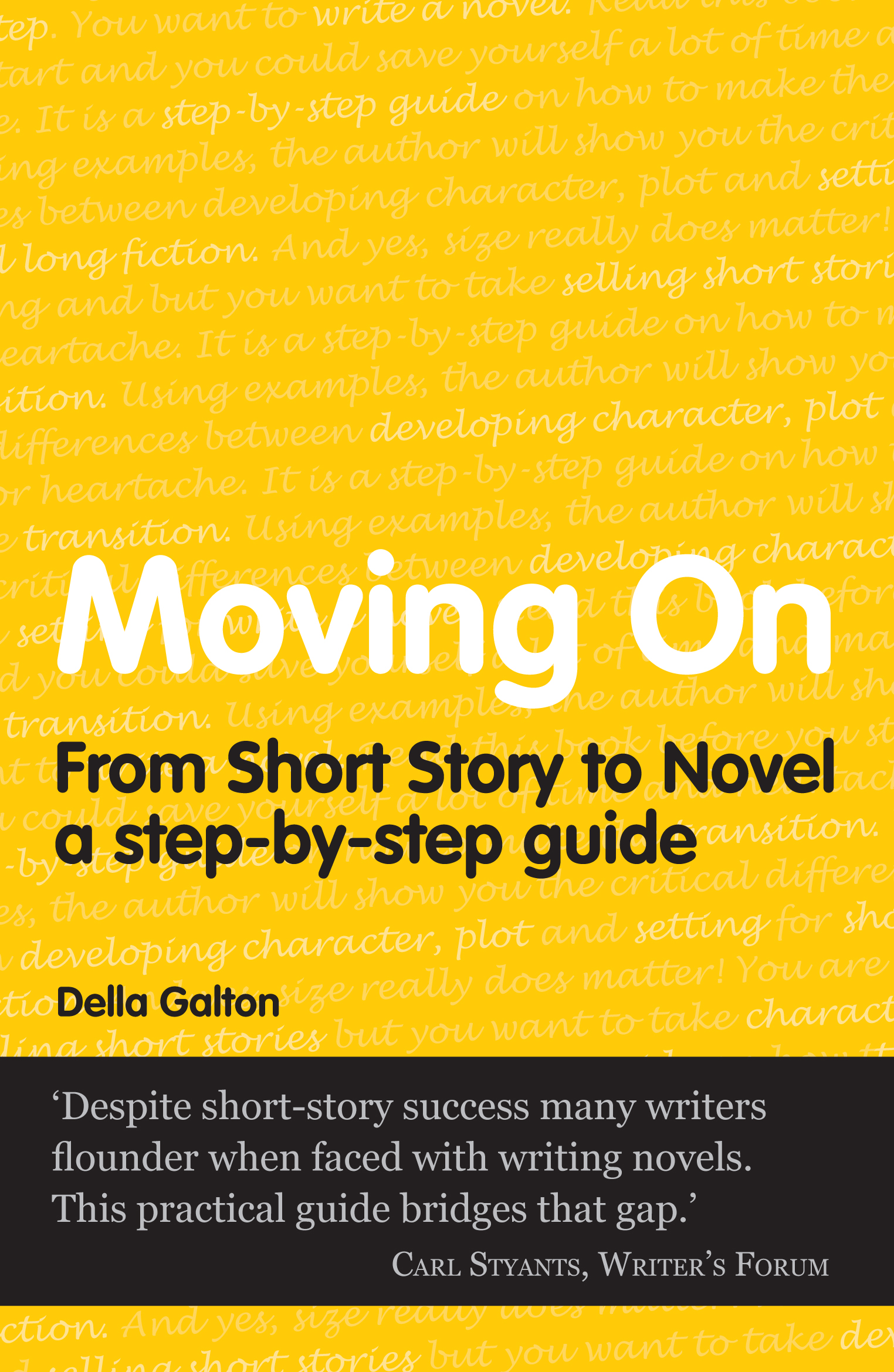
If you haven’t won you can buy a signed copy of Moving On – Short Story to Novel for a discounted price of £7.99 plus post and package by emailing me on dellagalton@yahoo.co.uk before the end of January.

Don’t forget.  If you are interested in exploring Flash Fiction in more detail I am running a Flash Fiction course in Bournemouth on Saturday 28 April.  The course runs from 10.00 a.m. till 4.00 p.m. and costs £35.00

If you have entered this competition you are entitled to a £5.00 discount on the cost – just mention this when you email me to book.


Flash Fiction Competition

Update on 250 word competition – The New Year Resolution that went wrong!

Oh my gosh, that’ll teach me to organise a short story competition and only give myself a day to judge it!

I was overwhelmed by the volume of entries.  I received 31 stories.  They were a great selection. Thank you so much for entering.

The most popular themes were:

Giving up drinking.

Giving up smoking.

Dieting/getting fit.

Finding a new man.

Combinations of the above.

Any of these could have worked as long as they had an original angle. The main two reasons stories didn’t make the shortlist were because:

They had a weak ending.  Lots of them started really well, and then tailed off.

They weren’t original or didn’t have an original slant

I ended up making a shortlist. My top six stories were written by the following writers:

Ginny Swart, Veronica Ryder, Karla Brecon, Caroline Hall, Hilary Forrest and Alyson Hilbourne.

The winner will be announced and available to read on this blog at 4.30 pm today.

Not that I like to keep you in suspense!

While you’re here though!

Check out my Flash Fiction Course

If you are interested in exploring Flash Fiction in more detail I am running a Flash Fiction course in Bournemouth on Saturday 28 April.  The course runs from 10.00 a.m. till 4.00 p.m. and costs £35.00

If you have entered this competition you are entitled to a £5.00 discount on the cost – just mention this when you email me to book.

And, and and and and ….If you haven’t won you can buy a signed copy of Moving On – Short Story to Novel for a discounted price of £7.99 plus post and package by emailing me on dellagalton@yahoo.co.uk before the end of January.

Win a signed copy of my new book! Moving On – Short Story to Novel

Want to win a signed copy of my new book?

Available for pre-order from Amazon, price £9.99

Just for fun – I am having a short story competition.  All you have to do – she says gleefully – is to write a 250 word short story on the subject of,  The New Year Resolution That Went Wrong.

Come on, you know you can do it. And who needs a long Christmas holiday anyway! Don’t let your brain go to sleep.

There is no entry fee. Just put your story in the body of an email and send it to me.

I will publish the winner on 5 January, 2012, which is also publication day. You can send your entry any time between now and 10.00 am on 4 January. What are you waiting for!


  • 1
  • 2
Tell your friends!

© Della Galton All rights reserved.
Powered by Cloudbase Media