Welcome to Della Galton’s website

The Short Story Writer’s Toolshed

The Short Story Writer’s Toolshed was first published as a series in Writer’s Forum. I later decided to compile it into a handy little book. Here is an extract I thought you might like.

How The Toolshed Works

Every writer has certain tools at their disposal. We all in fact use the same tools when it comes to writing short stories, but we’re not necessarily that adept when we set out. This book is a little like an instruction manual, which I’m hoping might save you some time.

So, what exactly do we have in our toolshed? Well this particular toolshed is divided into shelves and on the shelves you will find the following tools:

Shelf one: ideas and getting started; shelf two: plot; shelf three: characters and viewpoint; shelf four: dialogue; shelf five: structure; shelf six: time span, pace and theme; shelf seven: flashback; shelf eight: cutting and editing; shelf nine: putting it all together; shelf ten rejection and motivation.

If you like you can work through the entire toolshed, or you might prefer to go straight to the relevant shelf. But to begin let me take you on a whistle-stop tour of the toolshed. Let’s examine what a short story actually is, as well as having a quick look at some of the available tools.

A Look Around The Toolshed

What is a short story?

This might seem like an odd question to ask in an ebook for writers. We all know what a short story is, don’t we? It’s a story that’s short; it’s less than the length of a novel; it has a beginning, middle and end and gives the reader the chance to spend a brief time with some interesting characters. Simple enough, you might think. But actually no, it’s not that simple at all.

It’s shorter than a novel, yes, but there’s so much more to writing a successful short story than size. The techniques used, the tools if you like, are exactly the same as the tools for writing a novel. Except they are used differently!

In this ebook which I hope will be useful to both beginners and more experienced writers alike we will look at how to use the tools we have at our disposal.

We will look at not just what makes a story work, but also examine the reasons why some stories which on the surface have all the right ingredients don’t work.

To my mind, writing a short story is like painting in miniature. It should have all the depth and colour that a full size canvas allows, but there is no room for waffle. Don’t make the mistake of thinking they are easy to write. Many successful novelists will tell you that short stories are one of the hardest forms of writing. They are a craft.

Length

The length of a short story changes with the fashion. If you are writing to sell, then your market will dictate what length you should aim for, be it magazine or podcast or radio. If you are writing for a competition then the rules will dictate the length. Even if you are writing for your own pleasure and have no desire to see your work in print, it is wise to set yourself a word limit. This is because length is relevant to the elements of a short story. For example, you’ll have trouble writing a story of 1000 or 2000 words if you have a cast of ten or twelve characters.

They’ve got shorter than they used to be. A quick search of the internet will reveal short story competitions that start with a length as short as 60 words. In fact, I even found one which had a word limit of 6 words. But most short story competitions these days have a maximum word length of around 5000 and this is probably on the long side. The vast majority of competitions ask for short stories of between 1000 and 3000 words.

Magazine lengths are similar. Podcasts may go a bit longer. So even if you are not setting out to place your work, then it might be as well to limit yourself to a saleable length just so you can get into the feel of writing something shorter. If you find your stories feel stretched at 3000 words then you might want to reduce it, but the best way to find out is to write a few. See if the pace suits you. Find the length you are comfortable with and then stick to it until you feel you have mastered the art of fitting your plot and characters into that space.

Characters

You won’t have room for dozens of characters. In my experience one or two main characters are usually enough. You may of course need supporting characters, but look at them as bit part characters who don’t necessarily need to be fully developed or even named. That doesn’t mean they should be stereotypes. There are many ways of making minor characters spring to life with very few words.

We will look at this in more detail when we get to characterisation. Your main character or characters must be fully developed though. If they are not the reader won’t care about them. If she doesn’t care about them and cannot emotionally engage with them, there’s a good chance she won’t read on.

Interestingly, to return to the subject of length for a moment, when I first started writing stories longer than 1000 words I assumed I’d need more characters to get the extra length, but I quickly realised that it wasn’t about adding characters it was about developing the ones I already had. This is one of the most important things I’ve ever learned about short story writing. I later realised it applied to serials and novels as well.

So to summarise, if you are writing a short story of 1000 – 2000 words you probably won’t need more than a couple of main characters and one of them should be main, which takes us nicely on to viewpoint.

Viewpoint

I’m not going to go into the different types of viewpoint at great length here. I will cover those in the viewpoint section (or should I say on the viewpoint shelf). But just in case you’re new to writing, viewpoint simply means whose eyes we are experiencing the story through.

For example, let’s assume we are writing a story about a marriage break up where the wife has had an affair and left her husband. There are three characters in this story: the wife, her lover and the husband. The story might be told through the eyes of any of them, if it is the wife, then she will be the viewpoint character. Not only will we see the action of the story through her eyes, but the story will be coloured by her viewpoint.

It is traditional in a short story to stick to one viewpoint, although you may change if you have a good reason. The viewpoint character also tends to be the main character. There are certain things that should happen to a main character in a short story, one of them being that they should experience some kind of change.

Dialogue

Dialogue is fictional speech. It is very important. It characterises and moves on the plot and gives life to a story. It’s possible to write a short story without it but again you should have a good reason – and by this I mean a reason linked to the story, not just because you don’t fancy the idea of writing dialogue!

When you are working within the very tight framework of a short story, dialogue is even more important. You can, for example, start a short story with dialogue and throw the reader straight into the action and also set up what your story is actually about.

Let’s take the example of the wife, husband, lover story. You might start it like this:

“I’m leaving you, John. I’m sorry, but it has to be like this.” Kathy knew her voice was calm, but inside she was shaking.

“You’re not going anywhere.” He took a step towards her and she was glad the table was between them. “If you think I’m going to let you walk away with that scumbag you’re more of an idiot than I thought.”

This is not particularly subtle, but it’s a swift way of setting up a scene. Already we have a glimpse of the couples’ history as well as what is happening now. Kathy is obviously afraid of her husband and it looks as though she has good reason. You can show a lot of information through dialogue that would take considerably longer in narrative.

Plot

A short story is a snapshot, a glimpse into a character’s life but that doesn’t mean it shouldn’t have a plot. Without one it will probably be too slight. A plot is basically a series of events and in a short story it tends to start with the main character experiencing a problem, which by the end he or she will have resolved. There should be some surprises along the way; otherwise you’ll end up with a linear sequence of events. For example, a basic crime story might be: crime is committed, crime is solved. This is not a plot. In order for it to be a plot, there must be surprises along the way.

Maybe the person committing the crime is not who we thought, or maybe we learn along the way their reasons are not selfish but altruistic. Either of these scenarios would turn a sequence of linear events into a plot.

Setting

You won’t have room for reams of description, but you must have a setting. Your characters cannot interact with each other in a vacuum. Setting needs to be skilfully interwoven. To go back to our husband, wife story, the mention of a table indicates that the story is taking place indoors, possibly in a kitchen. Further snippets of setting would need to be given.

Pace and time span

The pace of a short story is swift. There isn’t time for lengthy set up; the reader should be dropped straight into the action, which must be relevant. Then the story will proceed quickly to its conclusion. A short story by its nature will often only cover a short time-span in the life of the character, say an afternoon, or possibly a few days.

Flashback

Just because your story takes place over a short time span doesn’t mean that you can’t bring in past events, via flashback.

Structure

Structure, pace and time-span are linked. For example, let’s assume you’re using a diary structure. You could divide your story into a series of sections, each headed up as a different diary entry. In this way the story can move seamlessly over a longer period of time.

Theme

For me, the theme is the glue that holds the story together. A theme dictates what the story is about. Is it loneliness, revenge, healing? If you know before you begin, then it will help you to stick to the point and only include what is relevant. Theme is a great help when it comes to cutting and editing. It will help you ensure your work is tightly written.

***

This is the end of the extract. If you would like to read more of the Short Story Writer’s Toolshed you can purchase it for your Kindle for £1.99 here.

If you are reading this between 12th and 19th April, 2016 you can get it at a bargain price of 99p. Here.

If you prefer a ‘real’ copy. It is also available in paperback for £4.99, Here.

Happy writing.

Very best wishes

Della xx
The Morning After The Life Before

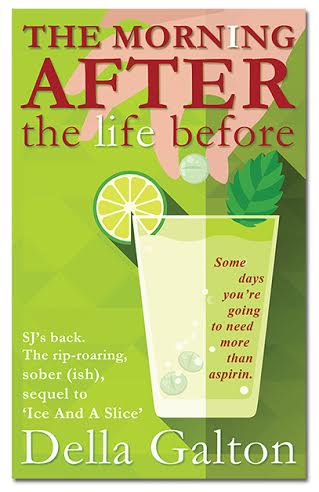
It’s publication day for me. The Morning After The Life Before is now out in the world. Oh gosh. I don’t think there is anything quite as scary.  I used to think that finishing the book was the end, but it isn’t, is it. It’s just the beginning and the really scary bit is waiting to hear what people actually think of it! And if anyone’s a fast reader that could be very soon. Gulp.

I am very proud of this one though. The Morning After The Life Before has a lot of me in it. As all of our stories do, don’t they. Not necessarily the bits you think though. A very dear friend of mine once told me I wrote in code. He meant that there were huge chunks of truth in my writing but they were mixed up with a lot of fiction. And so it is with this one.

I think I mentioned that I wasn’t a dominatrix, didn’t I! That’s the only clue you’re getting. There are some subjects in this novel I never thought I’d touch upon. That really is the last clue you’re getting.  I can tell you though that what I don’t know I research thoroughly and I think that the emotions of what I write about are authentic. I hope you’ll see that if you do decide to read it.

Here’s the first chapter for free.

Chapter One

SJ gave a very deep sigh and glanced once more at the phone. For the last two hours and twenty-two minutes, not that she was counting, the phone had become the focal point of her front room. No, not just her front room – her entire life.

The phone had sat in its cradle on the table by the television. She had sat on the sofa next to it, flicking surreptitious glances at it, while pretending to read Cosmopolitan and occasionally getting up to check that the display was still working in case there was a power cut.

“What if there is a power cut?” she’d said to Penny when they’d done the handover. “I have the plug-in kind of phone – it won’t work unless it has power.”

“I wouldn’t worry – they’ll phone back.”

“But what if they don’t? I thought you said it’s a matter of life and death. What if they’ve spent the last three weeks plucking up the courage to phone the helpline and this is their final desperate plea for help and then no one answers because there’s a power cut. What if they die?”

“They might die anyway,” Penny pointed out, with unnecessary sharpness, SJ thought, considering she was only trying to get things right. And considering that Penny had actually said – when she’d been trying to persuade SJ to sign up for phone service – that the helpline was a matter of life and death.

“We are the fifth emergency service,” she’d said, a mite pompously, SJ had thought. Especially as she hadn’t bothered to explain what she meant. Clearly, as everyone knew, police, ambulance and fire were the first three emergency services. But what was the fourth? And why weren’t they the fourth?

It was slightly crushing to realise that the Alcoholics Anonymous helpline couldn’t be all that important. Not if they were only the fifth.

“What if I miss the phone ringing because I’m out of the room – say I’m in the bathroom?” SJ had asked.

“I thought you said you had a carry-around phone.” There was a gleam of triumph in Penny’s voice.

“Yes I do, but if there was a power cut I’d be using my back up phone. My in-case-of-emergency, old fashioned, plug-straight-into-the-mains phone, wouldn’t I? So I won’t be able to carry that around, obviously.” SJ sighed patiently and resisted the urge to add, ‘so what have you got to say to that then, Miss Goody Two Shoes, know-it-all, pompous Penny?’ Which she would have done without hesitation once when someone like Penny wound her up.

But which she couldn’t do now because she was no longer that person any more. She was no longer judgmental and impatient and prickly – which she’d only ever been because she was lacking in self-esteem obviously. These days, she was serene and calm and peaceful. Serenity was her middle name. She’d considered, in fact, making Serenity her actual middle name by deed poll. Only there didn’t seem much point because no one ever asked you what your middle name was anyway. And deed polls were probably expensive.

“Someone might be trying to get through right now while we’re talking,” Penny said wearily.

“Right. I see. Yes, okay. Point taken.”

“Someone might be dying right now. So maybe if I could just put the phone down, SJ? Please – if you’re ready to take over. Are you?”

“Of course. Sorry. Um bye.”

“Goodbye, SJ.”

Penny disconnected. The phone rang almost immediately and SJ was so surprised she dropped the handset. Then when she reached to pick it up she knocked over her cup of calming peppermint tea which was on the glass-topped coffee table between her and the phone. Oh crap. The phone was still ringing. The tea pooled across the glass and began to drip down the wooden leg.

Double crap. What if there was some raging, desperate, suicidal alcoholic on the other end of the phone? What if they were pissed off because they hadn’t been able to get through? What if they shouted at her? What if they were an utter maniac? Don’t judge, SJ. Deep breaths, in, out, in, out, in, out. Try to stay calm. Serene and calm is where it’s at. If you feel serene your voice will be serene. Nothing to it. She punched the green button with a finger, intending to say, ‘Yep,’ in that ultra-cool voice that ultra-cool receptionists – usually the ones that worked in PR and marketing companies – were fond of using.

What actually came out of her mouth wasn’t yep. It was yip. She tried again. “Yip, yep, yip, yap.” Oh crap. Now she sounded like the next door neighbour’s Jack Russell terrier.

“SJ it’s me.” Penny’s voice held a note of incredulity. “I’m just – er checking that the phone line transferred okay. “Is – everything all right?”

“It’s fine. Absolutely fine. Couldn’t be better. Sorry, I was practising my – um – my dog whisperer voice. I’m doing evening classes.”

“You’re doing evening classes in dog whispering!”

“Yep. I mean yip. Yip yip, yap, yippety yip – ha ha! What do you think?”

“Very – er – authentic, but do you suppose you could do it when you’re not answering the helpline?”

“Of course. Sure. Sorry.”

SJ disconnected and put her head in her hands, before realising belatedly that her elbows were now in a pool of peppermint tea. Fantastic. Why had she ever thought she could do this? She must be mad. She shouldn’t have volunteered. She should have contented herself with making tea at meetings or acting as treasurer. Even she couldn’t make too much of a hash-up of that. What did she know about giving up drinking anyway? What was she going to say to someone if they did phone up the AA helpline? Oh it’s easy – you just swap your vodka for a mug of peppermint tea. Nothing to it. No one was going to believe that, were they? Everyone knew it wasn’t easy to give up. Not when you’d been drinking on a daily basis for months, or years, or possibly even decades.

She’d only managed to give up because she’d had an utterly brilliant counsellor who she’d gone to see, week after week after week. And let’s face it she probably wouldn’t have done that if he hadn’t also been utterly gorgeous and if she hadn’t also had the most humungous crush on him. Would she have given up drinking at all if she hadn’t fallen in love with her counsellor?

Ironically, it was the thought of the utterly gorgeous Kit that snapped her out of the beating herself up mood she’d fallen into. She cleared up the peppermint tea spillage – grabbed her iPad from the kitchen and found her latest To Do list. At the top of the page she wrote:

Things not to say when answering the AA helpline

1. Yip or yap, or yippety yip – or any possible derivative of the word yip.

2. Yep. (Mainly because it was very hard to inject a decent amount of empathy and sympathy and understanding into the word yep. Yes with a question mark would be better – or yeah if you stretched it out a bit or maybe even yo – that was a pretty cool word around youngsters, these days. Except that yo didn’t sound very sympathetic either. Yo dude – you gotta problem with your drinking? Hey that’s tough. And anyway she wasn’t exactly young. Forty-two might be the answer to life, the universe and everything – but as an age it was well over the hill. How on earth had she got to forty-two anyway?)

3. “Hello, this is the Alcoholics Anonymous helpline – how can I help?”

That would have made the most sense. But unfortunately she couldn’t say that in case it was her mother phoning, or her sister, Alison, or her best friend, Tanya. Not that her mother and her sister and Tanya didn’t know she was a recovering alcoholic. But there were people in her life, these days, who didn’t know. And it wasn’t the sort of thing she wanted to advertise when she answered her own phone. That was the trouble – she had no way of telling whether she was answering a call diverted from the helpline or whether it was someone who wanted to speak to her. It was a conundrum.

Although not that much of one because the phone hadn’t rung for – what – coming up for three hours now anyway. Soon her phone service shift would be over and she could go back to doing her housework or planning her Poetry and a Pint session. In fact, what the heck, why didn’t she do that now? What was she waiting for?

She had barely reached the door when the phone began to ring. SJ stared at it in surprise. She wasn’t imagining it, was she? It was ringing? She took a deep breath and strolled back into the room. This time she was going to get it right. She would be pleasant, polite, with a touch of concern. She would be relaxed, calm, the model helpline attendant. She felt her chest swell a little with pride at the thought. This was her chance to make a difference.

She picked up the phone. “Hello, can I help you?” Oh so simple – why hadn’t she thought of that before?

“Hello,” the girl’s voice was tearstained. “Is that the AA?”

“Yes it is.”

There was a small silence and SJ wondered if she’d sounded sympathetic enough. Maybe she’d been a bit matter of fact, or even abrupt. She sat back down on the sofa, pressing the phone close to her ear. “Are you okay?” she said softly.

“I don’t think I am,” said the girl and now she sounded so scared and so vulnerable that SJ forgot all about herself and how she was coming across and she just wanted to say something, anything that would help – even if it was only for a few moments, a few seconds.

“You’ve done the hardest part,” she said. “You’ve just phoned for help. You’ve made a phone call that could save your life. I know how hard it is to do that. I did it myself once.”

“Did you used to drink a lot then? I mean, really a lot. I don’t just mean wine. I mean, well, bottles and bottles of voddie?” The girl’s voice grew a little fainter and SJ realised she’d drawn away from the phone. She could hear sounds in the background, the clink of a bottle against a glass and the unmistakable glug of liquid.

“Are you drinking now?”

“No,” the girl said. There was a pause and SJ heard her swallowing and the slur in her voice when she spoke again. “No, I’m not drinking. I’m not phoning for myself. I’m phoning about a friend.”

“And is your friend able to come to the phone, honey?”

Another pause to swallow. “No – not really. She’s er… she’s asleep. Maybe when she wakes up.”

“Sure,” SJ said, knowing there was no friend. “So tell me about you. Are you okay?”

There was another long pause followed by a little beep and SJ realised as she held the phone away from her ear again that the display was blank – that the girl had hung up. She sat back on the sofa feeling terribly sad and also a little sick. So her very first call and she’d done nothing. Nothing at all. Somewhere out there was a very scared, very lonely, very drunk young girl and she – SJ – had been utterly powerless to help her.

***

And if you’d like to read on for a mere £1.99 – less than the price of a glass of Chardonnay! Please click here.

Thank you 🙂


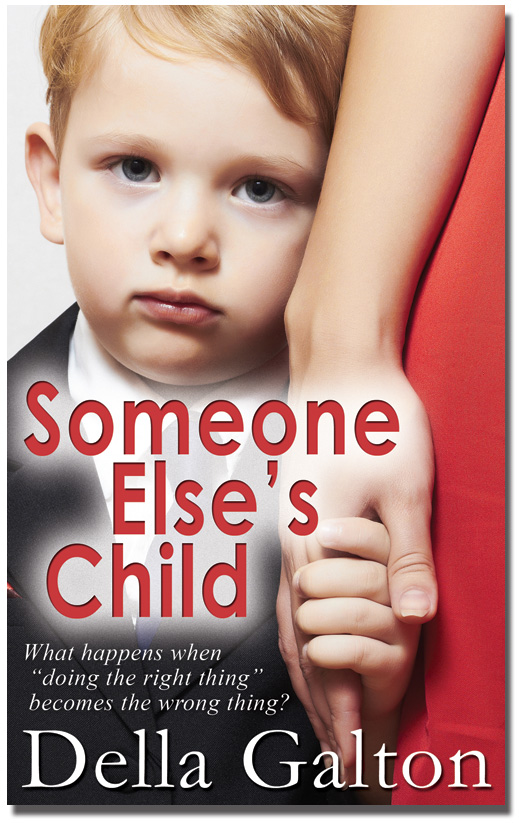
Someone Else’s Child

My new novella, Someone Else’s Child, recently hit the virtual shelves. Here’s the first chapter just in case you fancy a read. I like this little book – it was one of the first longer stories I ever wrote and there is a lot of me in it. It’s about friendship and about upbringings and about loving children that aren’t yours. And I cried when I wrote parts of it so I think it’s pretty emotional.  Please do let me know what you think.

Chapter One

Jo has been my best friend for as long as I can remember.

We have totally different backgrounds, Jo was brought up in a children’s home and my mother had a chain of hotels, but somehow we clicked right from the beginning. Perhaps, because for different reasons, we both felt isolated as children. Jo didn’t have any parents, and mine were absent most of the time. My mother, because the only thing she was truly passionate about was her business, and my father because he couldn’t cope with this fact and had left when I was small to marry a more ‘ordinary’ woman.

Jo and I aren’t alike in looks either. Jo is olive skinned, dark haired and curvy and I’ve always been what she calls a skinny blonde. I’m not skinny – well not these days anyway – and my hair is the kind of white blond that no one could envy because it comes with pale eyelashes and skin that burns at the first hint of sunlight. Looks-wise, I’d swap with Jo any day.

One of my most vivid childhood memories is of playing with Jo on the grass verge outside the Barrington Hall Hotel, which was where I lived at the time. The hotel was at the end of an unmade road, but only cars visiting us ever used it, and I was allowed to play out there unsupervised. My mother wouldn’t have been too happy if she’d known who I was playing with – she didn’t approve of Jo – but she wasn’t likely to find out, she was busy doing one of the endless things she did in the hotel.

Anyway, the sun was shining and Jo and I were stretched out on our backs. Jo was chewing a blade of grass, her face thoughtful, but as I glanced at her, she spat it out and sat up.

“So, are we going to do this blood sister thing then, Lainey? Did you get the stuff?”

I was really Elaine, and she was really Joanne – but those names were for other people. To each other we’d always been Lainey and Jo.

We’d been planning to become blood sisters for a while, but now the day was finally here I was a little bit scared. Not that I was going to admit to this, of course.

I nodded and sat up too and fished in my pocket. “I didn’t know whether scissors would work, so I got some of Mum’s needles from the sewing box as well.” I unwrapped the nail scissors and then more carefully a little pack of needles from the tissue paper. “Otherwise I could get a knife from the kitchen drawer.”

“No, the needles should work.” Jo’s eyes were alight with expectation. “Get one out. Don’t drop it.”

“I’m not going to drop it.” I slid one out and held it between my finger and thumb. I could hardly feel it, but it glinted silver in the morning sun. “Do you think it’ll hurt?” I stabbed it cautiously into the back of my hand.

“Nah. Not like that. You have to prick your thumb. That’s what they did in my book. Give it here.”

I handed it over obediently, watching with apprehension as Jo stabbed her thumb. She had to do it a couple of times because at first the skin just broke without bleeding, but then finally she got a drop of blood on the fleshy bit.

“Did it hurt much?” I asked, doing my best to sound casual.

“Nah. Come on. Hurry up and do yours. I’ll squeeze a bit more blood out.” I took the needle carefully. There was a trembly feeling in the pit of my stomach. This had been Jo’s idea, a way of proving that we were best friends who would never be separated, blood sisters for ever and ever. Not that I had to prove it, I knew it anyway, but it had been important to Jo so I’d gone along with it.

“Are you sure it doesn’t hurt?”

“Just get on with it. And hurry up. I’m bleeding to death waiting for you.”

We both giggled and it broke the tension. I pricked my thumb. It stung, but aware of her gaze, I pushed the needle a bit harder. A red bead appeared and for a moment I couldn’t take my eyes off it. My stomach was crunching and churning and the sun was hot on the back of my neck and I thought I might be sick.

“Right then.” Jo wriggled a bit closer and we pressed thumbs together. “Blood sisters for ever.”

“Friends for ever.” We gazed into each other’s eyes. “Even when we grow up and have kids of our own, we’ll still be best friends, won’t we?”

Jo nodded solemnly. “No one will ever come between us.”

I nodded too. “Never, ever, ever.”


If you’d like to read on for less than the price of a cup of coffee please click here. Thank you.

Meltwater

Novellas are the new novels, apparently. Can’t remember where I saw that. But just in case it’s true, I thought you might like to see my latest novella, Meltwater, which is all about dysfunctional families. (Are there any other kind!) Here is Chapter One. Happy reading. 🙂

Chapter One

“I’m leaving your father.” Mum’s voice on my answer phone was as clear as the winter sky outside my bungalow window, but I still couldn’t believe I’d heard her right. I pressed rewind and played the message again.

“Hi, Nina, I just thought you ought to know, I’m leaving your father.”

That was it. No preamble, no explanation. She didn’t even sound overly concerned about it. What kind of a message was that to leave on my answerphone at eight o’clock on a Saturday morning? Sometimes I could have happily throttled my mother.

Picking up the phone I pressed the memory button that stored my parents’ number. I let it ring ten, twelve, fourteen times. No answer. Yet she’d only left that message twenty minutes ago. I’d been out doing the horses’ morning feeds, as she’d known I would be. My parents weren’t early birds. They weren’t even normally up at this time of day. Perhaps she’d already left Dad and he didn’t know because he was still in bed asleep. My mind raced through the possibilities. I was about to try again when the phone rang. I snatched it up.

“Mum?”

“No, it’s me, Ingrid,” came the clear, bright voice of my sister in law. “Sorry, have I called at a bad time? I’ve been trying to catch you for a couple of days.”

“You’re OK.” I sighed. “Mum just left a bit of an odd message on my answerphone, that’s all.”

“What sort of an odd message?”

“Well – what she actually said was that she was leaving my dad.”

“You mean getting a divorce?” I could hear the surprise in her voice. “I didn’t realise they were having problems, your parents?”

“They’re not – well at least I didn’t think they were anyway. I’ve probably got the wrong end of the stick.”

“Maybe they’ve just had a row or something?”

“Yes, that must be it,” I said, although that seemed almost as unlikely as them splitting up. As far as I knew my parents didn’t have rows. Mum told Dad what to do and he did it. It had been the same for as long as I remembered. “I expect I’ll find out soon enough,” I said thoughtfully. “Anyway, what were you trying to get hold of me for?”

“Just about the arrangements for Tuesday.” She hesitated. “I’m going to the remembrance garden on my way home from work and I wondered if you’d like me to pick you up on my way by?”

“Yes, please, if you don’t mind.”

“Of course I don’t mind.” Her voice was warm. “It’s easier, isn’t it, if we go together?”

“Yes. Yes it is. Thanks.” I swallowed. I’d been trying not to think about Tuesday. The first anniversary of Carl’s death – my husband and Ingrid’s twin brother. Sometimes it felt as though he’d been gone forever. I had moments of panic when I couldn’t remember the details of his face. Other times it seemed as though no time at all had passed. I still turned over in bed, reaching for him.

“Are you OK?” Ingrid asked.

“Yes. Yes I’m fine.”

“The other thing,” she continued, “was that I wanted to ask you if Stewart Taylor ever got hold of you about booking a riding lesson for Oliver? You remember me telling you about little Oliver in my class? The kiddie with the problems?”

“They’re coming this morning,” I said, relieved at the change of subject. “Pop in for a coffee if you’re free later and I’ll tell you how it went.”

“Yes I’d like that. See you then.”

I put the phone down and pressed redial without much hope. Still no answer from my parents. They lived two hundred miles away, which had its advantages, but it also meant I couldn’t just nip round and find out what was going on. Not that I could have dropped everything anyway. Not with five horses to look after and a day of people booked in for lessons.

I hovered by the phone for a bit longer, but it stayed silent. And eventually I gave up, pulled my woollen hat back on, buttoned up my wax jacket and went outside again. It was a bright, icy morning, the sky an arc of blue over my head. My breath puffed in the air as I crossed the lane back to the stable yard, which was a five second walk from the bungalow Carl and I had bought five years ago. I’d been tempted to sell up and move away when he’d died. Away from this Dorset village and all the memories it held, maybe somewhere a bit closer to my parents inCornwall. I hadn’t thought I’d be able to bear staying where there were so many echoes of Carl. So many ghosts.

It had been Ingrid, who’d persuaded me not to.

“You can’t sell the horses,” she’d said, her voice sharp with grief “It’s not what he’d have wanted. You know it isn’t.” She’d looked at me, with the same blue eyes as her brother and added more softly, “He had two great loves in his life: you, and the horses. You might think it’s impossible, but it is the horses that will keep you sane. Believe me.”

Ingrid had been right I thought as I picked my way across the frozen mud in the field and broke the ice on the water trough. The horses had kept me sane. The routines of looking after them, the sheer physical hard work of them, had kept the structure from crumbling completely from my life.

I put out some piles of hay. The grass wasn’t much good at this time of year – not enough nutrition for my two thoroughbred crosses, Anton and Buska. Or the two horses that belonged to a couple in the village. They hardly rode in winter, just kept their horses at full livery, which meant they paid me to do everything, including ride them, which suited me fine. Not because I needed the money, that was one problem I no longer had, but because then I didn’t have to make small talk about trivia. I’d never been very good at small talk; Carl had been all the social life I’d needed.

Ingrid said I was in danger of turning into a recluse. “You never go out, you never mix with anyone,” she told me often. “You can’t hide yourself away forever, you know.”

“I teach four days a week,” I’d protested. “I see plenty of people.”

“That’s not the same,” she’d said. “You’re not going to meet anyone teaching.”

“I don’t want to meet anyone,” I’d said stubbornly.

“I’m not suggesting you jump headlong into another relationship,” she’d said. “But you could do with making some friends, Nina. It’s not good for you to spend so much time alone.”

It had been Ingrid who’d persuaded me to give Oliver a riding lesson. I didn’t usually teach kids. She was a primary school teacher and he was in her class. Apparently he’d become very withdrawn when his mother had walked out on him and his father six months earlier.

“He’s only eight. Far too young to lose his mum.” Ingrid’s voice had been indignant. “I’m very worried about him. He used to be such a bright little thing and now he hardly speaks. I’ve had a word with his dad – nice man – and apparently the only thing he shows any interest in is horses.”

I’d been sceptical at first, half suspicious that Ingrid was more interested in me meeting Oliver’s father than me teaching Oliver to ride, but eventually I’d given in. Ingrid could be very persistent when she wanted something and besides I knew I wouldn’t have coped without her this last year. It would have seemed churlish refusing to do this one small thing in return.

I went back to the stables and changed the horses’ night rugs for their day ones, fumbling with buckles and clips. Everything was harder work when it was cold. Then I put them all out in the field, except Leah, the pony that Oliver would ride for his first lesson. I leaned on the gate, watching for a moment, as the horses milled around the field, ears flattening, tails swishing, snorting white plumes of breath into the air as they sorted out whose pile of hay was whose.

Then I went back home to check the answerphone. There was a message from my three o’clock lady cancelling because she had a cold, but there was nothing else from Mum and there was still no answer when I tried phoning her. I didn’t even know the numbers of any of their friends, but then I suppose that wouldn’t have helped much. I could hardly have just phoned up and said, “Hey what’s this about Mum and Dad splitting up?”

I stood in the kitchen warming my hands on the Aga and thought about the last time I’d spoken to Mum. It had been two, possibly three weeks ago. We kept in touch regularly, if sporadically. She’d been moaning about Dad then, I thought, frowning. Something about him mooching around the house and never helping her with anything. Mum had always been house proud, but according to Dad she’d got worse since he’d retired two months previously.

“I’m not even allowed in some rooms until after four o’clock,” he’d grumbled, when she’d finally handed the phone over so he could speak to me. “And she makes me wear my slippers everywhere. Can you believe that?”

I’d laughed. “She doesn’t mean it, Dad.”

“Oh yes, she does. If I’ve got my gardening clothes on she puts a piece of newspaper on the kitchen chair before I’m allowed to sit on it.” He’d lowered his voice and added, “She’s obsessed, Nina. Obsessed with cleaning.”

“I expect she’s just adjusting to you being around more,” I consoled, and he’d sighed and said, “I hope you’re right. I don’t know if I can stand this much longer.”

Mum’s message couldn’t be anything to do with that, surely, I thought, glancing round my messy kitchen. I took after Dad where tidiness was concerned. There was mud on the floor by the back door, a pile of plates in the washing up bowl from last night and you could hardly see the table for bits of paper. The stable yard was immaculate, but I didn’t bother with the house much. No-one except Ingrid ever came round anyway.

It was odd though that I couldn’t get in touch with either of my parents. I glanced at my watch. I couldn’t afford to hang around for much longer. I had five stables to muck out and I had to get Leah ready for Oliver Taylor’s lesson.

If you fancy reading the rest, please click here to buy for kindle. Thank you for reading.


Shadowman

Shadowman drop shadow

Just in case anyone fancies a preview of my new novella, Shadowman, here’s the blurb and first chapter 🙂

Karen and Rob’s show-jumping yard is in trouble. And so is their marriage.

Then someone starts sending anonymous letters. They seem to have an enemy who is determined to wreck their lives, but who? Is it a vindictive stranger or could it be someone closer to home? Karen is determined to find out before she loses everything she loves.

Previously only available as a large print paperback, ‘Shadowman’ by Della Galton is now available as an ebook novella from amazon (.co.uk | .com)

Chapter One

It was a beautiful day. Autumn was just beginning to steal across the forest, turning the trees shades of red and gold, but I shivered as I leaned on the five bar gate that separated our land from the tangle of woodland that lay beyond. I had to talk to Rob again. Find a way to make him understand how worried I was that if we didn’t do something soon, we were going to lose all that we’d worked for. It wasn’t going to be easy. Rob and I didn’t have the same attitude to money. I was used to having a nest egg in the bank – I needed the cushion of financial security. Rob had an easy come, easy go attitude. To everything, I was beginning to think.

The differences between us hadn’t been so apparent when we’d first married. But lately things had been tough, financially. We’d had a couple of big bills we hadn’t budgeted for. Murphy, one of our horses, had been spooked by a backfiring car and had run into a barbed wire fence. The vet’s bill had been horrendous and it had taken weeks of care to get him right again. Then we’d had a drainage problem in the stable yard and the builder had discovered subsidence, which had cost a fortune to sort out. We’d used our savings and now we were deep into our overdraft and every time I raised the subject, Rob told me I worrying too much.

“Things aren’t that bad, Karen,” he said later that evening. “The bank’s hardly going to foreclose on us, are they?”

He smiled as he spoke, his eyes confident. There wasn’t a trace of grey in his black hair, not a trace of worry.

“We can’t just keep on borrowing. I think we ought to do something more positive.”

“Like what?” He raised his eyebrows and I took a deep breath because he definitely wasn’t going to like what I had in mind.

“We could sell a horse.”

“That’s not going to make much difference.”

“It would if it was the right horse. Ben Darley phoned me this morning. He saw you riding Shadowman at Lulworth last week. He wants to buy him.”

“Does he?” Rob’s eyes narrowed speculatively. “What’s he offering?”

I told him and he whistled. “If he’s that keen, then he obviously thinks the horse is going to be as good as I do. Excellent.”

“So you’ll think about it?”

“No way. I’m not selling our best horse. It would be madness.”

I sighed and he came round the table and took my hands. “Look at it this way, Karen. If Ben thinks he’s worth that much now, then he’ll be worth even more by the end of the season. I’ve got big plans for Shadowman.”

His eyes were sparkling, his face animated as it always was when he talked about the horse he’d reared from a gangly long legged foal, and I knew I’d lost the battle, at least for now.

“It’s going to be fine, Karen, I promise.” He went across the kitchen, dragged his coat from the back door and shrugged it on. “Look, I’d better do the evening feeds; we’ll talk some more later.”

I nodded, even though I knew we wouldn’t. Rob hated talking about money. It was ironic really; Rob had been brought up with next to none and I’d always taken things like holiday homes, private schools and my own pony for granted, but I was the one who constantly worried about it.

The only thing Rob wasn’t laid back about was his riding. He dreamed of being in the British show jumping team one day and he was probably good enough to do it. The first time I’d seen him ride we’d been competing against each other in the same show jumping class.

“That’s the one you want to watch,” Mum had said, as we walked the course, and I’d looked at the tall, dark haired man strolling ahead of us.

“I don’t think I’ve seen him before. Who is he?”

“Rob Patterson, he’s a bit of a rough diamond, but he can ride. He beat Suzy Canton last week, effortlessly, if the rumour mill’s to be believed. Caused quite a stir.” She patted her hair and raised her perfectly plucked eyebrows.

I hadn’t taken much notice of the rough diamond bit. Mum’s always been a snob, but I’d watched Rob jump a perfect clear round, with growing interest.

He was an instinctive rider, so much a part of the horse, that it had been breathtaking to watch him.

“Must be a good horse,” I’d murmured, but Mum shook her head.

“It’s not his. Belongs to some small yard the other side of Salisbury. He’d never sat on its back until a week ago, apparently. The girl who normally rides it had a fall and couldn’t jump today.”

I remember thinking that it must have been a lucky round, but that was before he beat me by a good ten seconds in the jump off.

As we lined up to collect our rosettes, Rob glanced across at me and nodded an acknowledgment. “Nice mare, you’ve got there,” he said, and I could feel myself softening beneath his gaze. “See you again, I hope.”

And then he was gone, cantering ahead of me around the ring and I thought, oh yes, I’d very much like to see him again. And not just on a horse.

A couple of weeks later we competed against each other again – he won that class too – and this time he asked me for a celebration drink. That was how it had begun. We’d soon discovered we were opposites in every way. Looks, backgrounds and personalities. I’d led a pretty sheltered life, really, I’d had relationships before Rob, but I’d never fallen in love, never wanted to get married. He’d said it was the same for him, but I wasn’t so sure. Rob could have had his pick of women. Why had he chosen me?

Deep down, I’d always been afraid it wouldn’t last, that our differences would somehow drive a wedge between us, and I had a horrible feeling that it was beginning to happen.

Nothing’s ever as bad in daylight as it seems in darkness, is it? As I crunched across the grass to check the horses’ water troughs the following morning, I felt my spirits lift. Maybe Rob was right. Shadowman would certainly be worth a lot more if they had another good season and there was no reason why they shouldn’t.

Besides, it was hard to feel depressed out here in the crystal air. The first thick frost had silver-plated the grass and villages of bejewelled spider’s webs sparkled in the hedgerows. The sun, which hadn’t long risen, slanted across the fields, turning ice crystals to diamonds so it was easy to imagine you were walking through some winter fairyland, a place touched with magic instead of just our back field. I swallowed. I never wanted to leave this place; we had to make it work.

When the estate agent had showed us round two years ago, it had been a bright summer day and we’d fallen in love with the place. The house had needed a fair bit doing, but the stables were beautiful, a white painted block that was big enough for twelve horses. We planned to offer a livery service and we were both qualified riding instructors. We knew it would be tight while we got established, but we thought we could make it work.

The house was on the edge of the New Forest and had only been in our price range because the owner wanted a quick sale, although I was well aware that we couldn’t have afforded it had my parents not given us a hefty deposit as a wedding present and also acted as guarantors for our mortgage. This worried me too, because neither of my parents had accepted Rob at first. I’d felt their unspoken disappointment that I could have done better. They’d come round eventually when they’d seen how serious I was about him. They’d trusted my judgement, both about Rob and my certainty that we could make a success of running our own yard, my parents were like that, but it meant that I couldn’t afford to let them down. Anyway, they couldn’t help us financially any more, even if pride would have let me ask them. Dad’s business hadn’t been too good lately either.

I was on my way back to the stables when my mobile rang.

“Hi, Karen, it’s Lynne, any chance you could turn out my horses. Slight change of plan. I’ve got to go into work today; my boss has called some emergency meeting.”

“Is everything all right?”

“Yeah, well, I hope so.” Lynne sounded distracted and I hung up, hoping that it was. Lynne was our best customer. We had three of her horses, all at full livery, which meant that she paid for us to look after them, although she exercised them herself when she had time.

Another reason things had been a bit tight lately was because we weren’t full. We only had six liveries. Rob had also been pretty busy with Shadowman this summer, going to shows most weekends, which took a lot of time out and was expensive and even though they’d done well, it was mostly investment for the future, not real income.

At four Lynne’s Range Rover drew into the yard, and I smiled as she got out and came across. “Hi, how’s it going?”

“Er, not too good actually.” She brushed a hand through her immaculate blond bob. “Karen, I’m really sorry, but I’m afraid I’ve got some bad news.”

“Oh?” I felt a little shiver run through me.

“Yes, it’s work. That meeting this morning was to tell us that the company has just been bought out. There are going to be quite a few redundancies, and some relocations. I’m one of the relocations. I’ve got to go to Leicester.”

I stared at her in horror. “When?”

“Next month. It means I’m going to have to move the horses. I’m so sorry.”

I touched her arm. “Don’t worry; it’s not your fault. Are you OK? It must have been a huge shock.”

“It was.” She flushed and stared at the ground.

“When do you have to take them?”

“At the end of this week. I’ll pay up to the end of the month, obviously. But I need to put things in motion.”

I wished I could tell her not to bother about the money, but I couldn’t. Anyway there was no point in pretending to Lynne. She was well aware of our financial problems because her father owned the feed merchants, who we always paid at the last possible minute.

“How are things here?”

“So, so.” I forced a smile. “We’ll manage. We always do.”

“I’ll ask Dad to recommend you to his customers. You never know, you might get some replacements pretty quick.”

Even Rob looked worried when I told him this latest development.

“We’ll have to extend the overdraft,” he said. “You can go to the bank; you can sweet talk Jack Dibbens any day.”

I booked an appointment for the following week, but I didn’t feel in the slightest bit confident in my ability to sweet talk anyone as I walked into the branch. Jack Dibbens was young and very shrewd. He was going to see straight through my assurances that this was just a bad patch, especially as I wasn’t sure what we were going to do about it.

He was as polite as ever, though. He pulled out a chair for me and offered me coffee and asked after Rob. Then he steepled his hands on the desk and gave me a serious look.

“Well, I think I can guess why you’re here, Karen.”

God, did I look that desperate? I felt myself redden under his steady gaze.

“We’d like to increase our overdraft. We’ve just lost our best livery owner, which has rather put us out. She had three horses with us.” I stopped gabbling, aware of his growing seriousness.

“I’d heard that things weren’t going well,” he said, at last.

I didn’t answer. News travels like wildfire in our village. It was no surprise that he’d have heard that.

He looked at a sheet of paper on his desk. “However, I am prepared to let you go a bit deeper into the red, if you think it will help?”

“It will,” I murmured, feeling dizzy with relief. “We are going to sort this out. I’m going to persuade Rob to sell a horse.” I told him about Shadowman and he listened, frowning.

Then to my surprise, he said, “I think I’m with your husband on this one. Yards like yours are built on reputations. If you sell your best horse, then you might find you’ve killed the golden goose, so to speak.”

I stared at him. I hadn’t thought of it like that and he smiled.

“Just a suggestion. Karen, there is something else I think you ought to know.” He produced an envelope from a drawer in his desk. “The bank received this a couple of days ago. It was hand delivered.”

I opened it and found a single piece of paper with a typed message.

The Patterson’s are sinking fast. Even their livery owners are leaving. Can your bank afford to throw good money after bad?

 A Well Wisher.

Coldness spread through my stomach. It was hard to breathe. I met the bank manager’s concerned eyes.

“If someone sent you this, then why are you lending us more money?”

“I don’t like being told what to do,” he said simply and held out his hand. “Good luck, Karen.”

If you enjoyed chapter one and would like to read the rest you can buy it on amazon (.co.uk | .com) for a very reasonable £1.53. It’s also available in large print format.


A little ‘light’ reading

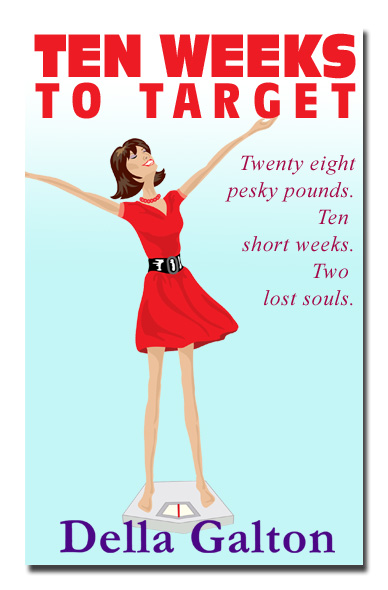
Ten Weeks to Target is my latest novella to make it into kindle. Actually it’s my first Della Galton novella to make it into kindle.  If you have ever set foot inside a slimming club it may appeal to you. In fact, if you have ever tried to lose a few pounds it may also appeal to you. It’s a light hearted romantic comedy – and I thought you might like a taster – so to speak!  So here is the first chapter to read at your leisure 🙂


Chapter One

“Why don’t you just get a bigger size, Mum?”

Very good question, Janine thought as she struggled to get the zip done up on her jeans.  Everything was so simple when you were fourteen, going on twenty-five, and could eat whatever you wanted without putting on a pound.  She glanced at Kelly, who was sitting on the bed, her dark hair gelled into hedgehog spikes and her blue eyes impatient.

“Because I don’t want a bigger size,” she said patiently.  “I want to fit into this size.”  Especially as your Aunt Alison will be looking like she’s just stepped off a catwalk, she could have added, but didn’t in case she sounded like a cow.

Alison was her sister in law.  Alison was perfect.   Well, she was in the looks department anyway.  She had the sort of cheekbones photographers raved about, not a trace of a laughter line despite being in her mid forties – blond hair that always looked effortlessly styled and – most enviably of all in Janine’s book right now – she was a size ten.

“If you’re getting all done up for Aunt Ali’s benefit then I shouldn’t bother,” Kelly went on with irritating perception. “She’s far more interested in discussing the ‘wedding of the year’ than in what you look like.”

“Yes, but that isn’t the point,” Janine said, forcing the button into place.  It would be all right if she didn’t sit down. And if she wore a long top then maybe she could leave the button undone.  With a bit of luck Ali would be in too much of a rush to stop long.

“What do you think?” she said, spinning round in front of her daughter.  “Do I look fat?”

“No-oo,” Kelly said, spinning out the O in the way she did when she was trying to think of something diplomatic to say.  “But you do look – er – uncomfortable.”

Uncomfortable was the understatement of the year, Janine thought wryly, and she hadn’t dared breathe out yet.  Maybe it would be more sensible to wear her black trousers.  At least they fitted properly.  The trouble was, her sister in law was going to think she didn’t have any other trousers.

And then the doorbell rang and it was suddenly too late.  She checked her hair in the mirror.  She always seemed to be too busy ferrying Kelly around to have time to worry about such things as hair appointments.   Her shoulder length brown frizz was in dire need of a cut and grey was coming through at the sides.  She was sure it hadn’t been there yesterday.  Why did it always have to come through just at the wrong time?

“Shall I let her in?” Kelly asked, standing up in one careless, graceful movement.

“Yes.  No, I’ll do it.”  Janine reached for her scent, at least she’d smell nice, but as she stretched forward, her jeans finally gave up the battle and tore along the crotch.

The bell rang again and Kelly hesitated in the bedroom doorway. “Oops, have they ripped?” she said sympathetically.  “Why don’t you wear your nice black ones instead.”

Sometimes, Janine thought, swallowing the urge to scream, she could have sworn that Kelly was the pacifying adult and she the child.

“I’ll let Aunt Ali in,” Kelly added and disappeared.

Janine ripped off the ruined jeans and rifled frantically through her wardrobe.  No black trousers.  Suddenly remembering they were in the wash, she tore into the bathroom and found them screwed up in the bottom of the linen basket.

They’d pass if she ironed them, but the iron was downstairs and by now that’s where Alison would be too – sitting slim and elegant in her kitchen.  She must have something else that fitted.  A frantic further search of her wardrobe told her different.  It would have to be her tracksuit bottoms.  She hauled them off the hanger, remembering belatedly that the last time she’d worn them had been to emulsion the spare room, which wasn’t quite finished.  They were paint spattered, but at least they fitted. She raced across the landing and put her head around the spare room door.  A tray of paint brushes was laid out neatly on some newspaper.  She grabbed one and went downstairs slowly.

Alison and Kelly were sitting at the kitchen table, bent over a wedding magazine.  Janine put on her brightest smile.

“Hi, Ali, sorry I forgot you were coming, I was just – er – doing a bit of decorating.”  With a bit of luck she could pass off the grey in her hair as paint.

“Oh, don’t let me stop you.”  Alison glanced up.  She looked breathtaking as usual in a navy and white suit.  Positively nautical, Janine thought, which was perhaps why she felt a bit sick.  Or perhaps that was because she was afraid that Kelly would give the game away and she’d have to confess that she had simply outgrown her wardrobe.  All of it, without even noticing.

But all her darling daughter did was to raise her eyebrows and shake her head slightly.  “I’ll put the kettle on while you two talk weddings,” she said, sliding off her chair and coming across the kitchen.  She took the dry paintbrush out of Janine’s hand.  “And I’ll put this in some white spirit, shall I, Mum, save it going all stiff and hard.”

Fortunately Alison didn’t seem too interested in the decorating.  “I thought you’d like to see the place cards we finally decided on,” she murmured, barely glancing at Janine.  “What do you think? Gorgeous, aren’t they?”

“Lovely,” Janine agreed dutifully, looking at the pink and blue edged cards.

“They’ll go in little gold place holders,” Alison went on.  “Mia thought you might like to see the seating layout, too.  I think we’ve finally thrashed it out.  You’re going to be here.” She pointed a pale pink fingernail.  “Next to Mia’s uncle Martin, remember him – he’s just split up with his wife, too.  Poor man was devastated.”

Great, Janine thought.  A table of discarded aunts and uncles, neatly packaged away by the fire exit by the look of it.

“It’ll cheer him up sitting with you,” Alison went on brightly.  “Have you decided what you’re going to wear yet?”

“Er no, I haven’t had much time to think about it.  What with the decorating.”

“Well, chop chop, it’s only ten weeks away now, you know. I’ve had my outfit for a year.”

Janine nodded miserably and resisted the urge to confess that if she’d had her outfit for a year, she’d have had to let it out by at least three sizes by now.  Some women gave up eating when they were unhappy, but unfortunately she’d never been one of them.  Since she and Jonathan had separated she’d piled on weight like there was no tomorrow.  Well, chocolate was so much more comforting than salad, wasn’t it.  But she felt quite unable to say any of this to Alison, who actually looked as if she’d lost weight lately.

“Mind you, I’ll have to get it taken in,” Alison muttered, flapping the waistband of her skirt.  “What with all this running about I’m losing weight by the bucket load.”

“What a nuisance,” Janine said, hoping she didn’t sound too bitter and twisted and reaching absently for the plate of chocolate hobnobs that Kelly had put out.  “Have one of these?”

“Ugh, no thanks. Far too much on my mind to eat.  Anyway, Janine dear, I’ll leave you to your decorating. You’re obviously up to your eyes in it.  And, don’t take this the wrong way, will you, but …” She hesitated.  “I thought you might like to get your hair done before the wedding at my salon.  Ritchie’s an absolute marvel. My treat of course.”

“That’s very sweet of you,” Janine said through gritted teeth.

“I’ll see myself out,” Alison trilled, gathering up her place settings and slipping them into her slimline, designer handbag.

Janine was very tempted to slam the door behind her.  Hard, so that it rattled the foundations of the house.  Hard enough to get rid of some of the simmering frustration that threatened to burst out of her as tears.

“She means well,” Kelly said, reading her mother’s face as they came back into the kitchen.  “And you’ll look great whatever you wear.”

“Thank you, darling.”  She treated her daughter to a hug, breathing in the mix of hair gel and apple shampoo and feeling a mixture of despair that she was a fat and frumpy forty year old, and relief that she had such a gorgeous, sweet daughter.  “But we both know that’s not true.  Anyway, at least one of us will look beautiful.”

“Mia’s too young to get married,” Kelly went on blithely. “I’m never getting married.  Especially not to a dork like Carl Baker – I don’t know what she sees in him.”

Janine frowned. Privately, she agreed that nineteen was very young to take such a big step, but then Mia had always been mature for her age.  She was a lovely girl, shy and sensible. She’d seen a lot her when she was younger, but they’d hardly spoken lately.  Poor Mia was probably rushed off her feet with wedding plans.

“I expect she loves him,” she told Kelly. That’s the usual reason to get married, isn’t it.”

“Didn’t help much with you and Dad, did it?”

Ouch, Janine thought, changing her mind about Kelly being gorgeous and sweet.  Mentions of her ex-husband still hurt far more than she wanted to admit.  She wasn’t looking forward to seeing him at the wedding with his new girlfriend, who was thin – naturally.

Blimey, she was going to have to lose some weight before then.  Perhaps she could get a padlock for the biscuit tin and the fridge, and she could have a ceremonial burning of all the take-away menus in the house.

They were on their way to school the next day when Kelly said hesitantly.  “You could always try a slimming club.  Sharon Tate’s mum lost three stone at hers.”

“Bet it took more than ten weeks,” Janine muttered, slowing for a red light.

“Yes, but you don’t need to lose three stone.  A stone wouldn’t take long, would it?”

“I’m not a slimming club type of person, though, darling.  I can’t think of anything worse than sitting in a room with a load of women discussing diets.”

“It’s not just women who go these days.  There are three men inSharon’s Mum’s group.”

“That sounds even worse,” Janine said, and then felt guilty at her daughter’s pained expression.  “All right, I’ll think about it,” she said, as they pulled up at the school gates.  “Have a good day, pet.”

***

She still wasn’t quite sure how on earth she’d let herself be talked into it when she walked into the “New You” Slimming Club the following Tuesday evening.  As she stood at the end of a queue of chattering women she very nearly lost her nerve and ran.  It was only the fact that she’d promised Kelly that stopped her.   The class was being held at a primary school about two miles from where she lived, and there was a board at the entrance that said, ‘Come on in, you have nothing to lose, but weight.’

She could think of a lot of other things she had to lose.  Dignity being the main one.  The last time she’d been to a slimming club, the group leader had thought it motivating to tell everyone in the room how much you weighed.  Mind you, that had been several years ago.  She closed her eyes and prayed things had changed…

If you enjoyed chapter one and would like to read the rest you can buy it on Amazon for a very reasonable £1.53 by clicking here. It’s also available in large print format.


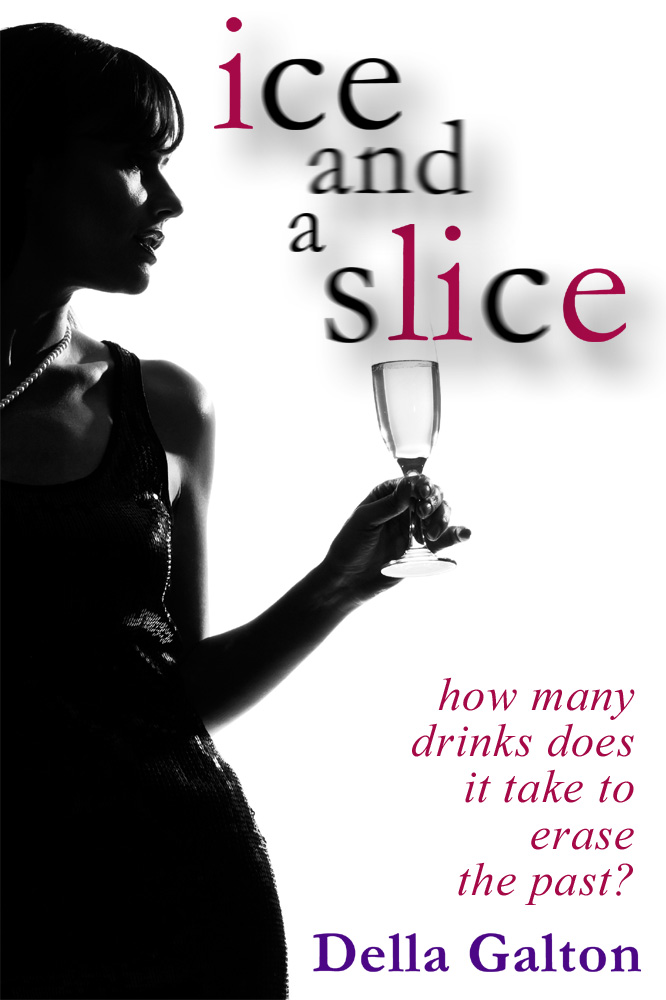
Ice and a Slice, Chapter One

Just in case you’re short of some reading material on this lovely, brrrr, summer weekend, here’s Chapter One of my new novel, Ice and a Slice…

Chapter One

The first thing she noticed was the tinny metallic taste in her mouth. And then came the thirst. The thirst was so bad it had got into her dreams and forced her awake. No, not awake, aware – a slowly growing awareness which was coming, sense by sense.

Like sound. She could hear an echoey blur of footsteps and voices, which rolled in and out of her head. Closer by, something electronic beeped. Beep, beep, beep – steady and rhythmic – beep, beep beep.

Where was she? She opened her eyes and was hit by a wall of light. She shut them swiftly. She felt as though she was made of crystal, cool and brittle. She was a thin glass person who could be shattered by the slightest touch.

After a while she tried opening her eyes again. This time the room swam in various shades of light, but she managed to squint long enough to focus. To her left was a tall metal stand with a clear bag of fluid clipped to the top. To her right was some kind of machine, which seemed to be the source of the beeping. Close to her cheek was the edge of a thin blue woven sheet, but it felt more like a tablecloth than a sheet. She shifted a little to get away from its roughness and her head spun.

“So you’re awake then?” A blurred face leaned over her. She made out red lipstick, a thin line of a nose, kind eyes.

“Drink?” she gasped.

The face moved away, then loomed back in and she was aware of a straw close to her mouth. “Take it steady.”

Ignoring the advice, she sucked greedily and her throat was suddenly awash with coolness – the wonderful coolness of water – and then she was retching, choking, drowning. A firm hand supported her back. “Easy does it.” She tried again, more carefully, and this time with more success.

“You’re in ICU,” the voice went on. But she wasn’t really listening, didn’t really care; there was nothing more important than water; the need for it blanked out every other sense, every other feeling.

It was about thirty seconds later that the pain kicked in.

There was a deep, deep ache in her lower back, sparked off by the movement of leaning forward to drink. She moaned and the voice returned. “Gently does it, love. Slowly, slowly…”

The other voices – the further away voices – were still rumbling in the background and now she could make out odd snatches.

“She’s in a very weakened condition – I really wouldn’t advise visitors.”

“I want to bloody well see her. Tell him, Jim. Tell him we want to bloody well see her now.”

Oh God, that was her mother. What was her mother doing here? And why was she swearing? She never swore. Something bad must have happened. Something very, very bad.

Beneath the awful aching her heart began to thump harder and the beep of the machine sped up to keep time.

Then all at once they were there; the lumbering shadows of her parents sliding into the light. Her father bulky and silent – he never said much, he couldn’t get a word in edgeways most of the time – and her mother in her Evans black and white knitted jacket.

“Oh, Sarah-Jane, whatever are we going to do with you? Whatever are we going to do with her, Jim?”

Her mother’s usually ruddy cheeks were pale and she didn’t look as though she’d combed her hair lately. She was shaking her head now, a frown creasing her forehead, and her face was reproachful.

“It’s okay,” Sarah-Jane began, desperate to reassure them, but she only managed the very first bit of the ‘it’ so her voice resembled that of a mouse – a very small mouse caught in a trap – and the hand she’d meant to lift to calm her mother seemed to be attached to a wire. She glanced at it, which turned into a painful and rather shocking moment as there was a needle in the top of her hand which led to the wire which, in turn, led to another machine that looked like an old fashioned typewriter.

“Oh,” she said. “Oh…oh…”

“What’s she saying, Jim? Do you think we should call the doctor?”

Something niggled at the back of her mind. It was something to do with a party. Had she been at a party? A snapshot of memory drifted in. Herself draped on a chair watching someone walk across the terracotta carpet. They were carrying a tray of mushroom vol-au-vents.

“SJ, love, can you hear me?” The kindness of her father’s voice brought a sharp ache to her throat. “SJ, lovie?” He’d moved closer to the bed and was holding her hand in a fumbling, awkward kind of way. They had never been a touchy feely family. And when she looked up at him she saw that his eyes were full of tears and the ache in her throat intensified. Dad never cried. He was trying very hard not to do it now. He sniffed twice and rubbed his cheek with the side of his index finger, a tiny little movement that broke SJ’s heart.

She couldn’t speak and she couldn’t bear to see the pain on his face. Shutting her eyes again she let herself drift backwards into the soft black space of her mind.

The next thing she was conscious of was someone lifting the wrist that wasn’t wired to the machine and taking her pulse.

It was the nurse who’d given her the water. She had tiredness lines around her eyes and spoke gently. “How are you feeling?”

“Quite bad,” SJ said, hearing her voice come out hoarse and unused.

The nurse nodded and wrote something on a clipboard. “You’ve got a visitor if you’re up to it.”

As she spoke another woman slid into SJ’s line of vision. She was small and serious-looking with bobbed hair and Yves St Laurent glasses.

“Hello, Sarah-Jane. I’m Doctor Maria Costello; I’m from Clinical Medicine. I’d like to have a little chat with you if I may?”

SJ nodded, although her consent was clearly not required. The doctor had already pulled up a chair.

“Do you know why you’re here?”

“No. Have you come to tell me what’s wrong with me?”

“Would you like me to tell you what’s wrong with you?”

“Yes please.” SJ lay back on her pillow, exhausted with the effort of speaking. Everything still hurt and she could smell antiseptic hand wash. It was beginning to make her feel sick.

She watched the doctor’s face through half closed eyes. Shadow memories lurched at the back of her mind and suddenly she wanted to say, “No, stop, I’ve changed my mind. I don’t want to know.”

But it was too late. The doctor’s mouth was moving again, her words crisp and precise. “You are suffering from alcoholic poisoning. On Sunday your husband found you unconscious at home and he called an ambulance. If he hadn’t acted as quickly as he did, you wouldn’t be here now. The quantities of alcohol we washed out of your stomach were more than enough to kill you.”

SJ covered her face with her hands. The memories were taking form, becoming less shadowy, forcing their way up to the surface.

There had been some terrible argument with Tom. She’d been trying to stop him leaving the house. She was holding tightly onto his arm and he was trying to shake her off and his face had been grimmer than she’d ever seen it. As if he really hated her. As if he couldn’t bear to be married to her for a moment longer.

She could feel herself starting to shake, in a place deep inside. Because there were other images coming too, only these were more detached. She was watching herself from a distance. She was watching herself cross the hallway of her house, go into her lounge and unclip the gin bottle from the optic behind Tom’s bar. She could see her own hands getting out glasses and lining them up – a long line of glasses on the bar.

Four crystal tumblers, two pewter tankards, five little shot glasses Tom used for whiskey chasers if ever he was in the mood, and one commemorative wine glass with the words Sarah-Jane and Tom, on their wedding day, May 2009 inscribed on the side.

“I did this to myself,” she said, closing her eyes.

The doctor’s voice was very serious. Almost cold. “Are you conscious of the danger you placed yourself in? Last Sunday afternoon you drank almost a full litre bottle of gin. I’d like you to tell me why.”

And if you’d like to know what happens next you can find out for less than the price of a gin and tonic 🙂 by clicking here


What should be on the first page of your novel?

The first page of your novel has to be excellent. If it is not first class, then it’s possible the agent or publisher you have targeted will not read any further.  Time is money, and they will only be interested in your novel if they can see its potential very quickly.  So it goes without saying that the writing must be as good as you can make it.

OK, so the writing is good, but what else should your first page contain?

Having carried out some research on this subject (I analysed a selection of best selling novels) I’ve collated a list of elements that a successful first page is likely to contain. So here they are:

A hook

There must be enough of a hook to make the reader want to turn the page, and, indeed, get past the first paragraph.  This does not have to be dramatic.  That will depend on the type of book you’re writing, but you should try to engage the reader immediately.

At least one character

This won’t necessarily be the main character, but it usually is the main character or someone closely connected to them.  If it isn’t, you should have a good reason.

Place

Whilst the setting doesn’t have to be spelt out, and this is often not possible, there should probably be some indication.

Time

Is your novel contemporary or historical?  It’s a good idea to indicate this fairly early on.

Genre

We should also be able to tell the genre of the novel very quickly.  Not necessarily from the first page, but do begin in the style in which you are likely to continue.   If the novel is humorous, you might not necessarily have an hilarious event on the first page, but the genre should be reflected in the style of writing.

Dialogue

Not all first pages contain dialogue. For example, first person novels often don’t need it, but it isn’t a bad idea to introduce dialogue quickly.  The sooner the reader hears your characters speak, the sooner they will start to care about them.  Or not – as the case may be.

Descriptions of characters

Again, these do not necessarily have to be on the first page, but if you are introducing a character without giving the reader any hint of what they look like, then the reader may well formulate their own view.  If you later contradict this, i.e. the reader assumes your character has brown hair and they actually have flaming red hair there is a danger of losing reader identification.

Summary

And finally, you will need to do these things without it appearing in the least contrived. This is no mean feat, I’m sure you’ll agree.

The good news is that it’s probably not worth worrying too much about your first page until you have completed the novel.  In my experience, the first page I originally write for a novel is rarely the first page I end up with.  Therefore it makes no sense to worry too much about it until you have completed a draft. It is pointless to edit and perfect something that you might later discard.

Incidentally, if you’re interested, there’s more on this subject in my book, Moving On – From Short Story to Novel, published by Accent Press. Price £9.99


Tell your friends!

© Della Galton All rights reserved.
Powered by Cloudbase Media