Welcome to Della Galton’s website

Last minute Christmas Presents for Writers

So… have you finished your Christmas shopping? Is everything wrapped and under the tree? Or have you just looked at your calendar and thought blimey, is it only a week away I’d better get cracking? (pun intended!).

If you fall into the latter category – I um may actually be in that category – here are some nifty ideas for presents for the writer in your life.

Up to £10

  • Novelty pens/mugs with writing quotes.
  • USB drives for backing up work.
  • Reference books such as Thesaurus or Book of Baby Names (handy for naming characters)
  • Books about writing or inspiring writing quotes.

£15 to £60

  • Book vouchers. (One of the best Christmas presents I ever got was a voucher to buy books from an ‘online book store’. It kept me going all year.)
  • External hard drive for backing up work.
  • Subscription to Writers’ Forum (£38 for 12 issues)
  • A one hour mentoring session with Della Galton. (Special Christmas Voucher can be provided). (£30).
  • A four week course of evening classes in Gillingham Dorset. 7th Jan, 14 Jan, 21 Jan, 28 Jan. 4 x 2 hour sessions. (£34).
  • A one day course on Saturday 12 January in Gillingham Dorset. Write a Short Story in a Day. (£45).

£60 to £150

  • Ergonomic chair.
  • New desk.

£150 plus

  • New laptop!
  • Or if you really want to push the boat out, why not buy your writer a week in a writing retreat, or a writing holiday, (some weekend suggestions below) or even his/her very own writing shed.
  • Weekend writing course at Fishguard, Pembrokeshire. 15th to 17th February, 2019. (£249). Click here for more details.
  • Weekend writing course at Cirencester, 12th to 14th April, 2019. (£255). Click here for more details

For any of my courses please email me HERE for more details. Please state name of course for which you would like details.

Happy Last Minute Shopping!

All best wishes

Della xxxx
Four Reasons We Don’t Write – and What to Do About Them!

Motivation – one of my favourite subjects. Motivating yourself to write should be easy, shouldn’t it? After all, we want to write. Don’t we? So why is it so difficult to get started? Recognise any of these excuses – er hem, I mean REASONS?

Time: I’d like to write but I never seem to have the time.

If that’s you, ask yourself a question. Is it really true?  Do you really not have time? Or are you just not prioritising writing?  Possibly because you don’t feel you deserve the luxury of having time to write when there are so many other things to do, for example, work, friends and family.

Well, if writing is what you really want to do, then don’t you deserve to carve out some time for it?  If you were to allocate half an hour three times a week you could probably write a short story in a month (perhaps even two). Little and often really is the key.

Focus: I don’t know what I want to write.

Many people set off with the idea of writing a novel.  This is very commendable; don’t let me stop you if that’s your burning passion. But there are many other forms. Here are some less time intensive ones:

  • A blog
  • A short story
  • A poem
  • Morning pages
  • A feature for a magazine

Why not experiment until you decide what’s for you. Better still why not pick one of the above and set a deadline to complete it.

Confidence: I’m not good enough to be published.

How do you know until you try? Not many people are good enough to be published until they’ve done some market research and learned what works and what doesn’t.  Writing is a little like learning the piano I think – we wouldn’t expect to be concert pianists without a fair bit of practice.

Laziness: It just feels too much like hard work a lot of the time.

Newsflash – it is! Believe me, I know it is. I write a lot and some days (actually there are quite a lot of them) I would much rather be doing something else. Some days it feels as though I’m wading through sludge.

Usually when this happens, I just carry on. (I have to, it’s my day job).  Very often it’s because I’ve got to a tricky bit. So my top tip for this is that it’s much better to finish writing when I’m really enjoying myself – then I’ll be all the keener to go back to it again. This really does work. Trust me.

If you’re really stuck I once heard a novelist say she used to handcuff her ankle to the desk to make herself sit still until she’d done her allotted amount of words. I can’t say I’ve tried this one – but I’m not ruling it out!

Happy writing

Della xxx

PS I’m running a course in Bournemouth this Saturday. 23 October. Write a Short Story in a Day (Hopefully the title is self explanatory but if you’d like further details please do leave a comment or email me.)

Is it possible to make a full time living writing for magazines?

Is it possible to make a full time living writing for magazines? If so, how?

I started writing for womags after joining an Adult Education class called Writing for Profit and Pleasure. The teacher was Jean Dynes (she writes as Barbara Dynes – see her column in Writers’ Forum.)   In that first class, back in September 1987, Jean asked if there was any news.

A girl in the row in front, put up her hand and said, ‘I’ve just sold my 27th story this year to Loving Magazine.’

Wow, I thought.   I want to sell a story. Just one would do. (ho ho, little did I know how addictive it was). But how was it done?

By researching the markets, I learned, which meant reading the magazine. So off I went to buy a copy of Loving, which I read from cover to cover, several times. They bought the 3rd story I sent. Then the 4th, then the 5th. I was on the verge of giving up the day job when they rejected the 6th, 7th, 8th and 9th.

We all know how it works. There are far more rejections in this business than successes

It’s always been like that for me. It still is. And blimey the market is much harder than it was. Back in 1987 there were 100 plus womags that carried fiction. In 2000, which was when I did finally give up the day job to write full time, there were 21 markets. Everyone said it was impossible to write short stories for a living.

It wasn’t! But back to my original question.

Is it impossible now? When there are a handful of magazines that still take stories from writers (who aren’t on their list). I think sadly that it may be. There are just too many of us out here. I know so many fabulous writers who get their stories rejected because there are only so many slots. So can we still follow the dream of being a full time writer?

I once heard a brilliant quote from Linda O Byrne, who at the time was fiction editor of Bella magazine. She said, ‘Don’t give up. There is always a market for excellence.’

I think she was right.

I’ve been a full time writer for 17 years. Here’s how I do it. I write short stories for the remaining markets. I am the agony aunt for Writers’ Forum. I have several self published books on Amazon which earn me £200 plus a month. I do some journalism. I do the odd spot of teaching. I write novels.  Last year I struck lucky. The Reading Group was published by a huge publisher (Quercus is part of the Hachette Group) but I wasn’t paid a huge advance to write it which meant I wrote it in addition to not instead of my usual work.

In short, I diversify. My income is made up of lots of bits of writing related work. Lots and lots of bits which means I work lots and lots of hours. Often 60 hours plus a week.

I live in hope of having a best selling novel that will mean I don’t have to worry about money so much.

The bottom line is that I love writing. I can’t stop. I won’t stop. I think Linda O Byrne’s advice still holds true. Don’t give up. There is always a market for excellence. I don’t think I’ve quite reached excellence yet – but I shall never, ever give up aiming for it.

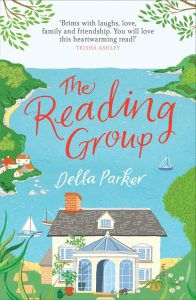
The Reading Group is published by Quercus. For most of November it is 99p. Not bad for 500 plus pages! Click here to buy/find out more. And if you do like it please leave me a review.  Until Sunday 19 November you can win a copy of the paperback by going to www.oapschat.co.uk

£7.99 (paperback) £3.99 (kindle)

Writing The End First – Do you write chronologically? Or not?

I can’t believe how long it is since I wrote a post! It’s been mad lately. I’ve been writing the last part of my series, The Reading Group.  Part Five was the Summer Holiday. Blimey, that was definitely the trickiest. Partly because this novella had more than one viewpoint. Partly because it was the culmination, as well as being a standalone novella, of the series. The deadline is in two days time. I’ve just sent it off to my agent and publisher, simultaneously. I managed to mess up my shoulder with RSI towards the end of the novella. I was so immersed in the work that I didn’t realise I was hurting my shoulder until it had practically seized up.  Top Tip, take regular breaks.

Anyway, that’s not what this is about. How do you write your stories? Long or short? I have always written chronologically, but I did something different on this one. I wrote the beginning, then I wrote the ending.  I wrote the middle last.   This had some advantages that had never occurred to me before.

  • Because I knew the ending, I knew the relevance of every single scene prior to it.  Usually I don’t know this until I’ve finished. Then I go back and revise. I think this made the middle much sharper. It was a bit like doing a jigsaw. I had the framework so the middle was much easier to write.
  • I think it was probably slightly quicker.
  • It also gave me a lot more time to reflect on the ending. Because as I built towards it, my subconscious, which I rely on so heavily, was busy enhancing bits of it. So by the time I got there for the second time I knew exactly what needed editing.

Will I do it again? Yes, I think I might. Do I recommend it? Yes.

Reading Group - Bookends 2

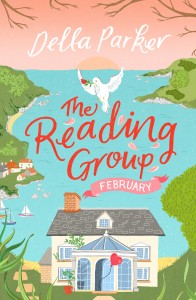
The Reading Group January, February and March are all out now. I would love to know what you think of them if you’ve read them.

I’d also love to know how you write. Chronologically, or not? Please do comment.

WRITING GOALS and the Rule of Three!

Do you, by any chance, have a New Year Resolution that involves writing? This idea might help you to keep it.

The Rule of Three is one of the most powerful principles I have ever learned. With thanks to Jack Canfield who is a motivational speaker in the US. All you’ll need is a notepad and pen, did you get one for Christmas? If you didn’t, a reporter’s notepad from the newsagents will do. Or just flip up a new document on your word processor.

  • Take a blank page and write your goal at the top of it – which can be anything. Make sure it’s specific though. For example, write a piece of Flash Fiction and send it to a competition. Or, get a feature published in a magazine. Or perhaps you’re thinking big and your goal is to write a 90,000 word psychological thriller. It doesn’t matter: Just commit your goal to paper.
  • Underneath your goal write the next three steps you will take towards it. For example if you want to write Flash Fiction. 1: find a flash fiction competition. 2: Read previous winners. 3: Make a list of possible subjects to write. Or, in the case of the feature. 1: Buy a copy of publication you are aiming for. 2: Establish which features are written by freelancers. 3: Work on a proposal for your feature and send it to the editor.
  • Next, split your piece of paper into days of the week. Under each day, write the next three things you will do to move your goal forward.   As it’s a writing goal many of them will be doing the actual writing. So you may find your later goals look like this. 1. Write the opening paragraph, 2. make a list of possible titles. 3. Edit previous day’s work. Etc.
  • Commit to doing the 3 tasks you’ve set for yourself for at least ONE WEEK. This can take you a considerable way on small goals. Probably past completion. On bigger goals you may be motivated enough to carry on.

Top Tip to help you make this work

Don’t overstretch yourself. Don’t commit to writing 1000 words of your novel every day for a week if you know you don’t have time. Your rule of three can be tiny things. On a busy day your three things may be to write three paragraphs that day. Or three sentences if you like! The point is that you MUST do the three thing you’ve written in your notepad daily. A continual, concerted daily effort is incredibly powerful. The most magnificent castle begins with the laying of a single brick! OK, this picture isn’t a castle, it’s the Fishguard BayHotel in Pembrokeshire! But it’s certainly a castle for writers twice a year. See The Writer’s Holiday. which I highly recommend by the way!

Where was I?fishguard

Ah yes, I use the rule of three on a regular basis in all of my work. It’s brilliant for writing projects. Small and large. It’s also brilliant for promotional work if you’re trying to promote a book, for example.

My January goal in case you’re interested, is to write the next novella in the series of The Reading Group, which is my current project. I will write 2000 words a day, weekdays, 1000 words at weekends, until I have a first draft.  My commitment is to start at 8.00 a.m. and do nothing else until the 2000 words are done. This is how I wrote the rest of the series.

December, January & February are out now. March is out on 1 January 2017. Yikes, I’d better crack on and write the next one! Do let me know how you get on with your goal too.

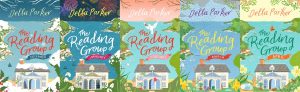
The Reading Group, all covers

The Long and Winding Road – to a Book Deal!

‘Whatever the struggle – continue the climb – it may only be one step to the summit.’
Diana Westlake
This is a quote I keep over my desk – because blimey it’s so true of writing.

The road to success is littered with rejection slips as we all know. I could paper St Paul’s Cathedral with mine! I still get dozens. Yet I had my first short story acceptance letter in 1987 – I can’t believe that was almost 30 years ago and I had no idea back then that it would one day be my career. Not just my career, but also one of the best things in my life. My raison d’être if you like and yes it really is that important.

I’m writing this on the train. I’m about to go and meet my agent, my new publisher and my publicist for lunch. I’ve just been signed by a major publisher, Quercus, who are owned by Hachette. In the interests of being ‘cool’ I was going to try and pretend this isn’t as exciting as it sounds, but I can’t because it wouldn’t be true. I have dreamed of this day happening for thirty years.
To be signed with a big publisher was, and always has been, my number one goal.

I have four novels out there, several books on writing, ten or so novellas, even a memoir about a dog, oh and a fair few short stories too. I’ve been making a living from writing for 16 years. It’s been hard work. According to Malcolm Gladwell you have to practice a craft for 10,000 hours before you can become a master of it. I’ve certainly done that. But for many years my number one goal eluded me.

So how did it come about?

Earlier this year my first agent, Judith Murdoch got in touch. I’d just sent her another manuscript.
“Not this one,” she said on the phone, “but I’ve got a proposition for you. One of my editors is looking for a writer. Can you write to order?”
“I can do backward somersaults at the same time if they like?” I said.
I wrote a sample chapter.
They loved it.
I wrote the rest of the novel – or as it turned out, three linked novellas.
They loved them.
So here I am on the train to London.
Was it luck? Was I just in the right place at the right time?
Yes, a little bit of luck, I think. But it wouldn’t have happened if I’ve ever given up trying. Would it? So that’s my very top tip for writers.

Never Give Up. Whatever the struggle, continue the climb, it may be only one step to the summit

Lunch was brilliant by the way. Nothing beats a publisher quoting scenes from your book that made them laugh. The penne arrabiata was nice too!

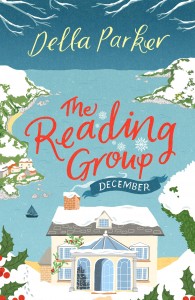
The novellas that I wrote will be published under the overall title of The Reading Group.  The first three, January, February and March will be out on 1 December 2016. They are available for pre order now.  But if you’d like to get a little better acquainted with the characters before deciding whether to buy then why not download the FREE short story (December) and see what you think.

December
December

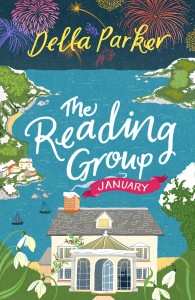
Here are the first three covers. So far there are six in the series. I think they’re beautiful. What do you think?

January
January
March
February

Creating Characters – How well do you know your imaginary people?

Sometimes a character comes into my head fully formed. Sometimes they are shadowy. Sometimes they are shy like real people and I have to get to know them slowly.  Interviewing them is good.

These 21 questions are one of my favourite ways of interviewing them. I may not know the answers, but the character often will. Does that sound mad? Probably, but I’ve never claimed to be completely sane.  I’ve used these questions, or variations of them, with dozens of students.  So I thought I’d reproduce them here. Hope it’s helpful.

  1. Name, age & sex.
  2.  Brief physical appearance. List 3 things.
  3.  Job.
  4. What is your character’s current problem?
  5. Personality type – extrovert, introvert bossy etc.
  6. Where does your character live? Flat, house, rural, city etc.
  7. What, if anything, would make your character laugh or cry?
  8. What is your character’s soft spot/weakness?
  9. What is your character really good at?
  10. What is your character afraid of?
  11. What would make your character furious?
  12. If your character had one wish, what would it be?
  13. How does your character view money?
  14. Does your character have any prejudices? If so, what?
  15. What are your character’s main qualities?
  16. What are your character’s main faults?
  17. Does your character get on with their parents? Siblings? Friends? Neighbours?
  18. What is your character’s biggest secret?
  19. What is the most defining experience your character has ever had?
  20. Who is the last person your character argued with and why?
  21. Summarise your character in a sentence. Pick 3 significant things. E.g. Dora is 82, wears mismatching clothes on purpose and likes to shock her rather pompous son.

One of my favourite things about this particular character sheet is that it doubles up as a plot creation tool. For example Q4 is the basis of a short story or longer piece of fiction.

Q18 is quite good too, when it comes to plotting. Q19 is one of my favourites when it comes  to novels and getting the psychology right.

If you can do Q21 you will probably know your character pretty well.

Happy Writing.

***

My next course, How to Write and Sell Short Stories is at a new venue. Shaftesbury, Dorset. The course will be small – a maximum of 10. (The venue is small.)  It will run on Saturday 12 November between 10.00 and 4.00 and costs £45.  This course is suitable for beginners as well as experienced writers and I hope students will go away with the beginning of a short story, the ending of a short story, (hopefully the same one!) and a good idea of how to develop the middle. Please email me via this website (or leave a comment) if you would like to book a place.

If you would like to know more about writing short stories, please check out my book, The Short Story Writer’s Toolshed. £2.49 for Kindle. £4.99 in paperback.

Five Tips to Stay Inspired With Your Writing

  1. Got an idea for a story? Write more than one opening paragraph – it takes the pressure off having to get it perfect. Keep writing openings until you feel the inspiration kick in.  This can sometimes take me a while.
  2. Don’t edit your beginning until you’ve completed the story. It’s very easy to focus so much on perfecting an opening paragraph that you never get to the end.
  3. Don’t end the section you’re writing at the end of a scene break. Stop mid scene, mid paragraph or even mid sentence if you’ve got a good memory! It’s much easier to pick it up again.
  4. We tend to spend much less time on the end of a story.  The right ending can take time. Write more than one closing paragraph.  Then leave the story a week or so before coming back and seeing which one feels right.
  5. When you have a complete first draft. Leave the story another week before you do your final edits.  A student I once taught likened it to putting your story in the ‘naughty cupboard’. When you go back to them they will tell you everything they did wrong. This is so true. Mistakes will leap out after a gap of time that it’s impossible to see when you’re close to your work.

Is Your Writing Smelly Enough?

Using the senses in your writing, especially the sense of smell, really helps to take the reader into your story.  However, it’s just as easy  to be cliché with smells as with any other writing so choose carefully and be current.   For example, do today’s hospitals really smell of disinfectant and boiled cabbage? Maybe they do, but they smell of a lot of other things too. I asked my writing students to come up with something different. Here are the results.

Hospital smells

  • Antiseptic hand wash.
  • Floor polish.
  • The colognes of visiting relatives.
  • Stale air.
  • Mass produced food.
  • Body odour.
  • Fear.
  • Fresh air and rain on the clothes of visitors.

We did the same thing with beaches.

Beach smells

  • Donkeys .
  • Coconut suntan lotion.
  • Burger vans.
  • Fish and chips.
  • Candyfloss.
  • Cigarette smoke.
  • Diesel generators from fast food stalls.
  • Ozone.
  • Rotting seaweed.
  • Fresh air.
  • Smoke from Bbqs.

I have a post it note stuck over my desk.  Smells, touch, taste.  I tend to use the other senses anyway but it’s easy to forget these three, especially the sense of smell.

A rose by any other name!

For more tips please check out my books on writing.

The Short Story Writer’s Toolshed

The Novel Writer’s Toolshed.

How to Write and Sell Short Stories.

Moving on From Short Story to Novel. 

I am also running a course in Bournemouth on Saturday 28 May – How to Write and Sell Short Stories. 10.00 am till 4.00 pm. £45.00. Please email me via this website if you’d like more details.

Happy writing!


Writing With Emotion – Four Top Tips

Writers are in the business of selling emotion. I forget who said that, but it’s true. We read – or at least I do – because we want to feel something. We might want to feel amused, uplifted, scared, touched, nostalgic or excited – or any combination of these. But we always want to feel something. We want to escape into an alternative world. A good writer will take us there. They will make us feel emotion. How do they  do it? Well I can tell you how I do it.

  1. Create Larger than Life REAL FLAWED Characters We have to care about the characters. Which means they have to be interesting. They need something that we love or possibly hate about them. They cannot be bland. They should be larger than life. Thing big.  Flawed characters are great.  So give your characters flaws. This is part of a review left on Ice and a Slice by James Nash. ‘This is ‘real life’ in all its complicated glory, challenging, gritty and very, very funny.’ Paradoxical flaws are the best I find. Especially if you don’t tell the reader straight away why the character has them. For example, in my novel The Morning After The Life Before, one of the main characters, Didi, has a phobia of white.  She can’t eat white food, she can’t keep milk in her house. She can’t have white appliances in her kitchen. Yes there’s a very, very good reason and it’s a vital part of the plot but I don’t reveal that until later in the novel.
  2. Use Universal Truths We all know what it’s like to feel we don’t fit in. That we’re not good enough. That we’ve been abandoned. That we’re not loved. We all know what it’s like to be human. Capitalize on these universal truths. Make your characters feel them. Transfer onto the page how you felt – when YOU felt these very powerful emotions.
  3. You MUST Care It’s very hard to write emotion by numbers. The first person who has to care about the characters is you. And I mean you have to really care. You can’t just pay lip service to it.  You can’t write emotion from a distance. You have to care so much you’ll feel pain if your character were to die. Bring this pain in from your own experience. We all know what it’s like to feel extreme pain. Use it, relive it, get it on the page. Wring out your soul. That may sound overdramatic (not to mention painful!) but it really works. What comes straight from the heart goes straight to the heart. If you feel it I guarantee your readers will feel it too. Don’t hold back. Don’t skate over emotions – they are everything. Absolutely everything.
  4. Go For High Stakes Give your characters emotionally charged dilemmas.  Make the stakes high. Loss of love, loss of life, loss of family. If you take us into a war zone I guarantee we’ll care. If you take us to a life threatening situation or a death bed situation we’ll care. If you show us the tenderness between mother and child, or of any kind of unconditional love we’ll care.

Also – try to keep it real. We are interested in the nitty gritty bits of human life. The specific details.

I’ve had some amazing feedback on my Ice series. I’ve had many many emails from reader telling me they loved SJ because she is warm and very flawed.  In Ice and a Slice she is struggling with a drink problem. She is very much in denial. One of my reviews for Ice says, ‘SJ is flawed and vulnerable and sweet but also sometimes self centred and thoughtless, just as people in real life are. She often tries to do the right thing with it backfiring spectacularly – sometimes with comic results.’

I was so thrilled to read this. And it brings me on to my next point.

One last bonus tip. Pathos and humour are amazing if they are on the page side by side. One will point up the other. Don’t be too dark. There is humour in the darkest situation. And actually, not so often quoted, there is pain in the lightest situation. 

Ice and a Slice is half price between December 27th 2015 and January 3rd 2016

Book two in this series, The Morning After The Life Before, is half price between Jan 3rd 2016 and January 10th 2016.

Happy New Year 🙂

Tell your friends!

© Della Galton All rights reserved.
Powered by Cloudbase Media