Welcome to Della Galton’s website

Six tips for writing shorts for Nanowrimo

As I mentioned in my last blog I’m busy doing Nanowrimo this month. But as usual I’m writing 50k of short stories in November not a novel. This is more useful for me, being as shorts are my day job. I thought I’d share some of how I work with you – in case it’s helpful. Here are my top tips.

  1. Keep them all in one document. I call mine Short Story Bonanza 2015 (Nano likes a title). And it’s easier to keep a word count if they are all in one place. I do start a new page for each story and I head it up with the date. (I don’t often have a title when I start a story.)
  2. I don’t necessarily start a new story each day.  I try to finish the one from the day before. After all, the object of doing Nano is that I write saleable stories and they have to be finished at some point. So I finish as many as I can in draft. But there might still be the odd one unfinished. And that doesn’t matter. Very freeing.
  3. Make Nano the first thing you do. I tend to get up early at least every other day and start at 6 ish. That way my words are often done by nine and I can get on with the rest of my day. I can’t tell you how good that feels!
  4. Use prompts to get going. I love A Writer’s Book Of Days by Judy Reeves. It has a prompt for every day of the year. Fabulous.  I’m not a plotter. I never have been. I sit at my desk, and I start typing. I trust the process. The main thing which stops us writing is us. Our lack of confidence. Our internal editors. Switch off these negatives and just write. You can do it.
  5. Do not use any Nanowrimo time for editing. Always do your daily word count first. Edit later. I edit most of my Nano stories in December. I like editing and it’s a lovely thing to do in December.  I do edit some of the Nano shorts in November. But I take them out of the main document and save them as a new document. I’m always cutting when I’m editing so I don’t want to be cutting any of my nano words, do I?
  6. Nano with a friend. I’ve got a writing friend coming over later today and we’re going to have a go at writing a story each, using the same theme. This makes it so much more fun. And it’s inspiring. And we can get feedback straight away should we want to edit the story and send it out before the end of Nano.
  7. Oh and one last bonus tip.Make sure you’re stocked up on coffee or biscuits! Or whatever you need to reward yourself! (cake in my case). We deserve it.

And if you’d like any help with writing short stories, please do check out my book, The Short Story Writer’s Toolshed. £2.49 for kindle or £4.99 for the paperback.

Happy Writing!
 

Nanowrimo 2014. 50k of short stories in a month!

It’s coming up to Nanowrimo again isn’t it? That’s National Novel Writing Month for the uninitiated. That’s when you sign up to write a 50,000 word novel in the month of November. Or 50,000 words worth of short stories in my case.  It works out at about 1660 words a day. I love it. I love deadlines. Even if they are self imposed ones!

I’ve done it for the last two years. I thought you might be interested in some stats.  I do love stats! This is what I did last year.

  • 25 stories written.
  • 17 of those sold to date.
  • 5 still circulating.
  • 3 still need work so not out there yet.
  • Income from stories to date £2985.00

Not bad for a months work. It wasn’t of course really a month’s work because  I edited a lot of them in December although I did edit about five in November as well as write them.

But what I really love about Nano is the freedom to just start a new story each day without worrying about the previous day’s. Because I’m writing so many I don’t worry if one doesn’t work out – who cares? I just start again the following day. It’s very liberating.

Am I going to do it again this November? You bet I am. The way I see it you can’t lose. Even if you don’t complete the target – I fell short in 2013 by about 14k – you still end up writing more than you would have done anyway. So who’s in? Will you be doing Nano this year?

And while we’re on the subject of short stories can I just mention that one of my books on writing short stories, The Short Story Writer’s Toolshed, is only 99p for kindle from now (assuming you’re reading this on Sunday 25 October 2015) until 31st October 2015. Just in case you need any inspiration. 🙂

Happy writing!

NaNoWriMo-2014-Winner-Certificate

Holidays for Writers – are they worth it?

I’ve recently been lucky enough to spend time at two well known writers’ Summer Schools.  The Writers’ Holiday at Fishguard (Pembrokeshire) and Swanwick the Writers’ Summer School (Derbyshire).

So what can you do at a writers’ holiday? Apart from network and enjoy yourselves a lot, that is!

Here’s a selection of the 2015 courses provided at each.

  • Novel Writing
  • Manifesting your goals – writing goals – naturally!
  • Writing for Children
  • Poetry
  • Short Stories
  • Script writing
  • Painting – discover the artist in you.
  • Writing historical fiction
  • Writing contemporary women’s fiction
  • Writing for magazines
  • Meditation

The speakers are impressive too. Experts in their fields, they range from authors to agents and publishers to magazine editors. Check out their websites for next years selection.

Oh and then there’s the entertainment. The last night pantomime at Swanwick. The Cwmbach male voice choir at Fishguard. All unmissable entertainment.

What’s the food like? Well, Swanwick has a reputation for school dinner food but I thought this year’s was pretty good actually. Fishguard isn’t bad either. Waitress service, choice of menu. Huge breakfasts. Fantastic. But then maybe it’s just the company of other writers – you never know who you are sitting next to? That little old lady at breakfast who turns out to be the author of 40 plus novels or the woman who’s the world expert in chimney sweeps! Who needs food!

The accommodation is good at both but you won’t be spending much time in your room. There is far too much going on and you won’t want to miss a thing.

Both holidays are superb value. Fully inclusive for a week and around £500.

Will you come away inspired and buzzing and fired up to get on with the lonely business of writing. Well, I always do.  Both courses have Facebook and Twitter pages. Check out their websites on the links above. So you can keep in contact all year long. I highly recommend both ‘holidays’.

Fishguard is more intimate – around 50 delegates and they have a weekend in February as well as a week in July.  Swanwick has around 200 delegates and has activities going on from dawn – meditation on the lawn – till dusk – late night discos and writing sessions.

Fishguard is set on the beautiful Pembrokeshire coastline. Great for walking if you want to clear your head between courses.

Partners are welcome at both. Some pix below to give you a flavour of both but please do check out their websites.

My next Saturday course in Bournemouth by the way is Create Off The Page Characters. This is workshop based and suitable for beginners or experienced writers. And will be useful for you whether you write short stories or novels. Should be great fun. Small group guaranteed. Very relaxed environment. Constructive feedback.

  • Date: Saturday 17th October – 10 till 4.00
  • Venue: Kinson Community Centre, Millhams Road, Pelhams Park, Bournemout BH10 7LH
  • Cost: £45

Please email me via this website if you’d like to book or find out more details of my Bournemouth course.

I’m also teaching at the Royal Agricultural University in Cirencester, 8th to 10th April 2016 and in Alicante on 13th June 2016 for a few days. Email me for details of these if you’d like more info. I also teach at Woman’s Weekly offices in London. Please see their website for details. I’m also at NAWG this year 4th to 6th September and Woman’s Weekly Manchester Live 10th to 12th September. Phew, no wonder I feel a tad tired! I wore myself out just writing that!

Della guitar
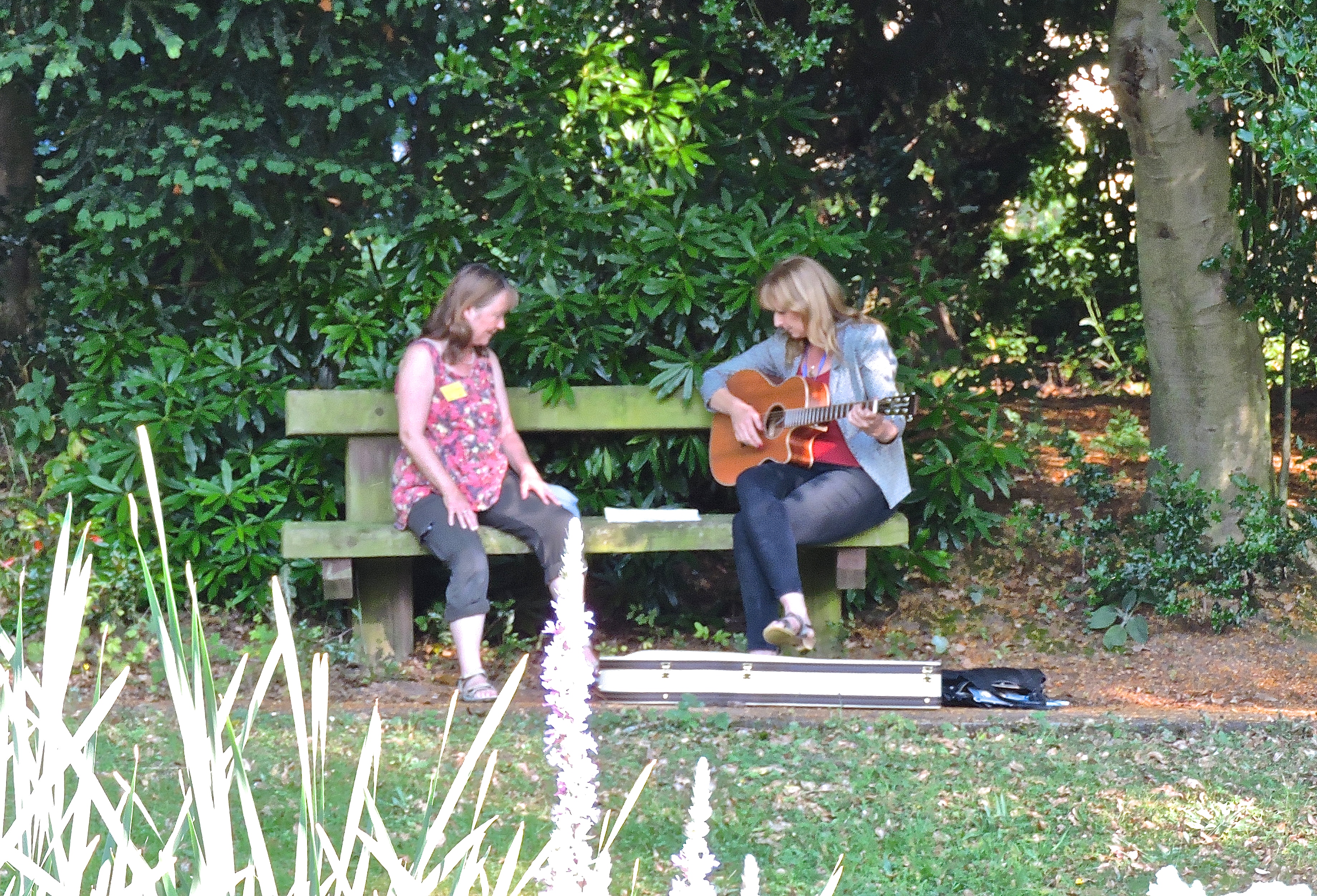
me having a guitar moment by the lake at Swanwick with the lovely Helen Ellwood
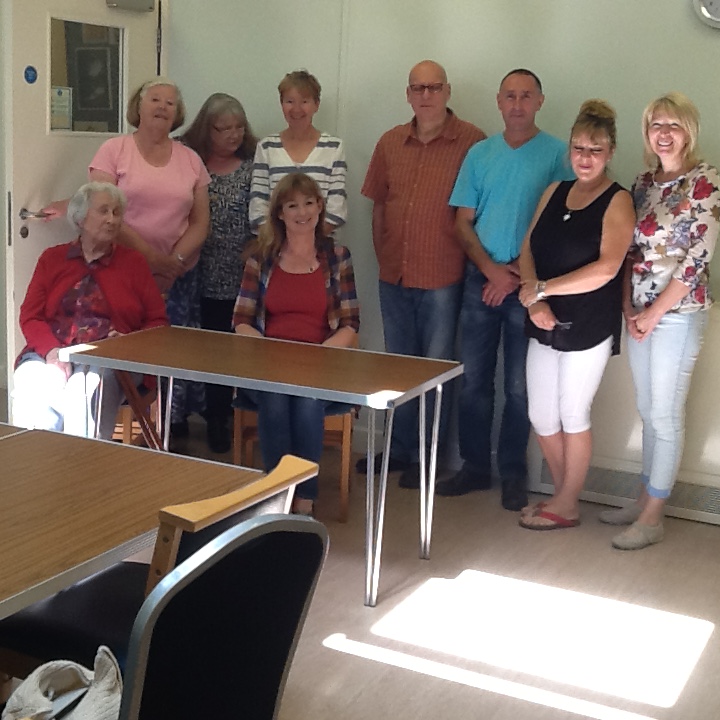
Me teaching at Kinson
Me teaching in Bournemouth.
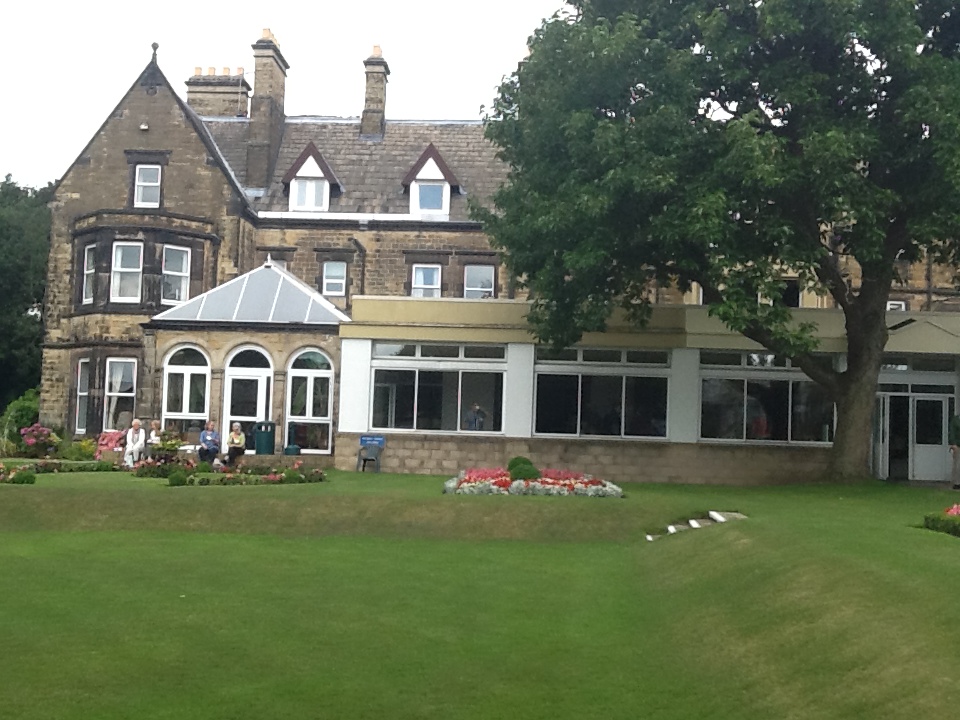
Swanwick house
Swanwick
fishguard
Fishguard

Ten Inspiring Quotes About Writing

writing Inspiration

1. Talent is not as important as authenticity.

2. Editing makes it perfect but raw is sometimes better. Don’t polish out the sparkle.

3. The best way to find your voice is to write more.

4. What comes from the heart goes to the heart. If the author feels it when she writes it – the reader will feel it when she reads it.

5. Write what you are passionate about, but don’t preach.

6. Never forget we are in the entertainment business.

7.  The question should be not, what can I sell to this market? but what can I give to this market?

8. Without character, plot is nothing.

9. Life is the stuff of which novels are made. You have to live it to write it.

10. Never give up. You may be only one rejection from that book deal.

The New Year’s Resolution every writer will keep

It’s that time of year again, isn’t it? We set a New Year’s resolution – this year we are going to write the novel, write every day, submit ten short stories a month to magazines. Will we keep them? Well, some of us will. But not many. Why not?

Perhaps because we are already over committed? Perhaps we don’t have time – however much we’d like to have it – to write that much. If you set yourself a ‘big’ resolution and you start to fail. Chances are you’ll give up, and feel guilty too.

Here is a resolution you will keep. No, it’s not eat more cake – although that is one of mine actually!

It is to begin a piece of writing. That is all. Just begin.

If you have time to read this blog, you have time to do this. Right now. Or maybe that should be write now!  There are three simple steps. They require seven minutes of your time.

Step one: Look at the prompts below.

Step two: Set the timer on your watch/phone/ or clock for six minutes.

Step three: Write an opening paragraph for ONE of the prompts.

Prompt one

Incorporate the following three words into a first paragraph. Rain, cupcake, crash.

Prompt two

Use this picture to inspire your first paragraph. Stop reading and do it now.


Everyone done that? Congratulations. You have kept a New Year Resolution. It was that simple.

You have begun. You are a writer. What you do next is up to you. Do you continue to write or go and do the housework/play on Social Media/watch a television program? Maybe you could write a bit more instead of doing one of these things. Housework is overrated anyway. It doesn’t matter what you do next. You have completed a New Year resolution. You have begun.

Maybe you’ll finish the piece you started. Of course you’ll finish. You are a writer, aren’t you?

NB My weekly classes are held on Thursday Evenings, 7-9 and Friday Mornings, 10-12 at Kinson Community Centre, Millhams Road, Kinson. Email me if you’d like more details, or leave a message on this post.

If you would like to know more about writing, two of my writing books, The Short Story Writer’s Toolshed and The Novel Writer’s Toolshed are currently 99p on Amazon if you have a kindle or a kindle app.

Happy New Year. And Happy Writing.


Five ways to progress your writing – or other stuff in your life!

As you might know if you follow my blog regularly I’m very goal orientated. Before I was a full time writer I was a Customer Services Manager for Bournemouth & West Hampshire Water and worked in a very goal orientated industry.

So I like strategies that involve goals. I have to give credit to the motivational speaker, Jack Canfield, for this strategy though. It’s very simple and extremely effective. I use it often.

Step One – Establish goal

First you need to establish a primary goal you want to achieve i.e. write a novel, sell  four short stories in a month, make your novel a best seller (I like the last one – might as well aim high!).

Step Two – Work out what you can do to progress it 

Then every day before you do anything else you write down five things that will help you to achieve that goal. They should be small things. See example.

Step Three – Do the small things

Then you do them. They need to be a priority. Do them before you do anything else.

Step Four – Repeat daily until your goal is achieved.

You carry this out until your goal is achieved. How long that is obviously depends on what your goal is. if it’s a big goal you may be looking at doing this for a year or more. So this takes commitment and staying power. But then so does everything else about being a writer!

But blimey, the results are fantastic. Incidentally, the five things do not have to be massive. We all need to be realistic – we all have jobs, families, social lives i.e. a lot of other things to do in a day. The point is that instead of just dreaming about it – you take steps to move your goal forward.

Here’s an example of how it works in practice.  Back in 2013 I set a goal to get my novel, Ice and a Slice on the Sunday Times Best Seller list. As I said earlier, I like to aim high.  Here are a couple of days actual examples of the five things I did to promote it.

Five a Day Promo for Ice and a Slice

July 10th

  1. Set up twitter page for my main character.
  2. Do five PR tweets that will help publicise.
  3. Follow five new relevant tweeters.
  4. Write a blog.
  5. Find a book review site.

July 11th

  1. Do five PR tweets that will help publicise.
  2. Follow five new relevant tweeters.
  3. Ask book review site if they’ll review.
  4. Set up a Facebook author page.
  5. Edit my blog and publish.

As you can see some of these tasks take longer than others. Some of them are actually the same each day. You need to be realistic. On some days, if I was very busy, my five things would literally be nothing more than five tweets. The point is that I did something – every single day – to progress this goal.

So….did Ice and a Slice get on to the Sunday Times Best Seller List? Not yet. But…. its sales have exceeded my wildest dreams. (It’s the best selling book I have out there at the moment – and some of my books do sell very well)

And I haven’t given up yet!

You can do this for anything. I’ve also used it to lose weight and get fitter. To sell more stories abroad and to decorate my entire house!

Try it and see. It really works.

And if you haven’t read Ice and a Slice yet – people tell me it is rather good.

Please click here to see if they’re right 🙂

Happy Writing!

12 Attributes Every Writer Needs

Have you ever wondered what attributes you might need to be a full time writer? Well, here’s a tongue in cheek list of 12 attributes every full time writer needs:
  1. Creativity.
  2. Persistence.
  3. An endless supply of patience.
  4. A second income. (or the ability to exist on next to nothing.)
  5. The ability to bounce back.
  6. The ability to be polite and professional at all times. ( to editors and reviewers)
  7. A good supply of chocolate – and/or wine.
  8. The ability to bounce back.
  9. Stubbornness.
  10. Tolerance.
  11. A sense of humour.
  12. The ability to bounce back.
Oh and did I mention the need to be cheeky? Ice and a Slice is 99p today by the way. Just saying 🙂

Ten Stories NOT to send to Woman’s Weekly

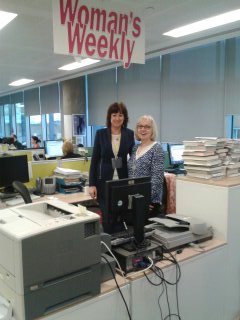
Woman’s Weekly at Blue Fin Buildings

I was lucky enough to be teaching with the very lovely Gaynor Davies at Woman’s Weekly last Monday. Here are a list of stories she currently does NOT WANT because a) they have too many already or b) they’d been done to death. So PLEASE DON’T DO THESE. hot off the press.

  1. Stories about weddings.
  2. Stories about funerals.
  3. Stories about women finding themselves by doing a bungee jump (who’d have thunk it!)
  4. Woman looking after neighbour’s cat/dog/budgie and coincidentally finding the man of her dreams! (Damn!)
  5. You think it’s a child’s first day at school (told from viewpoint of mum) but it’s actually a man leaving a woman. (that’s one I haven’t even thought of!!!).
  6. Retired husband getting under wife’s feet.
  7. Stories about adoption – mother finding child or child finding mother.
  8. Stories about infidelity – how many actual endings are there? Either she forgives him or she doesn’t.
  9. Stories in letter format. Or any other story structure that you have sold them a few times. (It was good the first time – but not quite so original on the third outing!).
  10. Children persuading elderly parents to downsize.

So what else is left? We asked Gaynor this. Here’s what she said. Stories about people, warm stories, quirky stories, believable stories. Stories with ends that do not read like the punchline to a joke. Maybe a bit of something sensual – but still within the Woman’s Weekly boundaries. These can stretch further than you think.

They  are always short of 1000 words (900-1000) and 2000 words (1800 to 2000) and also 8000 words for the Fiction Specials. Happy Writing.


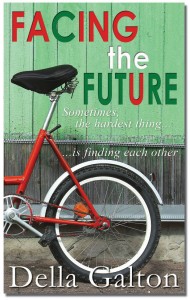
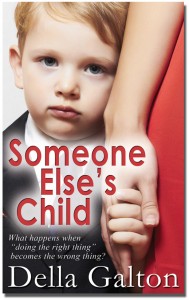
And did I mention I have two new novellas out – both previously published as Serials for Woman’s Weekly – in case you’d like a feel for what they DO like 🙂

Someone Else’s Child. Click here for a closer look.

Facing The Future. Click here for a closer look.

My novel, Ice and a Slice, is also on promotion from November 1st. 99p for a full length novel. Click here for a closer look.
Thank you for reading.

What Do Your Short Story characters Look Like?

Characterisation is the means by which you make your fictional characters appear to be real people. It is probably the most important part of any piece of fiction. If the reader doesn’t care about your character, he or she won’t read on.

Your characters reveal their personalities in much the same way as real people
i.e. via what they look like, what they do and say and what they feel.

Appearance
It’s not usually necessary to describe your character at length in a short story (unless their appearance is critical to the plot). All of the following examples come from 1000 word stories. The briefest touches can bring a character to life.

Example one (A City Girl at Heart – People’s Friend)
‘So…how are you settling in?’ I asked Andy when he phoned me the weekend after he’d moved into the cottage.
‘Fine, thanks. Absolutely fine.’
I sensed a note of unease beneath his cheery words. ‘But..?’ I prompted.
‘I keep hitting my head on doorways.’

Example two (Brief Encounter – Woman’s Weekly)
Jonathon wasn’t her usual type. He wore his hair in a ponytail. He wasn’t over tall, but he had big hands and feet, there was a comforting solidity about him. She could imagine herself snuggled up and protected in his arms.
“I build racing cars for a living,” he’d told her as they’d gone through all the polite introductions stuff. “How about you?”
“I’m a nurse. I probably treat people who’ve injured themselves in your cars.”

As you can see, these are very brief physical descriptions, but they are enough to brush stroke a character’s appearance. We know Andy is tall. Jonathan has long hair and is big boned.

But now for a story where appearance is critical to the plot.

Example Three (Mirror Mirror – Take A Break)
“I look fat in it, don’t I?”
Kath could clearly hear the girl’s voice in the next cubicle along. She was talking to her friend, another teenager. Kath had seen them coming in to the changing rooms earlier, both tall and leggy and beautiful.
But not as confident as they looked, she thought now, as she glanced appraisingly in the mirror of her own cubicle. Now she’d taken her top off she could see the slight bulge over her waistband and the tops of her arms weren’t as trim as they’d been only a couple of years ago. She gave a wry little smile.
‘You don’t know what you’ve got till it’s gone.’ Never was there a truer saying than that.

(Extract taken from later in Mirror Mirror)
Kath slipped the dress over her head and smoothed its cashmere softness down over her ample hips. It was Granny Smith green.
She could probably pass as an apple crumble in her Granny Smith dress with her newly highlighted hair. She giggled. A couple of weeks ago she’d have tugged the dress off and found something more staid, more fitting of her middle aged self, but that was a couple of weeks ago.
Everything had changed since yesterday.
For a moment she let her eyes linger on the perfect symmetry of her breasts. Earlier on she’d bought a new bra from Marks and Sparks. She got measured up because she hadn’t bought one for ages. There had been a time when she’d thought she might not need to buy a bra ever again.

Ah, so now we know why Kath’s appearance is important, why we had so much of it – the theme of the story relies on it. She has just had the All Clear from breast cancer and she is celebrating her body still being whole.

But you can see the difference, both in the amount and the focus of description needed.

Thank you for reading. For more tips on characterisation, please see my book, The Short Story Writer’s Toolshed. Currently on sale at Amazon for just 99p.

Naming Characters – Wednesday Writing Spot

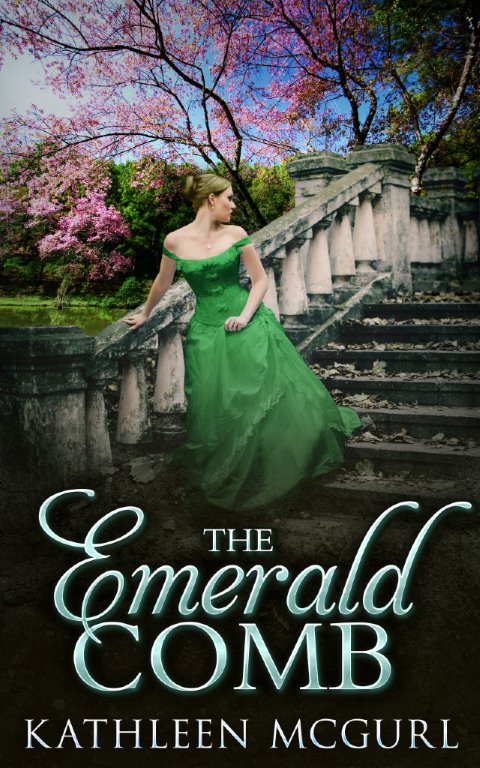
For this week’s Wednesday Writing Spot – sorry there hasn’t been one for a while – I would like to welcome my good friend and fellow author, Kath McGurl, who many of you will know from her fabulous Womag blog. She is talking about naming characters – something we all need to do – and how she went about it for her new novel, The Emerald Comb. Fascinating stuff. Over to you, Kath 🙂

‘Character names are so important. They have to be right for the period you’re writing about and right for the character. And personally, I find I can’t get to know my characters properly until I have found the best name for them.

So how do writers decide on names? For first names, some writers use baby name books, or websites which show the most popular names in given years. A good tip for historical writers is to consider the names of the royal family of the period you’re writing about. You can bet that after King George III and Queen Caroline named one of their daughters Augusta, that there were plenty of other little Augustas born in the following few years.

Surnames can be more tricky. You could flick through the phone directory for inspiration. Or, as my favourite writing spot is beside my bookcases, do what I do – browse the names of authors on book spines and pick one of those.

In my book The Emerald Comb, Katie researches her family tree. I needed her ancestors to have an unusual surname that she would easily be able to trace, and I picked ‘St Clair’. Katie was born Catherine St Clair – a name which I think has a nice ring to it. She married, and became in her own words, plain old Katie Smith. Her husband Simon is not at all interested in his family background, so I gave him the genealogist’s nightmare surname: Smith.

One of the main characters in the historical strand of the story is Bartholomew St Clair. I have no idea where the name Bartholomew came from, but I know that I woke up one morning thinking with that name in my head and I knew it was right for him.

Another thing to consider when naming characters is whether their name suits their personality. For Georgia Holland I needed a soft, rounded, pretty name. Whereas for Agnes Cutter I wanted something sharper, spikier.

A writer may want to give the reader an impression of their character just from the name. Charles Dickens was a master at this – the teacher Mr Gradgrind, the miser Ebenezer Scrooge, the conceited Mr Pumblechook, kind and jolly Polly Toodle. These names all fit the characters so well that hardly any description is necessary. The Emerald Comb contains a minor character named Mrs Oliphant, and I hope the reader pictures her as a rather large lady, just from her name.

When my children were born, in each case I had names ready for them as soon as they arrived. I hated to think they’d be in the world for even a single hour without a name. I feel the same about my characters. I can’t begin writing until I know what they’re called, and once named, I never change them. It’s part of their identity, and the main theme of The Emerald Comb is identity. So the names must be right from the start.

What’s the most memorable character name you’ve come across in fiction?’

Many thanks, Kath, and congratulations on the publication of The Emerald Comb. Please do check out Kath’s website and her new novel. Isn’t it a fabulous cover.

Website: http://kathleenmcgurl.com/

Twitter: @KathMcGurl

Facebook: https://www.facebook.com/KathleenMcGurl

The Emerald Comb: http://www.amazon.co.uk/The-Emerald-Comb-Kathleen-McGurl-ebook/dp/B00N1XRS3K


Tell your friends!

© Della Galton All rights reserved.
Powered by Cloudbase Media