Welcome to Della Galton’s website

Writing for The Friend

Last week I was lucky enough to listen to a talk – as well as have a chat with – Shirley Blair, Fiction ed of The People’s Friend.  Fascinating stuff.  Here are ten things you may or may not know about writing for The Friend.

  1. They buy 633 short stories a year – 641 if you count long reads. That’s 17 a week. Which makes them the biggest consumer of women’s short fiction and a very good market to try.
  2. They read everything they receive because they never know when they will find the next diamond.
  3. They are traditional and have a hardcore of readers who are easily offended – the ones who express dismay that consuming alcohol has become commonplace in fiction.
  4. Hence, they like to offer in their fiction, escapism, comfort, the feel good factor rather than the harsher edges of reality. Think reality in soft focus.
  5. This does not mean they want boring and same old.
  6. They like young romances.
  7. They like feel-good.
  8. They like to be entertained.
  9. They like a positive outcome.
  10.  Stories they see too much of are:
    1. Old lady who is scared of young people. Really???
    2. New widow thinking about sheltered housing, even though she is only 60.
    3. Empty nester seeing daughter off to university.

So, there you have it? Think you could write for The Friend. They have a website and a blog and are very active on Facebook and Twitter. Why not give them a go. And please give my love to Shirley.

And here’s a quick cheeky plug for my book about writing short stories. The Short Story Writer’s Toolshed. Click here to check it out. 🙂


Ideas – a poem that inspires a story

Recently, a lady wrote in to my Dear Della column in Writers’ Forum and asked me about turning a poem she had written into a story.  She wanted to know how to go about it. This is something I’ve done several times. I don’t generally use my own poems. I’m more inspired by other people’s. So this blog is about how one of the lovely James Nash’s poems became a Della Galton story. Both are published. The Promise in James’ book, and my story in Woman’s Weekly. But James has kindly agreed to let me reproduce his wonderful poem, The Promise, here.

The Promise by James Nash

We sit outside in the garden, you flat out on my knee, arms flailing at the Pyrex moon.
Honeysuckle hangs in the crab apple tree and feeds the night air as you fix me with a wondering amiable eye, gummy with sleep and half dried tears.
Inside the house she sleeps, lights blazing and every window flung open in a fragment of coma.
Breath heavy and exhausted, one breast leaks through cotton while her still rounded belly is pregnant only with hope.
A hope I share.
For your coming both completes me and shows me my lack of completion. I have never known my parents and look again and again into the faces of strangers for something of myself.
I can trace our contributions in your face, your form and your moonstone fingernails.
Though seasons and times may not always be sweet for you, I hope that you will know, as I did not this whispered long term guarantee of love.

Isn’t it wonderful!

I then asked James if I could base a story on his poem and being the lovely man he is, he agreed. Beneath the story I explain how I used the elements of the poem to create the story. Just in case anyone else would like to try this.

Here’s the story:

Evidence by Della Galton
The drive back from the hospital was both an ending and a beginning. Richard’s hands gripped the steering wheel, not with fear any more, nor with any of the nightmare tension of the preceding weeks, but with a care born of his new responsibilities.
On the back seat Jess sat close to their precious cargo. Richard was torn between keeping his eyes on the road and looking in the rear view mirror. He could see the curve of Jess’s cheek, the glow of happiness on her exhausted skin, the smile that never left her lips. It was the day they had thought would never come: the day they took their baby son home.
For the last few weeks the fragile pendulum of his son’s life had swung between hope and despair. Other emotions had been there too: the helplessness of being reliant on hospital staff, on machines, on God; the anger that this should be happening to them. Why them?
More than once he and Jess had stood by the incubator, having been summoned to say goodbye, and had held each other very tightly and wept. They had named their son, Douglas – after Jess’s father, a stocky, flame haired Scotsman. They had named him without knowing if he would survive. But Douglas, showing a fair bit of the hot headed stubbornness of his namesake had rallied. Each time the doctors thought he would not he had decided to live another night, his tiny heart beating strong, refusing to give up, proving everyone wrong.
On that first day back home they sat in the garden. It was late June. They sat on loungers beneath the shade of an ancient horse chestnut. Upstairs the yellow nursery with its frieze of smiley suns waited. The white cot with its softness of covers, the tiniest of specially made prem-baby clothes, the bottle in its steriliser – all of these things waited. And Richard swallowed the hugest of lumps in his throat and thought that all their baby really needed was a blanket, Jess’s breasts and a whole shedload of love.
And also on that first day and on every day since Richard had searched his son’s face for something he recognised of himself.
The Scottish lineage was evident. His son already had the hot red hair of the last three generations and his mother’s fierce little mouth. But Richard could see nothing of his genes. Deep inside him an ache was growing. An ache he hardly dared acknowledge or bring out into the light.
All through those long nights at the hospital he had prayed only for Douglas to live. He had watched the rise and fall of his chest, he had listened to the machines, he had held tight to Jess’s damp clenched fingers, and he had never dared ask for more than for his son to live. Now he felt ungrateful. He felt as though he should be thanking someone – God, the universe, destiny – for the miracle of his son’s life. He should not be looking for evidence of his own genes.
And besides, perhaps it was a good thing Douglas took after his mother – why would he want the tall gangly limbs of his father, the thinning hair, the anxious grey eyes? Why would he want any of these things?
‘He has his grandfather’s lungs,’ Jess said one Saturday afternoon when they were in the lounge and Douglas was yelling at the top of his voice.
‘Let me take him.’ Richard held out his arms. ‘Why don’t you go to bed for a while, love. Get your head down.’
‘I doubt I’d sleep.’ She laughed as she held their son up in front of her while he screwed up his face and bawled. ‘We haven’t got soundproof doors.’
‘I’ll take him out,’ Richard said. ‘We’ll walk to the park. It’s a lovely day.’
She yawned. ‘Go on then. And thanks.’

It was in the park that it happened. And it probably wouldn’t have happened but for the old lady with the pink and yellow walking stick. He admired it as he walked past and she smiled at him and said. ‘Do you like it? I got it because it reminded me of the sticks of rock I had as a child. Sugar candy colours.’ She leaned into the pram. ‘What a fine looking young man.’
He stopped – of course he stopped – he was radiating pride.
‘You can’t always tell,’ she said, ‘when they’re that little, but he’s an unmistakeable boy. Look at that strong little jaw.’ She glanced up at him. ‘Just like yours. And he has your long fingers too, doesn’t he, bless him. Does he have long toes?’
‘Yes,’ Richard said, feeling a glorious sense of recognition sweep through him. ‘Yes, yes, he does.’
‘You must be so proud.’ She cooed into the buggy. ‘You’re going to be even taller than your daddy, aren’t you, my darling? Is Mummy tall too?’
‘No,’ Richard said. He didn’t even mind her over-familiar use of “my darling”. He wanted to hug her. He wanted to punch his fist up to the heavens. He wanted to jump up and down. How come it had taken a stranger to point out what should have been so obvious?
Not evidence that Douglas was his – he knew that without a shadow of a doubt – the love he and Jess shared was the most solid thing in his life. But evidence of himself, his own genes – maybe he hadn’t spotted it because he just hadn’t known where to look.
He had never known his own parents. He’d grown up in the care system. His birth parents had registered a wish that he never get in touch. But that hadn’t stopped him searching. When he was out with his foster carers in supermarkets, on buses, on day trips to the seaside, he had scanned the faces of passers by. He had searched for something he recognised, something of his own, some sense of history, of roots, of belonging.
Richard reached into the pram and Douglas gripped tight to his finger. ‘My son,’ he whispered, oblivious now to the old woman and her sugar candy walking stick, oblivious to the fact he was in a public place and there were tears rolling down his face.
‘My son,’ he said again, feeling – for the first time in his life – utterly complete.

How I went about it

  • I decided to write the story in male viewpoint – as it’s primarily about a man. Richard, my main character, was born.
  • Interestingly, in the poem, the character’s ‘problem’ is that he’s adopted and he didn’t have the stability of genetic parents. The denouement is that he promises his son that he WILL have a long term guarantee of love.
  • To make my story work I felt I needed a further problem. I made Richard’s son, Douglas, a fragile baby who’s only just come out of hospital when the story begins. Also there are hints that Richard can’t see himself in his son’s face. I want the reader to think that Richard is worried about his son’s parentage. So I misdirect them.
  • I also decided to withhold the adoption strand from the reader in order to create a mini twist. We do not find out until near the end that Richard is adopted and this is why he searches his son’s face for something of his lineage.
  • This conclusion also needed the introduction of a new character, so we have the addition of the old lady with the pink and yellow walking stick in the park.
The best thing about writing a story based on a poem is that the emotion that you feel from the poem should inspire you to write the story.  I’d be really interested to hear about other people’s experiences. Have you tried this method of writing stories. Or indeed, has anyone ever tried doing it the other way round?

Thank you very very much to James Nash. You can check out James and his work here

Also you can visit his Amazon page here. The Promise is published in the book Coma Songs.

Creating Suspense in Short Stories – Three Top Tips

I used to believe that the art of writing suspense was mostly about technique – short sentences build tension and pace, longer sentences slow it down. But suspense means so much more than this. So what does the word suspense actually mean?

Maybe I won’t tell you yet…

Just kidding, but, according to the Oxford Dictionary, suspense is a noun and it means:

A state or feeling of excited or anxious uncertainty about what may happen

So how do we create this in our writing? Here are my top three tips:

1. Pose questions, but do not answer them. As soon as you answer a question the suspense is gone.

Here is the beginning of A Table for Four, a story I sold recently to My Weekly.

What should I wear? I looked at the clothes laid out on my bed and sighed. There was a part of me that didn’t really want to go to this reunion lunch. I didn’t want to face all that emotion, all that honesty. I didn’t want to be reminded of the past. And it was going to be odd without Alice. It was the first year that we had met without her.

There are several questions in this opening paragraph. What should the narrator wear? What sort of reunion is it? Who’s Alice and why isn’t she there this year?

In order to create suspense – they should not all be answered in paragraph two. In fact, it’s a good rule of thumb to make sure you never answer a question without posing another one.

2. Withhold Information – for as long as you possibly can without being annoying.

Paragraph two of A Table for Four

For a moment I let an image of her face fill my mind. Her sparkly blue eyes, her ever present smile. I’d loved Alice to bits. I don’t think I’d have got through my surgery or those endless hospital visits without her irrepressible brightness.

Cue flashback.

“Chin up, honey,” she’d say if I’d moaned about my hair falling out. “You’re not going to miss a bit of grey hair, are you?”
“It’s not grey, you cheeky mare,” I’d snap, and she’d click her tongue and shake her head. “You’re smiling though!”
It was amazing how you could joke about the darkest of things. It had often surprised people – family and friends – when I’d told them how much laughter there had been on Marshall Ward.
I had to go to the reunion. Besides, I wanted to find out how everyone else was.

So now we know a bit more about Alice – but we still don’t know who she is – or where she is – or exactly what’s going on here, although we are slowly being given more information.

3. Use Foreshadowing

I don’t mean the type where you say, she had no idea that tonight would be the last night of her life. Although that might well create suspense, it’s a bit clunky and amateurish. Instead, set up a scene or situation where you don’t explain something that will crop up later. Here’s a paragraph a little later in A Table for Four.

The waitress came for our order.
“Are you still waiting for someone?” she asked, glancing at the empty space beside me.
I shook my head, but when she moved to clear the surplus knife and fork, I stopped her. “Please could you leave them?”
“Er – yes, sure…” The waitress looked puzzled but no one enlightened her.

In this way although the reader might well guess that the fourth place is for Alice, they won’t know for sure why the others want it left, even though she isn’t coming.

The art of writing a good short story is to keep the reader guessing. Indeed if you’re writing a twist you need to keep them guessing until the very end. It’s the same with all writing. If you’re writing a novel or novella you have the luxury of cliff hangers too – don’t just keep them for chapter endings – use them for scene endings.

At the end of your short story the questions you’ve posed need to be answered. For example at the end of A Table For Four – we find out why a place has been set for Alice, even though she isn’t coming, and where she actually is. And there’s also a little twist. I’m afraid I can’t reveal the end as I don’t think this story has been published yet. If the suspense is really too much – email me privately and I’ll tell you!

PS in other news: my novel, Ice and a Slice is on Kindle Countdown. Between Friday 27th June and Thursday 3rd July it’s only 99p instead of £1.99.

Eating Loads and Staying Slim

The hardest thing about losing weight is keeping it off. I learned this in between trips to Slimming World, which I have been to three times.  That says it all really. I loved Slimming World – they helped me to lose a lot of weight – but as soon as I stopped going to weekly meetings I put it back on.

I have put on weight again lately. About six pounds. Not a lot, I know, but enough to make all my jeans and trousers (that did fit comfortably) too tight. I hate that feeling. Fortunately I know what to do about it.  I co wrote a book called How to Eat Loads and Stay Slim, didn’t I!  And part of staying slim is to get rid of the odd half stone when it becomes necessary.  I wish I was saintly enough to keep it off in the first place – but I’m not. Hey ho.

So let’s get positive.  The first thing is to stock up the fridge with things I can eat and still lose weight. Things that are satisfying. I am NOT going to starve myself – I know that doesn’t work.

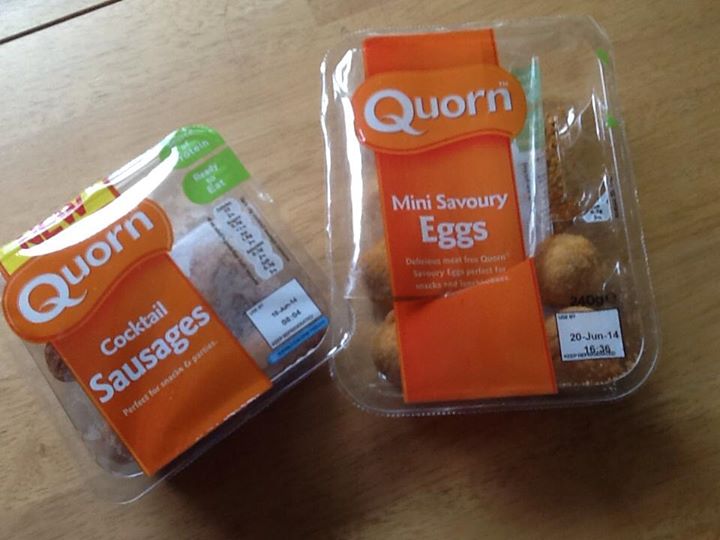
Here’s a couple of them. I’m not vegetarian but where else can you get a scotch egg that’s only 53 calories or a cocktail sausage for 33 calories. If you haven’t tried them, I highly recommend them. They are great snacks. I like snacking – it stops me getting hungry enough to eat everything in sight. One of the ways I stay slim is to make sure I have low calorie snacks on hand in the fridge. Ones you don’t need to cook. If I’m hungry I want them NOW!

Yummy even if you're not vegetarian

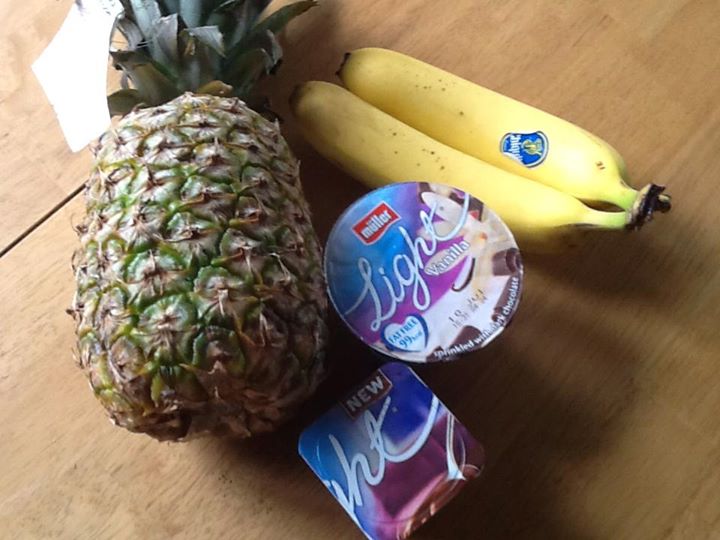
I’m also eating fresh fruit for breakfast. Fresh pineapples are awesome at the moment. They make great desserts too – especially if they are dipped in chocolate yogurt or chocolate mousse, fat free of course. The two in the picture are 99 calories per pot. The one at the bottom of the picture is also made by Muller.

Great for breakfast or dessert

Here’s another picture of the Muller chocolate dessert I just found and it really is this yummy and thick!

I hope to be back to my usual size in about three weeks. Then I’ll relax a bit. It’s what we do most of the time that’s what counts. I will eat cake and chocolate and pizza again – I’ll eat some over the next three weeks – but not too much. And I’ll up my dog walking forays to compensate – so the dogs will be pleased.  Feel free to remind me of my mission on Facebook or Twitter, tee hee. There’s nothing like a bit of motivational nagging.

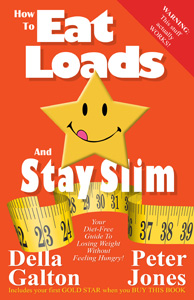
Oh and before I forget, How to Eat Loads and Stay Slim– that book I mentioned earlier – is only 99p until Wednesday. It has quite a few more eating loads and staying slim tips in. And do you like the flash new cover?

How to eat loads and stay slim


Woman’s Weekly Fiction Workshops – Hot Tips

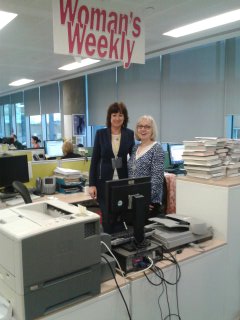
A couple of Fridays ago I was teaching again with Gaynor Davies at the Blue Fin Buildings, our subject, Writing Short Stories for Woman’s Weekly. I thought you might like an update. There are two more short story workshops planned at IPC, by the way, 15 August and 1st September 2014, click here for more details and as they are so popular I’m also in discussion with Gaynor about doing another one this year, probably in October. So don’t worry if you can’t get to one of these.

In the meantime for those who can’t make a workshop, here are a few tips from myself and Gaynor hot off the press. I must point out these are my tips, as I understand them, not direct quotes from Gaynor. (Just in case any of the Woman’s Weekly team are reading).

  • When Woman’s Weekly first came out their aim was ‘To be useful and not deal with the sordid side of life’.  An old adage which still holds true today.  But do be contemporary.
  • Today’s fiction should be escapist, but also believable.
  • Many stories are rejected because they are too old fashioned.
  • They need stories that have an individual voice so don’t copy the style of previously published stories.
  • They also want variety.
  • They are always looking for more humour.
  • Most popular lengths are one pagers (900-1000) and two pagers (1800-2000)
  • You can go up to 8000 words for the special and (top tip) they don’t get many of these.
  • On a technical level – keep the style simple. Cut adverbs and don’t get too wordy. The verb of speech ‘said’ is fine. Characters don’t need to exclaim, explain and expostulate.
  • Remember that imagery is good but too many images can cancel each other out.
  • Woman’s Weekly stories must have a proper ending – you don’t have to tie up the ends in a neat bow, but stories can’t be completely open ended either.

In the latest Woman’s Weekly Fiction Special (May – on sale 1st April to 6th May) I have a short story called By The Book (page 24 if you’re interested.) By The Book is a light romance about online dating. I don’t do many romance stories, mainly because it’s so hard not to get predictable. I was inspired however to write this story by Peter Jones’ latest book How to Start Dating and Stop Waiting which is very entertaining and also a brilliant guide to internet dating.

Woman’s Weekly are also very keen to get new serial writers. Serials go up to five parts, which is a lovely length if you want to write longer than a story but aren’t ready for a novel. The current one, called Amos Browne by Leonora Francis is excellent. If you would like to look at another example of a serial you could try my latest novella Shadowman, which was once a serial in Woman’s Weekly but is now having a second lease of life as a novella. If you buy it in the next day or two it’s only 99p too – as it’s on an Amazon Countdown promotion can’t say fairer than that!

And as I’m in ‘shameless promotion’ mode, if you’d like to read any more short stories by yours truly please do check out my collection of Daily Della titles, for example, Lessons in Love which is just £1.53. All of my Daily Della stories were previously published in magazines so they will give you a flavour of the type of story required.

There is a fabulous roof top terrace canteen at Woman’s Weekly, by the way, which does amazing shortbread – just in case you were still trying to make up your mind on whether to book up for a course.

If you’d like to know any more about the art of writing short stories, please also check out my Short Story Writer’s Toolshed which is £1.99 for kindle.

Thank you for reading. And here’s hoping none of our stories stay in the cupboard (see previous blog, journey of a woman’s weekly story) for long!

Wednesday Writing Spot – What Would You Save in a Fire?

So… this is the year you are going to write that novel, sell a short story to a magazine, publish that memoir. In short, do everything you said you were going to do this time last year but didn’t quite get round to.  So what’s different?

You’re more determined/inspired/motivated? Delete as appropriate.

Maybe you don’t need to be any of those things. Maybe it’s simpler than that.

Can I tell you a story?

It is 1997, five a.m. on a winter’s morning. I am asleep in bed when I hear the sound of shouting.  I don’t stir much. I think I am dreaming, and even when it becomes apparent that I’m not, I assume that the shouting is aimed at my neighbour, Eric, who lives in the flat above mine. Eric is a commercial window cleaner. His boss picks him up at an ungodly hour to take him to work. Eric is also fairly deaf and in order to wake him, his boss has to bang hard on the door and shout, and sometimes throw stones up at the window.

Today, his boss is making one heck of a noise. Eric must be deeply asleep.

I hear the sound of smashing glass – and it strikes me that Eric’s boss must have thrown one too many stones at the upstairs window.  How irresponsible, I think, pulling the duvet up over my head.

“Fire, FIRE, your house is on fire!” shouts Eric’s boss, and finally I rouse myself. Now that is just too much.  Someone might think there really is a fire.  Now I am angry. I decide to go to my own front door and give him a piece of my mind.

The man standing on my step is not Eric’s boss, but a stranger. A passing taxi driver, I later discover.  “Your house is on fire,” he says urgently. “You have to get out.”

And suddenly I realise there are flames leaping out of the windows of Eric’s lounge – which is directly above the bedroom where I slept until a few moments before.

There is no time to fetch so much as my slippers. I and my dogs are out of that flat in seconds. And thankfully Eric isn’t in his either.  The fire brigade arrive, the heroic taxi driver melts away into the night. I stand across the road in my nightie and a kindly neighbour’s coat and watch my house burn.  One of the more surreal experiences of my life.

Now, I am not telling you all this for dramatic effect, but because of what happened next.

After the fire brigade had made sure the fire was out, a hunky fireman strolled across the road and said to me. “Very soon there will be water flooding through your ceilings. We don’t have much time but is there anything in there you would like to save?”

What would you save in a fire?  I didn’t know until that moment. But aside from animals and people, there was only one thing I really cared about in my flat.

My writing!

At the time, I’d been writing for about ten years and I worked off my dressing table. And it was in the days when it wasn’t so easy to back up your work.  (I made copies to floppy discs when I remembered) Ten years of my work was about to be drowned.

So…rather swiftly, the very nice fireman and I carried my tower, monitor and printer – all still attached because there wasn’t time to unscrew any cables out of my ‘shortly to be waterlogged’ flat to the safety of my car. It wasn’t my ancient PC I cared about, but the stories that were on it.

I’ve thought about that incident many times since.

I think I was lucky to be in that fire. It forced me to focus on what my priorities were. Aside from people and animals, writing was the most important thing in my life.

So what are your priorities? If you were in a fire what would you save? If you had six months to live, would you use it to write that novel?

Would you?

Sometimes I am asked if there’s a secret to my writing success. I think that this may be it 🙂

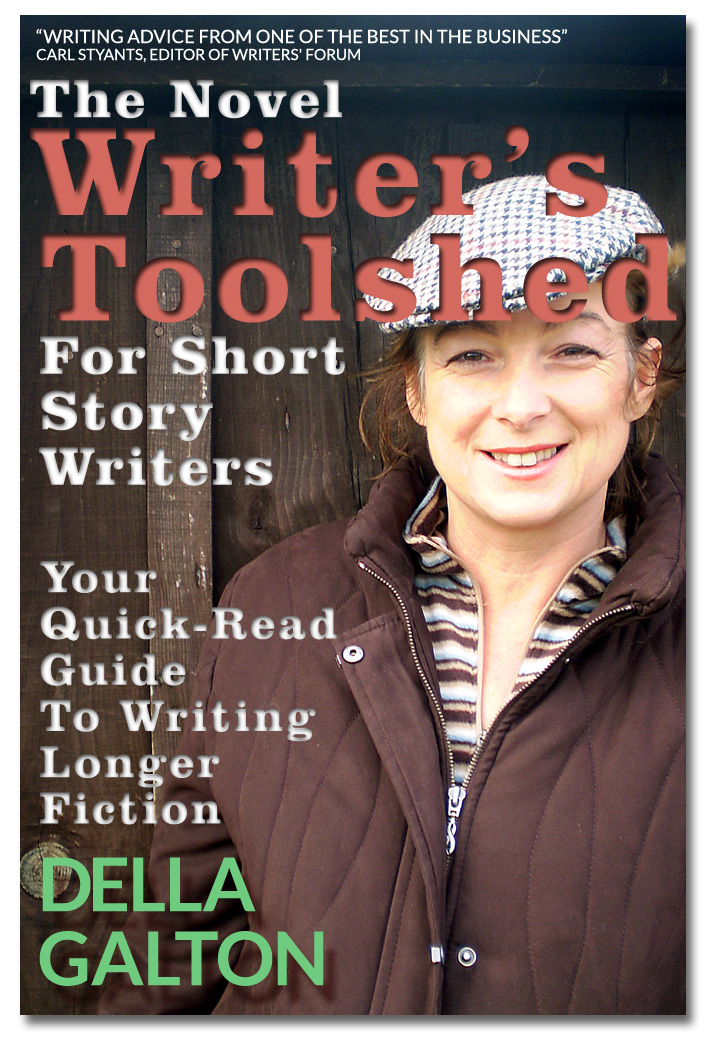
If you would like to know more about writing short stories or novels, do please check out my two latest writing guides: The Novel Writer’s Toolshed which is available for Kindle £1.88 and in paperback £4.99.

The Short Story Writer’s Toolshed which is available for Kindle £1.88 and in paperback £4.99.

Happy Christmas

A very quick blog to say festive greetings and also, I must apologize for the distinct lack of reading material I’ve produced lately. In the last few weeks I’ve been moving out of my house, trying to find a new one, and sorting out Christmas, all whilst working as usual. Slightly tricky, even for a workaholic like me. So I just wanted to say, have a fabulous Christmas everyone. Full service shall be resumed in the New Year and thank you for following my blog 🙂

Christmas Presents for Writers

That time of year again! How does Christmas creep up on us so fast?

If you’re anything like me you’ve got one or two writers in your life so I thought I’d share some of my present ideas 🙂

I discovered this company a couple of years ago – The Literary Gift Company It’s great if you want something for the writer in your life. They do everything from pens inscribed, ‘write a bestseller with this’ to chocolate bars inscribed with the words, ‘go away I’m writing.’ If anyone is stuck for a present for me, er hem, I love chocolate!

A signed book is always great too – especially if it’s about writing. Might I suggest one of mine, perhaps the Short Story Writer’s Toolshed although one of yours is probably better if you have one.  🙂

The ultimate gift is surely a dedication. You could dedicate your own book to a loved one.

You don’t have a book to dedicate? Why not? Is it because you haven’t got the technical side of things sorted out? Then you might like to check out this company, who will do it for you for a very reasonable cost. I highly recommend soundhaven.com A friend of mine recently self published her memoir with them to give to her dying mother. What an amazing gift.

Or how about a gift for you? A writing holiday perhaps if your partner is feeling flush? There are still places on my weekend writing course Write a Story Step by Step which takes place from 28th February to 2nd March in a beautiful hotel in Pembrokeshire.

Or maybe a novel to curl up by the fire with, Ice and a Slice is good, I’m told 🙂 Or for the slimmer in your life, How to Eat Loads and Stay Slim, maybe?

Or maybe even a gift to yourself. If you are anywhere near the Bournemouth area I teach weekly writing classes on Thursday evenings and Friday mornings. My new term starts on 9 and 10th January. I would love to see you there. I will do my best to inspire you throughout the year.

By the way I once received an amazing gift and it cost the giver nothing at all. It was a certificate promising me he would dedicate his first published book to me. What an awesome gift. So maybe if you do happen to have a book in the pipeline…?

Happy gift hunting. And Happy Christmas.

love Della xx

Wednesday Writing Spot – Calling all short story writers who want to write a novel?

If you’ve ever tried to write a novel and you’re on social media – particularly around this time of year – you have probably heard of National Novel Writing Month (NaNoWriMo for short).  It’s simple, you write a novel in a month. You start it on 1st November and you finish on the 30th November.

Of course you can do that any month of the year but the idea of signing up for NaNoWriMo is that you do it in November and you don’t do it alone. Thousands of other people around the globe do it alongside you. In 2012 341,375 people signed up for the challenge!

Once you have registered with NaNoWriMo, click here, i.e. made a commitment (very motivating – and quite scary) you upload your daily word count to the site. You can even scramble your words – look at their Frequently Asked Questions to find out how – that’s if you’re worried about someone plagiarizing your  potential best seller 🙂

To qualify as having written a novel in 30 days you have to write a total of 50,000 words 1666 words a day. Simples!

Well, we all know it isn’t simple, but clearly it is doable and actually the ethos behind NanWriMo is that you just write and you don’t stop to edit and beat yourself up over whether it’s perfect. This is great if you’re a procrastinator like I am.

Some Frequently Asked Questions (Della style)

Why would I want to do it?

Well, for the challenge, for fun? (depending on your definition of fun). Or maybe just to see if you can. That’s why I’m going to do it. I’ve been writing less and less fiction lately and I want to get back into the swing of it. I want to focus on my fiction writing and this seems like a great way to do it.

Where do I find the time?

I’m not sure.  Other writers I’ve spoken to say they give up television, or social media (yikes) or they get up an hour earlier  or go to bed an hour later.  How you do it is up to you. The point is that you do it – and it’s only for a month. So it’s not such a huge sacrifice.

What if I fail?

Do you know, I’ve already made up my mind that I can’t really fail. Because even if I don’t complete 50k I will sure as hell have a lot more words than I’d have had if I didn’t commit myself to writing 1600 words a day. There’s a very good chance I’m going to at least begin the challenge. So failing isn’t actually going to be a factor.

I usually write short stories – how do I write a novel?

This last question is in fact a shameless excuse to tell you about my new writing guide, The Novel Writer’s Toolshed (for short story writers).

This is the book I wish I’d had when I moved from writing short stories to writing novels. It’s available for kindle, just £1.88. Click here. A week from now it will be available in paperback. (Don’t panic – I’ll remind you)

So who’s for a spot of NaNoWriMo then? You can find my profile here.

While you’re here, please check out my two writing guides. How to Write and Sell Short Stories published by Accent Press and The Short Story Writers’ Toolshed published by Soundhaven.com


Goals, writing a bestseller and the law of attraction

If you are a regular follower of my blog you will know I’m quite keen on goals. I set goals for my writing: I set annual goals, which get broken down into weekly, monthly and daily goals. I come from a managerial background. Before I was writing full time I worked with targets both for myself and my staff.  (I wish I had staff now, ones that did housework and cooked dinner, sigh…). And goals transfer well to writing. They keep me motivated and help me to plan my work.

Today I was talking to Helen, a very wise, and very good friend of mine, about one of her favourite subjects, the law of attraction. If you haven’t heard of this before, it is the process of attracting things, people, money, and – well virtually anything you like really – into your life, effortlessly.

“You could do it,” Helen said, with a huge smile. “What would you like to attract into your life right now?”

“What I would like most,” I said, after a few minutes thought – OK, three seconds thought – “Is for my novel, Ice and a Slice, to be a bestseller.”

“Right,” she said, “You’ve just taken the first step. You’ve thought about what you would like.”

“How many steps are there?” I asked.

“Four,” she informed me cheerily.

So step one: Think about what you would like to happen. 

“What’s step two?” I asked.

“Form a clear intention about exactly what that means. Write it down.”

I had a think.  “Hmmm, well, I think I would like Ice and a Slice to be on the New York Times Bestseller List, oh and it would be quite nice if it was a Sunday Times Bestseller too. That would be pretty cool.”

Step two: Be specific. Identify a very clear goal and write it down somewhere you will see it often.

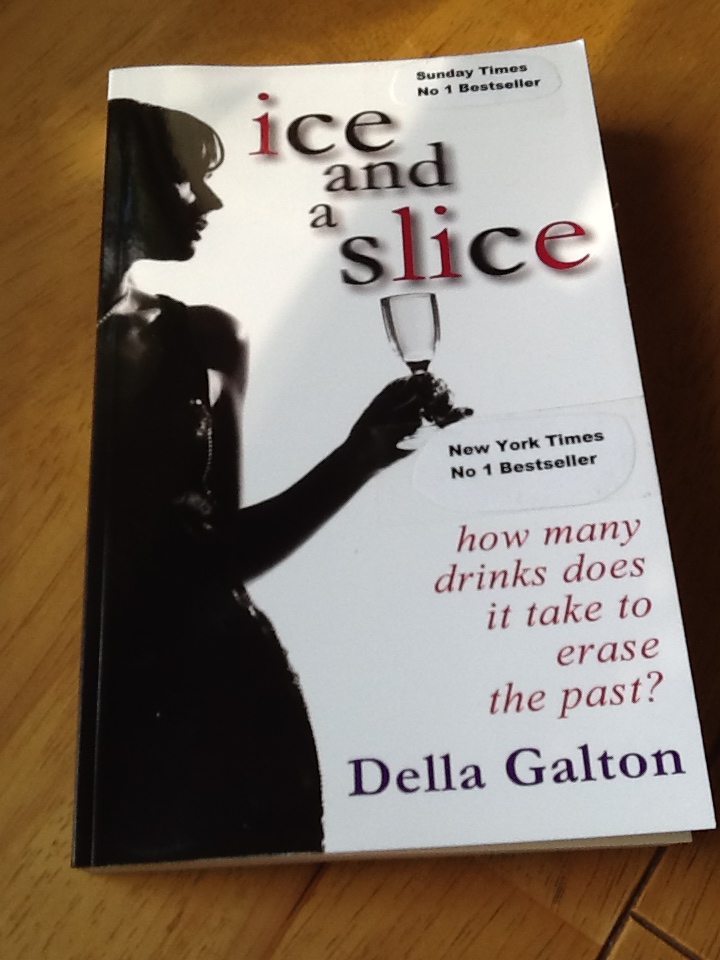
I thought it might be quite a fine plan to write it on the cover of my novel. Which was excellent fun. I recommend this. See picture.
“Step three,” Helen continued, “Is to take action.  Think about your goal (what it actually means) and then identify the actions you need to take to make your goal happen.”

Step three: Take Action.

That was pretty easy. If I want my novel to be a bestseller I need to sell a lot of copies. How exactly do I go about that? Well, I need to tell people about it for starters. Ideally, it would be good if I could get an advert on prime time television – in between the first and second half of Corrie would be excellent, or maybe Britain’s Got Talent.  However, I think this may require slightly more of a budget than I’ve got at my disposal 🙂

So what’s Plan B?

I can tell people about it.  Hence this blog – well you are reading it aren’t you?  Did I mention that Ice and a Slice is now out in paperback and it’s available here. You may find your copy doesn’t have quite the same cover as the copy above, but it’s close. It’s also available for Kindle enabled devices here.

“So is step four, to sit back and watch your plan, come to fruition?” I asked Helen with a wink.

“No, it is not,” she said, wagging a finger. “Step four is a ‘results step’ you are right there, but it does not involve sitting around doing nothing.” (I had a feeling that would be the case!)

“As you continue to carry out the actions that will make your goal a reality you will grow both personally and spiritually. But you must persevere. You must carry out these actions with passion. You must never, ever give up. It is in the process of action, action and more action that you will grow spiritually, and you will also inspire other people.”

Step four: Persevere. Never give up, which will result in both personal spiritual growth and will also inspire other people.

I decided to have another go at the cover. Just to be sure – this one’s slightly different. Check out the top right hand corner. I really do recommend you do this with your own bestseller projects by the way.  It’s excellent fun.
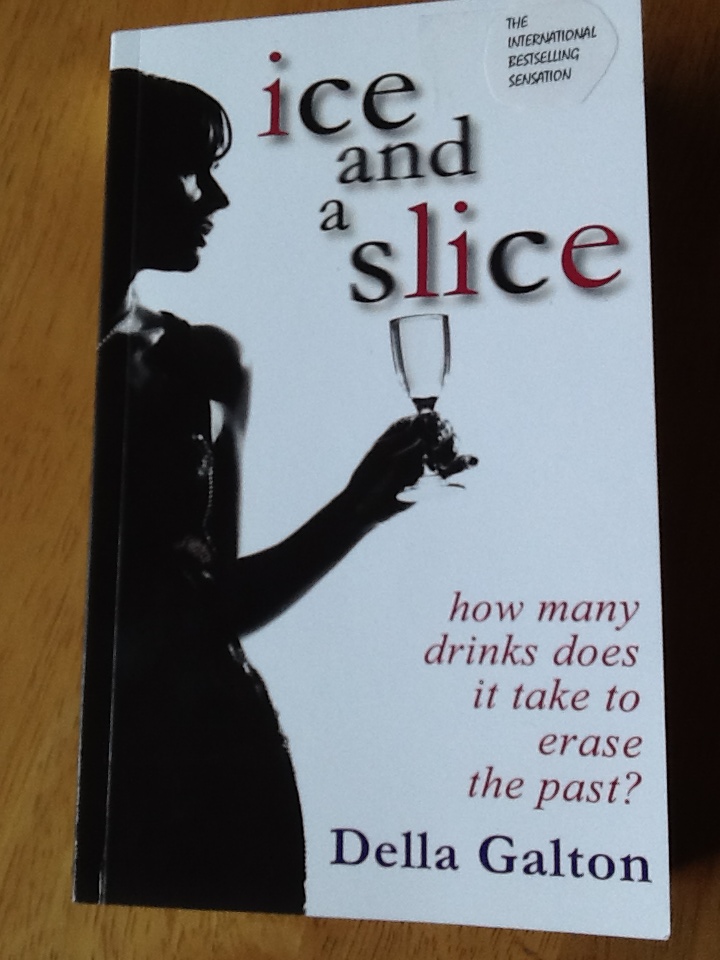
Does it work? I have no idea. But I have a great deal of respect for my friend, Helen.

Watch this space!

What I can confirm, however, is that if you are feeling low about anything, whether it is writing related or anything else, trying these four steps really does cheer you up. So it’s worth doing it just for that reason. I would really love to hear your thoughts. Please do comment.

Tell your friends!

© Della Galton All rights reserved.
Powered by Cloudbase Media