Welcome to Della Galton’s website

Five Tips to Stay Inspired With Your Writing

  1. Got an idea for a story? Write more than one opening paragraph – it takes the pressure off having to get it perfect. Keep writing openings until you feel the inspiration kick in.  This can sometimes take me a while.
  2. Don’t edit your beginning until you’ve completed the story. It’s very easy to focus so much on perfecting an opening paragraph that you never get to the end.
  3. Don’t end the section you’re writing at the end of a scene break. Stop mid scene, mid paragraph or even mid sentence if you’ve got a good memory! It’s much easier to pick it up again.
  4. We tend to spend much less time on the end of a story.  The right ending can take time. Write more than one closing paragraph.  Then leave the story a week or so before coming back and seeing which one feels right.
  5. When you have a complete first draft. Leave the story another week before you do your final edits.  A student I once taught likened it to putting your story in the ‘naughty cupboard’. When you go back to them they will tell you everything they did wrong. This is so true. Mistakes will leap out after a gap of time that it’s impossible to see when you’re close to your work.

Is Your Writing Smelly Enough?

Using the senses in your writing, especially the sense of smell, really helps to take the reader into your story.  However, it’s just as easy  to be cliché with smells as with any other writing so choose carefully and be current.   For example, do today’s hospitals really smell of disinfectant and boiled cabbage? Maybe they do, but they smell of a lot of other things too. I asked my writing students to come up with something different. Here are the results.

Hospital smells

  • Antiseptic hand wash.
  • Floor polish.
  • The colognes of visiting relatives.
  • Stale air.
  • Mass produced food.
  • Body odour.
  • Fear.
  • Fresh air and rain on the clothes of visitors.

We did the same thing with beaches.

Beach smells

  • Donkeys .
  • Coconut suntan lotion.
  • Burger vans.
  • Fish and chips.
  • Candyfloss.
  • Cigarette smoke.
  • Diesel generators from fast food stalls.
  • Ozone.
  • Rotting seaweed.
  • Fresh air.
  • Smoke from Bbqs.

I have a post it note stuck over my desk.  Smells, touch, taste.  I tend to use the other senses anyway but it’s easy to forget these three, especially the sense of smell.

A rose by any other name!

For more tips please check out my books on writing.

The Short Story Writer’s Toolshed

The Novel Writer’s Toolshed.

How to Write and Sell Short Stories.

Moving on From Short Story to Novel. 

I am also running a course in Bournemouth on Saturday 28 May – How to Write and Sell Short Stories. 10.00 am till 4.00 pm. £45.00. Please email me via this website if you’d like more details.

Happy writing!


Writing With Emotion – Four Top Tips

Writers are in the business of selling emotion. I forget who said that, but it’s true. We read – or at least I do – because we want to feel something. We might want to feel amused, uplifted, scared, touched, nostalgic or excited – or any combination of these. But we always want to feel something. We want to escape into an alternative world. A good writer will take us there. They will make us feel emotion. How do they  do it? Well I can tell you how I do it.

  1. Create Larger than Life REAL FLAWED Characters We have to care about the characters. Which means they have to be interesting. They need something that we love or possibly hate about them. They cannot be bland. They should be larger than life. Thing big.  Flawed characters are great.  So give your characters flaws. This is part of a review left on Ice and a Slice by James Nash. ‘This is ‘real life’ in all its complicated glory, challenging, gritty and very, very funny.’ Paradoxical flaws are the best I find. Especially if you don’t tell the reader straight away why the character has them. For example, in my novel The Morning After The Life Before, one of the main characters, Didi, has a phobia of white.  She can’t eat white food, she can’t keep milk in her house. She can’t have white appliances in her kitchen. Yes there’s a very, very good reason and it’s a vital part of the plot but I don’t reveal that until later in the novel.
  2. Use Universal Truths We all know what it’s like to feel we don’t fit in. That we’re not good enough. That we’ve been abandoned. That we’re not loved. We all know what it’s like to be human. Capitalize on these universal truths. Make your characters feel them. Transfer onto the page how you felt – when YOU felt these very powerful emotions.
  3. You MUST Care It’s very hard to write emotion by numbers. The first person who has to care about the characters is you. And I mean you have to really care. You can’t just pay lip service to it.  You can’t write emotion from a distance. You have to care so much you’ll feel pain if your character were to die. Bring this pain in from your own experience. We all know what it’s like to feel extreme pain. Use it, relive it, get it on the page. Wring out your soul. That may sound overdramatic (not to mention painful!) but it really works. What comes straight from the heart goes straight to the heart. If you feel it I guarantee your readers will feel it too. Don’t hold back. Don’t skate over emotions – they are everything. Absolutely everything.
  4. Go For High Stakes Give your characters emotionally charged dilemmas.  Make the stakes high. Loss of love, loss of life, loss of family. If you take us into a war zone I guarantee we’ll care. If you take us to a life threatening situation or a death bed situation we’ll care. If you show us the tenderness between mother and child, or of any kind of unconditional love we’ll care.

Also – try to keep it real. We are interested in the nitty gritty bits of human life. The specific details.

I’ve had some amazing feedback on my Ice series. I’ve had many many emails from reader telling me they loved SJ because she is warm and very flawed.  In Ice and a Slice she is struggling with a drink problem. She is very much in denial. One of my reviews for Ice says, ‘SJ is flawed and vulnerable and sweet but also sometimes self centred and thoughtless, just as people in real life are. She often tries to do the right thing with it backfiring spectacularly – sometimes with comic results.’

I was so thrilled to read this. And it brings me on to my next point.

One last bonus tip. Pathos and humour are amazing if they are on the page side by side. One will point up the other. Don’t be too dark. There is humour in the darkest situation. And actually, not so often quoted, there is pain in the lightest situation. 

Ice and a Slice is half price between December 27th 2015 and January 3rd 2016

Book two in this series, The Morning After The Life Before, is half price between Jan 3rd 2016 and January 10th 2016.

Happy New Year 🙂

Six tips for writing shorts for Nanowrimo

As I mentioned in my last blog I’m busy doing Nanowrimo this month. But as usual I’m writing 50k of short stories in November not a novel. This is more useful for me, being as shorts are my day job. I thought I’d share some of how I work with you – in case it’s helpful. Here are my top tips.

  1. Keep them all in one document. I call mine Short Story Bonanza 2015 (Nano likes a title). And it’s easier to keep a word count if they are all in one place. I do start a new page for each story and I head it up with the date. (I don’t often have a title when I start a story.)
  2. I don’t necessarily start a new story each day.  I try to finish the one from the day before. After all, the object of doing Nano is that I write saleable stories and they have to be finished at some point. So I finish as many as I can in draft. But there might still be the odd one unfinished. And that doesn’t matter. Very freeing.
  3. Make Nano the first thing you do. I tend to get up early at least every other day and start at 6 ish. That way my words are often done by nine and I can get on with the rest of my day. I can’t tell you how good that feels!
  4. Use prompts to get going. I love A Writer’s Book Of Days by Judy Reeves. It has a prompt for every day of the year. Fabulous.  I’m not a plotter. I never have been. I sit at my desk, and I start typing. I trust the process. The main thing which stops us writing is us. Our lack of confidence. Our internal editors. Switch off these negatives and just write. You can do it.
  5. Do not use any Nanowrimo time for editing. Always do your daily word count first. Edit later. I edit most of my Nano stories in December. I like editing and it’s a lovely thing to do in December.  I do edit some of the Nano shorts in November. But I take them out of the main document and save them as a new document. I’m always cutting when I’m editing so I don’t want to be cutting any of my nano words, do I?
  6. Nano with a friend. I’ve got a writing friend coming over later today and we’re going to have a go at writing a story each, using the same theme. This makes it so much more fun. And it’s inspiring. And we can get feedback straight away should we want to edit the story and send it out before the end of Nano.
  7. Oh and one last bonus tip.Make sure you’re stocked up on coffee or biscuits! Or whatever you need to reward yourself! (cake in my case). We deserve it.

And if you’d like any help with writing short stories, please do check out my book, The Short Story Writer’s Toolshed. £2.49 for kindle or £4.99 for the paperback.

Happy Writing!


How do I stop my romances becoming predictable?

A rose by any other name!

Here’s another question from a recent postbag at Writers’ Forum. This one comes up quite a bit.  We’re talking fictional ones by the way!

Q A common cause for the rejection of short stories (I know, because I’ve received many!) is that “the story line was too predictable”. I find this very hard to avoid particularly when writing a romantic story for the women’s magazine market, when the maximum number of recommended characters is only three or four. What can be done to stop the reader from working out that the boy and girl who meet at the beginning of the story are not inevitably going to end up in each other’s arms?

A First of all, I emphasize with you. I agree that writing a romantic short story for a magazine is one of the hardest genres to crack, for exactly the reasons you state.  Here are some tips that I hope may help:

  • While the romance is likely to be a little bit predictable, other aspects of the story needn’t be.  You might want to try a unique setting. I’ve sold more than one story which featured a wedding or romance set somewhere unusual, for example an ice hotel. Think about setting your romances somewhere unique or unlikely.
  • You can also experiment with viewpoint. It’s a common misconception to think that romances need to be told solely from the female perspective. They don’t. A romance told from the male perspective, or possibly even a child’s perspective (providing it isn’t the child having the romance) can work just as well and make your story a little different. You might also want to consider dual viewpoint, a romance told from both the hero and the heroine’s viewpoint. I’ve sold a few of these.
  • The romance needn’t be your main plot line either.  It could actually be a subplot. Perhaps consider writing a family story, where the romance is relevant to more than one generation or a cosy crime story where the romance underlays the solving of a crime.
  • Also, don’t forget that it’s possible for the writing itself to be predictable. The use of language and a slightly different style can give romance a new freshness. As can a slightly different structure, i.e. a monologue or diary format.

There’s actually a very fine line between predictable and unpredictable. And actually it’s always an editor’s perception, there’s a little bit of luck involved too.

So I wish you good luck.

Tips on writing emotion

Writers are in the business of selling emotion.  I don’t remember who said that, but it’s spot on. If a reader doesn’t emotionally connect with a character they won’t care about them and they won’t read on. So getting emotion – whether it is sadness, humour, or a feeling of poignancy or tension – into your writing, is critical.

The million dollar question is how do you do it?

In order to ascertain what constitutes emotion, myself and a group of students brought in a selection of prose & poetry extracts which we considered emotional and set about analysing them to see if there was any common ground. Here are our findings:

It’s easier to get emotion from very emotional events. It sounds obvious but it’s worth mentioning. If you pick a subject that we all understand and have experienced, you’ll have a head start. Here are some universal emotional subjects.

  • Love – especially unrequited.
  • Death.
  • Loneliness.
  • Old age.
  • Loss of a person, pet, job, home.
  • Illness.
  • Darkness.
  • Fear – especially of a universal threat – from earthquakes to terrorism, spiders to flying.
  • Humiliation – fear of looking a fool or being left out.
  • Not fitting in.

Sensory detail is key in every type of emotional writing. So have your character hearing, touching, tasting and smelling her surroundings. Don’t forget temperature.

Setting is very important too. Setting puts emotion in context. We need to know where your character is when they are experiencing emotional events.

Be very specific. Don’t say ‘it was a dark night’. Say, ‘It was a cold moonless night.’

Viewpoint is vital. We need to be inside the character’s head – not watching them from a distance. First person present tense works particularly well.

Pace is also very important. Particularly when setting up tension and when writing humour.

Interestingly if you are writing a very sad scene you can understate what you write. In fact you should understate to avoid mawkishness (imo). But if you’re writing humour you need to go OTT. Really milk the situation.  Don’t miss a single opportunity. Humour and pace are strongly linked – as every stand-up comic knows.

Finally – if you feel it when you write it – the reader will feel it when they read it. What comes from the heart goes to the heart. Be authentic. Don’t hold back. Make yourself cry, laugh or feel afraid and your audience will be right there with you.

Finding Time To Write

As every writer knows, there are always a dozen more pressing things to do than actually write.  But if you really want to, then you will find the time.  Below are some suggestions which I have found helpful.

What time of day?

Everyone has a good and bad time to write.  Some writers prefer to get up half an hour early in the morning, others to burn the midnight oil. Decide which is best for you and aim to write then. It’s probably best not to aim for a certain number of words.  Instead, aim to write for a set period of time every day.

Write when you’re in a working frame of mind

Some writers find it easier to get going if they’re already in a working mood.  You might be able to stay on at work for an extra hour a day – or start earlier.

Utilise time that would otherwise be wasted

What do you normally do in your lunch hour?  If this is wasted time, then you could use it to write.  Take a notebook and pen outside, or, if there is nowhere quiet to concentrate at your workplace, try sitting in the car.

I know one very busy lady who always took two old ladies shopping on Thursdays.  While they were going round Sainsbury’s she sat in the car and wrote.  She called it her supermarket writing.  She wrote three novels like this!

Know what you’ll write about before you sit down 

This might sound obvious, but it’s a lot easier (and less time consuming) if you know what you’re actually going to write about before you begin.  If you know what the first line is and have a vague idea of the storyline, you can get straight into the writing.  Thinking time should not have to take place at the computer.  It can be done while you’re washing up, walking the dog, etc.

Some time is better than no time

We are often put off by not having a long stretch of time at our disposal.  The truth is you don’t need a lot of time.  Everyone writes at different speeds, but not many people finish a whole piece in one sitting.  You will have to come back to it again, but if you don’t start you’ll have nothing to edit.  Even if you only have twenty minutes – make a start.  You’ll be amazed how the time adds up.

Happy Writing.


Submitting stories to magazines – should I send a cover letter?

Here is another question from my Dear Della page that I get asked regularly.

Q Whenever I submit a short story to a magazine, I give basic details and contact information on the cover sheet. Is it always necessary to include an introductory letter with brief synopsis as well? Apart from it being time consuming for a reader or editor, I worry more about the letter than the story!

A I’ve had several writers in touch about this dilemma and the short answer is no, it’s not always necessary to include an introductory letter. The cover sheet is enough for most fiction editors. It is not usually necessary to include a synopsis either and some magazines actually advise against doing this. However, do check the guidelines. If they ask you to submit a covering letter, then do so. It can be very simple. Here is one I have used.

Dear Fiction Editor (insert name – if you don’t know it, find out)

Please find enclosed my short story, THE RED SHOE (1000 words) that I hope might be suitable for publication in… (insert name of magazine).

I enclose a stamped addressed envelope for your reply, and look forward to hearing what you think.

Many thanks for your time.

Yours sincerely

Also please do make sure your SAE has sufficient postage to return the story to you. Or you will never know its fate.

***

I teach weekly writing classes at Kinson Community Centre, Pelhams Park, Kinson, Bournemouth. Thursday evenings, Friday mornings. Term dates in side panel to right of this page.

My next Saturday course on How to Write and Sell Short Stories is in Kinson on Saturday 25 April 2015.  £45.00 for the day. Please do check the course page of this website for further details and email me via website to book. I’m also doing a weekend course (Write a Short Story in a weekend) at the Royal Agricultural University, Cirencester) 10th to 12th April. £240. I am also doing the Twist Ending at Woman’s Weekly on 13th April £75.00. See side panel to the right for more details. The latter two courses must be booked via Relax and Write and Woman’s Weekly websites respectively.

Happy writing

Happy Ever After – or is it? How do you get a good end?

For me, endings have always been the most difficult thing to get right.  But a bad ending can ruin an otherwise excellent story. There are all sorts of bad endings. You probably recognise most of these. They don’t really need explaining.

  • Is that it?
  • So what?
  • Where’s the rest?
  • I worked that out in Paragraph One.
  • Did I miss something?
  • What happened to Harry?
  • You’ve got to be joking!

So – how do you make sure your ending doesn’t fall into these categories?  Here’s a list of types of endings and tips that might help to make them work:

  1. Circular stories – link the beginning with the end, often by time or place, for example we end up when and where we began.
  2. Twist – as it sounds. Spring a surprise on the reader, but do give them the clues to work it out.
  3. Surprise – these are a little bit gentler than a twist. Usually a surprise means some piece of information is withheld from the reader. An agent I once had called it the after eight mint effect.
  4. Straight ending – these don’t contain twists or surprises but they often contain a universal truth. They are often poignant. Can also be amusing.
  5. Link the title with the end – these are often stories with a theme, for example, a story called Faith, turns out in the last paragraph to be about ‘faith’.
  6. Motifs – you might have  a running motif through the story, for example a recurring sentence, or a recurring phrase that ties up with the end.
  7. An off the page end. You finish with a pointer as to where the story/characters will go next. Things aren’t neatly tied up but there’s an indicator that the characters will be ok.

It’s worth remembering the following too:

An ending must resolve the problem you initially set up.

It must be relevant to the beginning.

If you’re stuck for an ending, look at what you’ve written so far.  The clues to the end will always be in what you’ve already written.

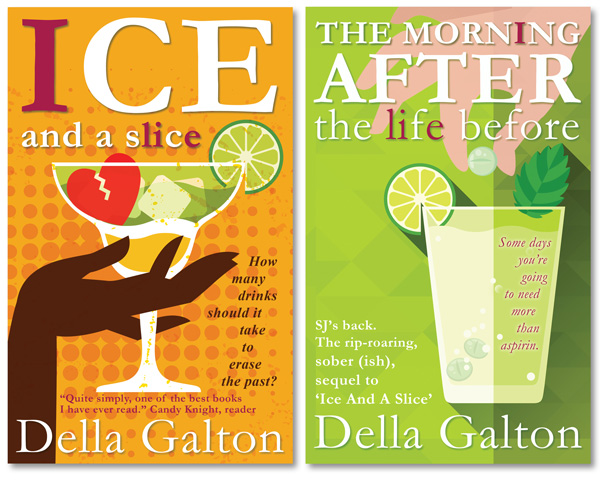
And while we’re on the subject of endings, did I mention the sequel to Ice and a Slice is out this week. Yay! The Morning After The Life Before is my latest novel and I’m very proud of it. SJ doesn’t quite get the Happy Ever After  she thought she was heading for! Nice matching cover for Ice and a Slice too – Can you spot the hidden message in these two covers?

The fabulous covers were designed for me by Peter Jones. Find out more about his book cover designing service here.

The Morning After The Life Before comes out on 5 February 2015 and is available for pre-order here.  Ice and a Slice with its funky new cover is available here. They are both £1.99, less than the price of a glass of Chardonnay!


Three Questions I Get Asked About Short Stories

Q How do I make my stories less predictable? Particularly if I’m using a common theme, for example, romance? What can be done to stop the reader from working out that the boy and girl who meet at the beginning of the story are not inevitably going to end up in each other’s arms?

A I agree that writing a romantic short story for a magazine is one of the hardest genres to crack, for exactly the reasons you state.  Here are some tips that I hope may help.

While the romance is likely to be a little bit predictable, other aspects of the story needn’t be.  You might want to try a unique setting. I’ve sold more than one story which featured a romance set somewhere unusual, for example, an ice hotel.

You can also experiment with viewpoint. It’s a common misconception to think that romances need to be told solely from the female perspective. They don’t. A romance told from the male perspective, or possibly even a child’s perspective (providing it isn’t the child having the romance) can work just as well and make your story a little different. You might also want to consider dual viewpoint, a romance told from both the hero and the heroine’s viewpoint. I’ve sold a few of these too.

The romance needn’t be your main plot line either.  It could actually be a subplot. Perhaps consider writing a family story, where the romance is relevant to more than one generation or a cozy crime story where the romance underlays the solving of a crime.

Also, don’t forget that it’s possible for the writing itself to be predictable. The use of language and a slightly different style can give romance a new freshness. As can a slightly different structure, i.e. a monologue or diary format.

Q My short stories seem a little dull. What can I do about this?

A If it’s the characters, make them a little quirky. Try giving them conflicting traits, for example, a traffic warden, who ices cakes as a hobby. Or a single parent who is a famous session musician.

If it’s the story that’s dull, try a universal truth. What is your story actually about? In my experience the best stories are ones that highlight some aspect of the human condition. Perhaps an unusual one, for example, children can often teach us more than we can teach them. Or, not all sweet little old ladies are sweet.

Q What is a short story?

A Never forget that a short story is not just a sequence of events. It should have a beginning, a middle and an end.  It will probably feature one central character with a problem that must be resolved (by the central character) in a way that is neither predictable nor contrived.  Not easy! The main character should also have undergone some kind of change. Maybe they have become a better person – or a worse one?

NB My weekly classes are held on Thursday Evenings, 7-9 and Friday Mornings, 10-12 at Kinson Community Centre, Millhams Road, Kinson. Email me if you’d like more details, or leave a message on this post.

If you would like to know more about writing, two of my writing books, The Short Story Writer’s Toolshed and The Novel Writer’s Toolshed are currently 99p on Amazon if you have a kindle or a kindle app.

Tell your friends!

© Della Galton All rights reserved.
Powered by Cloudbase Media