Welcome to Della Galton’s website

What Do Your Short Story characters Look Like?

Characterisation is the means by which you make your fictional characters appear to be real people. It is probably the most important part of any piece of fiction. If the reader doesn’t care about your character, he or she won’t read on.

Your characters reveal their personalities in much the same way as real people
i.e. via what they look like, what they do and say and what they feel.

Appearance
It’s not usually necessary to describe your character at length in a short story (unless their appearance is critical to the plot). All of the following examples come from 1000 word stories. The briefest touches can bring a character to life.

Example one (A City Girl at Heart – People’s Friend)
‘So…how are you settling in?’ I asked Andy when he phoned me the weekend after he’d moved into the cottage.
‘Fine, thanks. Absolutely fine.’
I sensed a note of unease beneath his cheery words. ‘But..?’ I prompted.
‘I keep hitting my head on doorways.’

Example two (Brief Encounter – Woman’s Weekly)
Jonathon wasn’t her usual type. He wore his hair in a ponytail. He wasn’t over tall, but he had big hands and feet, there was a comforting solidity about him. She could imagine herself snuggled up and protected in his arms.
“I build racing cars for a living,” he’d told her as they’d gone through all the polite introductions stuff. “How about you?”
“I’m a nurse. I probably treat people who’ve injured themselves in your cars.”

As you can see, these are very brief physical descriptions, but they are enough to brush stroke a character’s appearance. We know Andy is tall. Jonathan has long hair and is big boned.

But now for a story where appearance is critical to the plot.

Example Three (Mirror Mirror – Take A Break)
“I look fat in it, don’t I?”
Kath could clearly hear the girl’s voice in the next cubicle along. She was talking to her friend, another teenager. Kath had seen them coming in to the changing rooms earlier, both tall and leggy and beautiful.
But not as confident as they looked, she thought now, as she glanced appraisingly in the mirror of her own cubicle. Now she’d taken her top off she could see the slight bulge over her waistband and the tops of her arms weren’t as trim as they’d been only a couple of years ago. She gave a wry little smile.
‘You don’t know what you’ve got till it’s gone.’ Never was there a truer saying than that.

(Extract taken from later in Mirror Mirror)
Kath slipped the dress over her head and smoothed its cashmere softness down over her ample hips. It was Granny Smith green.
She could probably pass as an apple crumble in her Granny Smith dress with her newly highlighted hair. She giggled. A couple of weeks ago she’d have tugged the dress off and found something more staid, more fitting of her middle aged self, but that was a couple of weeks ago.
Everything had changed since yesterday.
For a moment she let her eyes linger on the perfect symmetry of her breasts. Earlier on she’d bought a new bra from Marks and Sparks. She got measured up because she hadn’t bought one for ages. There had been a time when she’d thought she might not need to buy a bra ever again.

Ah, so now we know why Kath’s appearance is important, why we had so much of it – the theme of the story relies on it. She has just had the All Clear from breast cancer and she is celebrating her body still being whole.

But you can see the difference, both in the amount and the focus of description needed.

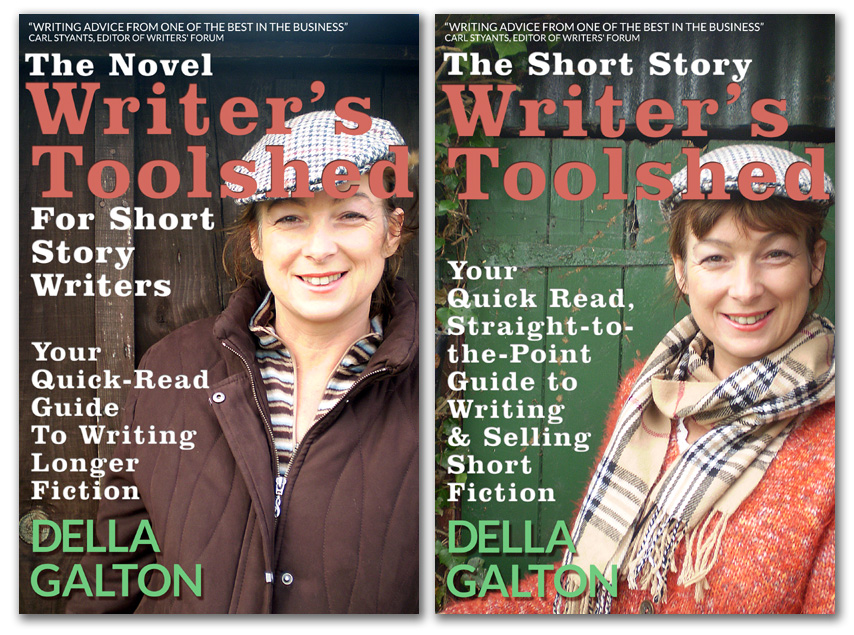
Thank you for reading. For more tips on characterisation, please see my book, The Short Story Writer’s Toolshed. Currently on sale at Amazon for just 99p.
Woman’s Weekly Fiction Workshops – Hot Tips

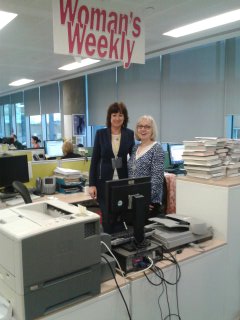
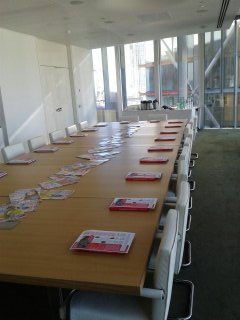
A couple of Fridays ago I was teaching again with Gaynor Davies at the Blue Fin Buildings, our subject, Writing Short Stories for Woman’s Weekly. I thought you might like an update. There are two more short story workshops planned at IPC, by the way, 15 August and 1st September 2014, click here for more details and as they are so popular I’m also in discussion with Gaynor about doing another one this year, probably in October. So don’t worry if you can’t get to one of these.

In the meantime for those who can’t make a workshop, here are a few tips from myself and Gaynor hot off the press. I must point out these are my tips, as I understand them, not direct quotes from Gaynor. (Just in case any of the Woman’s Weekly team are reading).

  • When Woman’s Weekly first came out their aim was ‘To be useful and not deal with the sordid side of life’.  An old adage which still holds true today.  But do be contemporary.
  • Today’s fiction should be escapist, but also believable.
  • Many stories are rejected because they are too old fashioned.
  • They need stories that have an individual voice so don’t copy the style of previously published stories.
  • They also want variety.
  • They are always looking for more humour.
  • Most popular lengths are one pagers (900-1000) and two pagers (1800-2000)
  • You can go up to 8000 words for the special and (top tip) they don’t get many of these.
  • On a technical level – keep the style simple. Cut adverbs and don’t get too wordy. The verb of speech ‘said’ is fine. Characters don’t need to exclaim, explain and expostulate.
  • Remember that imagery is good but too many images can cancel each other out.
  • Woman’s Weekly stories must have a proper ending – you don’t have to tie up the ends in a neat bow, but stories can’t be completely open ended either.

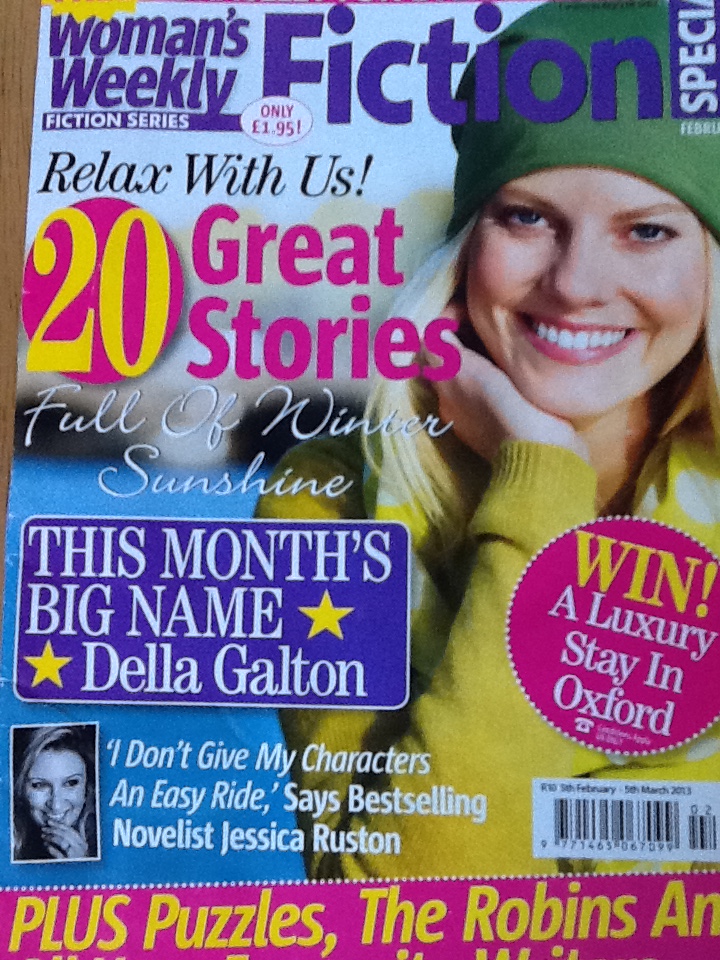
In the latest Woman’s Weekly Fiction Special (May – on sale 1st April to 6th May) I have a short story called By The Book (page 24 if you’re interested.) By The Book is a light romance about online dating. I don’t do many romance stories, mainly because it’s so hard not to get predictable. I was inspired however to write this story by Peter Jones’ latest book How to Start Dating and Stop Waiting which is very entertaining and also a brilliant guide to internet dating.

Woman’s Weekly are also very keen to get new serial writers. Serials go up to five parts, which is a lovely length if you want to write longer than a story but aren’t ready for a novel. The current one, called Amos Browne by Leonora Francis is excellent. If you would like to look at another example of a serial you could try my latest novella Shadowman, which was once a serial in Woman’s Weekly but is now having a second lease of life as a novella. If you buy it in the next day or two it’s only 99p too – as it’s on an Amazon Countdown promotion can’t say fairer than that!

And as I’m in ‘shameless promotion’ mode, if you’d like to read any more short stories by yours truly please do check out my collection of Daily Della titles, for example, Lessons in Love which is just £1.53. All of my Daily Della stories were previously published in magazines so they will give you a flavour of the type of story required.

There is a fabulous roof top terrace canteen at Woman’s Weekly, by the way, which does amazing shortbread – just in case you were still trying to make up your mind on whether to book up for a course.

If you’d like to know any more about the art of writing short stories, please also check out my Short Story Writer’s Toolshed which is £1.99 for kindle.

Thank you for reading. And here’s hoping none of our stories stay in the cupboard (see previous blog, journey of a woman’s weekly story) for long!

Tips on Entering Writing Competitions – Wednesday Writing Spot

I recently judged the H E Bates Short Story Competition, organised by the Northampton Writers Group. Morgen Bailey is the chair and for today’s Wednesday Writing Spot I’m delighted to welcome Morgen to my blog to give us her tips on entering writing competitions. Over to you, Morgen 🙂

Tips on entering Writing Competitions

Competitions are a great inspiration and not only get me writing something new (certainly for the themed ones) but even if I don’t get anywhere, I still have the story to do something else with, like submitting to women’s magazines here in the UK (although it’s more advisable to write specifically for their markets) or self-publishing to add to my collection of eBooks.

I’d love to give you advice that will guarantee a competition win but it won’t. Sorry about that. There are two reasons for this:

    1. You will never know how the judge will feel when he / she reads your story. He / she could be going through an acrimonious divorce and your divorce story is a painful reminder. I know, judges shouldn’t be personally involved in your writing but that’s the thing with fiction (and non-fiction of course); readers get emotionally involved – you should want them to, and if they do, it means your story ‘works’.
    2.  You will never know whom you’re up against. Yours could be a fantastic story – the best of twenty about unrequited love – but that’s it, it’s one of many on the same theme. It would have more chance of the judge seeing it if it’s the best but it’s the story about a pink tutu-wearing green alien they remember. I’m not saying to write something so way out that you run the risk of… erm, alienating the non-science-fiction-loving judge, but your story needs to ‘pop’. If you’re going to pick a well-worn theme – it is said, after all, that there are only seven plots – you need to find a new angle.

The most important thing? Read the guidelines. I can’t stress that enough. If they want a maximum of 2,000 words, don’t send them 3,000 or even 2,010 (or a 45-line poem when they only want 40). I’ve just finished judging the first ever NLG Flash Fiction Competition and had to disqualify one story because it was 610 words (max 500). We have Word, so we have a word counter – it’s easy to check and catch you out. Your story may be the best thing since sliced granary but no one will know because they won’t get to read it. I didn’t read the 610-word story, although I might go back out of curiosity.

Another usual pre-requisite is to not send a story (or poem) that has been published (online counts as published) or won / shortlisted in another competition. Another NLG story was disqualified because the author notified us saying he / she had submitted the story in error because it had gained second place in another competition. Ironically, it was also my second-place, so my third became second and another story became my third, and eleventh now highly commended. I don’t know who submitted the story (because I’m Head Judge – only our Secretary knows so it’s fair) but editors and judges remember those authors who do such things, so don’t. Keep a list. File your story in a particular folder. Be organised.

Another must is spell and grammar check. It sounds obvious but I spotted a ‘tine’ instead of ‘time’ in one piece and it lost a point because it was a careless error. Unless you’re writing a new story the day before the deadline, give yourself plenty of notice. Write the piece at least a week (the earlier the better) before you have to send it in, leave it for a day (preferably more) then edit it. Read your story out loud – it will sound different to how it sounds in your head and you will spot errors easier (especially if it’s been a while since you wrote / read it last).

Don’t leave it until the last minute. It’s very tempting to send in your story the day the competition ends just in case you want to make any last minute alterations, or so the judge might remember it coming in, but the organisers appreciate it if you’re early. It makes their job easier, as they can send the stories out to the judge/s in batches rather than in one go.

If the competition has a theme, stick to it. If they want a story set in the London Underground, don’t think you’re being clever by setting it in the Paris Metro or New York Subway, unless you’ve come from / are going to the London Underground. Last year’s H.E. Bates competition had (for the first time in its 20-year+ history) a theme; ‘A Walk at Midnight’, and we had a couple of stories which didn’t include a walk or set, at any point in the story, at midnight.

Choose a snappy title. Don’t be lazy and call it The Journey (a title of an old story of mine which I’ve since renamed No White Left). You can certainly use it as a working title but then a phrase might leap out at you when you’re writing it. I write a short story a day for my blog’s 5pm Fiction slot and it’s often what happens to me.

Research your judge. If he or she writes romance, the chances are s/he’d favour a love story over a slasher horror. If it’s the best thing they’ve ever read then you could still do well but again you’re running a risk. With most competitions, the Head Judge (the name advertised) will only see a selection of the stories, so even if you write to their taste, if the competition panel (often a writing group) don’t like it then it will never reach Mr / Mrs Famous Writer. ‘Named’ judges’ time costs money and most competitions can’t afford to pay a famous (or even semi-famous) author to sift through hundreds of entries.

So you want to make your story (or poem) as good as it can be to get through all those people and make the last one go “wow”. You never know it could even be me.

Morgen Bailey

morgen@morgenbailey.com

http://morgenbailey.wordpress.com

http://icanbuildyourwritingblog.wordpress.com


Thank you very much, Morgen, for being my guest today. Some very useful tips :


Tips for Writers – Novel Layout

I had a letter recently via my Dear Della page in Writers’ Forum from  a lady who was anxious about the layout of a novel when submitting to publishers. I know there’s a wealth of information out there about writing, but sometimes the basic stuff is overlooked. And the hardest questions to ask are the ones we feel we ought to know already.

So here are some basic presentation guidelines for writers who are interested in how to present a novel to publishers.

How you lay out your manuscript can vary from publisher to publisher, for example, Mills & Boon have very specific requirements (these are laid out in detail in their guidelines).  So do check if this applies to individual publishers. However, as a general rule, use the following guidelines:

  • Use double line spacing and an easy to read font. Times New Roman size 12/14 is an industry standard.
  • Left and right hand margins should be approximately 1inch.
  • There should be a title page which should include your name and address, (phone number and e mail address optional) the title of the story and the approximate number of words.
  • The title and page number should also appear on every page of the manuscript. It’s usual to put them in the header and footer. This will also prevent your pages going awry if you later alter your document.
  • Each chapter should begin on a new page.
  • Dialogue is indented, as are new paragraphs. There should not be a double space between paragraphs.
  • A double space to indicate scene breaks is only necessary if it’s not clear there’s a scene break without one, for example if there is a time gap or a change of viewpoint.
  • Text following a gap (including dialogue) is not indented.
If you’re interested in writing short stories – or novels – please check out The Toolsheds. Both are in paperback and are available for kindle.

The Wednesday Writing Spot – Writing Competitions – an insider’s view

On this week’s Wednesday Writing Spot I am delighted to welcome the lovely Morgen Bailey, who has generously agreed to give us an insider’s view of what goes on behind the scenes in the judging of writing competitions.

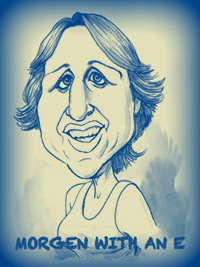
Based in Northamptonshire, England, Morgen Bailey (“Morgen with an E”) is a prolific blogger, podcaster, editor / critiquer, tutor, speaker, Chair of NWG (which runs the annual H.E. Bates Short Story Competition), freelance author of numerous short stories, novels, articles, and dabbler of poetry. Like her, her blog, http://morgenbailey.wordpress.com, is consumed by all things literary and she loves chatting with other writers and readers. Her email is morgen@morgenbailey.com.

Over to you, Morgen…

I’m involved in three writing competitions:

So I’ll be talking today about my insider’s view.

How competitions work

H.E. Bates (run by Northampton Writers Group, of which I am Chair) – deadline 4th November 2013

  • Our Competition Secretary, Nick, receives the (national and international) submissions by email and post. He catalogues each one, giving them a number. He then prints off the emailed ones, adds them to the posted, and divides them into batches of c.25, bringing them to the writing group where each person has a pile at a time (Nick and I read / score them all). We score them, give them back and he collates them then selects the top ten which goes off to the Head Judge (who, in 2013, is the prolific short story author, ‘how to’ writer and novelist Della Galton, previously crime novelist Stephen Booth and in 2011 romance writer Katie Fforde) who picks his / her top three. These are then announced (and prizes awarded) at a ceremony in Northampton the following January, along with a Northamptonshire winner (if not the same as the Top 3) and an under 18.

NLG Poetry Competition (run by Northampton Literature Group, of which I am Acting Chair) – currently on hold for 2013

  • I have little involvement in this other than being a member of NLG and (fellow dog-walker with the organiser) but in a similar fashion to the H.E. Bates, submissions are received in to one person, Pat, who collates and documents them. She, however, sends them all to the judges (there was one for free-verse and rhyming poetry, and another for humorous) who pick their favourites whom are awarded at a ceremony later in the year.

NLG Flash Fiction Competition – new for 2013 (deadline was 30th June)

  • It was my idea to hold a flash fiction competition in place of the poetry competition (which the poetry circle decided to put on hold due to finances and Pat wanting a well-deserved break). The word limit was set at 500 words making it easier / quicker for us to read than 1,000 words which some competitions allow, and until recently I had for my blog’s Flash Fiction Fridaysslot. It was an email-only which came into a dedicated email address accessible only by our Secretary / Treasurer, Brenda, who catalogued them and sent them out to myself and two other members of the group. I have already submitted her my scores (including three 10/10s and seven 9.5s) so Brenda will collate the other two sets of scores and send me the overall top ten for me, as Head Judge, to pick my top ten (if they don’t match mine) which will be listed / announced on our websites (see below).

Money

  • Some writers resent paying to enter competitions, often preferring to submit to magazines / online publications for a chance to be paid. I can’t say I blame them but, unless they’re sponsored, competition organisers invariably have to charge – how else do they give you prize money and pay the judges (plus admin costs such as advertising, postage etc.)?
  • The H.E. Bates competition fee is £4 per story, £10 for three. Expenses include the judge fee, administration and prize ceremony.
  • The NLG Poetry competition fee was £3 per poem, £10 for four (£3.50 / £10.60 if paid online by PayPal). The prize fund was £1200 and the judges were paid several hundreds of pounds each because they were judging all the entries. A huge outlay, and one that resulted, not unexpectedly, in a loss, so has been put on hold for the time being.
  • The NLG flash fiction competition fee was £2 entry, £5 for three (PayPal only). The only expense (because I gave my time for free) is the prize money (£75 / £35 / £15). There will be no ceremony but the top three will be published in full on the NLG website and my website (http://morgenbailey.wordpress.com), and seven Highly Commended listed (author name and story title only so they can be submitted elsewhere).
  • You may (or may not) be surprised to learn that none of the three competitions I’m involved in made a profit this time round (making a small, considerable loss or breaking even). This could be to do with the economic climate or that there are lots of competitions out there – more clash with the June NLG competitions, less so with the November H.E. Bates. Who knows? We do it because we enjoy it and want to help writers write and get noticed. Getting anywhere in a competition is something to add to your CV.

Tips

  • Read the guidelines. I can’t stress that enough.
  • Stick to within the maximum word / line count. You’ll be disqualified if you don’t.
  • Make your story unique. Apart from a fresh twist on one of the (supposed) seven plots out there, don’t send us a story that has already been published (even online) or certainly that has been placed in another competition and therefore published in some format (listed as Highly Commended with just your name and title is OK). Keep a list. File your story in a particular folder. Be organised.
  • Choose a memorable title. My favourite competition entry (which sadly didn’t make the top 10) to the H.E. Bates Short Story Competition 2011 was ‘The Bus Driver Who Stopped And Then Didn’t’ (the author actually won the 2012 competition with another story, so he persevered). It sticks in my brain, which a title of ‘The Bus Driver’ probably wouldn’t have done.
  • Don’t write to shock. Not many of us like reading about vomiting or guts spilling out – my apologies if you’re just eating while reading this, but that sort of proves my point.
  • Spell and grammar check. Read it out loud. It helps. A lot. I start a story with 10 out of 10 and knock marks off for avoidable mistakes, especially those that the computer’s checker would have highlighted.

So you want to make your story (or poem) as good as it can be to get through all those people and make the last one (me in some cases) go “wow”.

Morgen Bailey

morgen@morgenbailey.com

http://morgenbailey.wordpress.com

http://icanbuildyourwritingblog.wordpress.com

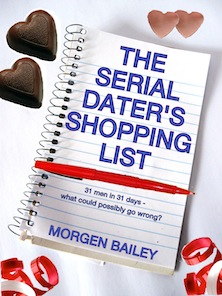
Thanks so much, Morgen. Incidentally, I happen to know that Morgen’s latest novel, The Serial Dater’s Shopping List,  is available for just 77p. You can buy it by clicking here


The Wednesday Writing Spot – Getting Ideas – Guest Post from Patsy Collins

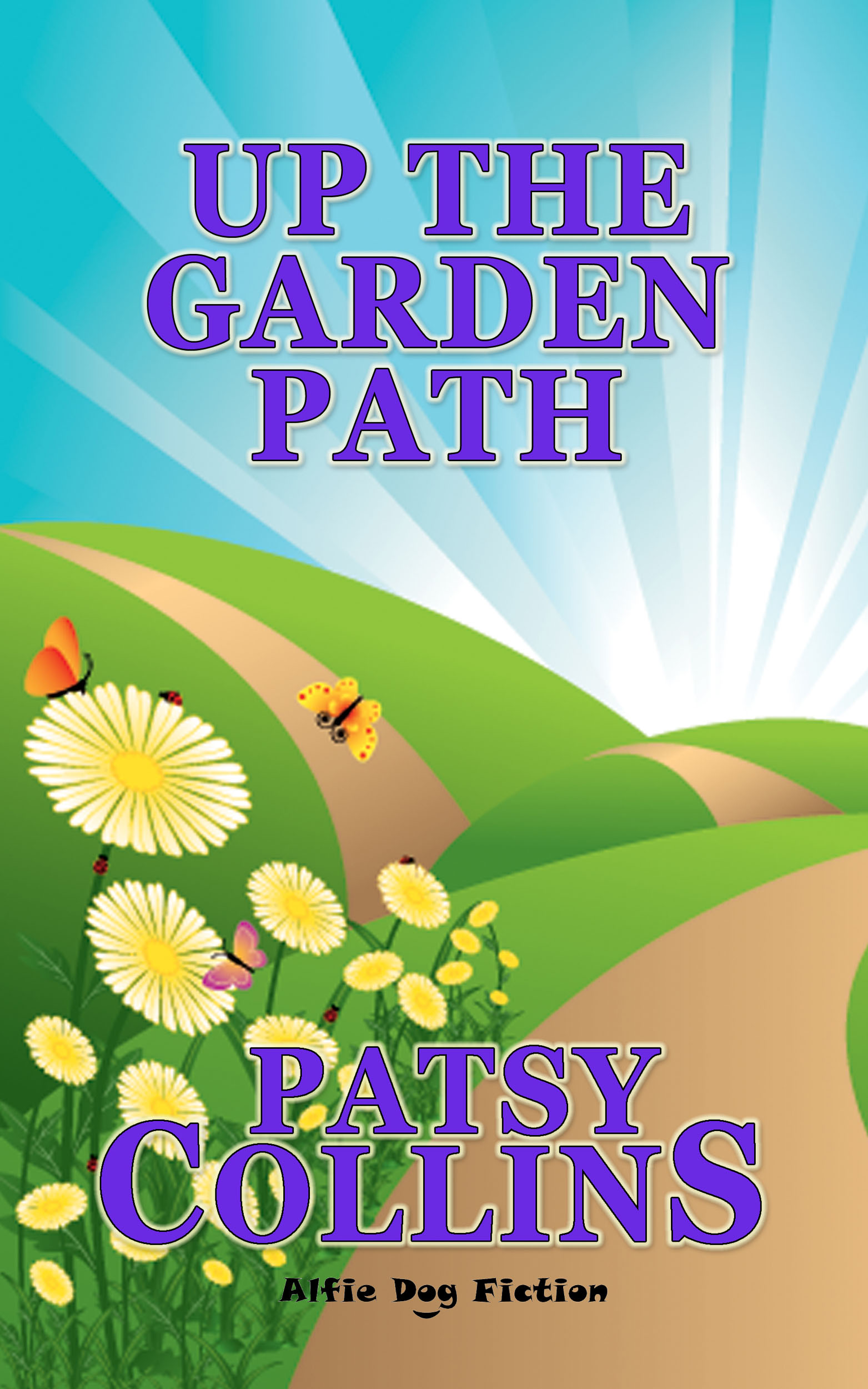
This week on the Wednesday Writing Spot, I am delighted to welcome writer, Patsy Collins, who is talking about where she gets her ideas from and her fabulous new short story collection, which is called Up The Garden Path. It’s lovely to have you here, Patsy. Now it’s over to you…

As writers we are often asked where we get our ideas from. It seems such a reasonable question but it’s very hard to give a satisfactory answer. Each writer will get their inspiration in a different way to that of their colleagues and they’ll probably draw on a number of resources. Ideas are everywhere you see. That’s both good and bad. We don’t have to wait for the ideas shop to open, but those little story sparks don’t come neatly labelled ‘romance novel suggestion’ or ‘ghost story premise’ so we need to train ourselves to spot them.

My new short story collection contains twenty four short stories and each is the result of a different stimulus. It’s a bit like picking wild mushrooms, really. If you want nice, safe mushrooms you need to know what they look like or you’ll end up with something toxic, or hallucinogenic or bitter. Of course if you actually want to poison someone you’ll need to be on the lookout for something different (pale gills and skinny stalks are a good sign in this case). ‘Write what you know’ is good advice. That’s what I did for ‘A Piece of Pink Ribbon’ which is set on a farm and ‘Coming Home’ which is about separation when someone is away at sea. It also explains why all the stories in the collection have a horticultural theme – I’m nearly as keen on gardening as eating cake. Real life events can be a great source of story ideas, but the truth often needs adapting. Weirdly when we write something strange, funny or touching that really happened it often doesn’t feel believable. ‘Watchdog’ is based on a real event (although not one which happened to me) but to make it work I had to change reality. Whenever I come across an unusual name eg ‘Mrs Dalrymple’ overhear an interesting comment such as ‘Your Granddad is Stuck Up a Tree Again’ or want revenge on an annoying boss (‘Blooming Talent’) I make a note in a computer file. Sometimes the prompt is as simple as the smell of ‘Strawberry Jam’ and at others it’s as complex as family politics (I’m admitting nothing!). It doesn’t matter where the ideas come from, it’s what you do with them that counts. I hope you like what I’ve done with those which resulted in ‘Up the Garden Path’. The book is available here – or here.

The Wednesday Writing Spot – Plotting the longer Short Story

Plotting was the bane of my life when I started writing. It still trips me up now occasionally, particularly when I’m changing lengths, for example from 1000 to 2000 words. So here are some tips for writing the longer short story.  They are very popular in fiction specials.

This advice also works well when trying to reduce your longer stories to short ones. Just reverse it.

What’s the difference between 1000 words and 2000 words in plot terms?

There is not as much difference between the two as I thought when I first started writing.  I assumed that if I needed one or two main characters with a problem to solve in a 1000 word story, then I’d probably need more characters and more of a problem for a 2000 or 3000 word story.

I soon discovered that this was not the case. You won’t necessarily need more characters or more plot for a longer short story, but you will need more development of both.  This is usually achieved by writing more scenes.

Very short stories

In a 1000 word short story you won’t have room for more than a couple of scenes, probably three at the most and that might be pushing it.  We will probably join your character at the point of change or conflict. For example, let’s assume your character is worried about a forthcoming appointment she has the following day. Your story might go something like this:

Scene one

Your character is discussing her worries with friend or partner.

Scene two

Your character goes for the appointment.

Scene three

Resolution and possibly a twist.

If you did follow the format above for a 1000 word short story, then you’d have to make your scenes extremely short – you’d have just over 300 words to devote to each one.

If you had more space to play with, you might also have a flashback of exactly why your character was so worried about her forthcoming appointment. Your story might then go something like this:

Scene one

Your character is discussing her worries with friend or partner.

Scene two

Flashback in your character’s viewpoint to show a previous occasion when she had to go to an appointment and it didn’t work out – hence meaning the stakes for today are higher and we (hopefully) care about it more.

Scene three

Your character at the appointment.

Scene four

Resolution and twist

The number of characters and the plotline are the same, but the story is longer and has more depth because we have more development of both.

This helped me so much when I first got it. Hope it helps you too.  And if you’d like any more advice on writing short stories, please check out my two writing guides. How to Write and Sell Short Stories published by Accent Press and The Short Story Writers’ Toolshed published by Soundhaven.com

Issue Led Stories

Issue led stories are controversial – or can be? Should we write them? Especially for magazines. Or should we stick to nice safe subjects like weddings and car boot sales and summer balls. Not that I’ve got anything against these subjects, I think I’ve sold stories about all of them – well possibly not a summer ball, must put that one on my list!

But – and I think I might have mentioned this – I also like writing about issues. Gritty issues. My students often ask me if there are any subjects that are taboo for magazines and the answer is that, no, I don’t think so.  Well maybe some subjects are taboo for some magazines, but I’ve written lots of issue led stories. I’ve written (and sold) stories about: abortion, agoraphobia, anorexia, alcoholism (did I mention I just wrote a book about alcoholism called Ice and a Slice).  Check it out here. You can even read the first chapter on the previous blog. I will shut up about Ice and a Slice soon, I promise!

I’ve also written about the death of pets or people, drugs, sexual abuse, nervous breakdowns, cancer, prisons – I’ve even slipped the odd quite saucy story past a magazine editor!

I think the key to writing issue led stories and selling them to magazines is to do it sensitively and also to give some hope. If you write about a gritty issue and then give it a really sad ending this might not be so successful.

You can of course write stories with more downbeat endings for competitions. But don’t be depressing even if you’re being downbeat.

I’ve just had one of my issue led stories (about anorexia) published on Morgen Bailey’s blog. If you’d like to check that out, please do take a look. Click here. It’s Flash Fiction so very short. In fact, I think that Flash Fiction works very well if you use a strong, gritty subject.

I’d love to know what other writers think.


To Plot or Not

When you write a novel, one of the first decisions you need to make is how you are going to undertake to write it.  Will you

a)  Plan out each chapter in detail so that you know exactly what is going to happen from beginning to end.

Or

b) Simply place your characters in a difficult situation and see what they do to resolve it, hence allowing the plot to evolve through the actions of the characters.

These are the two extremes and you might decide to do a little of both, but there are advantages and disadvantages of both working methods and it might help to know them before you start.

The planned approach – Advantages

A detailed plot will cut down your writing time considerably because you will always know exactly what you are going to write next.

You are also unlikely to get stuck or run out of steam halfway through.

Planning in detail means that you can also keep an eye on the structure as you work.  You will probably know how many words each scene will take and so can keep an eye on balance as you write.  I.e. make sure that one or two characters don’t run away with the action.

Planning also means that you don’t have to write the novel in chronological order.  You know what is going to happen, for example, two thirds of the way through, so therefore, you could, if you wished, write that bit first.

Disadavantages

If you know exactly what is going to happen all the way through your novel, there is a danger that you might become bored and stop writing it.

There is also a danger that you might write all the exciting scenes first and leave the slower scenes until later – with the same result.

The Unplanned Approach – Advantages

There is nothing more exciting when writing than not knowing what your characters are going to do or say next, so you might well end up with some unexpected twists and turns of the plot that are less likely to come from a strictly planned approach.

Disadvantages

There is a very real danger that you will get stuck because your characters have been backed into a corner from which there is no way out.

On a similar note, you might find that you get about halfway through your novel and find that you have run out plot.

If this happens, then you can often put it down to one of two reasons.

a)      You didn’t have enough plot in the first place.

b)      You haven’t developed the plot you already have.

Want to know more? Come along to How to Write Your First Novel on Saturday 13th April, in Bournemouth. Cost, just £35.00. Please email me if you’d like any more details.


Author voice – finding yours.

Voice

This is a word that is often bandied about by critics and writing tutors alike. But what does it actually mean?

It’s a hard thing to define. For me, it means the way that a novel is written: style comes close, but it’s a little bit more than style, it has to do with the author and how they come across. Although, these days, not many novelists, directly address the reader, ‘and that, dear reader, is how the story begins,’ the author is of course there. No matter how hidden they are, their presence shines through between the lines, and this is how it should be. Otherwise all novels would feel the same -they would have a text book style.

How do you develop voice?

I think this comes with practice. When we begin to write we often model ourselves on our favourite authors. We unconsciously (or not) emulate their style. This rarely works. It’s better to develop your own style. And as writers grow more confident, that is generally what happens.

The more you write, the more your own individual voice will emerge. We all write in a way that instinctively feels comfortable to us and I think that this is what becomes our voice.

It’s difficult to decide if your own writing has a voice, but anyone who regularly reads your work will be able to tell you. In my writing classes we have regular writing competitions. To make it fair, students enter these anonymously by putting their stories in a folder on my desk, but after being with a class for a while and listening to their work read out, I find I can identify certain entries, because the authors have a very strong voice.

Three words that sum up Voice

If I had to pick three words that sum up voice, I would say: passion; honesty; and language. When you write your first draft let it all hang out. Don’t edit yourself, be passionate, be messy. But also be truthful. Our writing, our creativity, comes from deep within us. Get in touch with your inner truth. Be aware of the language you use. Be aware of how you actually say things. What words are really you? In this way, I think you will find your own voice.

Voice is what makes readers care about your work (or not). Voice is what makes them want to read on.

Below is an extract from my new novel, Ice and a Slice – well you didn’t think you were going to get away with me not mentioning it, did you?  One of the things that helped when I was writing it was finding the character’s voice early on. And her voice became the novel’s voice.

Ice and a Slice

The terrifying part was pressing the button on the intercom system beside the grimy frosted-glass door. Before that she could have been any other office worker on the busy Soho street with nothing more important on her mind than where to go for lunch: Daddy Donkey for a burrito or Malletti for a slice of pizza? Oh, what she would have given to have been making a choice like that.

She could still run away. Phone up later and say she’d been ill or had to work. She probably needn’t even phone. These kinds of places must get loads of people who made appointments and didn’t turn up. No doubt they were used to it.

Her legs were too rubbery to run anywhere. She glanced over her shoulder. No one was paying her the slightest attention. Thank God. Her outfit, overloud floral leggings and her hideously expensive Monsoon jacket, red for confidence, had been a mistake. She should have worn a wig and dark glasses and one of those great big overcoats so no one knew whether she was male or female. On second thoughts, that would have attracted a fair bit of attention in the June heat – everyone else was in summer suits or mini dresses. A few hundred yards away two bare-chested council workers had coned off a section of kerb and were digging up the road. The faint smell of tar mingled with traffic fumes on the summer air.

Taking a deep breath, she stabbed at the intercom button, which she missed first time because her fingers were shaking. Now she was committed – please let them open the door quickly before someone she knew strolled by and spotted her.

If you did happen to want to buy the book – a mere £1.94 for Kindle, you could always click here 🙂


Tell your friends!

© Della Galton All rights reserved.
Powered by Cloudbase Media