Welcome to Della Galton’s website

Getting the Grip Factor

Have you ever been in a writing group and listening to a manuscript – possibly read out by one of your very good friends – and then realised that you’ve stopped listening. That you have drifted off partway through? That you have missed a chunk. Have you ever felt relieved that they’ve stopped reading? No?

Don’t lie. I know you have. So have I. And then I’ve felt guilty. And then I’ve decided it must be because I’m tired, or it’s been a long day, or because I’m stressed. Or because I’m distracted. In short, I’ve decided it must be my fault.

But what if it isn’t my fault? What if it’s their fault?

Here’s another question for you? Have you ever been in a writing group and listening to a manuscript – possibly read out by someone you don’t care for too much – you weren’t really paying that much attention. And suddenly you find that you’re gripped. You’re listening. You don’t want them to stop. You are disappointed when they do stop. You want more.

Whose fault is that? This is an easier question to answer, isn’t it. It’s their fault. The writer’s. Clearly they have written something that’s good. They have the X factor, the hook, the read-on-ability factor – whatever you want to call it.

I realised recently that this whole question of whether it’s easy to listen – or not – is a very good gauge of how good something is. If I’m gripped, chances are the story/writing is good, If I’m not gripped, well it isn’t.

So has your writing got the Grip-Factor or the Switch Off Factor?

Your friends won’t tell you the truth. So here is a light hearted look at how to tell.

How to tell if your writing has the Switch Off Factor

People are fidgeting, texting, writing notes, playing on their iPad, looking glazed over.

People have fallen asleep and are snoring.

People sigh when you finish – with relief.

There is utter silence in the room – everyone has left.

How to tell if your writing has the Grip Factor

There is utter silence in the room – everyone is hanging on to your every word.

People sigh when you finish – with frustration because they want more.


And yes, I’m being very lighthearted here, but it’s food for thought, isn’t it. Check out your audiences’ reactions next time you read 🙂

If you want to get the Grip Factor – when it comes to short story writing. There are still places on my day course next Saturday 9 March. How to Write and Sell Short Stories.

More details for How to Write and Sell Short Stories
 

Tips on Dialogue

As we know dialogue in fiction – or non fiction – has several functions:

It characterises, i.e. it shows the reader what our characters are like.

It moves the plot along, i.e. it helps to unfold the story.

It adds pace by breaking up the narrative.

It should do these things while sounding very natural, and this in itself can be quite a skill.  It’s very tempting to put chunks of information into dialogue that don’t sound natural.

Example one

Karen sat back in her chair and looked at her friend, Annie. “So how does it feel now that your eighteen-year-old boy, Jack, has left home to go to university,” she asked.

“It doesn’t feel very good to be honest,” Annie replied. “I feel as though the house is too big for me. It would be better if Charlie hadn’t run off with his much younger blonde secretary six months ago.”

Karen sighed. “Yes, it must be very hard for you suddenly having a four bedroom house all to yourself and I guess you aren’t as rich as you used to be either now that you have lost your well paid job at the bookmakers.”

This dialogue is certainly moving the plot along at a rapid pace, but does it sound real?  Would these two women really speak like this to each other?  Would they say these things? How could this section of dialogue be improved?

Try writing it again conveying the same information but making it sound more natural.

Watch out for dialogue tags. It’s not always necessary to use the words, he said, she said etc.  It’s also not necessary to vary the speech very often. This can make dialogue sound unnatural too.

Technically

Dialogue should be indented. Every time a new person speaks they should have a new line. Quotation marks go outside the punctuation.


So what is a short story then?

This is a question I regularly get asked by students. I was doing a talk at a writers’ group in Bournemouth on Monday evening and it came up again.  I know I have my own definition, it’s one I’ve refined and honed over the years, and it’s this:

A short story is a piece of writing where a character has a problem, which is resolved by the end in an unexpected way, preferably by the character’s own endeavours.  During the process the character is changed in some way.

There does not have to be a twist, but the problem can’t be resolved so simply that there was never really a story.

I don’t really think about this definition when I’m writing a story, but what I do find interesting is this. If I’m struggling with a story that isn’t working, it’s usually because one of these elements is missing.  Perhaps there is no problem, for example. Or perhaps it’s resolved by someone else, or perhaps the resolution is too obvious.

There are other definitions, other elements, like themes and universal truths that come into play, but this definition has stood me in very good stead.

If you want to know more my next two courses are about short story writing

Write a short story in a weekend takes place at Fishguard 15th – 17 February

http://www.writersholiday.net/fishguard.htm

I’m also teaching How to Write and Sell Short Stories in Bournemouth on Saturday 9 March, 13.

http://www.dellagalton.co.uk/?page_id=31

Inspiration and writing

I was writing a short story yesterday – well trying to write one actually – and it was like wading through treacle. There was nothing actually wrong with it, I mean the words were OK, but I was not enjoying it at all. I got to 800 words and realised I didn’t know how to end it, and that’s when I realised that actually there was no plot – this has happened to me a few times lately.  OK, so plot isn’t a major problem, I can quite often engineer one and insert earlier signposts into the story. But yesterday this didn’t work either. I just couldn’t understand why I was having this problem.

And then it hit me in a flash (sorry for cliche) what the answer actually was   I was not inspired. I was not inspired because I didn’t feel anything. I had no emotion on which to hang the story.

I don’t know about you, but I always have to be emotionally engaged to write a decent short story. Or to write a decent anything come to that. As soon as I realised this, I abandoned the story I was writing and went back to one I was emotionally engaged with, but that I hadn’t finished. Oh the difference was amazing.

And yes, I’ve just finished it.  And yes I’ll go back to the other one some time, but not before I find a way of becoming emotionally engaged with it.

So, how do you find inspiration and hence emotional engagement with your work. Here are three of the ways I do it:

Music – borrow emotion from music – put on a tune you really connect with, feel the emotion and transfer it to the page.

Other writers – last night I went back to my writing class after the Christmas break. Listening to other writers and reading my work to other writers is amazingly inspiring and very motivating. If you don’t go to a class, then maybe you could do a story swap online with another writer, or hold a manuscript evening at your house where everyone brings something to read.

Read – reading something very, very good also works for me. I’m the type of reader who gets motivated by other writers’ brilliance.  Every time I read a brilliant short story I think, one day, I’ll be able to write something as good as that.

How do you get inspired? I’d love to know.


Happy New Year

We all begin the year with various writing resolutions, but then real life gets in the way.  So why not have one resolution a month?

January

Don’t think about it, just write.  Set a timer for ten minutes and begin writing on the theme of new beginnings.

February

Write a short piece, which includes the words, Summer, Knife and Jealousy.

March

Describe a winter scene in 500 words.  Be poetic.

April

Write a short piece on the theme of water.

 May

Imagine that you have just confronted your deepest fear.  Write down how you feel.

June

Write about an intruder.

July

Invent a character who has a problem that is major to him, but minor to other people.

August

Write a letter to your local newspaper about something that you feel strongly about.

September

Look out the first story you ever wrote and see what you can do to improve it.

October

Describe the view from your window.

 November

Describe in detail a character you dislike.

December

Write a Christmas carol or poem.

Happy writing, and thank you for reading my blog 🙂


Writing a Serial

I started writing serials because the thought of making the leap between short stories and novels terrified me.   Writing a serial of around twenty thousand words seemed like a good interim step. Not quite as scary as embarking on a hundred thousand words, but allowing more scope than a short story.

I hadn’t realised then, that a serial is not a mini novel with cliff hangers thrown in at the ends of instalments.  The pace is completely different.  As different, in fact, as the pace between a short story and a novel, and, for me, this was the hardest adjustment.

Obviously, there are similarities between serials and novels, too.  The main one that springs to mind is that a serial gives a lot more room for character development.  And you do need cliff hangers, which should be developed throughout the rest of the part, yet also come as a surprise to the reader.  This is not easy!

I’ve had ten serials published now in Woman’s Weekly and I’ve enjoyed writing them all.  One of my favourites was called SHADOWMAN, and was a five part thriller set in a show jumping yard.  A young couple, are plagued by anonymous notes, which threaten both their business and their marriage.  Writing this was like putting a jigsaw puzzle together.  There were several people who could have been the note writer – I had set up motives for them all – and I wasn’t sure myself who it was until the end.

I also loved writing WISH LIST, which was a humorous three part serial.  The main character who’s just emerged from a traumatic divorce, finds a wish list she’s written twenty years earlier.  She decides to work her way through it and in doing so regains her shattered self esteem.   

I had a lovely letter about this one from a lady vicar, who said she laughed all the way through.  That really made my day.

Both of the above had strong structures.  Shadowman was a whodunnit and The Wish List was based on a ‘wish list’ – odd that. But I think that good use of structure is worth thinking about in a serial.

Only three of the magazines take serials these days, which is a shame.  They are Woman’s Weekly, My Weekly and People’s Friend, the latter runs two a week and so is probably a good place to start.  Editors’ requirements do differ, but each of these magazines will supply guidelines for writers venturing into this medium.

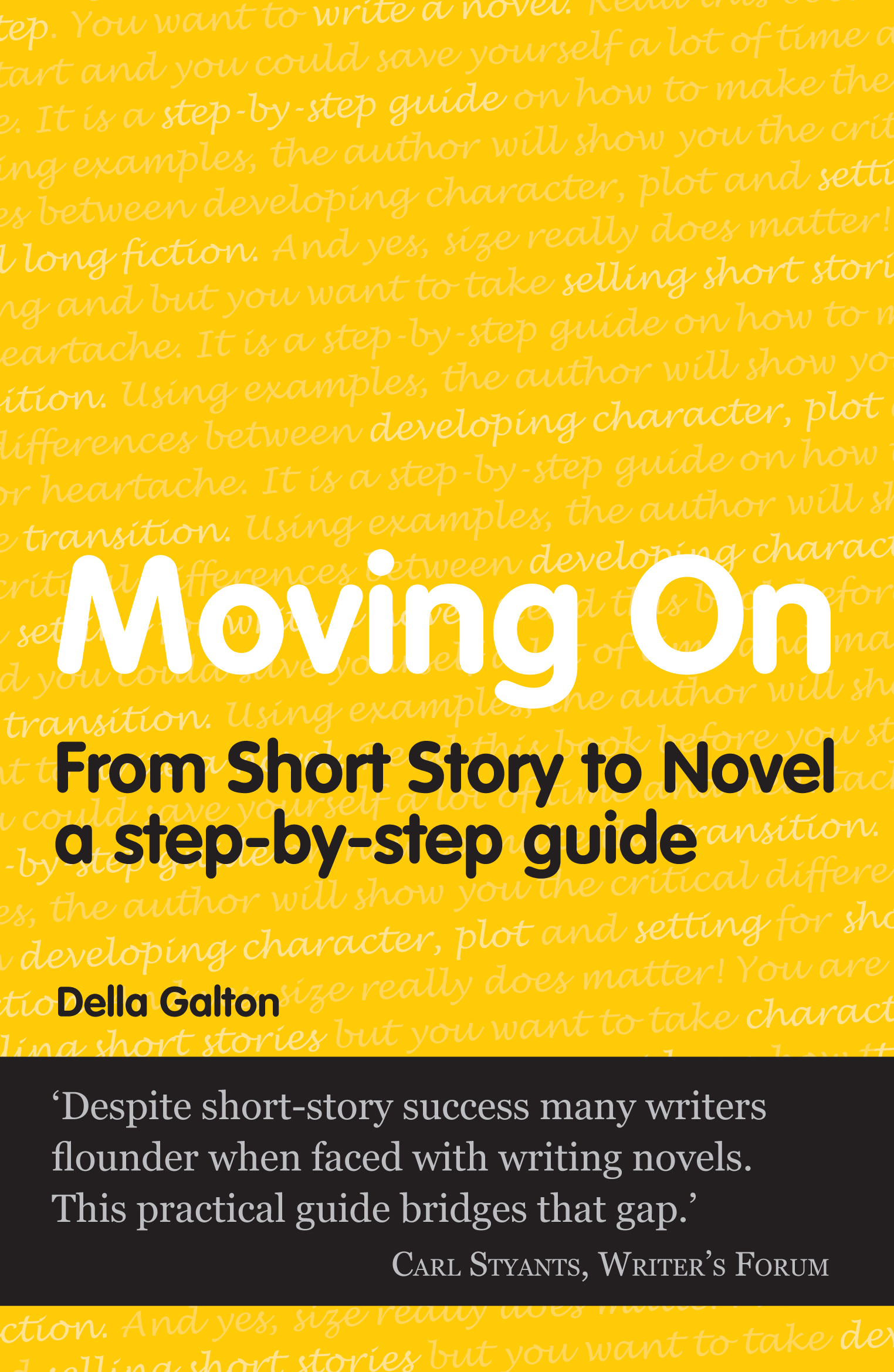
If you want to know more about making the leap between writing short and long fiction, then I happen to have written a book about it 🙂

Moving On – Short Story to Novel

I think it’s quite good! Though I might be prejudiced!

Your guide to writing longer fiction


Eleven Qualities Every Professional Writer Needs

I’ve been editing a piece on writing short stories that I did for Writers’ Forum some time ago. I just came across this list of qualities a professional writer needs, and I thought it might be quite fun to share it with you. It’s very tongue in cheek, but oh how true!

Eleven Qualities Every Professional Writer Needs

Patience

Sensitivity (whilst writing)

A thick skin! (whilst being rejected)

Patience

A sense of humour

A very stubborn streak

Patience

The ability to exist on next to no money

Diligence

Courage

And did I mention patience!

Tips on giving and receiving constructive feedback on your writing

Constructive feedback is something that we do a lot in my writing classes, i.e. students read out work for which they’d like feedback.  For me it’s very valuable, and is the reason I still attend a writing class as well as teach them.  But I’m well aware of how sensitive we are as writers, so I produced this tongue in cheek tip sheet, which I hope others might find useful.

For the critic

Please be constructive.   Think about how the manuscript could be improved and tell the writer which bits you really liked – as well as which bits you didn’t think worked as well. This is very important.

Think about how the piece began – did the opening catch your attention?  Did you want to find out what happened next?  Was the ending satisfying? If not, why not?

Please give feedback on the writing – not the subject matter.  (And definitely not the writer!)

If you have some specialist knowledge on a subject that might be useful – eg the piece has a medical slant and you’re a nurse or doctor – please say so.

For the victim!

Don’t take constructive feedback on your work personally.  Remember it is only someone else’s opinion and it is your manuscript.  At the end of the day you don’t have to change anything if you don’t want to.

However, if several people mention the same point – then it may be worth listening to them.

Please don’t argue with critics (although this can be tempting!) In the interests of class serenity, it is much better to nod, smile, pretend you’re writing down everything they say and totally ignore it.  However, if you do write down what they say, you might read it later and find that you actually agree with it. 

And Finally….

Listening to feedback about your work is not easy – it is on a par with having someone criticise your close family.   But it is one of the best ways there are to learn the skills of writing.  I personally have learned so much from feedback. It’s worth it.

Wacky Filing Systems

I always find it interesting what other writers do to keep track of their stories. I know some of us have paper filing systems (I do) and some of us keep track of our stories on spreadsheets.

I prefer the paper filing systems because when I finish writing and editing a story which I do direct on to the computer, and then I send it out, which I tend to also do by email, I quite like to sit and fill in a paper record.  I know, I’m odd like that!  For every story I ever write I keep a blank postcard. It has the title at the top of the card and the number of words, and then below this, I write down the markets where this story will go, for example, Woman’s Weekly, Take a Break etc. Then I list the date sent on the first market and when the story is either sold or returned I list the date again, with any comments.

Recently I ran out of white postcards, so I decided it would be fun to get some different coloured postcards and colour code my stories. So now I have:

Yellow – humorous stories

Blue – emotional stories

Green – twists

Pink – romance

I know, I am quite mad. but it’s quite good fun, watching the colours build up in my index card filing box and seeing how many of each type I write. 🙂

Does anyone else do this?


How to Write and Sell Short Stories in a Changing Market

Shameless self promotion below 🙂

I am doing a course called: How to write and sell short stories in a changing market – Saturday 20 October, 10 till 4.00 in Bournemouth.

Is the short story market dead? I don’t think so. Although you may have to think a little laterally to find good markets. This course will focus on writing short stories for some of the new as well as existing (paying) markets currently open to submissions.
(Suitable for beginners and experienced writers)
Cost: £35.00

There will be workshops 🙂

Please email me or reply to post for further details.

Thanks

Della


Tell your friends!

© Della Galton All rights reserved.
Powered by Cloudbase Media