Welcome to Della Galton’s website

Writing Courses – Five tips on finding a good one?

I am lucky enough to be able to teach creative writing at various venues.  This is Woman’s Weekly’s new home at Canary Wharf. How can you fail to be inspired by this view?

Tip Number One – Credibility

Do the course organisers have the credibility factor? Yes, if they are a respected publisher. such as Woman’s Weekly, they certainly do.  Choose carefully.

Tip Number Two – Marketability

Can the course organisers actually buy the work you produce? Yes, in Woman’s Weekly’s case – they buy twenty plus stories a month. They  also buy features. Which means that what you learn on the course may actually help you to sell your story to them.

Tip Number Three – Venue and accessibility

Woman’s Weekly have courses in London and in Birmingham. They cost £79 for a full day’s course. Choose from fiction, poetry or journalism. Check here for details.

Another wonderful venue, particularly if you are looking for something longer than a day is Writers’ Holiday, Fishguard, Pembrokeshire.   Check out their winter weekend in February 2018 but be quick because it books up fast. £229 fully inclusive.

Tip Number Three – Inclusivity

Does your course include all levels of experience?  If you’re a beginner you don’t want to feel out of your depth. But equally if you’re a more experienced writer you don’t want to sit through a course that is too basic. Check with the organisers.  Both the Writers’ Holiday, at Fishguard and Woman’s Weekly cover all levels of experience, often on the same course.

Tip Number Five –  The Fun Factor

It’s not all about the work, it’s wonderful to have fun too.  Choose a course which has a reputation for friendliness.  This is where The Writers’ Holiday comes into its own. Ann and Gerry Hobbs, who run Writers’ Holiday, are amazing. It would be hard to find a nicer couple. Nothing is too much trouble. Don’t take my word for it. Check out their  website. www.writersholiday.net

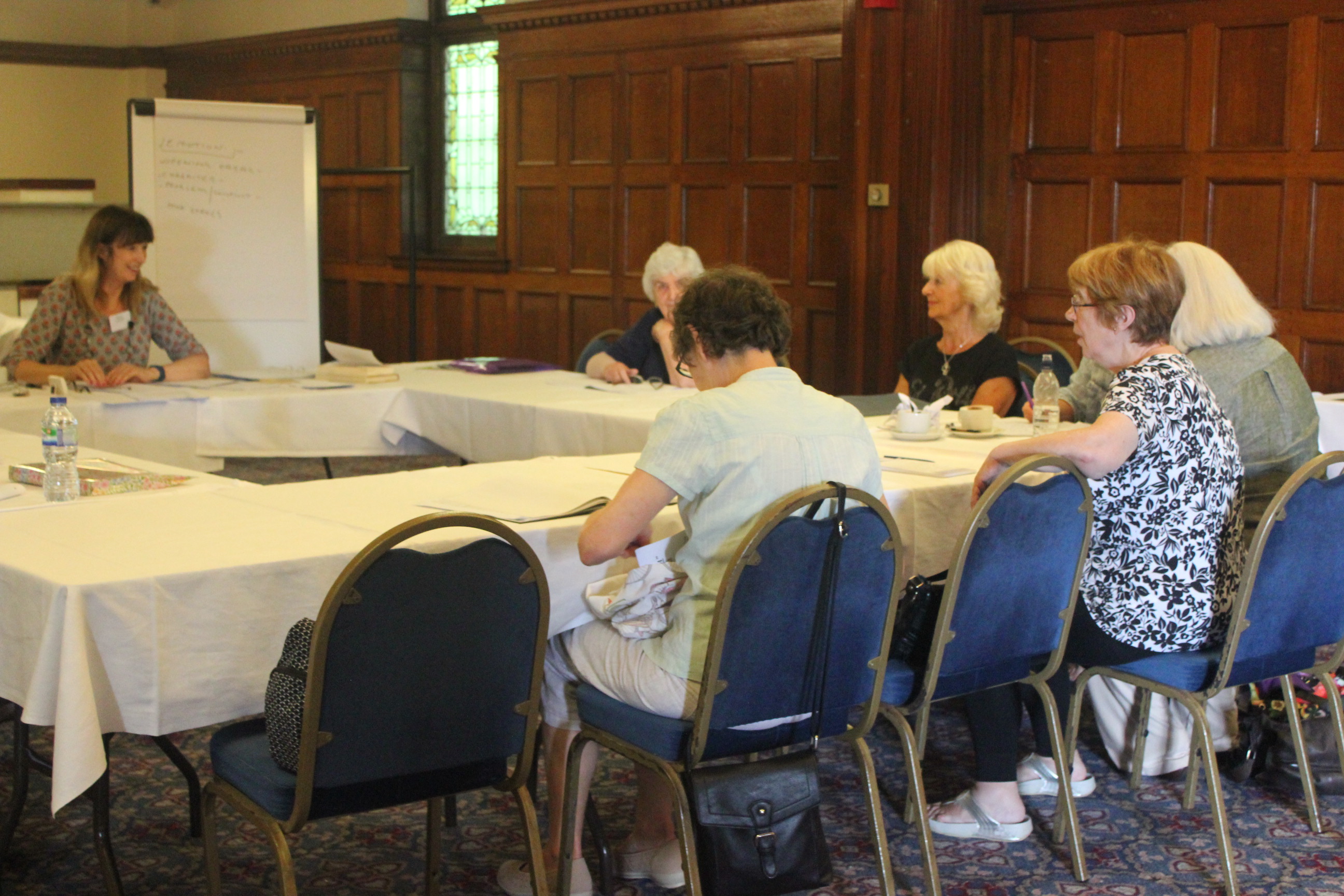
And while we’re on the subject of friendly, I’m pretty friendly myself. Here are the details of my next two Saturday courses in Bournemouth. They run from 10 am till 4.00 pm.

Saturday 5 August, 2017 – Fiction Workshop – summer special DISCOUNT RATE £29.00

A day of inspirational workshops, designed to get your creative juices flowing. Workshop based. Places will be on a first come, first served basis.

Saturday 11 November 2017 – Writing Your First Novel £45.00

  • The first chapter and beyond.
  • Writing the synopsis and cover letter.
  • Approaching agents and publishers.

Please contact me if you’d like to book. I will leave you with some biscuits.  These are the ones Woman’s Weekly have on their courses – just saying!

Thanks for reading.

WRITING GOALS and the Rule of Three!

Do you, by any chance, have a New Year Resolution that involves writing? This idea might help you to keep it.

The Rule of Three is one of the most powerful principles I have ever learned. With thanks to Jack Canfield who is a motivational speaker in the US. All you’ll need is a notepad and pen, did you get one for Christmas? If you didn’t, a reporter’s notepad from the newsagents will do. Or just flip up a new document on your word processor.

  • Take a blank page and write your goal at the top of it – which can be anything. Make sure it’s specific though. For example, write a piece of Flash Fiction and send it to a competition. Or, get a feature published in a magazine. Or perhaps you’re thinking big and your goal is to write a 90,000 word psychological thriller. It doesn’t matter: Just commit your goal to paper.
  • Underneath your goal write the next three steps you will take towards it. For example if you want to write Flash Fiction. 1: find a flash fiction competition. 2: Read previous winners. 3: Make a list of possible subjects to write. Or, in the case of the feature. 1: Buy a copy of publication you are aiming for. 2: Establish which features are written by freelancers. 3: Work on a proposal for your feature and send it to the editor.
  • Next, split your piece of paper into days of the week. Under each day, write the next three things you will do to move your goal forward.   As it’s a writing goal many of them will be doing the actual writing. So you may find your later goals look like this. 1. Write the opening paragraph, 2. make a list of possible titles. 3. Edit previous day’s work. Etc.
  • Commit to doing the 3 tasks you’ve set for yourself for at least ONE WEEK. This can take you a considerable way on small goals. Probably past completion. On bigger goals you may be motivated enough to carry on.

Top Tip to help you make this work

Don’t overstretch yourself. Don’t commit to writing 1000 words of your novel every day for a week if you know you don’t have time. Your rule of three can be tiny things. On a busy day your three things may be to write three paragraphs that day. Or three sentences if you like! The point is that you MUST do the three thing you’ve written in your notepad daily. A continual, concerted daily effort is incredibly powerful. The most magnificent castle begins with the laying of a single brick! OK, this picture isn’t a castle, it’s the Fishguard BayHotel in Pembrokeshire! But it’s certainly a castle for writers twice a year. See The Writer’s Holiday. which I highly recommend by the way!

Where was I?fishguard

Ah yes, I use the rule of three on a regular basis in all of my work. It’s brilliant for writing projects. Small and large. It’s also brilliant for promotional work if you’re trying to promote a book, for example.

My January goal in case you’re interested, is to write the next novella in the series of The Reading Group, which is my current project. I will write 2000 words a day, weekdays, 1000 words at weekends, until I have a first draft.  My commitment is to start at 8.00 a.m. and do nothing else until the 2000 words are done. This is how I wrote the rest of the series.

December, January & February are out now. March is out on 1 January 2017. Yikes, I’d better crack on and write the next one! Do let me know how you get on with your goal too.

The Reading Group, all covers

Writing Courses – are they worth it?

teaching at fishguard
Teaching at Fishguard Writers’ Holiday

There are so many writing courses around these days. Universities run them, publishers run them, magazines run them. In fact every Tom, Dick and Harry (if you’ll excuse the cliche) runs writing courses. Even the smallest town has a literary festival. But are they worth spending your hard earned cash on?

In my opinion, that depends on what you hope to gain. So before you begin, establish what you want and choose the right course for you.

I started my writing career by joining an Adult Education Class called Writing for Profit and Pleasure back in 1987. My tutor knew about getting published. Jean Dynes,who currently writes a column for Writers’ Forum as Barbara Dynes, was already well published.

  • Top Tip Number One: Choose Credibility
  • If you want to get published, get someone to teach you who is well published themselves. It helps if their students are too. I was inspired by another student in the class who had got published since joining (she’d just sold her 27th short story that year).
  • Top Tip Number Two: Choose Expertise
  • If you’re aiming to get published in a magazine and they run a course about getting published in their magazine, then go. They are the best people to teach you. I teach for Woman’s Weekly Magazine in London, Manchester and Glasgow, alongside their fiction editor, Gaynor Davies.

    Woman's Weekly at Blue Fin Buildings
    At Woman’s Weekly with Fiction Editor, Gaynor Davies.
  • Top Tip Number: Three Choose longevity.
  • I’ve just come back from the Writers’ Holiday at Fishguard, which is run by the lovely Anne and Gerry Hobbs. This year’s Writers’ Holiday was their 30th! They have a huge repeat rate of students, who can’t resist their courses because they are well organised, the food is fabulous, the locations (Fishguard, Pembrokeshire) is wonderful and the tutors are all working and well published writers. Top marks Anne and Gerry.
  • Anne and Gerry also run a weekend course at Fishguard in February. I’d advise booking as soon as possible if you fancy it because places are limited. I’m teaching the short story course in February 2017  by the way.
  • More information about Anne and Gerry’s courses can be found at Writers’ Holiday.
  • More information about Woman’s Weekly Courses can be found at. Woman’s Weekly Courses. (incidentally that photograph is not of me, but a much fatter imposter, tee tee).
  • More information about my courses is usually on my website, or you can email me. Next week I am running a day course (Saturday 6 August 2016.) Write a short story in a day. (£29 summer special offer, they’re usually £45). Venue Kinson Community Centre. Please email me if you’d like to book. Or leave a comment and I’ll get back to you.

Happy Writing!

Ten Stories NOT to send to Woman’s Weekly

Woman’s Weekly at Blue Fin Buildings

I was lucky enough to be teaching with the very lovely Gaynor Davies at Woman’s Weekly last Monday. Here are a list of stories she currently does NOT WANT because a) they have too many already or b) they’d been done to death. So PLEASE DON’T DO THESE. hot off the press.

  1. Stories about weddings.
  2. Stories about funerals.
  3. Stories about women finding themselves by doing a bungee jump (who’d have thunk it!)
  4. Woman looking after neighbour’s cat/dog/budgie and coincidentally finding the man of her dreams! (Damn!)
  5. You think it’s a child’s first day at school (told from viewpoint of mum) but it’s actually a man leaving a woman. (that’s one I haven’t even thought of!!!).
  6. Retired husband getting under wife’s feet.
  7. Stories about adoption – mother finding child or child finding mother.
  8. Stories about infidelity – how many actual endings are there? Either she forgives him or she doesn’t.
  9. Stories in letter format. Or any other story structure that you have sold them a few times. (It was good the first time – but not quite so original on the third outing!).
  10. Children persuading elderly parents to downsize.

So what else is left? We asked Gaynor this. Here’s what she said. Stories about people, warm stories, quirky stories, believable stories. Stories with ends that do not read like the punchline to a joke. Maybe a bit of something sensual – but still within the Woman’s Weekly boundaries. These can stretch further than you think.

They  are always short of 1000 words (900-1000) and 2000 words (1800 to 2000) and also 8000 words for the Fiction Specials. Happy Writing.


And did I mention I have two new novellas out – both previously published as Serials for Woman’s Weekly – in case you’d like a feel for what they DO like 🙂

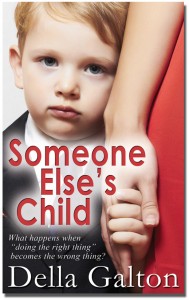
Someone Else’s Child. Click here for a closer look.

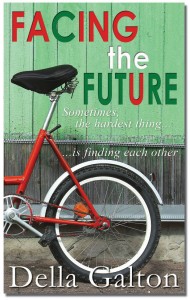
Facing The Future. Click here for a closer look.

My novel, Ice and a Slice, is also on promotion from November 1st. 99p for a full length novel. Click here for a closer look.
Thank you for reading.

Woman’s Weekly Fiction Workshops – Hot Tips

A couple of Fridays ago I was teaching again with Gaynor Davies at the Blue Fin Buildings, our subject, Writing Short Stories for Woman’s Weekly. I thought you might like an update. There are two more short story workshops planned at IPC, by the way, 15 August and 1st September 2014, click here for more details and as they are so popular I’m also in discussion with Gaynor about doing another one this year, probably in October. So don’t worry if you can’t get to one of these.

In the meantime for those who can’t make a workshop, here are a few tips from myself and Gaynor hot off the press. I must point out these are my tips, as I understand them, not direct quotes from Gaynor. (Just in case any of the Woman’s Weekly team are reading).

  • When Woman’s Weekly first came out their aim was ‘To be useful and not deal with the sordid side of life’.  An old adage which still holds true today.  But do be contemporary.
  • Today’s fiction should be escapist, but also believable.
  • Many stories are rejected because they are too old fashioned.
  • They need stories that have an individual voice so don’t copy the style of previously published stories.
  • They also want variety.
  • They are always looking for more humour.
  • Most popular lengths are one pagers (900-1000) and two pagers (1800-2000)
  • You can go up to 8000 words for the special and (top tip) they don’t get many of these.
  • On a technical level – keep the style simple. Cut adverbs and don’t get too wordy. The verb of speech ‘said’ is fine. Characters don’t need to exclaim, explain and expostulate.
  • Remember that imagery is good but too many images can cancel each other out.
  • Woman’s Weekly stories must have a proper ending – you don’t have to tie up the ends in a neat bow, but stories can’t be completely open ended either.

In the latest Woman’s Weekly Fiction Special (May – on sale 1st April to 6th May) I have a short story called By The Book (page 24 if you’re interested.) By The Book is a light romance about online dating. I don’t do many romance stories, mainly because it’s so hard not to get predictable. I was inspired however to write this story by Peter Jones’ latest book How to Start Dating and Stop Waiting which is very entertaining and also a brilliant guide to internet dating.

Woman’s Weekly are also very keen to get new serial writers. Serials go up to five parts, which is a lovely length if you want to write longer than a story but aren’t ready for a novel. The current one, called Amos Browne by Leonora Francis is excellent. If you would like to look at another example of a serial you could try my latest novella Shadowman, which was once a serial in Woman’s Weekly but is now having a second lease of life as a novella. If you buy it in the next day or two it’s only 99p too – as it’s on an Amazon Countdown promotion can’t say fairer than that!

And as I’m in ‘shameless promotion’ mode, if you’d like to read any more short stories by yours truly please do check out my collection of Daily Della titles, for example, Lessons in Love which is just £1.53. All of my Daily Della stories were previously published in magazines so they will give you a flavour of the type of story required.

There is a fabulous roof top terrace canteen at Woman’s Weekly, by the way, which does amazing shortbread – just in case you were still trying to make up your mind on whether to book up for a course.

If you’d like to know any more about the art of writing short stories, please also check out my Short Story Writer’s Toolshed which is £1.99 for kindle.

Thank you for reading. And here’s hoping none of our stories stay in the cupboard (see previous blog, journey of a woman’s weekly story) for long!

The Journey of a Woman’s Weekly Short Story – from arrival to publication

Last Friday I was lucky enough to be teaching at Woman’s Weekly’s offices in London with Fiction Editor, Gaynor Davies.  While I was there, I thought it would be very interesting to find out exactly what happens to our stories when they arrive. So if you have ever wondered what happened to your manuscript after you posted it – here is the journey of a Woman’s Weekly Short Story.

Woman's Weekly

Step One. All manuscripts are logged in date order and put in this cupboard.

The Manuscript Cupboard

Step Two. They are sorted out and read. If you have been published by Woman’s Weekly before they will be read ‘in house’. If you have not they will be sent out to two very experienced readers who Gaynor says she trusts with her life.

Step Three. If your story is a near miss or a possible it will be sent back to Clare for a second read.

Step Four. If Clare likes it, she will pass it to Gaynor Davies, fiction editor.

Step Five. If Gaynor likes it she will pass it to Diane Kenwood, the editor for a final read/approval. Which is hopefully followed by a yes.

Step Six. If it’s a yes, Clare will contact you by phone or email to tell you the good news.

Of course, a ‘no’ can happen at any stage of this process.  If it’s a ‘no’, you will have an email from Maureen Street.  Now it has been rumoured that Maureen Street doesn’t exist. That she is just the pseudonym or ‘fall guy’ if you like – the made-up person who sends the rejections.  I can confirm she does exist and she is a very very nice lady. Here she is with Gaynor.

Gaynor Davies (left) Maureen Street (right)

And here are the two desks where so many decisions regarding the fate of our stories are made 🙂

So now you know!


Gaynor's desk (closest) Maureen's desk (by window)


Tell your friends!

© Della Galton All rights reserved.
Powered by Cloudbase Media