Welcome to Della Galton’s website

The Elements of a Short Story

I often get asked if there is any sort of checklist for writing a short story.  And yes, I think there is.  Here is what I think a short story should include:

A character who has a problem/conflict which must be resolved by the end of the piece in an unexpected way.

In fact this definition could, very roughly, be applied to all fiction.  If one or more of the elements are missing the story won’t quite work. Don’t take my word for it.  If you have a story that doesn’t work, try running this checklist against it. Are the following elements in place?

  • Character
  • Conflict
  • Change
  • Resolution
  • Surprise

If a story isn’t working, I very often find that one of the last two is missing. Another common problem (oh the irony) is that there simply isn’t enough conflict, i.e. the character doesn’t have a big enough problem for the length of the piece.

Don’t take my word for it. If you have a story that doesn’t quite work, apply the checklist and see if you can fix the missing element and get the story to work.

Happy Editing!

Della xx

PS if you would like some more help with identifying what’s gone wrong with a short story I’m running two summer workshops in Bournemouth on Saturday 21 July and Sunday 26 August.  You can bring along a story of up to 2000 words for detailed feedback.

  • Venue: Kinson Community Centre
  • Time 10 till 4.00
  • Cost £40
  • Email me via this website to book.


Four Reasons We Don’t Write – and What to Do About Them!

Motivation – one of my favourite subjects. Motivating yourself to write should be easy, shouldn’t it? After all, we want to write. Don’t we? So why is it so difficult to get started? Recognise any of these excuses – er hem, I mean REASONS?

Time: I’d like to write but I never seem to have the time.

If that’s you, ask yourself a question. Is it really true?  Do you really not have time? Or are you just not prioritising writing?  Possibly because you don’t feel you deserve the luxury of having time to write when there are so many other things to do, for example, work, friends and family.

Well, if writing is what you really want to do, then don’t you deserve to carve out some time for it?  If you were to allocate half an hour three times a week you could probably write a short story in a month (perhaps even two). Little and often really is the key.

Focus: I don’t know what I want to write.

Many people set off with the idea of writing a novel.  This is very commendable; don’t let me stop you if that’s your burning passion. But there are many other forms. Here are some less time intensive ones:

  • A blog
  • A short story
  • A poem
  • Morning pages
  • A feature for a magazine

Why not experiment until you decide what’s for you. Better still why not pick one of the above and set a deadline to complete it.

Confidence: I’m not good enough to be published.

How do you know until you try? Not many people are good enough to be published until they’ve done some market research and learned what works and what doesn’t.  Writing is a little like learning the piano I think – we wouldn’t expect to be concert pianists without a fair bit of practice.

Laziness: It just feels too much like hard work a lot of the time.

Newsflash – it is! Believe me, I know it is. I write a lot and some days (actually there are quite a lot of them) I would much rather be doing something else. Some days it feels as though I’m wading through sludge.

Usually when this happens, I just carry on. (I have to, it’s my day job).  Very often it’s because I’ve got to a tricky bit. So my top tip for this is that it’s much better to finish writing when I’m really enjoying myself – then I’ll be all the keener to go back to it again. This really does work. Trust me.

If you’re really stuck I once heard a novelist say she used to handcuff her ankle to the desk to make herself sit still until she’d done her allotted amount of words. I can’t say I’ve tried this one – but I’m not ruling it out!

Happy writing

Della xxx

PS I’m running a course in Bournemouth this Saturday. 23 October. Write a Short Story in a Day (Hopefully the title is self explanatory but if you’d like further details please do leave a comment or email me.)

How much research should I do?

I can’t believe how long it is since I’ve blogged. So big apologies.  Where has the year gone? I think it’s summer isn’t it, although it doesn’t actually feel like it in deepest Dorset right now!  It’s all wind and rain!  Anyway, here’s a question that came into my postbag for Dear Della in Writers’ Forum recently so I’ve reproduced it here.  It’s an interesting one and I’m sure we’d all have different answers.

Q: How much research should you do before you write a novel? How do you know when enough is enough? One of the writers in my local group says she does hers afterwards, but I don’t see how this can work. How can you write a novel if you don’t know the facts that you are writing about? Please advise.

A: The amount of research you need to do will vary, depending on your subject and how much you know already. I’d say that more is generally better – definitely don’t skimp because it will show. But if you like research it’s easy to get carried away too.

Paradoxical as it may seem, I think that very often you can do your research after you’ve written the novel. How do you know what you need to research until you get to that point? There are pros and cons for both before and after.

Here are some pitfalls for doing it in advance. You might do a whole pile of research that later turns out to be unnecessary for your story and hence a waste of time. Or you might be tempted to put in every bit of research whether you need it or not just because you’ve done it. I’m sure we’ve all read novels where this has been the case. And finally, and most dangerously, you might never start the writing because you are having far too much fun researching.

On the other hand if you leave it all until after you’ve written the story you run the risk of having to rewrite huge chunks in the light of information you didn’t know previously. So my advice would be to research facts and information before the writing if major plot points hang on it.

It probably also depends on how much you plot in advance. If you plot everything out to the nth degree you may well know all the fine points of what you need to research. If you’re more of a panster (as I am) then you won’t. There’s no hard and fast rule. It may just come down to a matter of what works for you.

***

Incidentally the novelist who told me to do the research after the writing was the late Frederick E Smith, author of the 633 Squadron novels.  I respected him very much, we had many a long chat at the Riverside Pub, sitting outside in summer overlooking the river and putting the world to rights.  So thank you, Fred.  Invaluable advice which I still follow.

I’d be interested to hear what others do. Happy writing everyone.

Della xx

I’m running a course on How to Write Your First Novel in Bournemouth on Saturday 24 June 2017. 10 till 4.00. Cost £45.00.  Do contact me via this website or on Twitter or Facebook if you’re interested.

How do I stop my romances becoming predictable?

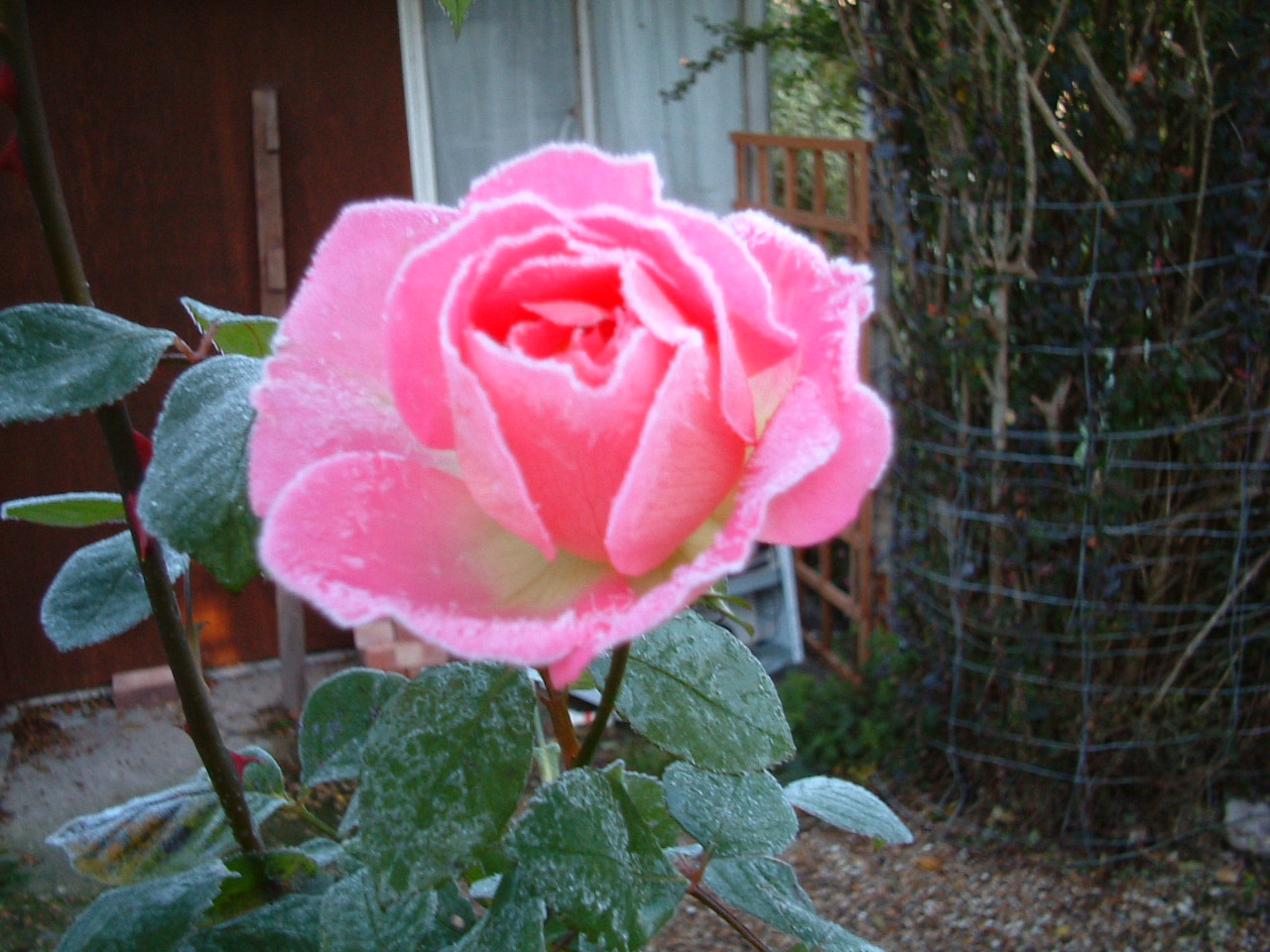
A rose by any other name!

Here’s another question from a recent postbag at Writers’ Forum. This one comes up quite a bit.  We’re talking fictional ones by the way!

Q A common cause for the rejection of short stories (I know, because I’ve received many!) is that “the story line was too predictable”. I find this very hard to avoid particularly when writing a romantic story for the women’s magazine market, when the maximum number of recommended characters is only three or four. What can be done to stop the reader from working out that the boy and girl who meet at the beginning of the story are not inevitably going to end up in each other’s arms?

A First of all, I emphasize with you. I agree that writing a romantic short story for a magazine is one of the hardest genres to crack, for exactly the reasons you state.  Here are some tips that I hope may help:

  • While the romance is likely to be a little bit predictable, other aspects of the story needn’t be.  You might want to try a unique setting. I’ve sold more than one story which featured a wedding or romance set somewhere unusual, for example an ice hotel. Think about setting your romances somewhere unique or unlikely.
  • You can also experiment with viewpoint. It’s a common misconception to think that romances need to be told solely from the female perspective. They don’t. A romance told from the male perspective, or possibly even a child’s perspective (providing it isn’t the child having the romance) can work just as well and make your story a little different. You might also want to consider dual viewpoint, a romance told from both the hero and the heroine’s viewpoint. I’ve sold a few of these.
  • The romance needn’t be your main plot line either.  It could actually be a subplot. Perhaps consider writing a family story, where the romance is relevant to more than one generation or a cosy crime story where the romance underlays the solving of a crime.
  • Also, don’t forget that it’s possible for the writing itself to be predictable. The use of language and a slightly different style can give romance a new freshness. As can a slightly different structure, i.e. a monologue or diary format.

There’s actually a very fine line between predictable and unpredictable. And actually it’s always an editor’s perception, there’s a little bit of luck involved too.

So I wish you good luck.

Wednesday Writing Spot – Writing Problems and Solutions, part one.

The Problem – Procrastination

This is a big one for me. I didn’t realise how big until I took a week off and went to Devon last week, where I had hired a cottage to write the beginning of my new novel.  I deliberately hired a cottage with no internet signal so I would not get side-tracked on Facebook, Twitter etc.  Incidentally, there was barely any phone signal either so I couldn’t phone anyone up to chat without going out into the adjoining field.

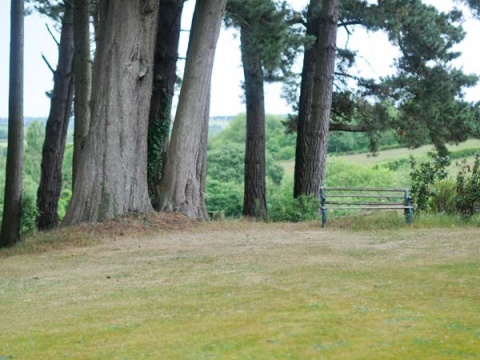
Here’s the view from the cottage.

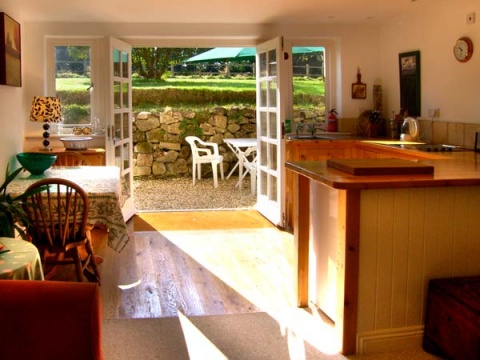
The picture below is the room I worked in. Glorious isn’t it.

So – did this work? Did I do loads of writing?

Yes and no. I did do a lot of writing, but not quite as much as I planned.  (I had planned to write three chapters of my new novel as a minimum).  I actually came away with three chapters – but one was already mostly written – does that count? Hangs head in shame. No, not really, I know!

So what did I actually do?  Well, I found other ways to procrastinate. Here are the writing ways:

Writing ways of procrastination

(Be particularly wary of these – because you probably think you are still working)

  • I planned out my entire novel in bullet point form. (I don’t usually do this).
  • I got side-tracked finishing a short story – well when I say finished, I still haven’t quite finished it.
  • I did a lot of editing of the chapters I’d already written.

Non writing ways of procrastination

  • I talked to the owners of the cottage about writing, tee hee – why is talking about it so much easier than doing it? They were thrilled I was ‘writing’ on location and wanted me to mention it in my next book!
  • I went on lots of walks with my dog, Maggie.
  • I caught up on a lot of reading – I read a novel for an author friend and gave them my editing suggestions.
  • I watched DVDs.
  • I – um – went on a couple of interesting expeditions; I went to a chilli farm, for one thing. Excellent writing material (if I ever have time!).
  • I bought presents for friends.
  • Oh and there was cooking and messing about and sunbathing.

The Solution

  1. When you have time to write, set a timer and just start writing. (I’m going to do that in a minute – honestly).
  2. Do this at the start of the day before doing a single other thing.
  3. Arrange to read out what you have written to another writer.

Number 3 works the best. Do this first and then do the other two.  And you will write, I promise. You’ll have to – or you won’t have anything to read.

I am so glad my weekly writing classes begin again next week.  I teach writing classes. I set homework. Most of my students agree that the class – and knowing they’ll have to read something out in it – is what motivates and inspires them to get something done. It works for me too because I occasionally take in a manuscript I’m having problems with and my wonderful class help.

My classes are on Thursday evenings (writing fiction and non fiction) and Friday mornings (writing for the terrified) at Kinson Community Centre in Bournemouth – in case you are interested. They start on Thursday September 5th or Friday September 6th. Please do email me for term dates or further details. If Bournemouth is too far away from you, why not try and join a class near you.

Just as soon as I’ve finished this blog I’m going to get back to writing. Did I mention that blogging is a great procrastination device too? If you’d like any more advice on writing short stories, (I am quite good at them when I actually start!) please check out my two writing guides. How to Write and Sell Short Stories published by Accent Press and The Short Story Writers’ Toolshed published by Soundhaven.com

The Wednesday Writing Spot – Plotting the longer Short Story

Plotting was the bane of my life when I started writing. It still trips me up now occasionally, particularly when I’m changing lengths, for example from 1000 to 2000 words. So here are some tips for writing the longer short story.  They are very popular in fiction specials.

This advice also works well when trying to reduce your longer stories to short ones. Just reverse it.

What’s the difference between 1000 words and 2000 words in plot terms?

There is not as much difference between the two as I thought when I first started writing.  I assumed that if I needed one or two main characters with a problem to solve in a 1000 word story, then I’d probably need more characters and more of a problem for a 2000 or 3000 word story.

I soon discovered that this was not the case. You won’t necessarily need more characters or more plot for a longer short story, but you will need more development of both.  This is usually achieved by writing more scenes.

Very short stories

In a 1000 word short story you won’t have room for more than a couple of scenes, probably three at the most and that might be pushing it.  We will probably join your character at the point of change or conflict. For example, let’s assume your character is worried about a forthcoming appointment she has the following day. Your story might go something like this:

Scene one

Your character is discussing her worries with friend or partner.

Scene two

Your character goes for the appointment.

Scene three

Resolution and possibly a twist.

If you did follow the format above for a 1000 word short story, then you’d have to make your scenes extremely short – you’d have just over 300 words to devote to each one.

If you had more space to play with, you might also have a flashback of exactly why your character was so worried about her forthcoming appointment. Your story might then go something like this:

Scene one

Your character is discussing her worries with friend or partner.

Scene two

Flashback in your character’s viewpoint to show a previous occasion when she had to go to an appointment and it didn’t work out – hence meaning the stakes for today are higher and we (hopefully) care about it more.

Scene three

Your character at the appointment.

Scene four

Resolution and twist

The number of characters and the plotline are the same, but the story is longer and has more depth because we have more development of both.

This helped me so much when I first got it. Hope it helps you too.  And if you’d like any more advice on writing short stories, please check out my two writing guides. How to Write and Sell Short Stories published by Accent Press and The Short Story Writers’ Toolshed published by Soundhaven.com

The Wednesday Writing Spot. Tips on Winning Short Story Competitions

This is the first of four posts about various aspects of short story writing, which will go out over the next four Wednesdays, in my new Wednesday Writing Spot. I hope they are helpful.

I have spent a fair bit of time judging short story competitions, and I have been asked to judge two more this year, I’m judging the short story award for the Wells Festival of Literature, more details here and also the H E Bates Short Story Competition, more details here so I thought it would be a good plan if we started with some tips on winning competitions.
So what do I look for when I judge a competition?  How exactly do stories lift themselves to the top of the pile?

These elements are in no particular order.

A good title

This helps attract my attention although if the story doesn’t work – it won’t be enough on its own.

Good writing

This always attracts my attention. And by good writing, I mean that the story is well crafted. There will be good sentence construction, no clichés or tired lines. There will be an intriguing opening, probably a few particularly good lines – I often point out examples of these in my individual comments, if I’m doing critiques too.

The story works

This means that the whole story has to work – from beginning to end.  There must be a good strong premise, which is developed throughout the story and the ending must be satisfactory. By satisfactory I mean that it should work for that story. It should tie up with the beginning without being predictable. It shouldn’t be obscure or too obvious.

Originality

It helps if I haven’t seen the plot line before – this is tricky because I’ve seen hundreds. If I have seen it before it helps if there is a new angle – maybe humour, or a different structure.

Believable characters

They must be believable and not cardboard cut outs.  Characterisation is probably one of the most important things in a short story – or any story, come to that.  If I get the sense that these characters could actually exist that is a great start. In many of the stories I read I find that the characters are not fully developed, which means that often they are not quite believable.

Character motivation

This is strongly tied up with believable characters. Would they really do that?  Ask yourself when you are creating a character if their actions are likely. If a character’s actions strike me as unbelievable I tend to lose interest in the story. Characters can do unlikely things in a story, but you have to make me believe they would do them.

Emotional involvement

Again this is strongly tied up with believable characters and character motivation. Am I involved with these characters? Do I care what happens to them, or are they so insipid and unbelievable that I’m not that bothered? The acid test here, is do you care about them? Really care, I mean? Are you moved when you write about them or are they just a means to get your plot on the page?

An intriguing plot/dilemma

Do I want to keep reading? Is there enough of a hook which starts at the beginning and draws me through. It’s quite hard to do this in a short story, but if you can do it, you are likely to succeed.

Good dialogue

It’s hard to achieve but good dialogue (where everyone doesn’t speak in exactly the same way) goes a long way to making characters believable.

An unusual setting

The more competitions I judge the more I think that this is important. An unusual well drawn setting can make your story stand out from the rest.

A point

Yes, stories should be entertaining but they should also have a point.  This is a fact I overlooked when I first started writing short stories.  Think about your story’s overall message. Is there one? Or are you just writing about an incident that is actually quite slight – and may have been amusing when you thought about it, but isn’t really enough to hold a reader’s interest?  Stories that are too slight can come across as anecdotal.

Good presentation, grammar etc

This is not the be all and end all. If you have written an excellent story and it’s badly presented you may still get placed. (If the judge sees your story) But bear in mind you probably won’t get past the first reader in a national competition.

Something very important to remember

When you enter a competition where there are hundreds of entries and only three or so prizes the initial readers will be looking for a reason to throw your story out of the pile. Don’t give them one.

And, one last thing, most entries arrive on the deadline in a competition. This is fine, as long as you haven’t written it the day before in a panic because if you have, then you won’t have had a proper cooling off period in which to edit it. Write your story in good time, then put it aside for a week or so, then edit it. You are much more likely to produce a polished piece of work.

Good luck.

And if you’d like any more advice on writing short stories, please check out my two writing guides. How to Write and Sell Short Stories published by Accent Press and The Short Story Writers’ Toolshed published by Soundhaven.com

Next week we will take a look at story arcs.

PS Below is the update on entries received so far for the Wells Festival of Literature Competition.

Total On-line Entries so far this year:

Poetry: 17
Short Stories: 29
Crime Novels: 4

We have also received a similar number of entries using the traditional pen and paper method.

To Plot or Not

When you write a novel, one of the first decisions you need to make is how you are going to undertake to write it.  Will you

a)  Plan out each chapter in detail so that you know exactly what is going to happen from beginning to end.

Or

b) Simply place your characters in a difficult situation and see what they do to resolve it, hence allowing the plot to evolve through the actions of the characters.

These are the two extremes and you might decide to do a little of both, but there are advantages and disadvantages of both working methods and it might help to know them before you start.

The planned approach – Advantages

A detailed plot will cut down your writing time considerably because you will always know exactly what you are going to write next.

You are also unlikely to get stuck or run out of steam halfway through.

Planning in detail means that you can also keep an eye on the structure as you work.  You will probably know how many words each scene will take and so can keep an eye on balance as you write.  I.e. make sure that one or two characters don’t run away with the action.

Planning also means that you don’t have to write the novel in chronological order.  You know what is going to happen, for example, two thirds of the way through, so therefore, you could, if you wished, write that bit first.

Disadavantages

If you know exactly what is going to happen all the way through your novel, there is a danger that you might become bored and stop writing it.

There is also a danger that you might write all the exciting scenes first and leave the slower scenes until later – with the same result.

The Unplanned Approach – Advantages

There is nothing more exciting when writing than not knowing what your characters are going to do or say next, so you might well end up with some unexpected twists and turns of the plot that are less likely to come from a strictly planned approach.

Disadvantages

There is a very real danger that you will get stuck because your characters have been backed into a corner from which there is no way out.

On a similar note, you might find that you get about halfway through your novel and find that you have run out plot.

If this happens, then you can often put it down to one of two reasons.

a)      You didn’t have enough plot in the first place.

b)      You haven’t developed the plot you already have.

Want to know more? Come along to How to Write Your First Novel on Saturday 13th April, in Bournemouth. Cost, just £35.00. Please email me if you’d like any more details.


Tell your friends!

© Della Galton All rights reserved.
Powered by Cloudbase Media