Welcome to Della Galton’s website

The chip of ice in every writer’s heart

It was Graham Greene, wasn’t it, who said that every writer should have a chip of ice inside his heart. This has more than one interpretation, some of them not very nice, but I used to think it meant this: however tragic our situation, or someone else’s, there is a detached part of us that is storing up details so that we may one day write about it.

Does this make us callous? Hard hearted? Exploitative? Should we be ashamed of ourselves? Well, that’s debatable. Do I do this? Yes, I can’t help it, I’m a writer. I sell emotion. (as all writers must).

But I’ve been thinking about this a lot lately and I’d like to put forward another theory of mine. Actually it’s not a theory; for me it’s a fact.

Writing about emotions that I’ve felt, especially grief or sadness or anger, is immensely cathartic. I write about them because if I didn’t I would go stark raving mad – OK madder than I already am!

I have to write these things out of my system, it helps me to stay sane. It helps me to cope with the awful things life can throw at you sometimes.

And actually I think it helps others too – I write out my emotions in fiction and on the whole I write fiction with upbeat endings. I hope my readers will find identification in what I write and find some comfort in my stories. I really do – and, as it happens, I have many letters from readers who have said that this is exactly how it works.

Gosh, I didn’t know I had such a bee in my bonnet (sorry for the cliché) about this. I would love to know what you think.
Issue Led Stories

Issue led stories are controversial – or can be? Should we write them? Especially for magazines. Or should we stick to nice safe subjects like weddings and car boot sales and summer balls. Not that I’ve got anything against these subjects, I think I’ve sold stories about all of them – well possibly not a summer ball, must put that one on my list!

But – and I think I might have mentioned this – I also like writing about issues. Gritty issues. My students often ask me if there are any subjects that are taboo for magazines and the answer is that, no, I don’t think so.  Well maybe some subjects are taboo for some magazines, but I’ve written lots of issue led stories. I’ve written (and sold) stories about: abortion, agoraphobia, anorexia, alcoholism (did I mention I just wrote a book about alcoholism called Ice and a Slice).  Check it out here. You can even read the first chapter on the previous blog. I will shut up about Ice and a Slice soon, I promise!

I’ve also written about the death of pets or people, drugs, sexual abuse, nervous breakdowns, cancer, prisons – I’ve even slipped the odd quite saucy story past a magazine editor!

I think the key to writing issue led stories and selling them to magazines is to do it sensitively and also to give some hope. If you write about a gritty issue and then give it a really sad ending this might not be so successful.

You can of course write stories with more downbeat endings for competitions. But don’t be depressing even if you’re being downbeat.

I’ve just had one of my issue led stories (about anorexia) published on Morgen Bailey’s blog. If you’d like to check that out, please do take a look. Click here. It’s Flash Fiction so very short. In fact, I think that Flash Fiction works very well if you use a strong, gritty subject.

I’d love to know what other writers think.


To Plot or Not

When you write a novel, one of the first decisions you need to make is how you are going to undertake to write it.  Will you

a)  Plan out each chapter in detail so that you know exactly what is going to happen from beginning to end.

Or

b) Simply place your characters in a difficult situation and see what they do to resolve it, hence allowing the plot to evolve through the actions of the characters.

These are the two extremes and you might decide to do a little of both, but there are advantages and disadvantages of both working methods and it might help to know them before you start.

The planned approach – Advantages

A detailed plot will cut down your writing time considerably because you will always know exactly what you are going to write next.

You are also unlikely to get stuck or run out of steam halfway through.

Planning in detail means that you can also keep an eye on the structure as you work.  You will probably know how many words each scene will take and so can keep an eye on balance as you write.  I.e. make sure that one or two characters don’t run away with the action.

Planning also means that you don’t have to write the novel in chronological order.  You know what is going to happen, for example, two thirds of the way through, so therefore, you could, if you wished, write that bit first.

Disadavantages

If you know exactly what is going to happen all the way through your novel, there is a danger that you might become bored and stop writing it.

There is also a danger that you might write all the exciting scenes first and leave the slower scenes until later – with the same result.

The Unplanned Approach – Advantages

There is nothing more exciting when writing than not knowing what your characters are going to do or say next, so you might well end up with some unexpected twists and turns of the plot that are less likely to come from a strictly planned approach.

Disadvantages

There is a very real danger that you will get stuck because your characters have been backed into a corner from which there is no way out.

On a similar note, you might find that you get about halfway through your novel and find that you have run out plot.

If this happens, then you can often put it down to one of two reasons.

a)      You didn’t have enough plot in the first place.

b)      You haven’t developed the plot you already have.

Want to know more? Come along to How to Write Your First Novel on Saturday 13th April, in Bournemouth. Cost, just £35.00. Please email me if you’d like any more details.


Getting the Grip Factor

Have you ever been in a writing group and listening to a manuscript – possibly read out by one of your very good friends – and then realised that you’ve stopped listening. That you have drifted off partway through? That you have missed a chunk. Have you ever felt relieved that they’ve stopped reading? No?

Don’t lie. I know you have. So have I. And then I’ve felt guilty. And then I’ve decided it must be because I’m tired, or it’s been a long day, or because I’m stressed. Or because I’m distracted. In short, I’ve decided it must be my fault.

But what if it isn’t my fault? What if it’s their fault?

Here’s another question for you? Have you ever been in a writing group and listening to a manuscript – possibly read out by someone you don’t care for too much – you weren’t really paying that much attention. And suddenly you find that you’re gripped. You’re listening. You don’t want them to stop. You are disappointed when they do stop. You want more.

Whose fault is that? This is an easier question to answer, isn’t it. It’s their fault. The writer’s. Clearly they have written something that’s good. They have the X factor, the hook, the read-on-ability factor – whatever you want to call it.

I realised recently that this whole question of whether it’s easy to listen – or not – is a very good gauge of how good something is. If I’m gripped, chances are the story/writing is good, If I’m not gripped, well it isn’t.

So has your writing got the Grip-Factor or the Switch Off Factor?

Your friends won’t tell you the truth. So here is a light hearted look at how to tell.

How to tell if your writing has the Switch Off Factor

People are fidgeting, texting, writing notes, playing on their iPad, looking glazed over.

People have fallen asleep and are snoring.

People sigh when you finish – with relief.

There is utter silence in the room – everyone has left.

How to tell if your writing has the Grip Factor

There is utter silence in the room – everyone is hanging on to your every word.

People sigh when you finish – with frustration because they want more.


And yes, I’m being very lighthearted here, but it’s food for thought, isn’t it. Check out your audiences’ reactions next time you read 🙂

If you want to get the Grip Factor – when it comes to short story writing. There are still places on my day course next Saturday 9 March. How to Write and Sell Short Stories.

More details for How to Write and Sell Short Stories


Do men write erotica – or is it a closed shop?

One of the letters I recently received for my Dear Della page was from a guy asking if erotica was a closed shop to men. He’d noticed that many erotica writers were female.

Interesting question – I know what he means. However, who writes what can be somewhat misleading in this field as practically everyone has a pseudonym.

In my experience from working as an editor for Xcite Books I’d say this is one of the fields where male and female writers are fairly evenly spread.  In some of the niche markets there are actually more male writers than female. However, it’s actually quite hard to identify authors because so many of them use a pseudonym. These are often changed to reflect the type of erotica, for example, a woman writing for a gay market might well use a male pseudonym and a man writing lesbian erotica often uses a female pseudonym.

So no – this market is definitely not a closed shop for men.

If you would like to know more about writing erotica – whether you are male or female, please do check out my day course on How to Write and Sell Erotica on 2 February. More details here http://www.dellagalton.co.uk/?page_id=31

Happy New Year

We all begin the year with various writing resolutions, but then real life gets in the way.  So why not have one resolution a month?

January

Don’t think about it, just write.  Set a timer for ten minutes and begin writing on the theme of new beginnings.

February

Write a short piece, which includes the words, Summer, Knife and Jealousy.

March

Describe a winter scene in 500 words.  Be poetic.

April

Write a short piece on the theme of water.

 May

Imagine that you have just confronted your deepest fear.  Write down how you feel.

June

Write about an intruder.

July

Invent a character who has a problem that is major to him, but minor to other people.

August

Write a letter to your local newspaper about something that you feel strongly about.

September

Look out the first story you ever wrote and see what you can do to improve it.

October

Describe the view from your window.

 November

Describe in detail a character you dislike.

December

Write a Christmas carol or poem.

Happy writing, and thank you for reading my blog 🙂


Writing a Serial

I started writing serials because the thought of making the leap between short stories and novels terrified me.   Writing a serial of around twenty thousand words seemed like a good interim step. Not quite as scary as embarking on a hundred thousand words, but allowing more scope than a short story.

I hadn’t realised then, that a serial is not a mini novel with cliff hangers thrown in at the ends of instalments.  The pace is completely different.  As different, in fact, as the pace between a short story and a novel, and, for me, this was the hardest adjustment.

Obviously, there are similarities between serials and novels, too.  The main one that springs to mind is that a serial gives a lot more room for character development.  And you do need cliff hangers, which should be developed throughout the rest of the part, yet also come as a surprise to the reader.  This is not easy!

I’ve had ten serials published now in Woman’s Weekly and I’ve enjoyed writing them all.  One of my favourites was called SHADOWMAN, and was a five part thriller set in a show jumping yard.  A young couple, are plagued by anonymous notes, which threaten both their business and their marriage.  Writing this was like putting a jigsaw puzzle together.  There were several people who could have been the note writer – I had set up motives for them all – and I wasn’t sure myself who it was until the end.

I also loved writing WISH LIST, which was a humorous three part serial.  The main character who’s just emerged from a traumatic divorce, finds a wish list she’s written twenty years earlier.  She decides to work her way through it and in doing so regains her shattered self esteem.   

I had a lovely letter about this one from a lady vicar, who said she laughed all the way through.  That really made my day.

Both of the above had strong structures.  Shadowman was a whodunnit and The Wish List was based on a ‘wish list’ – odd that. But I think that good use of structure is worth thinking about in a serial.

Only three of the magazines take serials these days, which is a shame.  They are Woman’s Weekly, My Weekly and People’s Friend, the latter runs two a week and so is probably a good place to start.  Editors’ requirements do differ, but each of these magazines will supply guidelines for writers venturing into this medium.

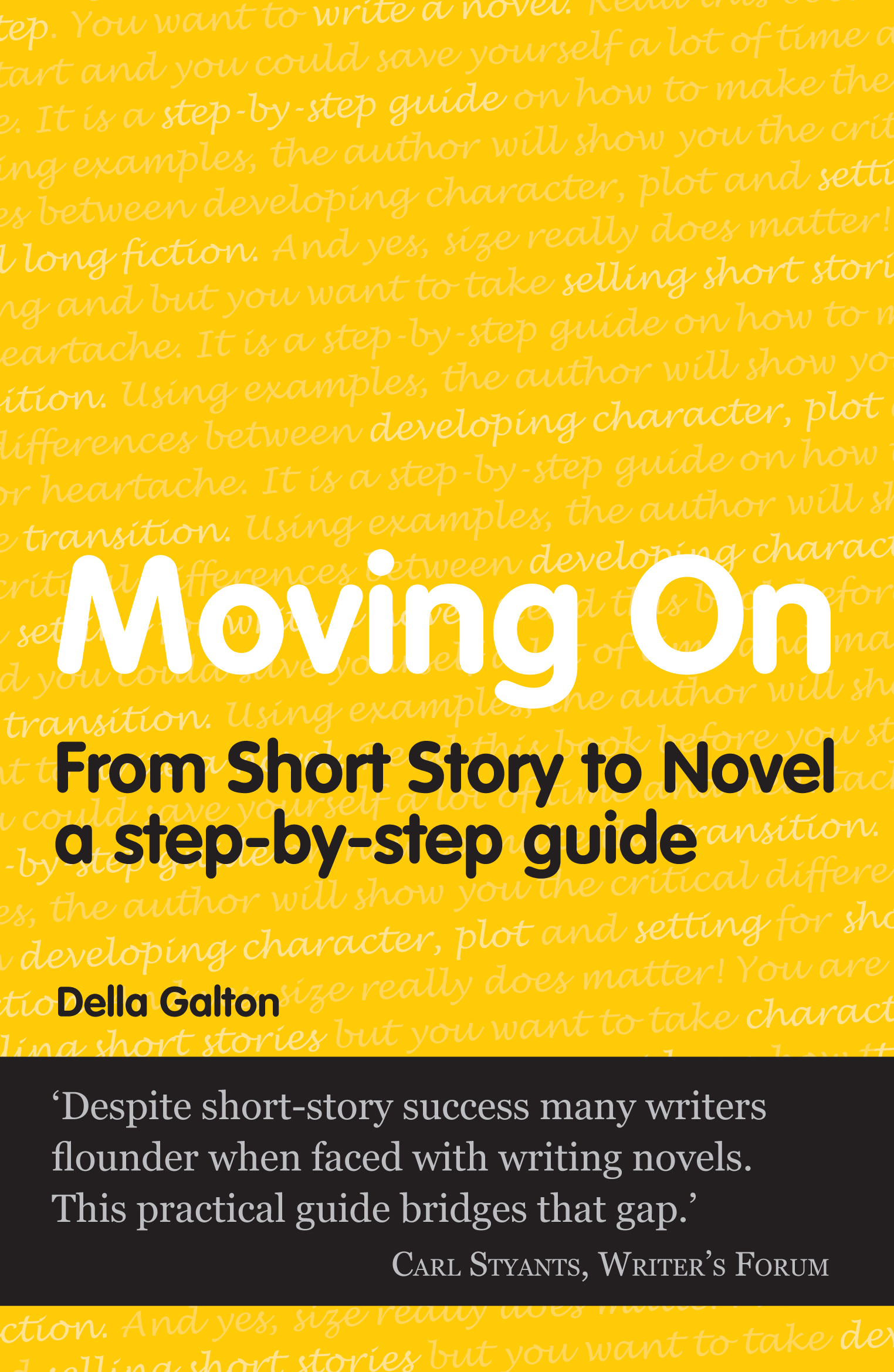
If you want to know more about making the leap between writing short and long fiction, then I happen to have written a book about it 🙂

Moving On – Short Story to Novel

I think it’s quite good! Though I might be prejudiced!

Your guide to writing longer fiction


The Dunford Novelists’ Conference

Gosh, it’s ages since I wrote a blog, and I have been meaning to tell you about the Dunford Novelists for a while.

This is my all time favourite writing conference. Two reasons: one, it’s at the end of January – and looking forward to it livens up that flat ‘after Christmas’ feeling no end – and two, it’s a working writer’s conference. Moi? workaholic? Well, of course!

I was first introduced to Dunford about 12 or so years ago. It runs from Friday tea time to Sunday just after lunch and it’s one of the most intensive things I’ve ever done. Basically it’s all about getting the first chapter – and indeed the first page – of your novel as spectacular as possible. Because if you don’t do this, the rest of it might never be read.

You take along your first chapter – four copies of it to be precise – and throughout the weekend you get written feedback from the other delegates, a mix of published and yet to be published novelists. You also read your first chapter aloud to your group (6 people) and get comprehensive verbal feedback. You also read your first page aloud to the entire assembly (36 people) and get verbal feedback.

It’s scary. Very, very scary. But it doesn’t half focus your attention on your first chapter. And your first page. I love it, love it, love it!

Dunford is chaired by best selling novelist, Catherine King.

It is however, invitation only, but I happen to know that there are one or two places left for this year’s conference because of last minute cancellations.

It costs £201 for the weekend, and is in Bournemouth on 25-27 January.

If you fancy subjecting your first chapter to intense scrutiny and having a rather fine time socialising too, then get in touch with me and I’ll see if I can wrangle you an invite 🙂


It’s invitation only,

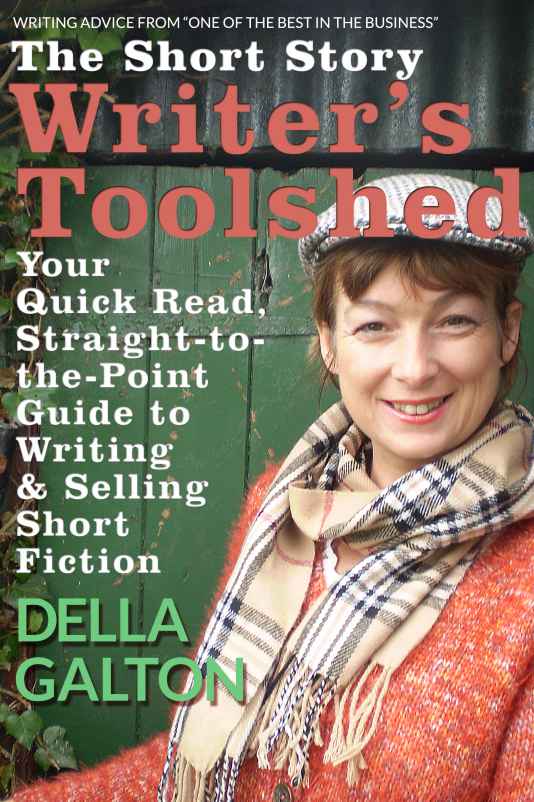
The Short Story Writer’s Toolshed

Does anyone remember my Writer’s Toolshed series in Writers’ Forum magazine?  It ran for a year and was a series of features focused on writing and selling the magazine short story.

Well here’s some good news if you missed it. I’ve put the whole thing together in this handy little ebook. I’ve updated it and added a few extra bits.  It should complement my other writing books – it doesn’t replace them. Although I’m talking about the same subjects the Toolshed is a slightly different approach. How to Write and Sell Short Stories is for the writer who wants more depth whereas The Short Story Writer’s Toolshed is for the writer in a hurry.

If you write short stories, particularly for magazines then I think you might like both.

At the moment The Short Story Writer’s Toolshed is FREE. And I’d love any feedback you may have if you have the time to give it.

Only £1.88 (or similar local equivalent)
Read the first few pages here, for free
Purchase it now from amazon.co.uk | amazon.com

The FREE Kindle reader app is available for all smart phones, tablets, PCs and Macs.
Download it here.

Tips on giving and receiving constructive feedback on your writing

Constructive feedback is something that we do a lot in my writing classes, i.e. students read out work for which they’d like feedback.  For me it’s very valuable, and is the reason I still attend a writing class as well as teach them.  But I’m well aware of how sensitive we are as writers, so I produced this tongue in cheek tip sheet, which I hope others might find useful.

For the critic

Please be constructive.   Think about how the manuscript could be improved and tell the writer which bits you really liked – as well as which bits you didn’t think worked as well. This is very important.

Think about how the piece began – did the opening catch your attention?  Did you want to find out what happened next?  Was the ending satisfying? If not, why not?

Please give feedback on the writing – not the subject matter.  (And definitely not the writer!)

If you have some specialist knowledge on a subject that might be useful – eg the piece has a medical slant and you’re a nurse or doctor – please say so.

For the victim!

Don’t take constructive feedback on your work personally.  Remember it is only someone else’s opinion and it is your manuscript.  At the end of the day you don’t have to change anything if you don’t want to.

However, if several people mention the same point – then it may be worth listening to them.

Please don’t argue with critics (although this can be tempting!) In the interests of class serenity, it is much better to nod, smile, pretend you’re writing down everything they say and totally ignore it.  However, if you do write down what they say, you might read it later and find that you actually agree with it. 

And Finally….

Listening to feedback about your work is not easy – it is on a par with having someone criticise your close family.   But it is one of the best ways there are to learn the skills of writing.  I personally have learned so much from feedback. It’s worth it.

Tell your friends!

© Della Galton All rights reserved.
Powered by Cloudbase Media