We’ve been talking about literary devices in my classes, which, perhaps oddly for a writing class, we rarely do. We’re usually focusing on dialogue or characterization or some other element of short stories. So here are just three literary devices which are often used in fiction.
Allegory: a story, poem, or picture which can be interpreted to reveal a hidden meaning, typically a moral or political one.
Example: The Lion, the Witch, and the Wardrobe by C.S. Lewis is a religious allegory with Aslan as Christ and Edmund as Judas.
Analogy: a comparison between one thing and another, typically for the purpose of explanation or clarification.
Example: A biology teacher might explain the immune system by saying, “What policemen do in a town, white blood cells do inside the body.”
Motif: a symbolic image or idea that appears over and over again in a story. Motifs can be symbols, sounds, actions, ideas, or words. Motifs strengthen a story by adding images and ideas to the theme. Incidentally, the word motif (pronounced moh-teef) is derived from the French phrase motif meaning pattern.
Example: Throughout a story, a character wears a pair of earrings for a variety of occasions: her wedding, her mother’s funeral, and her own daughter’s wedding. The earrings become a symbol of her changing duties as a wife, daughter and mother as she ages.
I use analogies a lot in short fiction and I’m quite fond of motifs for longer fiction. How about you?
For more about writing short stories please check out my Toolshed Series.
Using the senses in your writing, especially the sense of smell, really helps to take the reader into your story. However, it’s just as easy to be cliché with smells as with any other writing so choose carefully and be current. For example, do today’s hospitals really smell of disinfectant and boiled cabbage? Maybe they do, but they smell of a lot of other things too. I asked my writing students to come up with something different. Here are the results.
Hospital smells
Antiseptic hand wash.
Floor polish.
The colognes of visiting relatives.
Stale air.
Mass produced food.
Body odour.
Fear.
Fresh air and rain on the clothes of visitors.
We did the same thing with beaches.
Beach smells
Donkeys .
Coconut suntan lotion.
Burger vans.
Fish and chips.
Candyfloss.
Cigarette smoke.
Diesel generators from fast food stalls.
Ozone.
Rotting seaweed.
Fresh air.
Smoke from Bbqs.
I have a post it note stuck over my desk. Smells, touch, taste. I tend to use the other senses anyway but it’s easy to forget these three, especially the sense of smell.
A rose by any other name!
For more tips please check out my books on writing.
I am also running a course in Bournemouth on Saturday 28 May – How to Write and Sell Short Stories. 10.00 am till 4.00 pm. £45.00. Please email me via this website if you’d like more details.
If writing more productively is one of your New Year Resolutions – it’s one of mine – these tips might help.
Choose a market. Preferably one with a deadline like a competition. If you’re stuck for an idea. Why not try The Writers and Artists Year Book Short Story Competition. It’s for a story on the theme of Ageing and it closes on February 15 2016. Max length 2000 words. More details here.
Decide what you want to write BEFORE you get to the computer/notepad. Let the idea stroll around your mind for a few days. The subconscious is a wonderful tool. Even if you just have one word. For example, I currently have Fire. I’m going to write something about fire next. I’ve already brainstormed the word for possible plots. I already have emotions attached to the word. When I start the actual writing I’m expecting my subconscious to come up with the goods. This works. Trust me.
Make a Deadline Date to write. Do this with a writing partner. Set a time. Set a theme. Set a word limit. Agree the time you will write and agree the time you will email your stories to each other for feedback. Once you have swapped your stories then edit them based on your partner’s feedback.
Edit your story one final time and then send it to the competition. Good luck.
And if another of your New Year Resolutions happens to be losing weight (as mine is) you might like to know that I have two helpful books, currently both at half price, on this subject.
Ten Weeks to Target (fiction – a romance set in a diet club) may keep you sane while you’re doing the actual diet bit! Is also half price for kindle from January 1st 2016 until January 8th.
Writers are in the business of selling emotion. I forget who said that, but it’s true. We read – or at least I do – because we want to feel something. We might want to feel amused, uplifted, scared, touched, nostalgic or excited – or any combination of these. But we always want to feel something. We want to escape into an alternative world. A good writer will take us there. They will make us feel emotion. How do they do it? Well I can tell you how I do it.
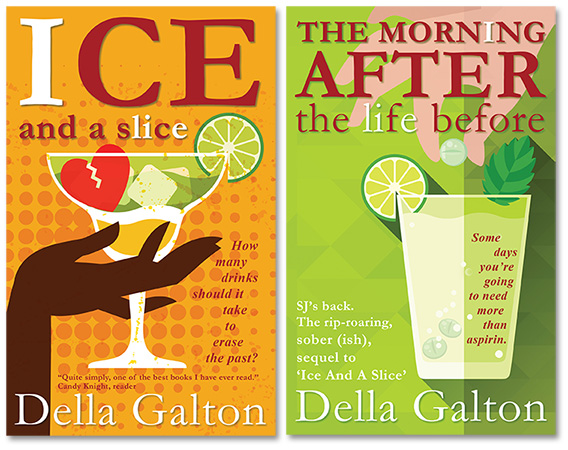
Create Larger than Life REAL FLAWED Characters We have to care about the characters. Which means they have to be interesting. They need something that we love or possibly hate about them. They cannot be bland. They should be larger than life. Thing big. Flawed characters are great. So give your characters flaws. This is part of a review left on Ice and a Slice by James Nash. ‘This is ‘real life’ in all its complicated glory, challenging, gritty and very, very funny.’ Paradoxical flaws are the best I find. Especially if you don’t tell the reader straight away why the character has them. For example, in my novel The Morning After The Life Before, one of the main characters, Didi, has a phobia of white. She can’t eat white food, she can’t keep milk in her house. She can’t have white appliances in her kitchen. Yes there’s a very, very good reason and it’s a vital part of the plot but I don’t reveal that until later in the novel.
Use Universal Truths We all know what it’s like to feel we don’t fit in. That we’re not good enough. That we’ve been abandoned. That we’re not loved. We all know what it’s like to be human. Capitalize on these universal truths. Make your characters feel them. Transfer onto the page how you felt – when YOU felt these very powerful emotions.
You MUST Care It’s very hard to write emotion by numbers. The first person who has to care about the characters is you. And I mean you have to really care. You can’t just pay lip service to it. You can’t write emotion from a distance. You have to care so much you’ll feel pain if your character were to die. Bring this pain in from your own experience. We all know what it’s like to feel extreme pain. Use it, relive it, get it on the page. Wring out your soul. That may sound overdramatic (not to mention painful!) but it really works. What comes straight from the heart goes straight to the heart. If you feel it I guarantee your readers will feel it too. Don’t hold back. Don’t skate over emotions – they are everything. Absolutely everything.
Go For High Stakes Give your characters emotionally charged dilemmas. Make the stakes high. Loss of love, loss of life, loss of family. If you take us into a war zone I guarantee we’ll care. If you take us to a life threatening situation or a death bed situation we’ll care. If you show us the tenderness between mother and child, or of any kind of unconditional love we’ll care.
Also – try to keep it real. We are interested in the nitty gritty bits of human life. The specific details.
I’ve had some amazing feedback on my Ice series. I’ve had many many emails from reader telling me they loved SJ because she is warm and very flawed. In Ice and a Slice she is struggling with a drink problem. She is very much in denial. One of my reviews for Ice says, ‘SJ is flawed and vulnerable and sweet but also sometimes self centred and thoughtless, just as people in real life are. She often tries to do the right thing with it backfiring spectacularly – sometimes with comic results.’
I was so thrilled to read this. And it brings me on to my next point.
One last bonus tip. Pathos and humour are amazing if they are on the page side by side. One will point up the other. Don’t be too dark. There is humour in the darkest situation. And actually, not so often quoted, there is pain in the lightest situation.
Ice and a Slice is half price between December 27th 2015 and January 3rd 2016
It’s an honour to welcome Patsy Collins to my blog today to talk about the Womagwriter blog. Patsy is a short story writer and novelist. Like myself, she has always found Womagwriter a brilliant resource for short story writers. So when she was asked if she’d like to take over the blog – what did she say? Here’s her story.
***
When I first started submitting short stories to magazines, I did a lot by guesswork. As a result, quite a lot of my submissions stood no chance of being accepted. Stories fell between usable word counts, were in 1st person for markets taking only 3rd, included taboo subjects (yep – I had someone ill in a story I submitted to The People’s Friend!) Naturally that didn’t help either my acceptance rate or my confidence.
Then I discovered http://womagwriter.blogspot.co.uk. On there were guidelines for every magazine I’d ever considered submitting to, plus some I’d never heard of. There was advice and updates, plus comments from other writers. It was a huge help for several years. Then Kath McGurl who ran it got a book deal and stopped writing short stories. She kept the blog going as long and as well as she was able with very limited time, but eventually I took over.
These days the blog still contains current guidelines for all the UK women’s magazines which accept fiction submissions, plus as many foreign ones as I can find out about. There’s also lots of tips, information and advice – not just from me, but from many different writers and even a few editors. There are interviews giving an insight into the lives and writing process of other writers. Guest posts offer encouragement or explain a particular writing or submission topic. Sometimes you’ll find special offers on womag related books, or details of new releases. Occasionally there will be links to workshops or other useful events. There’s a page where people can ask questions. Hopefully the blog is as useful now as when I first discovered it.
I enjoy running the blog – particularly when people take the trouble to comment on posts to say they’ve enjoyed them or found them useful. It does take up a lot of time though, so help is always welcome. If you discover a new market or hear any womag news, please let me know, either through the comments, or using the contact information on the blog. Please look through the posted questions occasionally, in case you can answer. If you can contribute a guest post that will be useful to womag writers, or you’re a womag writer, editor, illustrator etc who’d like to be interviewed, please get in touch.
***
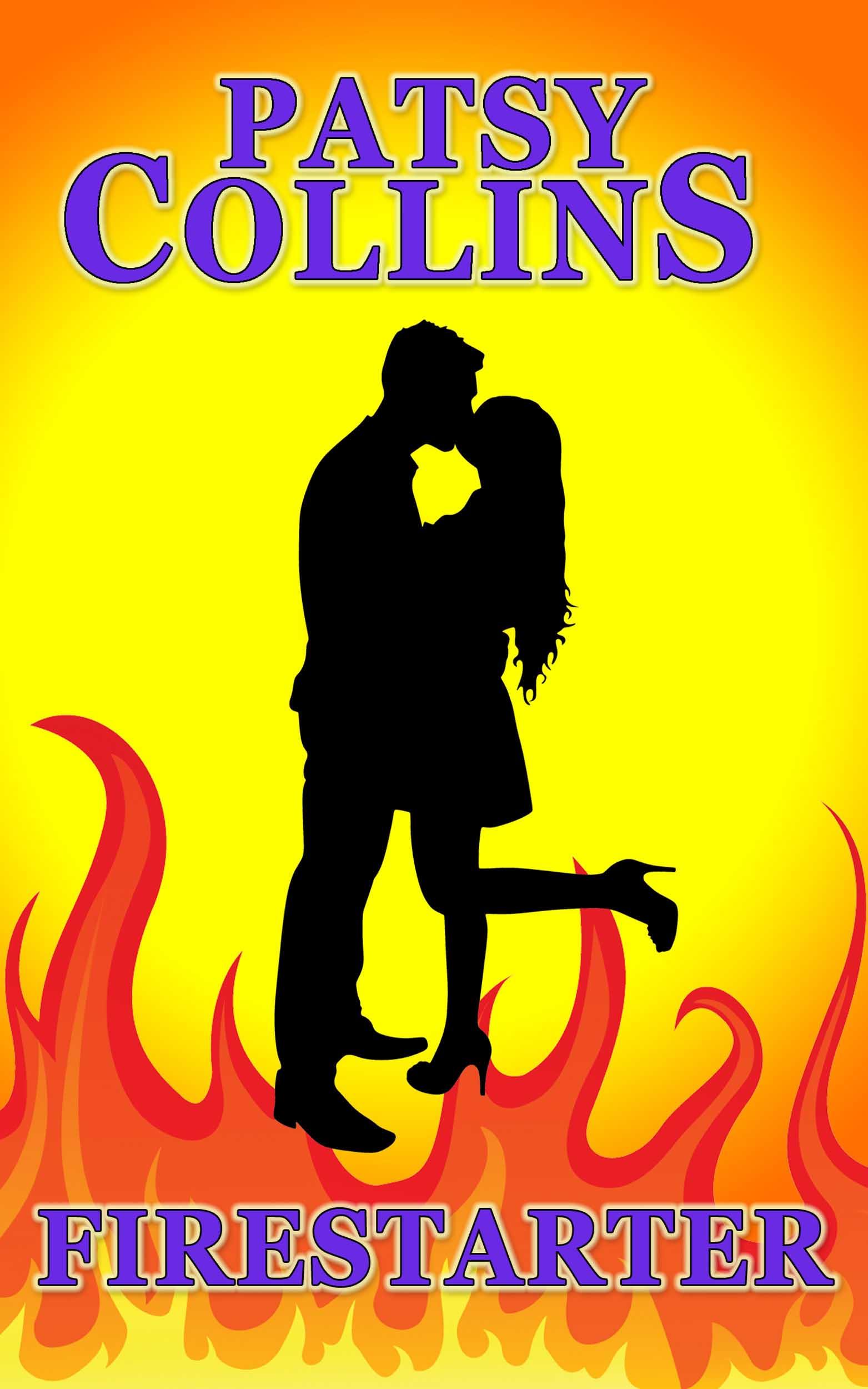
Thanks so much, Patsy. It’s lovely to have you. As well as writing short stories for womags, Patsy has published four novels. The most recent, Firestarter, is a romantic comedy with a hot fireman and a few flames. Check it out here. http://viewbook.at/Firestarter
PR is a subject which can strike horror into the hearts of authors everywhere. Some love it, some hate it. Personally I quite like it but it’s hard work and very time consuming. I’m always fascinated to hear how other writers handle it. So today I’m absolutely delighted to welcome the very lovely Sarah E. England to my blog to give us her take on PR for authors. Over to you, Sarah.
Sarah England
****
Well I thought learning how to write good quality fiction was a long, hard learning curve – what with all those magazine rejections over the years – so twelve years on, with over 160 short stories, several serials and two books published with the small press, I really did think I could do it. Publish my first supernatural horror novel, that is. On my own. Yes – research, writing, editing (many times), proof-reading, formatting, cover art and the publishing! So much to learn. But actually, just at the point I thought I’d cracked it, I began to realise that was the easy bit.
Since then – a month ago – I have discovered just what it means to try and get your new book in front of readers, because without them writing novels is a luxury for most of us. Now I don’t know about you but I really squirm at self-promotion. However, as I had to it anyway with the online publishers I was with, my thinking was – I’ll do it myself and that way I’ll a) get the book out more quickly, and b) have more control over presentation, promotion and price. I have a background in sales and marketing so how hard can it be? Hmmm – well the answer to that is very! Very hard indeed! So this is what I’ve learned and I hope it helps or at least invites discussion!
First you will need to correct all the mistakes you’ve made in terms of proof-reading, cover art, and basic presentation on Amazon – if you’re like me and didn’t pay anyone to do it for you originally! For this you can approach people like Laurence O’Brian of BooksGoSocial… he pointed out my cover title was too small and my own name too big. He advised on the Amazon book page presentation, plus the inclusion of review quotes at the top. Of course, I now realise big publishers will have those reviews ready on day one! And yes, they are important – you have, apparently, 3 seconds to hook a potential reader! And top publishers know this.
Next you have to get your book onto the virtual bookshelf. It isn’t in the shops on the first shelf a potential reader will go to, nor is it on the front page of the genre in which you feature on Amazon. Unless a reader is actually looking for your book or knows you on face book – they don’t know the book is there. So yes, a launch party and your family and friends will catapult you into the top 100 in your genre on day one. But then you could well have to watch a nosedive into oblivion. Unless you do something.
In the past I’ve done blog tours and guest spots and tweeted until I’m hoarse… and it’s got me reviews and a few sales keeping the book in the midlist for a while. But still the wider readership does not know it’s there. So here’s what the big publishers do to get their own books noticed: apart from doing deals with bookstore chains and buying shop front space, they pretty much have to do the same thing in the virtual world of amazon and nook and kobo etc So what do they do?
Spend… a lot!
First there are the top promotional channels like Bookbub and ENT who email out to hundreds of thousands of readers specifying the genre they are interested in. These not only cost serious money per day, but also specify high review ratings and lots of them – not easy to get quickly if you haven’t had your book mailed out to reviewers prior to release, and it’s not easy to get top reviewers quickly either – more on that later. Ideally a cut price deal on the book is required, and even more ideally, a layering approach to your marketing – ie lots of promotional channels all on the same day – right across their mailing lists, social media and websites. So already we’re talking in the high hundreds and that’s just for one day.
Next – advertising in the media. For example The Publishers Weekly is one I subscribed to and which sends out its beautifully presented recommendations every week. So I looked at what a spot in ‘We Love This Book’ would cost me… thousands! Yes thousands, and again – for one day or even just a morning’s circulation. Imagine how a reader on these mailing list buys a book… they will look in the genre they are interested in, pick out something that grabs them, click and buy! Great. If you’re a reader. But try getting onto that list at those prices regularly enough and with a big enough space to attract that 2-3 second attention span a busy person will give you. Without big money….
So now let’s look at radio and TV shows. I now know how writers get to be invited on there! PR companies cost thousands too. And they work for the big publishers. Handshakes on the golf course again?
Lastly, reviews, as I said, are crucial. Why? Well I now know that reviews from the media, beta readers, bloggers, and well-known book reviewers hold great sway with the readers who follow them and trust them – after all no one wants to waste their money. And this is what spreads in the end – recommendations engender trust which in turn engenders more readers.. And promotional companies take notice, eventually believing that the product is of good enough quality to be included on their mailing lists… at a cost of course!
Highlighting this very fact is the recently opened Amazon store in Seattle. They bought books on the basis of reviews not on what they were told to stock by big publishers because that’s what a handful of marketing people decided they would push. So all power to the people… there’s a way forward in this – just not sure what it is yet. Needs shaking up though, doesn’t it?
A note on Father of Lies. I’d been writing for magazines for ten years, and had a background in psychiatry (nursing and then medical sales/marketing) when I met a lady with what used to be called multiple personality disorder and it broke my heart hearing her story and what she suffered. I already had an unhealthy interest in the occult and from that point on I started to do some serious research into demonology and even exorcisms – the books were so scary I had them burnt afterwards because I couldn’t keep them in the house! Anyway, having lived in a haunted mill at one time, up on the bleak but very beautiful Derbyshire moors, Father of Lies soon began to take shape. It took a long time to write, and even longer to prepare for publication …and all I wanted to do was bring it to the readers….sound of sobbing…
To this end a group of us have formed Authors Reach – it’s a day old as I write – but the aim is to bring a diverse group of genres to the reading public and encourage interaction. The one problem I can see regarding independent authors is quality. There are literally thousands of books out there that are really and truly awful. (Why do people think they can just write a book? Another subject …) At least agents and publishers do usually ensure good quality. Usually. In my view it’s very much a closed shop and more upcoming authors need a look in, BUT the issue remains – how does a reader know a book is going to be worth their money? Reviews. Lots of them. Endorsements. Hard work building up a fan base via social media and writers working to help each other. This really does have to be for love, doesn’t it?
Anyway, never one to miss an opportunity – if you love horror and you fancy being scared witless (actually when you know a lot of this is based on a true story it only adds to the horror).. Here’s a little about Father of Lies, and thank you for reading. Please hook up with me on social media too… it will be interesting to know what you think!
*********************
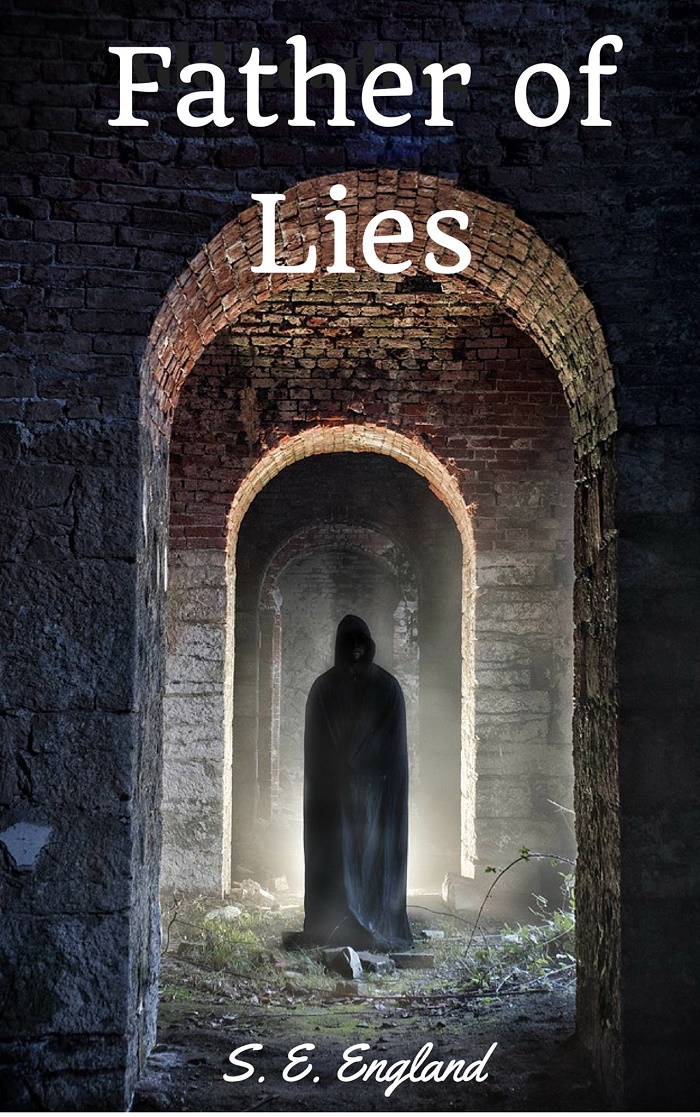
Father of Lies
A Supernatural Horror Novel by S. E. England
Ruby is the most aggressively disturbed patient ever admitted to Drummersgate High Security Forensic Unit, on the bleak Derbyshire moors in England. With no improvement after almost two years, psychiatrist Jack McGowan, finally decides to take a risk and hypnotises her . With devastating effects.
A horrific, dark force is now unleashed on the entire medical team, as each in turn attempts to unlock Ruby’s shocking and sinister past. Who is this girl? And how did she manage to survive such evil when no one else can?
Set in a desolate northern mining village, where secrets remain secrets and intruders are hounded from their homes, soon enough their questions lead to a haunted mill, the heart of darkness…and The Father of Lies.
Sleep tight!
Thank you so much, Sarah. I love the cover by the way. Shivery stuff. And great tips on PR and marketing. Yes, it’s the hard bit, I agree. Writing a book suddenly seems relatively easy, doesn’t it!
This year, as I mentioned in my last blog, I’m attempting to write 50,000 words of short stories during the month of November for Nanowrimo. We are 7 days in. I thought you might like to know how I’m getting on.
Statistics
I’ve written 14,000 words so far in 7 days.
I’ve started ten stories.
I’ve finished eight of them in first draft.
So far I’ve edited two and sent two out.
Yay, so it feels like I am achieving something.
Inspiration
My week started with a bang. Last weekend I was on a roll. The words flowed. I wrote one longish story (2700 words), quite emotional, good structure that I liked a lot. Then another two pager (2000 words) which was lighthearted and fun. Quite liked this one too.
The next story I started, which was supposed to be a very short one pager decided it might quite like to be a serial. That’s one of the ones I haven’t finished, it’s about 2000 words currently.
Then came the one pagers, two of which are finished, edited and sent. The rest all need editing and I’m not sure I’m happy with the endings. I rarely am happy with my endings straight off.
It’s harder some days than others. It’s pretty full on writing like this. And I find it quite tiring.
Enjoyment Factor
Mostly, however, I am having a wonderful time. I think I mentioned that before. It’s incredibly freeing. I’m not obsessing over any of the stories or worrying about them. I can’t even remember exactly what I’ve written.
Grass roots
It takes me back to when I began writing short stories. I used to write at speed then. When I started to write full time, I wrote three stories a week. Every week. One on Monday morning, one on Monday afternoon, one on Tuesday morning. The remainder of the week was spent editing these three, teaching my five writing classes and editing any rewrites/rejections that came back in. I don’t do that any more. There seems to be far more PR and publicity work to do. Oh and I don’t think there was much social media then either.
The Down Side
Is there one? Yes, possibly.
A part of me really really wants to edit as I go. It’s hard to resist that. It’s difficult to discipline myself not to look at yesterday’s story.
It also means I had to cancel virtually everything else I do in November. Apart from prebooked essentials, for example, tomorrow I’m teaching at Woman’s Weekly all day. I will leave my house at 5.45 a.m. and get back about 10.00 pm. I won’t be writing any Nano tomorrow. Mind you, if I was going on the train I would have done!
I’ve had to virtually give up social media. (is that a down side!) Oh, and answering emails.
My friends think I’m dead!
Oh, and I’m also moving house, which is slightly stressing me out. Haven’t packed much!
Week Two
This may be harder as I have 3 other commitments this week. I will report back. How is everyone else getting on? Don’t forget, if you need any help with short stories, The Short Story Writer’s Toolshed is quite good. Even if I do say so myself! 🙂
As I mentioned in my last blog I’m busy doing Nanowrimo this month. But as usual I’m writing 50k of short stories in November not a novel. This is more useful for me, being as shorts are my day job. I thought I’d share some of how I work with you – in case it’s helpful. Here are my top tips.
Keep them all in one document. I call mine Short Story Bonanza 2015 (Nano likes a title). And it’s easier to keep a word count if they are all in one place. I do start a new page for each story and I head it up with the date. (I don’t often have a title when I start a story.)
I don’t necessarily start a new story each day. I try to finish the one from the day before. After all, the object of doing Nano is that I write saleable stories and they have to be finished at some point. So I finish as many as I can in draft. But there might still be the odd one unfinished. And that doesn’t matter. Very freeing.
Make Nano the first thing you do. I tend to get up early at least every other day and start at 6 ish. That way my words are often done by nine and I can get on with the rest of my day. I can’t tell you how good that feels!
Use prompts to get going. I love A Writer’s Book Of Days by Judy Reeves. It has a prompt for every day of the year. Fabulous. I’m not a plotter. I never have been. I sit at my desk, and I start typing. I trust the process. The main thing which stops us writing is us. Our lack of confidence. Our internal editors. Switch off these negatives and just write. You can do it.
Do not use any Nanowrimo time for editing. Always do your daily word count first. Edit later. I edit most of my Nano stories in December. I like editing and it’s a lovely thing to do in December. I do edit some of the Nano shorts in November. But I take them out of the main document and save them as a new document. I’m always cutting when I’m editing so I don’t want to be cutting any of my nano words, do I?
Nano with a friend. I’ve got a writing friend coming over later today and we’re going to have a go at writing a story each, using the same theme. This makes it so much more fun. And it’s inspiring. And we can get feedback straight away should we want to edit the story and send it out before the end of Nano.
Oh and one last bonus tip.Make sure you’re stocked up on coffee or biscuits! Or whatever you need to reward yourself! (cake in my case). We deserve it.
And if you’d like any help with writing short stories, please do check out my book, The Short Story Writer’s Toolshed. £2.49 for kindle or £4.99 for the paperback.
It’s coming up to Nanowrimo again isn’t it? That’s National Novel Writing Month for the uninitiated. That’s when you sign up to write a 50,000 word novel in the month of November. Or 50,000 words worth of short stories in my case. It works out at about 1660 words a day. I love it. I love deadlines. Even if they are self imposed ones!
I’ve done it for the last two years. I thought you might be interested in some stats. I do love stats! This is what I did last year.
25 stories written.
17 of those sold to date.
5 still circulating.
3 still need work so not out there yet.
Income from stories to date £2985.00
Not bad for a months work. It wasn’t of course really a month’s work because I edited a lot of them in December although I did edit about five in November as well as write them.
But what I really love about Nano is the freedom to just start a new story each day without worrying about the previous day’s. Because I’m writing so many I don’t worry if one doesn’t work out – who cares? I just start again the following day. It’s very liberating.
Am I going to do it again this November? You bet I am. The way I see it you can’t lose. Even if you don’t complete the target – I fell short in 2013 by about 14k – you still end up writing more than you would have done anyway. So who’s in? Will you be doing Nano this year?
And while we’re on the subject of short stories can I just mention that one of my books on writing short stories, The Short Story Writer’s Toolshed, is only 99p for kindle from now (assuming you’re reading this on Sunday 25 October 2015) until 31st October 2015. Just in case you need any inspiration. 🙂
Just Thought I’d pop in and mention that The Morning After The Life Before is 99p till this Thursday (22 October 15). So if you fancied reading the sequel to Ice and a Slice, now’s your chance 🙂
Nothing like curling up with a good book and a glass of mulled wine – you might want to drink the mulled wine first, tee hee!