Welcome to Della Galton’s website

Writing a Winning Opening Paragraph. Three Top Tips.

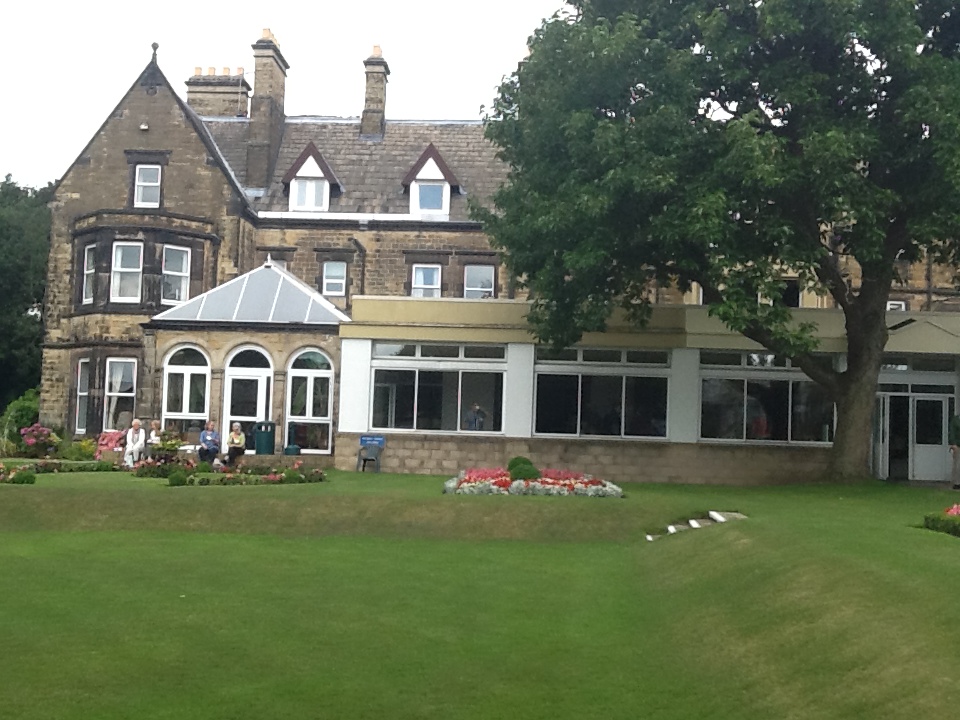
Last week I was lucky enough to be teaching at the Writers’ Summer School at Swanwick in Derbyshire. Beautiful place if you haven’t been there. One of my courses was about winning writing competitions. Just for fun we had an opening paragraph competition, which was won by Tony Greenfield. He was kind enough to let me reproduce his winning paragraph.

But first, here are my three top tips for writing an excellent opening paragraph.

  1. The paragraph must have a good hook – and be intriguing enough to make a judge want to read on.
  2. The writing must be original and strong.
  3. We need to care about the character.

Many Congratulations to Tony for getting all of these things right – in a ten minute workshop, I might add. And many thanks to everyone else who entered. There were 50 entries. There wasn’t a bad one among them.

Here is Tony’s winning paragraph:

Eulogies can be wrong

Thank you for coming to my funeral last week. Hundreds of people were there but the only two I knew were you and George. I knew George was there because he spoke a eulogy. He said many good things about my life. My life, he said, had been ordered and planned to succeed. He was wrong. I always ran from plans.


Ideas – a poem that inspires a story

Recently, a lady wrote in to my Dear Della column in Writers’ Forum and asked me about turning a poem she had written into a story.  She wanted to know how to go about it. This is something I’ve done several times. I don’t generally use my own poems. I’m more inspired by other people’s. So this blog is about how one of the lovely James Nash’s poems became a Della Galton story. Both are published. The Promise in James’ book, and my story in Woman’s Weekly. But James has kindly agreed to let me reproduce his wonderful poem, The Promise, here.

The Promise by James Nash

We sit outside in the garden, you flat out on my knee, arms flailing at the Pyrex moon.
Honeysuckle hangs in the crab apple tree and feeds the night air as you fix me with a wondering amiable eye, gummy with sleep and half dried tears.
Inside the house she sleeps, lights blazing and every window flung open in a fragment of coma.
Breath heavy and exhausted, one breast leaks through cotton while her still rounded belly is pregnant only with hope.
A hope I share.
For your coming both completes me and shows me my lack of completion. I have never known my parents and look again and again into the faces of strangers for something of myself.
I can trace our contributions in your face, your form and your moonstone fingernails.
Though seasons and times may not always be sweet for you, I hope that you will know, as I did not this whispered long term guarantee of love.

Isn’t it wonderful!

I then asked James if I could base a story on his poem and being the lovely man he is, he agreed. Beneath the story I explain how I used the elements of the poem to create the story. Just in case anyone else would like to try this.

Here’s the story:

Evidence by Della Galton
The drive back from the hospital was both an ending and a beginning. Richard’s hands gripped the steering wheel, not with fear any more, nor with any of the nightmare tension of the preceding weeks, but with a care born of his new responsibilities.
On the back seat Jess sat close to their precious cargo. Richard was torn between keeping his eyes on the road and looking in the rear view mirror. He could see the curve of Jess’s cheek, the glow of happiness on her exhausted skin, the smile that never left her lips. It was the day they had thought would never come: the day they took their baby son home.
For the last few weeks the fragile pendulum of his son’s life had swung between hope and despair. Other emotions had been there too: the helplessness of being reliant on hospital staff, on machines, on God; the anger that this should be happening to them. Why them?
More than once he and Jess had stood by the incubator, having been summoned to say goodbye, and had held each other very tightly and wept. They had named their son, Douglas – after Jess’s father, a stocky, flame haired Scotsman. They had named him without knowing if he would survive. But Douglas, showing a fair bit of the hot headed stubbornness of his namesake had rallied. Each time the doctors thought he would not he had decided to live another night, his tiny heart beating strong, refusing to give up, proving everyone wrong.
On that first day back home they sat in the garden. It was late June. They sat on loungers beneath the shade of an ancient horse chestnut. Upstairs the yellow nursery with its frieze of smiley suns waited. The white cot with its softness of covers, the tiniest of specially made prem-baby clothes, the bottle in its steriliser – all of these things waited. And Richard swallowed the hugest of lumps in his throat and thought that all their baby really needed was a blanket, Jess’s breasts and a whole shedload of love.
And also on that first day and on every day since Richard had searched his son’s face for something he recognised of himself.
The Scottish lineage was evident. His son already had the hot red hair of the last three generations and his mother’s fierce little mouth. But Richard could see nothing of his genes. Deep inside him an ache was growing. An ache he hardly dared acknowledge or bring out into the light.
All through those long nights at the hospital he had prayed only for Douglas to live. He had watched the rise and fall of his chest, he had listened to the machines, he had held tight to Jess’s damp clenched fingers, and he had never dared ask for more than for his son to live. Now he felt ungrateful. He felt as though he should be thanking someone – God, the universe, destiny – for the miracle of his son’s life. He should not be looking for evidence of his own genes.
And besides, perhaps it was a good thing Douglas took after his mother – why would he want the tall gangly limbs of his father, the thinning hair, the anxious grey eyes? Why would he want any of these things?
‘He has his grandfather’s lungs,’ Jess said one Saturday afternoon when they were in the lounge and Douglas was yelling at the top of his voice.
‘Let me take him.’ Richard held out his arms. ‘Why don’t you go to bed for a while, love. Get your head down.’
‘I doubt I’d sleep.’ She laughed as she held their son up in front of her while he screwed up his face and bawled. ‘We haven’t got soundproof doors.’
‘I’ll take him out,’ Richard said. ‘We’ll walk to the park. It’s a lovely day.’
She yawned. ‘Go on then. And thanks.’

It was in the park that it happened. And it probably wouldn’t have happened but for the old lady with the pink and yellow walking stick. He admired it as he walked past and she smiled at him and said. ‘Do you like it? I got it because it reminded me of the sticks of rock I had as a child. Sugar candy colours.’ She leaned into the pram. ‘What a fine looking young man.’
He stopped – of course he stopped – he was radiating pride.
‘You can’t always tell,’ she said, ‘when they’re that little, but he’s an unmistakeable boy. Look at that strong little jaw.’ She glanced up at him. ‘Just like yours. And he has your long fingers too, doesn’t he, bless him. Does he have long toes?’
‘Yes,’ Richard said, feeling a glorious sense of recognition sweep through him. ‘Yes, yes, he does.’
‘You must be so proud.’ She cooed into the buggy. ‘You’re going to be even taller than your daddy, aren’t you, my darling? Is Mummy tall too?’
‘No,’ Richard said. He didn’t even mind her over-familiar use of “my darling”. He wanted to hug her. He wanted to punch his fist up to the heavens. He wanted to jump up and down. How come it had taken a stranger to point out what should have been so obvious?
Not evidence that Douglas was his – he knew that without a shadow of a doubt – the love he and Jess shared was the most solid thing in his life. But evidence of himself, his own genes – maybe he hadn’t spotted it because he just hadn’t known where to look.
He had never known his own parents. He’d grown up in the care system. His birth parents had registered a wish that he never get in touch. But that hadn’t stopped him searching. When he was out with his foster carers in supermarkets, on buses, on day trips to the seaside, he had scanned the faces of passers by. He had searched for something he recognised, something of his own, some sense of history, of roots, of belonging.
Richard reached into the pram and Douglas gripped tight to his finger. ‘My son,’ he whispered, oblivious now to the old woman and her sugar candy walking stick, oblivious to the fact he was in a public place and there were tears rolling down his face.
‘My son,’ he said again, feeling – for the first time in his life – utterly complete.

How I went about it

  • I decided to write the story in male viewpoint – as it’s primarily about a man. Richard, my main character, was born.
  • Interestingly, in the poem, the character’s ‘problem’ is that he’s adopted and he didn’t have the stability of genetic parents. The denouement is that he promises his son that he WILL have a long term guarantee of love.
  • To make my story work I felt I needed a further problem. I made Richard’s son, Douglas, a fragile baby who’s only just come out of hospital when the story begins. Also there are hints that Richard can’t see himself in his son’s face. I want the reader to think that Richard is worried about his son’s parentage. So I misdirect them.
  • I also decided to withhold the adoption strand from the reader in order to create a mini twist. We do not find out until near the end that Richard is adopted and this is why he searches his son’s face for something of his lineage.
  • This conclusion also needed the introduction of a new character, so we have the addition of the old lady with the pink and yellow walking stick in the park.
The best thing about writing a story based on a poem is that the emotion that you feel from the poem should inspire you to write the story.  I’d be really interested to hear about other people’s experiences. Have you tried this method of writing stories. Or indeed, has anyone ever tried doing it the other way round?

Thank you very very much to James Nash. You can check out James and his work here

Also you can visit his Amazon page here. The Promise is published in the book Coma Songs.

Creating Suspense in Short Stories – Three Top Tips

I used to believe that the art of writing suspense was mostly about technique – short sentences build tension and pace, longer sentences slow it down. But suspense means so much more than this. So what does the word suspense actually mean?

Maybe I won’t tell you yet…

Just kidding, but, according to the Oxford Dictionary, suspense is a noun and it means:

A state or feeling of excited or anxious uncertainty about what may happen

So how do we create this in our writing? Here are my top three tips:

1. Pose questions, but do not answer them. As soon as you answer a question the suspense is gone.

Here is the beginning of A Table for Four, a story I sold recently to My Weekly.

What should I wear? I looked at the clothes laid out on my bed and sighed. There was a part of me that didn’t really want to go to this reunion lunch. I didn’t want to face all that emotion, all that honesty. I didn’t want to be reminded of the past. And it was going to be odd without Alice. It was the first year that we had met without her.

There are several questions in this opening paragraph. What should the narrator wear? What sort of reunion is it? Who’s Alice and why isn’t she there this year?

In order to create suspense – they should not all be answered in paragraph two. In fact, it’s a good rule of thumb to make sure you never answer a question without posing another one.

2. Withhold Information – for as long as you possibly can without being annoying.

Paragraph two of A Table for Four

For a moment I let an image of her face fill my mind. Her sparkly blue eyes, her ever present smile. I’d loved Alice to bits. I don’t think I’d have got through my surgery or those endless hospital visits without her irrepressible brightness.

Cue flashback.

“Chin up, honey,” she’d say if I’d moaned about my hair falling out. “You’re not going to miss a bit of grey hair, are you?”
“It’s not grey, you cheeky mare,” I’d snap, and she’d click her tongue and shake her head. “You’re smiling though!”
It was amazing how you could joke about the darkest of things. It had often surprised people – family and friends – when I’d told them how much laughter there had been on Marshall Ward.
I had to go to the reunion. Besides, I wanted to find out how everyone else was.

So now we know a bit more about Alice – but we still don’t know who she is – or where she is – or exactly what’s going on here, although we are slowly being given more information.

3. Use Foreshadowing

I don’t mean the type where you say, she had no idea that tonight would be the last night of her life. Although that might well create suspense, it’s a bit clunky and amateurish. Instead, set up a scene or situation where you don’t explain something that will crop up later. Here’s a paragraph a little later in A Table for Four.

The waitress came for our order.
“Are you still waiting for someone?” she asked, glancing at the empty space beside me.
I shook my head, but when she moved to clear the surplus knife and fork, I stopped her. “Please could you leave them?”
“Er – yes, sure…” The waitress looked puzzled but no one enlightened her.

In this way although the reader might well guess that the fourth place is for Alice, they won’t know for sure why the others want it left, even though she isn’t coming.

The art of writing a good short story is to keep the reader guessing. Indeed if you’re writing a twist you need to keep them guessing until the very end. It’s the same with all writing. If you’re writing a novel or novella you have the luxury of cliff hangers too – don’t just keep them for chapter endings – use them for scene endings.

At the end of your short story the questions you’ve posed need to be answered. For example at the end of A Table For Four – we find out why a place has been set for Alice, even though she isn’t coming, and where she actually is. And there’s also a little twist. I’m afraid I can’t reveal the end as I don’t think this story has been published yet. If the suspense is really too much – email me privately and I’ll tell you!

PS in other news: my novel, Ice and a Slice is on Kindle Countdown. Between Friday 27th June and Thursday 3rd July it’s only 99p instead of £1.99.

Writing Your Memoir/Autobiography

If you’ve ever fancied writing your memoir or autobiography you are not alone.  How do I go about writing my memoir or autobiography? is probably the second most frequently asked question I get on my Dear Della page at Writers’ Forum.

The first most frequently asked question I get is, how do I publish my memoir/autobiography?

My course, How to Write and Sell Your Memoir/Autobiography is probably also the most popular one I do. Here is what we cover:

Course Content

Ever wanted to write a memoir but don’t know where to start? Then this is the course for you. We will look at compiling information, layout and structure and ways to make your memoir accessible and readable.  There will be workshops to inspire you. We will also look at cost effective ways of self publishing your memoir.

Courses are run on an informal lecture/discussion group basis.

Is the Course suitable for you?

This course is suitable for beginners or experienced writers and will include workshops. It is designed to give you practical tips, advice and feedback in a friendly and informal atmosphere.

What can you achieve?

By the end of the day you should know how to go about compiling information, how to organise your material and have an overview of different types of structure and layout for memoir/autobiography.

You should know what works and what doesn’t, and will, hopefully, have made a start on the actual writing.

Handouts are provided. But please bring a pen, a notepad and lunch. If you would like to bring a laptop that is also fine, but there are limited power points in the room.

Time and Cost

10.00 am to 4.00 pm

£45.00

Next course Sat 14 June, 2014

Venue

Pelhams Park, Millhams Road, Kinson, Bournemouth, BH10 7LH

Please email me if you would like to book a place.

5 Things a Writer Should Never Say on Social Media and 5 Things That They Should :)

If you use sites like Facebook and Twitter as promotional tools, as I do myself, there are certain things you should and shouldn’t say in public.  This is my rather tongue in cheek list of Dos and Don’ts.

Dont’s

  1. Don’t ever say Buy My Book – yes I know I do this, but it’s boring and annoying and I am trying to give it up. Or at least be slightly more subtle.
  2. Don’t put up posts stating what a terribly hard and underpaid job writing is – no one wants to know that. As far as they’re concerned you are living the dream. At least have the grace to pretend you are!
  3. Don’t write posts confessing you’re just about to go into rehab or are being treated for depression – unless you’re writing the kind of book that is being inspiring about such things and offering solutions/cures. In which case, fill your boots.
  4. Don’t put up photographs of your aunt/uncle/second cousin’s funeral flowers. This may be OK if you use social media just for friends, but it’s not terribly professional if your posts are public. Or at least I don’t think it is. I have enough heartbreak of my own without anyone else’s. Is that harsh?
  5. Don’t put up shocking photos of battered animals or cruelly treated livestock with petitions attached. Please. For same reasons as number 4.

Dos

  1. Do talk about things other than writing. Pets, family, cakes, the weird man you saw on the way to the shop – all make excellent subject matter.
  2. Do take the mickey out of yourself as much as you like. This is always fun and quite entertaining. And fun is what most people expect from social media.
  3. Do put up entertaining/helpful quotes from other writers – or make some up yourself. Be upbeat and amusing.
  4. Do freely share writing help/advice you have come across or learned yourself from your writing experience.
  5. Do share any pictures/jokes/promos from other friends if you think they’re of interest to your followers..

The most helpful advice I ever received about writing was from a very experienced Mills & Boon author.  “Never forget,” she said with a gracious smile, “that we are in the entertainment business.”

I think her advice was very pertinent for social media too.

Woman’s Weekly Fiction Workshops – Hot Tips

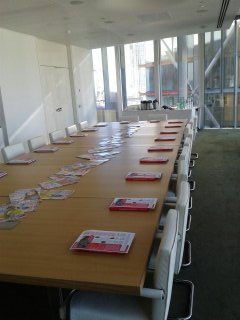
A couple of Fridays ago I was teaching again with Gaynor Davies at the Blue Fin Buildings, our subject, Writing Short Stories for Woman’s Weekly. I thought you might like an update. There are two more short story workshops planned at IPC, by the way, 15 August and 1st September 2014, click here for more details and as they are so popular I’m also in discussion with Gaynor about doing another one this year, probably in October. So don’t worry if you can’t get to one of these.

In the meantime for those who can’t make a workshop, here are a few tips from myself and Gaynor hot off the press. I must point out these are my tips, as I understand them, not direct quotes from Gaynor. (Just in case any of the Woman’s Weekly team are reading).

  • When Woman’s Weekly first came out their aim was ‘To be useful and not deal with the sordid side of life’.  An old adage which still holds true today.  But do be contemporary.
  • Today’s fiction should be escapist, but also believable.
  • Many stories are rejected because they are too old fashioned.
  • They need stories that have an individual voice so don’t copy the style of previously published stories.
  • They also want variety.
  • They are always looking for more humour.
  • Most popular lengths are one pagers (900-1000) and two pagers (1800-2000)
  • You can go up to 8000 words for the special and (top tip) they don’t get many of these.
  • On a technical level – keep the style simple. Cut adverbs and don’t get too wordy. The verb of speech ‘said’ is fine. Characters don’t need to exclaim, explain and expostulate.
  • Remember that imagery is good but too many images can cancel each other out.
  • Woman’s Weekly stories must have a proper ending – you don’t have to tie up the ends in a neat bow, but stories can’t be completely open ended either.

In the latest Woman’s Weekly Fiction Special (May – on sale 1st April to 6th May) I have a short story called By The Book (page 24 if you’re interested.) By The Book is a light romance about online dating. I don’t do many romance stories, mainly because it’s so hard not to get predictable. I was inspired however to write this story by Peter Jones’ latest book How to Start Dating and Stop Waiting which is very entertaining and also a brilliant guide to internet dating.

Woman’s Weekly are also very keen to get new serial writers. Serials go up to five parts, which is a lovely length if you want to write longer than a story but aren’t ready for a novel. The current one, called Amos Browne by Leonora Francis is excellent. If you would like to look at another example of a serial you could try my latest novella Shadowman, which was once a serial in Woman’s Weekly but is now having a second lease of life as a novella. If you buy it in the next day or two it’s only 99p too – as it’s on an Amazon Countdown promotion can’t say fairer than that!

And as I’m in ‘shameless promotion’ mode, if you’d like to read any more short stories by yours truly please do check out my collection of Daily Della titles, for example, Lessons in Love which is just £1.53. All of my Daily Della stories were previously published in magazines so they will give you a flavour of the type of story required.

There is a fabulous roof top terrace canteen at Woman’s Weekly, by the way, which does amazing shortbread – just in case you were still trying to make up your mind on whether to book up for a course.

If you’d like to know any more about the art of writing short stories, please also check out my Short Story Writer’s Toolshed which is £1.99 for kindle.

Thank you for reading. And here’s hoping none of our stories stay in the cupboard (see previous blog, journey of a woman’s weekly story) for long!

Meltwater

Novellas are the new novels, apparently. Can’t remember where I saw that. But just in case it’s true, I thought you might like to see my latest novella, Meltwater, which is all about dysfunctional families. (Are there any other kind!) Here is Chapter One. Happy reading. 🙂

Chapter One

“I’m leaving your father.” Mum’s voice on my answer phone was as clear as the winter sky outside my bungalow window, but I still couldn’t believe I’d heard her right. I pressed rewind and played the message again.

“Hi, Nina, I just thought you ought to know, I’m leaving your father.”

That was it. No preamble, no explanation. She didn’t even sound overly concerned about it. What kind of a message was that to leave on my answerphone at eight o’clock on a Saturday morning? Sometimes I could have happily throttled my mother.

Picking up the phone I pressed the memory button that stored my parents’ number. I let it ring ten, twelve, fourteen times. No answer. Yet she’d only left that message twenty minutes ago. I’d been out doing the horses’ morning feeds, as she’d known I would be. My parents weren’t early birds. They weren’t even normally up at this time of day. Perhaps she’d already left Dad and he didn’t know because he was still in bed asleep. My mind raced through the possibilities. I was about to try again when the phone rang. I snatched it up.

“Mum?”

“No, it’s me, Ingrid,” came the clear, bright voice of my sister in law. “Sorry, have I called at a bad time? I’ve been trying to catch you for a couple of days.”

“You’re OK.” I sighed. “Mum just left a bit of an odd message on my answerphone, that’s all.”

“What sort of an odd message?”

“Well – what she actually said was that she was leaving my dad.”

“You mean getting a divorce?” I could hear the surprise in her voice. “I didn’t realise they were having problems, your parents?”

“They’re not – well at least I didn’t think they were anyway. I’ve probably got the wrong end of the stick.”

“Maybe they’ve just had a row or something?”

“Yes, that must be it,” I said, although that seemed almost as unlikely as them splitting up. As far as I knew my parents didn’t have rows. Mum told Dad what to do and he did it. It had been the same for as long as I remembered. “I expect I’ll find out soon enough,” I said thoughtfully. “Anyway, what were you trying to get hold of me for?”

“Just about the arrangements for Tuesday.” She hesitated. “I’m going to the remembrance garden on my way home from work and I wondered if you’d like me to pick you up on my way by?”

“Yes, please, if you don’t mind.”

“Of course I don’t mind.” Her voice was warm. “It’s easier, isn’t it, if we go together?”

“Yes. Yes it is. Thanks.” I swallowed. I’d been trying not to think about Tuesday. The first anniversary of Carl’s death – my husband and Ingrid’s twin brother. Sometimes it felt as though he’d been gone forever. I had moments of panic when I couldn’t remember the details of his face. Other times it seemed as though no time at all had passed. I still turned over in bed, reaching for him.

“Are you OK?” Ingrid asked.

“Yes. Yes I’m fine.”

“The other thing,” she continued, “was that I wanted to ask you if Stewart Taylor ever got hold of you about booking a riding lesson for Oliver? You remember me telling you about little Oliver in my class? The kiddie with the problems?”

“They’re coming this morning,” I said, relieved at the change of subject. “Pop in for a coffee if you’re free later and I’ll tell you how it went.”

“Yes I’d like that. See you then.”

I put the phone down and pressed redial without much hope. Still no answer from my parents. They lived two hundred miles away, which had its advantages, but it also meant I couldn’t just nip round and find out what was going on. Not that I could have dropped everything anyway. Not with five horses to look after and a day of people booked in for lessons.

I hovered by the phone for a bit longer, but it stayed silent. And eventually I gave up, pulled my woollen hat back on, buttoned up my wax jacket and went outside again. It was a bright, icy morning, the sky an arc of blue over my head. My breath puffed in the air as I crossed the lane back to the stable yard, which was a five second walk from the bungalow Carl and I had bought five years ago. I’d been tempted to sell up and move away when he’d died. Away from this Dorset village and all the memories it held, maybe somewhere a bit closer to my parents inCornwall. I hadn’t thought I’d be able to bear staying where there were so many echoes of Carl. So many ghosts.

It had been Ingrid, who’d persuaded me not to.

“You can’t sell the horses,” she’d said, her voice sharp with grief “It’s not what he’d have wanted. You know it isn’t.” She’d looked at me, with the same blue eyes as her brother and added more softly, “He had two great loves in his life: you, and the horses. You might think it’s impossible, but it is the horses that will keep you sane. Believe me.”

Ingrid had been right I thought as I picked my way across the frozen mud in the field and broke the ice on the water trough. The horses had kept me sane. The routines of looking after them, the sheer physical hard work of them, had kept the structure from crumbling completely from my life.

I put out some piles of hay. The grass wasn’t much good at this time of year – not enough nutrition for my two thoroughbred crosses, Anton and Buska. Or the two horses that belonged to a couple in the village. They hardly rode in winter, just kept their horses at full livery, which meant they paid me to do everything, including ride them, which suited me fine. Not because I needed the money, that was one problem I no longer had, but because then I didn’t have to make small talk about trivia. I’d never been very good at small talk; Carl had been all the social life I’d needed.

Ingrid said I was in danger of turning into a recluse. “You never go out, you never mix with anyone,” she told me often. “You can’t hide yourself away forever, you know.”

“I teach four days a week,” I’d protested. “I see plenty of people.”

“That’s not the same,” she’d said. “You’re not going to meet anyone teaching.”

“I don’t want to meet anyone,” I’d said stubbornly.

“I’m not suggesting you jump headlong into another relationship,” she’d said. “But you could do with making some friends, Nina. It’s not good for you to spend so much time alone.”

It had been Ingrid who’d persuaded me to give Oliver a riding lesson. I didn’t usually teach kids. She was a primary school teacher and he was in her class. Apparently he’d become very withdrawn when his mother had walked out on him and his father six months earlier.

“He’s only eight. Far too young to lose his mum.” Ingrid’s voice had been indignant. “I’m very worried about him. He used to be such a bright little thing and now he hardly speaks. I’ve had a word with his dad – nice man – and apparently the only thing he shows any interest in is horses.”

I’d been sceptical at first, half suspicious that Ingrid was more interested in me meeting Oliver’s father than me teaching Oliver to ride, but eventually I’d given in. Ingrid could be very persistent when she wanted something and besides I knew I wouldn’t have coped without her this last year. It would have seemed churlish refusing to do this one small thing in return.

I went back to the stables and changed the horses’ night rugs for their day ones, fumbling with buckles and clips. Everything was harder work when it was cold. Then I put them all out in the field, except Leah, the pony that Oliver would ride for his first lesson. I leaned on the gate, watching for a moment, as the horses milled around the field, ears flattening, tails swishing, snorting white plumes of breath into the air as they sorted out whose pile of hay was whose.

Then I went back home to check the answerphone. There was a message from my three o’clock lady cancelling because she had a cold, but there was nothing else from Mum and there was still no answer when I tried phoning her. I didn’t even know the numbers of any of their friends, but then I suppose that wouldn’t have helped much. I could hardly have just phoned up and said, “Hey what’s this about Mum and Dad splitting up?”

I stood in the kitchen warming my hands on the Aga and thought about the last time I’d spoken to Mum. It had been two, possibly three weeks ago. We kept in touch regularly, if sporadically. She’d been moaning about Dad then, I thought, frowning. Something about him mooching around the house and never helping her with anything. Mum had always been house proud, but according to Dad she’d got worse since he’d retired two months previously.

“I’m not even allowed in some rooms until after four o’clock,” he’d grumbled, when she’d finally handed the phone over so he could speak to me. “And she makes me wear my slippers everywhere. Can you believe that?”

I’d laughed. “She doesn’t mean it, Dad.”

“Oh yes, she does. If I’ve got my gardening clothes on she puts a piece of newspaper on the kitchen chair before I’m allowed to sit on it.” He’d lowered his voice and added, “She’s obsessed, Nina. Obsessed with cleaning.”

“I expect she’s just adjusting to you being around more,” I consoled, and he’d sighed and said, “I hope you’re right. I don’t know if I can stand this much longer.”

Mum’s message couldn’t be anything to do with that, surely, I thought, glancing round my messy kitchen. I took after Dad where tidiness was concerned. There was mud on the floor by the back door, a pile of plates in the washing up bowl from last night and you could hardly see the table for bits of paper. The stable yard was immaculate, but I didn’t bother with the house much. No-one except Ingrid ever came round anyway.

It was odd though that I couldn’t get in touch with either of my parents. I glanced at my watch. I couldn’t afford to hang around for much longer. I had five stables to muck out and I had to get Leah ready for Oliver Taylor’s lesson.

If you fancy reading the rest, please click here to buy for kindle. Thank you for reading.
 

The Journey of a Woman’s Weekly Short Story – from arrival to publication

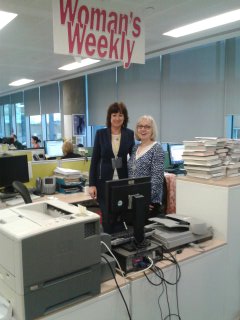
Last Friday I was lucky enough to be teaching at Woman’s Weekly’s offices in London with Fiction Editor, Gaynor Davies.  While I was there, I thought it would be very interesting to find out exactly what happens to our stories when they arrive. So if you have ever wondered what happened to your manuscript after you posted it – here is the journey of a Woman’s Weekly Short Story.

Woman's Weekly

Step One. All manuscripts are logged in date order and put in this cupboard.

The Manuscript Cupboard

Step Two. They are sorted out and read. If you have been published by Woman’s Weekly before they will be read ‘in house’. If you have not they will be sent out to two very experienced readers who Gaynor says she trusts with her life.

Step Three. If your story is a near miss or a possible it will be sent back to Clare for a second read.

Step Four. If Clare likes it, she will pass it to Gaynor Davies, fiction editor.

Step Five. If Gaynor likes it she will pass it to Diane Kenwood, the editor for a final read/approval. Which is hopefully followed by a yes.

Step Six. If it’s a yes, Clare will contact you by phone or email to tell you the good news.

Of course, a ‘no’ can happen at any stage of this process.  If it’s a ‘no’, you will have an email from Maureen Street.  Now it has been rumoured that Maureen Street doesn’t exist. That she is just the pseudonym or ‘fall guy’ if you like – the made-up person who sends the rejections.  I can confirm she does exist and she is a very very nice lady. Here she is with Gaynor.

Gaynor Davies (left) Maureen Street (right)

And here are the two desks where so many decisions regarding the fate of our stories are made 🙂

So now you know!


Gaynor's desk (closest) Maureen's desk (by window)


Workshops and Writing Courses Happening Now

We are suddenly awash with writing courses – must be spring 🙂  In date order, soonest first, below are some of the ones I am personally involved with:

From 17th February, 2014 – 2nd March – Purbeck Literary Festival

There are all sorts of exciting events going on across the Purbecks. I am teaching How to Write and Sell Short Stories on 18th February, at the Limes Hotel in Swanage. 10 a.m. till 4.00 p.m. Cost £18.50 including lunch. Click here for details.

21 February 2014 – Woman’s Weekly, London (also running 11 April, 15th August and 1st September)

Woman’s Weekly Fiction Workshop (short stories with Della Galton and Gaynor Davies): 21 February at IPC Media, The Blue Fin Building, London SE1. 10 a.m till 4.30 p.m. Cost £65. Click here for details.

28 February to 2 March (weekend course) – Fishguard, Pembrokeshire

Write a Short Story Step by Step with Della Galton. Also other courses at Fishguard this weekend. Cost £229. Click here for details.

Saturday 22 March – Bournemouth

How to Write and Sell Short Stories. 10 a.m. till 4.00 p.m. Cost £45.00 Click here for details.

Sunday 23 March – Southend on Sea, Essex

This one’s not writing – but who doesn’t want to be happy? And I can personally vouch for the course because I’ve been on it.

How to Do Everything and be Happy. 10 a.m. till 4.00 p.m. Workshop leader, Peter Jones. Cost £45. Click here for details, and to book online.

Saturday 14th June – Bournemouth

How to Write and Sell Your Memoir. 10 a.m. till 4.00 p.m. Cost £45. Click here for details.

I also teach weekly classes in Bournemouth if you would like a weekly injection of inspiration. Please see this website for details or email me.

Happy writing all.

Tell your friends!

© Della Galton All rights reserved.
Powered by Cloudbase Media