Welcome to Della Galton’s website

Books? We’ve got them covered. Guest Post from Soundhaven.com

Today I’d like to welcome Soundhaven.com to my blog.  And it’s all about covers. Oh and just in case you were interested – From Invisible to Irresistible is free today too 🙂  Over to you, Soundhaven.com…

Soundhaven.com hasn’t been around long. About two years give or take. But in that time we’ve published twenty four titles under our own imprint, and helped several authors start their own. We’ve learnt a fair bit in those two short years, particularly when it comes to designing covers.

That age old advice, “never judge a book by its cover”, is as ignored today as it’s ever been. Perhaps more so. In a world where book-covers are more likely to seen as thumbnails on a screen (than through the window of a bookshop) it’s never been more important to make sure the cover of a book stands out from its competitors, and in that briefest of moments communicates some semblance of the wonders that might lay within the pages it enshrouds.

Just for fun then, here are a handful of soundhaven.com covers that we’ve designed, and what we were thinking when came up with them.

cover paperback


Ice And A Slice by Della Galton

Popular magazice Author Della Galton had some pretty clear ideas about what she wanted for the cover of her latest full length novel. From our perspective it was important that the cover worked just as well in print as it does on the screen – for this reason we were keen to find an image we could wrap round the spine and continue onto the back. We’re particularly fond of strong photographic imagery, but sometimes the image needs a helping hand communicate what the book is about, which is why we played around with some of the words and letters in the title. Does the word ‘and’ seem out of focus to you? And did you happen to notice what the pink letters spell out?

toolshed1 kindle covertoolshed2 kindle cover


The Writer’s Toolshed Series by Della Galton

Sticking with Della, The Short Story Writer’s Toolshed was one of our earliest titles. This short book is a based on a series of articles Della wrote for the rather excellent Writers’ Forum magazine, so it seemed logical (to us) to give the cover that authentic ‘magazine’ feel in an effort appeal to those same readers that the articles had originally been written for. A year later we persuaded Della to bring out a follow up book, and again we went for that magazine look. However, even though Della is wearing a different jacket, and standing in front of a different shed(!) in retrospect I wish we’d made the covers more different, perhaps by changing the colour of the font, or the overall layout. I still wake up in the middle of the night fretting about whether her readers have figured out there’s two books!

RGB versionFITI kindle


How To Start Dating And Stop Waiting Series by Peter Jones

When it came to our most recent ‘series’ we went all out to try and make sure that whilst the titles are clearly related (same font, similar layout, similar colour pallet), they’re very different (if anyone confuses them I think I might just cry). It was important too to come up with a design that could be used to brand the associated website and a facebook page. And finally we were keen to continue the graphical theme that Harper Collins established with Peter’s first book and pick icons that give you some idea what each book is about. Have we succeeded? You decide.

Shadowmanmeltwater


Shadowman and Meltwater by Della Galton

Our two most recent covers are amongst our all time favourites. And whilst the titles aren’t related (they’re not even the same genre) we rather like how they look together. Fiction titles don’t generally have a subtitle, which is partly why we’re strong believers in the importance of an intriguing ‘movie-style’ strap-line.

We hope you like our covers as much as we do. You might be interested to know that even if you’re not one of our authors for a small fee we can be bought! We offer a number of publishing services of which cover designing is just one.


‘Meltwater’ will be available on Kindle in the coming weeks.


Tips on Entering Writing Competitions – Wednesday Writing Spot

I recently judged the H E Bates Short Story Competition, organised by the Northampton Writers Group. Morgen Bailey is the chair and for today’s Wednesday Writing Spot I’m delighted to welcome Morgen to my blog to give us her tips on entering writing competitions. Over to you, Morgen 🙂

Tips on entering Writing Competitions

Competitions are a great inspiration and not only get me writing something new (certainly for the themed ones) but even if I don’t get anywhere, I still have the story to do something else with, like submitting to women’s magazines here in the UK (although it’s more advisable to write specifically for their markets) or self-publishing to add to my collection of eBooks.

I’d love to give you advice that will guarantee a competition win but it won’t. Sorry about that. There are two reasons for this:

    1. You will never know how the judge will feel when he / she reads your story. He / she could be going through an acrimonious divorce and your divorce story is a painful reminder. I know, judges shouldn’t be personally involved in your writing but that’s the thing with fiction (and non-fiction of course); readers get emotionally involved – you should want them to, and if they do, it means your story ‘works’.
    2.  You will never know whom you’re up against. Yours could be a fantastic story – the best of twenty about unrequited love – but that’s it, it’s one of many on the same theme. It would have more chance of the judge seeing it if it’s the best but it’s the story about a pink tutu-wearing green alien they remember. I’m not saying to write something so way out that you run the risk of… erm, alienating the non-science-fiction-loving judge, but your story needs to ‘pop’. If you’re going to pick a well-worn theme – it is said, after all, that there are only seven plots – you need to find a new angle.

The most important thing? Read the guidelines. I can’t stress that enough. If they want a maximum of 2,000 words, don’t send them 3,000 or even 2,010 (or a 45-line poem when they only want 40). I’ve just finished judging the first ever NLG Flash Fiction Competition and had to disqualify one story because it was 610 words (max 500). We have Word, so we have a word counter – it’s easy to check and catch you out. Your story may be the best thing since sliced granary but no one will know because they won’t get to read it. I didn’t read the 610-word story, although I might go back out of curiosity.

Another usual pre-requisite is to not send a story (or poem) that has been published (online counts as published) or won / shortlisted in another competition. Another NLG story was disqualified because the author notified us saying he / she had submitted the story in error because it had gained second place in another competition. Ironically, it was also my second-place, so my third became second and another story became my third, and eleventh now highly commended. I don’t know who submitted the story (because I’m Head Judge – only our Secretary knows so it’s fair) but editors and judges remember those authors who do such things, so don’t. Keep a list. File your story in a particular folder. Be organised.

Another must is spell and grammar check. It sounds obvious but I spotted a ‘tine’ instead of ‘time’ in one piece and it lost a point because it was a careless error. Unless you’re writing a new story the day before the deadline, give yourself plenty of notice. Write the piece at least a week (the earlier the better) before you have to send it in, leave it for a day (preferably more) then edit it. Read your story out loud – it will sound different to how it sounds in your head and you will spot errors easier (especially if it’s been a while since you wrote / read it last).

Don’t leave it until the last minute. It’s very tempting to send in your story the day the competition ends just in case you want to make any last minute alterations, or so the judge might remember it coming in, but the organisers appreciate it if you’re early. It makes their job easier, as they can send the stories out to the judge/s in batches rather than in one go.

If the competition has a theme, stick to it. If they want a story set in the London Underground, don’t think you’re being clever by setting it in the Paris Metro or New York Subway, unless you’ve come from / are going to the London Underground. Last year’s H.E. Bates competition had (for the first time in its 20-year+ history) a theme; ‘A Walk at Midnight’, and we had a couple of stories which didn’t include a walk or set, at any point in the story, at midnight.

Choose a snappy title. Don’t be lazy and call it The Journey (a title of an old story of mine which I’ve since renamed No White Left). You can certainly use it as a working title but then a phrase might leap out at you when you’re writing it. I write a short story a day for my blog’s 5pm Fiction slot and it’s often what happens to me.

Research your judge. If he or she writes romance, the chances are s/he’d favour a love story over a slasher horror. If it’s the best thing they’ve ever read then you could still do well but again you’re running a risk. With most competitions, the Head Judge (the name advertised) will only see a selection of the stories, so even if you write to their taste, if the competition panel (often a writing group) don’t like it then it will never reach Mr / Mrs Famous Writer. ‘Named’ judges’ time costs money and most competitions can’t afford to pay a famous (or even semi-famous) author to sift through hundreds of entries.

So you want to make your story (or poem) as good as it can be to get through all those people and make the last one go “wow”. You never know it could even be me.

Morgen Bailey

morgen@morgenbailey.com

http://morgenbailey.wordpress.com

http://icanbuildyourwritingblog.wordpress.com


Thank you very much, Morgen, for being my guest today. Some very useful tips :


H E Bates Short Story Competition. Winners and Presentation

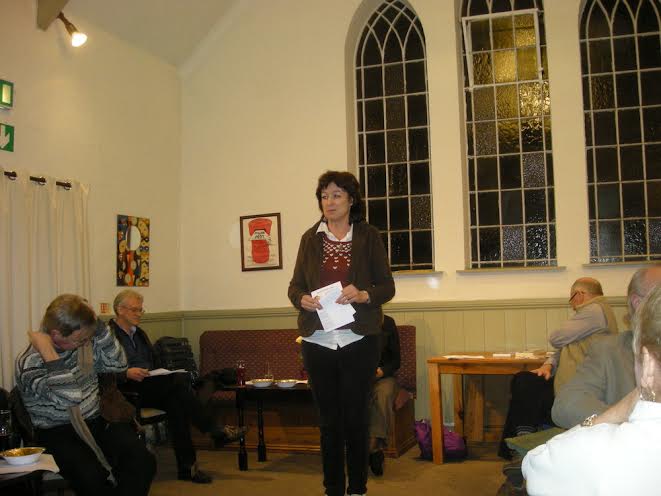
I was honoured to be asked to judge the 2013 H E Bates Short Story Competition, and last Friday 17th January I presented the prizes to the winners, which was both humbling (I wish I’d written some of those stories) and nerve racking (I had to do a short talk too). By the way, do these two gentlemen in the foreground and on the right of the photo look as though they are asleep? I’m sure I didn’t “hold forth” for that long!

So without further ado, here are the results and a brief summary of why I chose them.

Adult Section
1st prize: Last Tango in Space by Anne Corlett
2nd prize: Ancient Wing by Tracy Fells
3rd prize: Make Mine Mythical by Rosa Johnson

Under 18s
1st prize:Something In The Mist by Katie Bunting

Best short story written by a Northamptonshire writer:
Memories Through My Grandfather’s Eyes by Dave Martin

Why did I choose these stories? There were different reasons, but… they all had the X Factor. I’ve gone into a bit more detail below:

Memories Through my Grandfather’s Eyes was both warm and poignant and a lovely portrayal of an ordinary family.

Something In The Mist was both gripping and full of insight and I was impressed by the author’s grasp of storytelling and structure. It was in male viewpoint and I was even more impressed when I discovered the author was female.

Make Mine Mythical was very funny and had brilliant characterisation and dialogue.

Ancient Wing  was original, unusual, and beautifully written.  Tracy managed to make me love the ‘at first’ unsympathetic main character – well done.

Last Tango In Space was fabulous. I cried when I read it. I cried again when Anne read it out on Friday.  It was about an older couple on the first manned trip to Mars. Written in diary form, it was both amusing and deeply moving and ended with a fabulous universal truth. Thank you Anne for writing this. I wish I’d written it myself. I can give you no higher compliment.

Well done to all the winners of this incredibly hard to judge competition.

Thank you to everyone who entered.


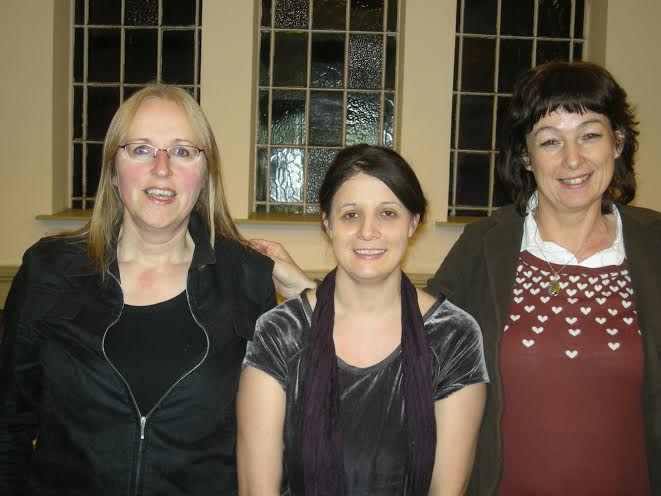
And here is Anne Corlett, winner of the H E Bates, with Morgen Bailey, Chair of the Northampton Writer’s Group, and myself.


Shadowman

Shadowman drop shadow

Just in case anyone fancies a preview of my new novella, Shadowman, here’s the blurb and first chapter 🙂

Karen and Rob’s show-jumping yard is in trouble. And so is their marriage.

Then someone starts sending anonymous letters. They seem to have an enemy who is determined to wreck their lives, but who? Is it a vindictive stranger or could it be someone closer to home? Karen is determined to find out before she loses everything she loves.

Previously only available as a large print paperback, ‘Shadowman’ by Della Galton is now available as an ebook novella from amazon (.co.uk | .com)

Chapter One

It was a beautiful day. Autumn was just beginning to steal across the forest, turning the trees shades of red and gold, but I shivered as I leaned on the five bar gate that separated our land from the tangle of woodland that lay beyond. I had to talk to Rob again. Find a way to make him understand how worried I was that if we didn’t do something soon, we were going to lose all that we’d worked for. It wasn’t going to be easy. Rob and I didn’t have the same attitude to money. I was used to having a nest egg in the bank – I needed the cushion of financial security. Rob had an easy come, easy go attitude. To everything, I was beginning to think.

The differences between us hadn’t been so apparent when we’d first married. But lately things had been tough, financially. We’d had a couple of big bills we hadn’t budgeted for. Murphy, one of our horses, had been spooked by a backfiring car and had run into a barbed wire fence. The vet’s bill had been horrendous and it had taken weeks of care to get him right again. Then we’d had a drainage problem in the stable yard and the builder had discovered subsidence, which had cost a fortune to sort out. We’d used our savings and now we were deep into our overdraft and every time I raised the subject, Rob told me I worrying too much.

“Things aren’t that bad, Karen,” he said later that evening. “The bank’s hardly going to foreclose on us, are they?”

He smiled as he spoke, his eyes confident. There wasn’t a trace of grey in his black hair, not a trace of worry.

“We can’t just keep on borrowing. I think we ought to do something more positive.”

“Like what?” He raised his eyebrows and I took a deep breath because he definitely wasn’t going to like what I had in mind.

“We could sell a horse.”

“That’s not going to make much difference.”

“It would if it was the right horse. Ben Darley phoned me this morning. He saw you riding Shadowman at Lulworth last week. He wants to buy him.”

“Does he?” Rob’s eyes narrowed speculatively. “What’s he offering?”

I told him and he whistled. “If he’s that keen, then he obviously thinks the horse is going to be as good as I do. Excellent.”

“So you’ll think about it?”

“No way. I’m not selling our best horse. It would be madness.”

I sighed and he came round the table and took my hands. “Look at it this way, Karen. If Ben thinks he’s worth that much now, then he’ll be worth even more by the end of the season. I’ve got big plans for Shadowman.”

His eyes were sparkling, his face animated as it always was when he talked about the horse he’d reared from a gangly long legged foal, and I knew I’d lost the battle, at least for now.

“It’s going to be fine, Karen, I promise.” He went across the kitchen, dragged his coat from the back door and shrugged it on. “Look, I’d better do the evening feeds; we’ll talk some more later.”

I nodded, even though I knew we wouldn’t. Rob hated talking about money. It was ironic really; Rob had been brought up with next to none and I’d always taken things like holiday homes, private schools and my own pony for granted, but I was the one who constantly worried about it.

The only thing Rob wasn’t laid back about was his riding. He dreamed of being in the British show jumping team one day and he was probably good enough to do it. The first time I’d seen him ride we’d been competing against each other in the same show jumping class.

“That’s the one you want to watch,” Mum had said, as we walked the course, and I’d looked at the tall, dark haired man strolling ahead of us.

“I don’t think I’ve seen him before. Who is he?”

“Rob Patterson, he’s a bit of a rough diamond, but he can ride. He beat Suzy Canton last week, effortlessly, if the rumour mill’s to be believed. Caused quite a stir.” She patted her hair and raised her perfectly plucked eyebrows.

I hadn’t taken much notice of the rough diamond bit. Mum’s always been a snob, but I’d watched Rob jump a perfect clear round, with growing interest.

He was an instinctive rider, so much a part of the horse, that it had been breathtaking to watch him.

“Must be a good horse,” I’d murmured, but Mum shook her head.

“It’s not his. Belongs to some small yard the other side of Salisbury. He’d never sat on its back until a week ago, apparently. The girl who normally rides it had a fall and couldn’t jump today.”

I remember thinking that it must have been a lucky round, but that was before he beat me by a good ten seconds in the jump off.

As we lined up to collect our rosettes, Rob glanced across at me and nodded an acknowledgment. “Nice mare, you’ve got there,” he said, and I could feel myself softening beneath his gaze. “See you again, I hope.”

And then he was gone, cantering ahead of me around the ring and I thought, oh yes, I’d very much like to see him again. And not just on a horse.

A couple of weeks later we competed against each other again – he won that class too – and this time he asked me for a celebration drink. That was how it had begun. We’d soon discovered we were opposites in every way. Looks, backgrounds and personalities. I’d led a pretty sheltered life, really, I’d had relationships before Rob, but I’d never fallen in love, never wanted to get married. He’d said it was the same for him, but I wasn’t so sure. Rob could have had his pick of women. Why had he chosen me?

Deep down, I’d always been afraid it wouldn’t last, that our differences would somehow drive a wedge between us, and I had a horrible feeling that it was beginning to happen.

Nothing’s ever as bad in daylight as it seems in darkness, is it? As I crunched across the grass to check the horses’ water troughs the following morning, I felt my spirits lift. Maybe Rob was right. Shadowman would certainly be worth a lot more if they had another good season and there was no reason why they shouldn’t.

Besides, it was hard to feel depressed out here in the crystal air. The first thick frost had silver-plated the grass and villages of bejewelled spider’s webs sparkled in the hedgerows. The sun, which hadn’t long risen, slanted across the fields, turning ice crystals to diamonds so it was easy to imagine you were walking through some winter fairyland, a place touched with magic instead of just our back field. I swallowed. I never wanted to leave this place; we had to make it work.

When the estate agent had showed us round two years ago, it had been a bright summer day and we’d fallen in love with the place. The house had needed a fair bit doing, but the stables were beautiful, a white painted block that was big enough for twelve horses. We planned to offer a livery service and we were both qualified riding instructors. We knew it would be tight while we got established, but we thought we could make it work.

The house was on the edge of the New Forest and had only been in our price range because the owner wanted a quick sale, although I was well aware that we couldn’t have afforded it had my parents not given us a hefty deposit as a wedding present and also acted as guarantors for our mortgage. This worried me too, because neither of my parents had accepted Rob at first. I’d felt their unspoken disappointment that I could have done better. They’d come round eventually when they’d seen how serious I was about him. They’d trusted my judgement, both about Rob and my certainty that we could make a success of running our own yard, my parents were like that, but it meant that I couldn’t afford to let them down. Anyway, they couldn’t help us financially any more, even if pride would have let me ask them. Dad’s business hadn’t been too good lately either.

I was on my way back to the stables when my mobile rang.

“Hi, Karen, it’s Lynne, any chance you could turn out my horses. Slight change of plan. I’ve got to go into work today; my boss has called some emergency meeting.”

“Is everything all right?”

“Yeah, well, I hope so.” Lynne sounded distracted and I hung up, hoping that it was. Lynne was our best customer. We had three of her horses, all at full livery, which meant that she paid for us to look after them, although she exercised them herself when she had time.

Another reason things had been a bit tight lately was because we weren’t full. We only had six liveries. Rob had also been pretty busy with Shadowman this summer, going to shows most weekends, which took a lot of time out and was expensive and even though they’d done well, it was mostly investment for the future, not real income.

At four Lynne’s Range Rover drew into the yard, and I smiled as she got out and came across. “Hi, how’s it going?”

“Er, not too good actually.” She brushed a hand through her immaculate blond bob. “Karen, I’m really sorry, but I’m afraid I’ve got some bad news.”

“Oh?” I felt a little shiver run through me.

“Yes, it’s work. That meeting this morning was to tell us that the company has just been bought out. There are going to be quite a few redundancies, and some relocations. I’m one of the relocations. I’ve got to go to Leicester.”

I stared at her in horror. “When?”

“Next month. It means I’m going to have to move the horses. I’m so sorry.”

I touched her arm. “Don’t worry; it’s not your fault. Are you OK? It must have been a huge shock.”

“It was.” She flushed and stared at the ground.

“When do you have to take them?”

“At the end of this week. I’ll pay up to the end of the month, obviously. But I need to put things in motion.”

I wished I could tell her not to bother about the money, but I couldn’t. Anyway there was no point in pretending to Lynne. She was well aware of our financial problems because her father owned the feed merchants, who we always paid at the last possible minute.

“How are things here?”

“So, so.” I forced a smile. “We’ll manage. We always do.”

“I’ll ask Dad to recommend you to his customers. You never know, you might get some replacements pretty quick.”

Even Rob looked worried when I told him this latest development.

“We’ll have to extend the overdraft,” he said. “You can go to the bank; you can sweet talk Jack Dibbens any day.”

I booked an appointment for the following week, but I didn’t feel in the slightest bit confident in my ability to sweet talk anyone as I walked into the branch. Jack Dibbens was young and very shrewd. He was going to see straight through my assurances that this was just a bad patch, especially as I wasn’t sure what we were going to do about it.

He was as polite as ever, though. He pulled out a chair for me and offered me coffee and asked after Rob. Then he steepled his hands on the desk and gave me a serious look.

“Well, I think I can guess why you’re here, Karen.”

God, did I look that desperate? I felt myself redden under his steady gaze.

“We’d like to increase our overdraft. We’ve just lost our best livery owner, which has rather put us out. She had three horses with us.” I stopped gabbling, aware of his growing seriousness.

“I’d heard that things weren’t going well,” he said, at last.

I didn’t answer. News travels like wildfire in our village. It was no surprise that he’d have heard that.

He looked at a sheet of paper on his desk. “However, I am prepared to let you go a bit deeper into the red, if you think it will help?”

“It will,” I murmured, feeling dizzy with relief. “We are going to sort this out. I’m going to persuade Rob to sell a horse.” I told him about Shadowman and he listened, frowning.

Then to my surprise, he said, “I think I’m with your husband on this one. Yards like yours are built on reputations. If you sell your best horse, then you might find you’ve killed the golden goose, so to speak.”

I stared at him. I hadn’t thought of it like that and he smiled.

“Just a suggestion. Karen, there is something else I think you ought to know.” He produced an envelope from a drawer in his desk. “The bank received this a couple of days ago. It was hand delivered.”

I opened it and found a single piece of paper with a typed message.

The Patterson’s are sinking fast. Even their livery owners are leaving. Can your bank afford to throw good money after bad?

 A Well Wisher.

Coldness spread through my stomach. It was hard to breathe. I met the bank manager’s concerned eyes.

“If someone sent you this, then why are you lending us more money?”

“I don’t like being told what to do,” he said simply and held out his hand. “Good luck, Karen.”

If you enjoyed chapter one and would like to read the rest you can buy it on amazon (.co.uk | .com) for a very reasonable £1.53. It’s also available in large print format.
 

Wednesday Writing Spot – What Would You Save in a Fire?

So… this is the year you are going to write that novel, sell a short story to a magazine, publish that memoir. In short, do everything you said you were going to do this time last year but didn’t quite get round to.  So what’s different?

You’re more determined/inspired/motivated? Delete as appropriate.

Maybe you don’t need to be any of those things. Maybe it’s simpler than that.

Can I tell you a story?

It is 1997, five a.m. on a winter’s morning. I am asleep in bed when I hear the sound of shouting.  I don’t stir much. I think I am dreaming, and even when it becomes apparent that I’m not, I assume that the shouting is aimed at my neighbour, Eric, who lives in the flat above mine. Eric is a commercial window cleaner. His boss picks him up at an ungodly hour to take him to work. Eric is also fairly deaf and in order to wake him, his boss has to bang hard on the door and shout, and sometimes throw stones up at the window.

Today, his boss is making one heck of a noise. Eric must be deeply asleep.

I hear the sound of smashing glass – and it strikes me that Eric’s boss must have thrown one too many stones at the upstairs window.  How irresponsible, I think, pulling the duvet up over my head.

“Fire, FIRE, your house is on fire!” shouts Eric’s boss, and finally I rouse myself. Now that is just too much.  Someone might think there really is a fire.  Now I am angry. I decide to go to my own front door and give him a piece of my mind.

The man standing on my step is not Eric’s boss, but a stranger. A passing taxi driver, I later discover.  “Your house is on fire,” he says urgently. “You have to get out.”

And suddenly I realise there are flames leaping out of the windows of Eric’s lounge – which is directly above the bedroom where I slept until a few moments before.

There is no time to fetch so much as my slippers. I and my dogs are out of that flat in seconds. And thankfully Eric isn’t in his either.  The fire brigade arrive, the heroic taxi driver melts away into the night. I stand across the road in my nightie and a kindly neighbour’s coat and watch my house burn.  One of the more surreal experiences of my life.

Now, I am not telling you all this for dramatic effect, but because of what happened next.

After the fire brigade had made sure the fire was out, a hunky fireman strolled across the road and said to me. “Very soon there will be water flooding through your ceilings. We don’t have much time but is there anything in there you would like to save?”

What would you save in a fire?  I didn’t know until that moment. But aside from animals and people, there was only one thing I really cared about in my flat.

My writing!

At the time, I’d been writing for about ten years and I worked off my dressing table. And it was in the days when it wasn’t so easy to back up your work.  (I made copies to floppy discs when I remembered) Ten years of my work was about to be drowned.

So…rather swiftly, the very nice fireman and I carried my tower, monitor and printer – all still attached because there wasn’t time to unscrew any cables out of my ‘shortly to be waterlogged’ flat to the safety of my car. It wasn’t my ancient PC I cared about, but the stories that were on it.

I’ve thought about that incident many times since.

I think I was lucky to be in that fire. It forced me to focus on what my priorities were. Aside from people and animals, writing was the most important thing in my life.

So what are your priorities? If you were in a fire what would you save? If you had six months to live, would you use it to write that novel?

Would you?

Sometimes I am asked if there’s a secret to my writing success. I think that this may be it 🙂

If you would like to know more about writing short stories or novels, do please check out my two latest writing guides: The Novel Writer’s Toolshed which is available for Kindle £1.88 and in paperback £4.99.

The Short Story Writer’s Toolshed which is available for Kindle £1.88 and in paperback £4.99.

Wednesday Writing Spot – New Year Resolutions for Writers – all under 1000 words

writing Inspiration

One writing resolution a month. All of them under 1000 words. How hard can it be 🙂

January

In 400 words – Begin with the words, ‘A dream I would like to achieve this year is…’ 

February

In 100 words  – Write the Valentine message you wish you’d had the nerve to send.

March

In 250 words – Describe a winter sea.  Be poetic. Use metaphor and simile.

April

In 700 words -­ Write a story about clocks.

May

In 50 words – What does summer mean to you?

June
In 950 words – Write a crime story with a twist

July
In 400 words – Write a monologue from the point of view of a character you’ve just created. Have them rant about something they care passionately about.

August
In 400 words – Have the character you created previously argue with someone who has an opposing point of view.

September
In 150 words – Write a letter to Writers’ Forum or Writing Magazine. Aim for star letter.

October
In 250 words – Write a blurb for the novel you might one day write.

November
In 250 words – Write the first page of this novel.  Find a title.

December

In 100 words or less – Give us the premise of this novel OR of your next story.

NaNoWriMo So Far

If you’ve read this blog lately, you’ll know I’ve been doing the NaNoWriMo challenge, i.e. I signed up to write a 50,000 word novel during the month of November. Well, actually, I’m a nano rebel. I decided it would be more fun to write 50,000 words of short stories instead of writing a novel.  So that’s what I’ve actually been doing. Here’s how it’s going so far.

I’m behind.  It’s day 22, so I should have written 36,666 words. I have actually written 30,625 words.  But hey, the good news is that I’ve written a whole pile of short stories.  I’ve just had a bit of a tally. So far I’ve completed:

8 stories of approx 1000 words

2 of 3000 words

2 of 2500 words

(The rest of the words are beginnings and ideas that aren’t fully developed – might be interesting to come back to later)

Of the completed 8 short stories, 3 are edited, polished and submitted to mags. 1 is sold. It’s called the Lebkuchen Heart and Take a Break bought it for their New Year issue of Fiction Feast. Yippee. The other short ones are complete (ish) but need editing and polishing.

Both the 3000 word stories are also complete, but need editing and polishing.

1 of the 2500 word stories is polished, edited and submitted. The other I just finished writing today, so still needs an edit and polish.

But that still means I have 12 stories done so far up to at least draft stage.

Plus a pile of beginnings that I may go back to and develop.

Plus a pile of words that may have the nugget of a character or idea in them but that aren’t very structured.

So being behind on my word count isn’t a problem. I am thrilled. I never really expected to do this much. Especially as I’m in the throes of moving house so lots of packing and sorting out is going on.

It’s really inspiring and magical writing short stories every day without having to worry too much if they are a) any good and b) finished.  Some of them I haven’t bothered finishing because they’re not working.  Usually I’d struggle with that and waste loads of time flogging a dead horse – excuse the cliché.  I’ve used all my original phrases in Nano stories 🙂

My top tip for doing Nano – or at least the thing that’s worked best for me, is to do it first thing. I don’t do anything else, not even check emails or go on Facebook or Twitter when I get to my computer. I just open up my Nanowrimo document, type the date, and start on today’s story.  (I don’t – even if I really want to – edit yesterdays. Although I have let myself finish it if I didn’t manage to finish it the day before.)

It’s fantastic.  Wonderfully Liberating.

Better get back to work.  But I’d love to hear about other people’s Nanowrimo experiences. How are you getting on?

Tips for Writers – Novel Layout

I had a letter recently via my Dear Della page in Writers’ Forum from  a lady who was anxious about the layout of a novel when submitting to publishers. I know there’s a wealth of information out there about writing, but sometimes the basic stuff is overlooked. And the hardest questions to ask are the ones we feel we ought to know already.

So here are some basic presentation guidelines for writers who are interested in how to present a novel to publishers.

How you lay out your manuscript can vary from publisher to publisher, for example, Mills & Boon have very specific requirements (these are laid out in detail in their guidelines).  So do check if this applies to individual publishers. However, as a general rule, use the following guidelines:

  • Use double line spacing and an easy to read font. Times New Roman size 12/14 is an industry standard.
  • Left and right hand margins should be approximately 1inch.
  • There should be a title page which should include your name and address, (phone number and e mail address optional) the title of the story and the approximate number of words.
  • The title and page number should also appear on every page of the manuscript. It’s usual to put them in the header and footer. This will also prevent your pages going awry if you later alter your document.
  • Each chapter should begin on a new page.
  • Dialogue is indented, as are new paragraphs. There should not be a double space between paragraphs.
  • A double space to indicate scene breaks is only necessary if it’s not clear there’s a scene break without one, for example if there is a time gap or a change of viewpoint.
  • Text following a gap (including dialogue) is not indented.
If you’re interested in writing short stories – or novels – please check out The Toolsheds. Both are in paperback and are available for kindle.

Wednesday Writing Spot – Being a Rebel

Just a very short blog today because I am doing National Novel Writing Month (Nanowrimo)   You know – the challenge where you have to write a 50,000 word novel in the month of November.  There’s no prize for succeeding, although I think you may get a virtual badge.

I discovered recently that I’m a nano rebel.  Because – OK – time to fess up, I’m not writing a novel at all. I’m writing short stories. Writing 50,000 words worth of short stories would be far more use to me than writing a novel, I decided.  But was it in the rules? Would I still qualify? Would I get my badge? I like getting badges!  Anyway, apparently it’s fine to write short stories but I really am a Nano rebel (who knew?)  If you want to find out if you’re a nano rebel click on the link below.

Are you a nano rebel?

So how am I doing with the writing? Well, I started on the 1st November and so far I’ve written 11,953 words, which equates to 1992 per day apparently.  And means I’m on target to finish my 50,000 words by November 26th. Oo-er!  Mind you, that’s if I don’t have a day off, which I think is unlikely as I might end up dead from exhaustion – being as I also have to teach writing classes, do my other scheduled work and sleep occasionally.

I’ve written 6 short stories so far.  They are not all finished, I hasten to add.  Some of them are nearly finished. Some of them are not so nearly finished and may never reach that exalted state because I don’t know how to end them.  Although I might do, one day!

Two of them – both 1000 words – are finished. I hooked them out of my Nano document, edited them and submitted them to magazines yesterday.

The acid test is whether or not they sell.  I will keep you posted.

Am I enjoying the experience?

I am – immensely. It is very freeing just writing without editing as I go along – which is the essence of doing Nano.

Would I have usually written two stories since Friday and subbed them to magazines?

Possibly. But I wouldn’t have had another four draft stories (two of which, I think will work well) waiting in the wings.  And hey, we’re only six days in.

Is it worth doing Nano? 

Well it definitely is for me!

If you’re interested in writing short stories – or novels – please check out The Toolsheds. Both are in paperback and are available for kindle.

Thank You.

More Next Week.

Wednesday Writing Spot – Writing a Novel

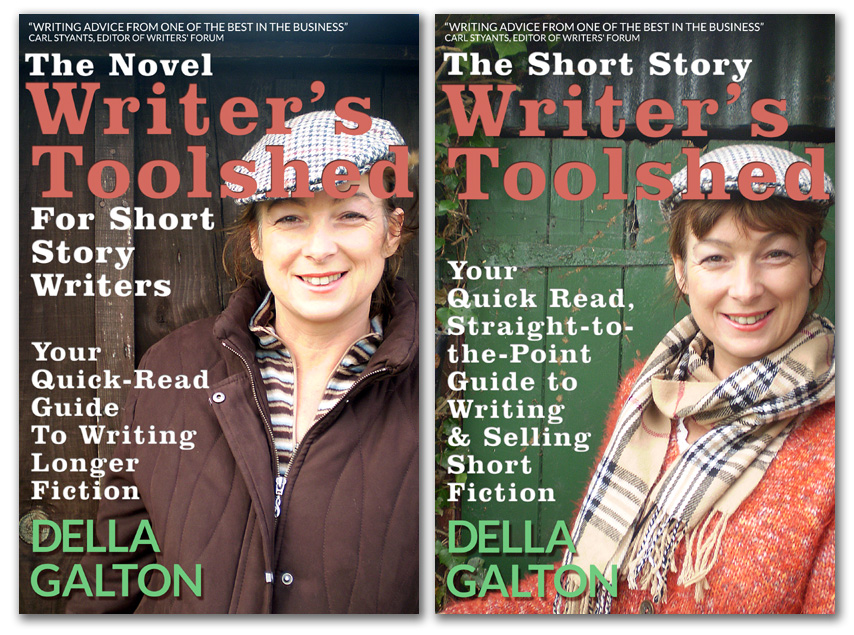
As I think I may have mentioned (once or twice) I now have two Writer’s Toolshed books in existence. Apparently there has been some confusion and a few people think there is still only one. So in the interests of setting the record straight, no, there really are two. And to prove it here they both are side by side. (in the same room!)

The Toolshed Collection

The Short Story Writer’s Toolshed is about writing short stories. And The Novel Writer’s Toolshed is – oddly enough – about writing novels  – BUT The Novel Writer’s Toolshed is for writers who usually write short stories.  It would actually be just as useful for novelists who fancy writing short stories instead because it’s specifically about the differences between the two forms.  Phew! That was complicated. Hope it makes sense?

Tell you what – why don’t I reproduce the beginning of The Novel Writer’s Toolshed here – just in case anyone would like to check it out. Here it is:

Short Stories Versus Novels What’s the Difference?

Making the transition between writing short stories and writing your first novel isn’t as simple as you might think. Or at least it wasn’t for me. I’d had a fair amount of success with my short stories and I didn’t think that writing a novel would present too much of a problem. Surely it was just a short story with more words, more characters and more plot, wasn’t it?

No doubt, some of you are already sniggering at my naivety, and I was naïve. I made a lot of mistakes before I managed to write a publishable novel. Many of them were down to assumptions I had that simply weren’t true.

Yes, there are similarities between the short story and the novel and yes many of the techniques used for one can be transferred successfully to the other, but there are an awful lot of differences too.

The object of this book is to help you avoid some of the mistakes I made.   Let’s take a quick look at some of the differences before we go into more detail about what’s in the toolshed, and hopefully this will make your transition a little smoother than mine was!

Length

This is probably the most obvious difference. Not many short stories are longer than about 5,000 words and even a short novel is at least ten times longer than that. The average length for a novel – if there is such a thing – is somewhere between about 50,000 and 120,000 words, depending on the type of novel and the publisher’s requirements.

Unlike a short story, which can be written and edited in a few days, a novel is going to take a substantial amount of time and work, which brings me on to my next point nicely.

Subject

What you write is always a fairly important question – time is our most precious commodity – but it’s not quite as important when you’re choosing what your next short story is about. After all, writing a short story takes significantly less time than writing a novel. We can afford to experiment a bit more.  However, if you are going to spend a great deal of your precious time and energy on your novel – which you will if you’re going to do it properly – then it isn’t a bad idea to choose something you are passionate about. There are two main reasons for this:

1)  If you are enjoying the writing, you are more likely to finish it.

2)  If you don’t end up selling it then at least you will have enjoyed its creation and hence won’t feel your time would have been better spent doing cross stitch or playing golf!

I have no idea of the statistics on unfinished novels, but I bet there are thousands of them, languishing in desks or on computers across the country. They are started in a flash of inspiration and then the author finds they peter out at around 27,000 words, or perhaps worse, are finished in 27,000 words.

The percentage of first novels that are published is also very small. I have heard various figures quoted, but I won’t depress you with them. Besides, who really knows? A great many writers don’t even send their first novels out to publishers and a great many more are told by their publishers that although this is the eighth book they’ve actually written, it will be marketed as their debut novel.

This is not intended to put you off, far from it. Write your novel, keep an eye on the market, but primarily do it for the love of it.

My first novel, incidentally, which was written when I was about twenty, is somewhere in our loft, along with the other three novels I wrote before I managed to write one that was publishable!

Right then, let’s have a quick look at what’s on each of the shelves, whist keeping the differences between short story and novel in mind.

Planning, plotting, pace and timescale

A short story plot, by its nature, needs to be kept fairly simple.  There isn’t enough room for it to be complicated.  Generally a short story will tend to focus on a single event or theme.

If you are writing several thousand words you will need a much more developed plot, or perhaps one main plot and some interlinking subplots to sustain the length. Whereas a short story can follow a single idea, longer fiction tends to need more than one.

There isn’t room to hang around too much in a novel either, but you do need to have a very good control of pace.  Contrary to what I thought when I started my novel writing journey, there is no room for waffle. Every word must still count.  For many short story writers, pace is the hardest thing to adjust to when they begin to write longer fiction.

Setting

Setting in a novel is much more important than it is in a short story. In certain types of novels, for example regional sagas, it is equally as important as character.  I will cover setting in detail under Shelf Two. All I want to say here is that you need to show setting through the eyes of your viewpoint characters – do not paste it into your novel in blocks or your reader will probably skip it!

Characters and viewpoint

A short story of a thousand words almost certainly won’t have more than two or three characters, one of whom will be the main character. There is a lot more room for characters in a novel although that doesn’t mean you should attempt to have a cast of hundreds!  You will still need to know whose story it is – this is perhaps even more important in a novel than a short story as it’s much easier to lose focus – and all of your characters must be essential.

In a short story there is often only room for one viewpoint. In a novel there is room for more. Using the viewpoint of more than one character can add a great deal of depth to a novel if done with skill.

Dialogue

In a short story your reader will probably forgive you if your characters don’t have recognisable and individual voices. In a novel, they probably won’t.  So character voice is one of the most important things to work on in longer fiction.

The first page and beyond

It’s vital to get your first page right. It is just as vital not to get stuck on it. I have a personal theory that it’s difficult to write the first page of your novel until you’ve written the rest of it.  When I’m writing a short story I find the ending is the most difficult part. When I’m writing a novel I find it’s the opposite.  It’s easy to write the last page, but very difficult to write the first.

Development, author voice and endings

Developing a story is fairly easy. The middle follows on naturally from the beginning – and so it is with novels, only it’s much easier to end up with a saggy middle in a novel – this can be solved by careful control of pace and also, I think by strong author voice. Thankfully, while ending a short story is tricky, bringing a novel to a satisfactory conclusion is much easier.

Structure and flashback

How will you structure your novel? Deciding before you begin to write can help you to plan it. Structure is a short story writer’s friend, but it’s a novelist’s best friend because there are far more options.

Your novel might have a prologue. It might be split into parts and it will probably have chapters. You’re not limited to flashback. You can use flash forward too! It is great fun to play with time in a novel.

Editing and revision

The main difference between editing and revision of the two forms is time. A short story can be edited in a morning or an afternoon. A novel is much more unwieldy. Using a plan can help.

The Title, the synopsis, the blurb

A good title is always important, but it’s more vital for a novel than a short story, as it’s one of your key selling points. A great title can sell a novel. A bad one can cause it to sink without trace.

Most novelists I have spoken to hate writing a synopsis. This is something you rarely have to do for short stories but which is an essential part of a novelist’s job.  Or is it?

These days it’s probably more important to be able to write a blurb.  Has the synopsis taken over from the blurb? What’s the difference? On Shelf Nine you’ll find some examples of both.

Finding an Agent – Do you need one?

The short answer is no. You have never needed an agent for short stories and you don’t necessarily need an agent for novels either, these days, but is it worth going alone? If you do want to look for an agent or a publisher, Shelf Ten, will show you how to proceed.

So there you have it – a little taster of what the Novel Writer’s Toolshed is about.

if you would like to know more, do please check out The Novel Writer’s Toolshed which is available for Kindle £1.88 and in paperback £4.99.

The Short Story Writer’s Toolshed is currently available for Kindle £1.88. Paperback coming very soon.

And if you just fancy a bit of light reading (pun intended), Ten Weeks to Target, my new novella is available as a Kindle book too for just £1.53 🙂

Tell your friends!

© Della Galton All rights reserved.
Powered by Cloudbase Media