Welcome to Della Galton’s website

The Wednesday Writing Spot – Write about your ancestors – Emmeline Pankhurst and I…

Genealogy is a fascinating subject and I know more than one writer who has both researched their family tree and then used their ancestors as characters in either a short story or a novel.  I love this idea. I believe that writing with emotion is the way to sell your work – and what better way to do it!

We are linked to our ancestors, we are bound to have some emotional involvement with them – especially when we start researching their lives.  Hence we are halfway there if we create characters who are based on people in our past. We may not know much about them, but we will know something, and it’s amazingly inspiring and satisfying to recreate their lives in fiction.

I have a very complicated and (at least to me) interesting family history. My father was one of six. He also had six children. (there are four different mothers). I wasn’t brought up with any of my paternal brothers and sisters, but in the last fifteen years I have met two of my brothers.

Last week I met one of my cousins for the first time, and two nephews, and a couple of uncles and aunts. Fabulous stuff.  Now, on to something quite interesting that arose when we were chatting about our family history.  I was born Della Parkhurst.  My father was Peter Parkhurst, his father was Patrick Frank Parkhurst, his father was Frank William Parkhurst.

So what does all this have to do with Emmeline Pankhurst? Well… according to one of my aunts, who’s the custodian of our family history, Frank William Parkhurst was actually a Pankhurst, but he and his wife, Florence, were so horrified by another member of their family, Emmeline Pankhurst doing such embarrassing things such as chaining herself to the railings that they decided to disassociate themselves from her and changed their name by sleight of pen from Pankhurst to Parkhurst.

I was blown away when I learned of this fact. So if this is true – and apparently it’s been passed down my family over the years, and everyone thinks it’s true, then I’m related to Emmeline Pankhurst. How amazing is that. (It also explains a lot about my character, tee hee!).

I haven’t actually chained myself to any railings, but I have been passionate about one or two causes and have even been an activist in the past (long story). However, I would definitely have been up for some railing chaining in Emmeline’s time. My next step is to dig around a little and see if I can verify this, one way or the other. I’m sure one of you genealogy experts can tell me how to do it too.

Now, lets get back to writing, and also on to the most bizarre bit of this story. I sold a story a couple of years ago which was called Fifteen Minutes of Fame – it was published by The Weekly News, and it was about a girl who chains herself to the railings to save her grandfather’s allotments. Someone then lies to the newspapers that she is the great great great granddaughter of Emmeline Pankhurst.

How spooky is that 🙂

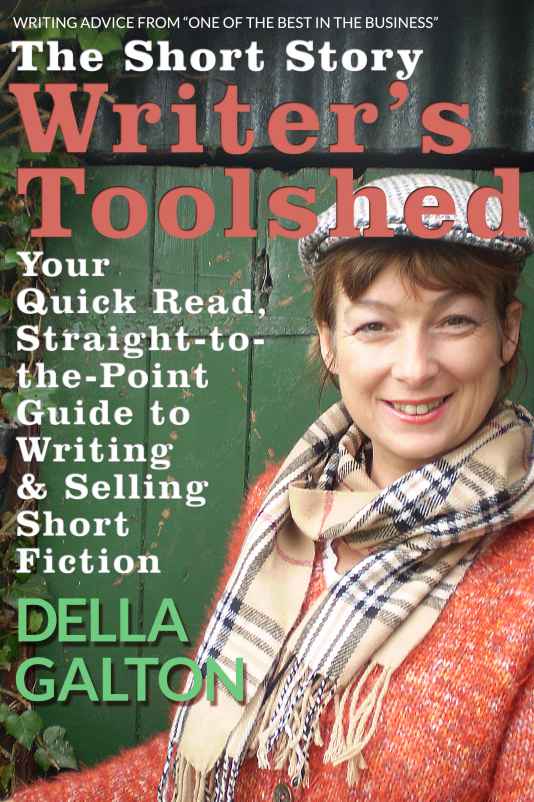
If you’d like any more advice on writing short stories, please check out my writing guides. How to Write and Sell Short Stories  and Moving On, Short Story to Novel, published by Accent Press and The Short Story Writers’ Toolshed published by Soundhaven.com
The Wednesday Writing Spot – Getting Ideas – Guest Post from Patsy Collins

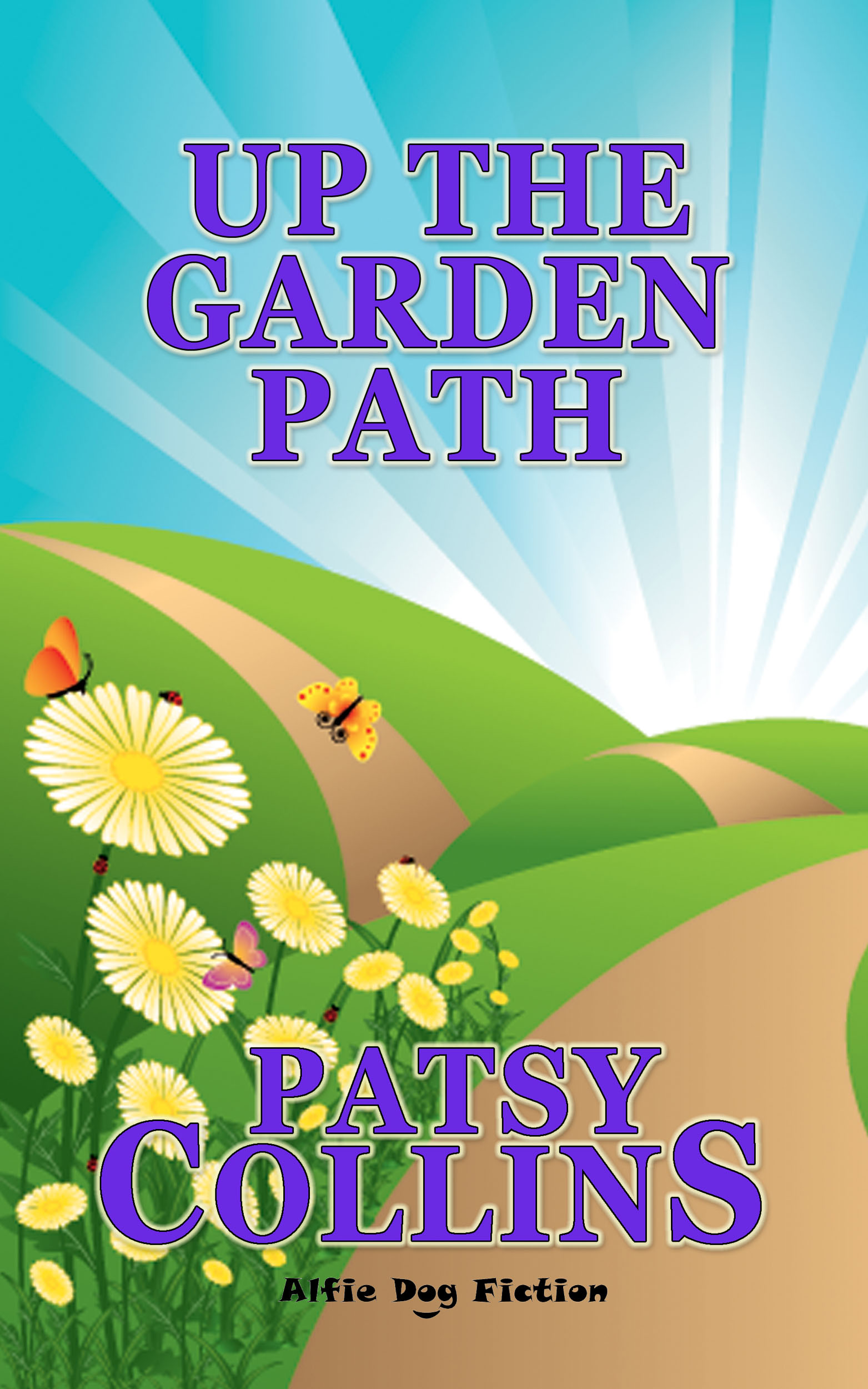
This week on the Wednesday Writing Spot, I am delighted to welcome writer, Patsy Collins, who is talking about where she gets her ideas from and her fabulous new short story collection, which is called Up The Garden Path. It’s lovely to have you here, Patsy. Now it’s over to you…

As writers we are often asked where we get our ideas from. It seems such a reasonable question but it’s very hard to give a satisfactory answer. Each writer will get their inspiration in a different way to that of their colleagues and they’ll probably draw on a number of resources. Ideas are everywhere you see. That’s both good and bad. We don’t have to wait for the ideas shop to open, but those little story sparks don’t come neatly labelled ‘romance novel suggestion’ or ‘ghost story premise’ so we need to train ourselves to spot them.

My new short story collection contains twenty four short stories and each is the result of a different stimulus. It’s a bit like picking wild mushrooms, really. If you want nice, safe mushrooms you need to know what they look like or you’ll end up with something toxic, or hallucinogenic or bitter. Of course if you actually want to poison someone you’ll need to be on the lookout for something different (pale gills and skinny stalks are a good sign in this case). ‘Write what you know’ is good advice. That’s what I did for ‘A Piece of Pink Ribbon’ which is set on a farm and ‘Coming Home’ which is about separation when someone is away at sea. It also explains why all the stories in the collection have a horticultural theme – I’m nearly as keen on gardening as eating cake. Real life events can be a great source of story ideas, but the truth often needs adapting. Weirdly when we write something strange, funny or touching that really happened it often doesn’t feel believable. ‘Watchdog’ is based on a real event (although not one which happened to me) but to make it work I had to change reality. Whenever I come across an unusual name eg ‘Mrs Dalrymple’ overhear an interesting comment such as ‘Your Granddad is Stuck Up a Tree Again’ or want revenge on an annoying boss (‘Blooming Talent’) I make a note in a computer file. Sometimes the prompt is as simple as the smell of ‘Strawberry Jam’ and at others it’s as complex as family politics (I’m admitting nothing!). It doesn’t matter where the ideas come from, it’s what you do with them that counts. I hope you like what I’ve done with those which resulted in ‘Up the Garden Path’. The book is available here – or here.

The Wednesday Writing Spot – Plotting the longer Short Story

Plotting was the bane of my life when I started writing. It still trips me up now occasionally, particularly when I’m changing lengths, for example from 1000 to 2000 words. So here are some tips for writing the longer short story.  They are very popular in fiction specials.

This advice also works well when trying to reduce your longer stories to short ones. Just reverse it.

What’s the difference between 1000 words and 2000 words in plot terms?

There is not as much difference between the two as I thought when I first started writing.  I assumed that if I needed one or two main characters with a problem to solve in a 1000 word story, then I’d probably need more characters and more of a problem for a 2000 or 3000 word story.

I soon discovered that this was not the case. You won’t necessarily need more characters or more plot for a longer short story, but you will need more development of both.  This is usually achieved by writing more scenes.

Very short stories

In a 1000 word short story you won’t have room for more than a couple of scenes, probably three at the most and that might be pushing it.  We will probably join your character at the point of change or conflict. For example, let’s assume your character is worried about a forthcoming appointment she has the following day. Your story might go something like this:

Scene one

Your character is discussing her worries with friend or partner.

Scene two

Your character goes for the appointment.

Scene three

Resolution and possibly a twist.

If you did follow the format above for a 1000 word short story, then you’d have to make your scenes extremely short – you’d have just over 300 words to devote to each one.

If you had more space to play with, you might also have a flashback of exactly why your character was so worried about her forthcoming appointment. Your story might then go something like this:

Scene one

Your character is discussing her worries with friend or partner.

Scene two

Flashback in your character’s viewpoint to show a previous occasion when she had to go to an appointment and it didn’t work out – hence meaning the stakes for today are higher and we (hopefully) care about it more.

Scene three

Your character at the appointment.

Scene four

Resolution and twist

The number of characters and the plotline are the same, but the story is longer and has more depth because we have more development of both.

This helped me so much when I first got it. Hope it helps you too.  And if you’d like any more advice on writing short stories, please check out my two writing guides. How to Write and Sell Short Stories published by Accent Press and The Short Story Writers’ Toolshed published by Soundhaven.com
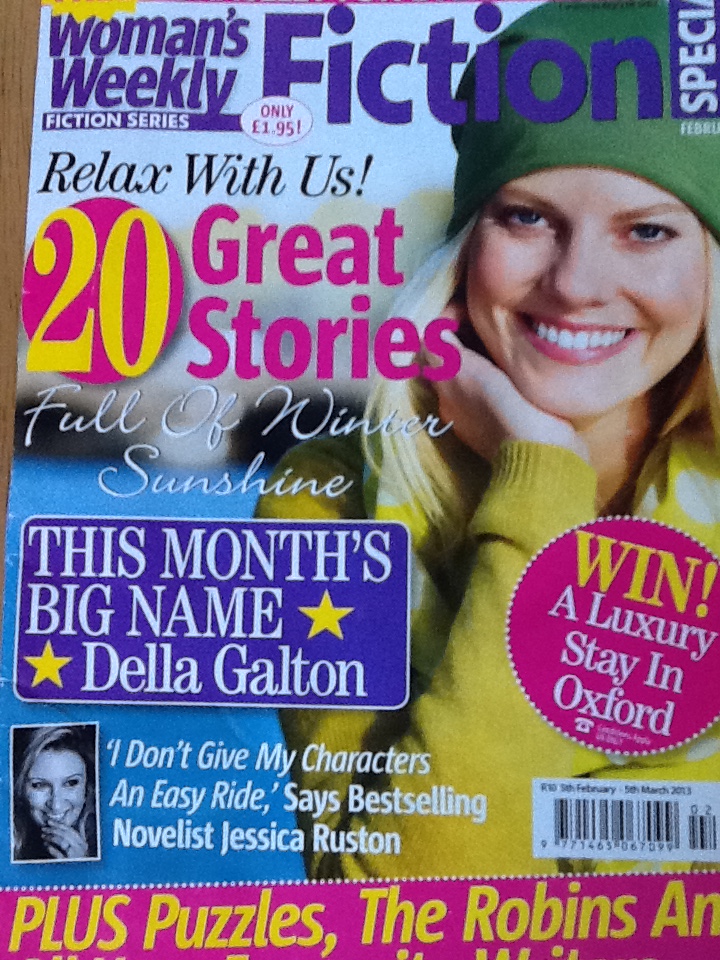
The Wednesday Writing Spot – Plotting the Short Story

Plotting a short story is something that many writers, both new and experienced, find difficult.  I include myself in this.  It is not always easy, and I say not always, because occasionally we all have those magical days when it is.

For the days when it isn’t, I have outlined some techniques below that should hopefully help.

Starting from Scratch

Give your character a dilemma to solve. Preferably make it the sort of dilemma that will force your character to re-evaluate his life or his attitudes.  In this way he will have changed before the end of the story.

Be as nasty as you like.  The tougher the problem that your character has to face, the more drama you’ll be able to create.

Make sure the resolution to the dilemma is credible, but also make it as unexpected as you can.  This is the tricky bit.  Knowing you have to provide a resolution to the story before you start can be very off putting for some writers (it is for me!).

Starting Halfway through

Now, this might sound strange, but I find this is by far the easiest way to plot.  By starting halfway through I am saying that you should just start writing.  Certainly give your character a dilemma to solve, but don’t worry about the rest.

For example :  I once sold a story  of 1000 words called The Best Laid Plans, which I’d started the previous year and got stuck on.  My original idea was as follows:

The story opens with Katie in bed in hospital on her 25th wedding anniversary, which is not quite how she planned to spend it. Since she married Paul most of their anniversary plans have gone wrong. On bad days she thinks they’re jinxed and on good days she thanks her lucky stars they ever got this far. This was a light hearted story and the humour was provided by flashback (the story is in Katie’s viewpoint) to previous disastrous anniversaries.

I got stuck at the 750 word point, which I frequently do.  I couldn’t think how to resolve this story.   This is where the plotting bits come in.  Because the story is already half written, there are only so many options.

  1. They could have a late anniversary celebration which could go wrong
  2. As above, but it doesn’t go wrong.
  3. They could split up (not very satisfactory for Woman’s Weekly)
  4. They could decide not to celebrate on the actual day itself, but at other times in the year, after all a marriage isn’t about just one day a year.

I stopped here because I’d found my solution.  I used a mixture of number 1, 2 and 4.

Plotting is actually just a chain of events that leads your character to a satisfactory resolution and that resolution will largely be determined by market.

Problems Finishing

When you’re stuck on a resolution – this is another problem I have frequently, then I suggest you ask yourself the following questions:

  1. What is it that I am actually trying to say?
  2. What is this story about?

The Best Laid Plans was a humorous story, designed to entertain, but it did have a serious underlying message – a universal truth, if you like.   A wedding anniversary is the day that couples celebrate on, but the other 364 days of their marriage were just as important.  They could also laugh about the things that went wrong.

The answer is in what you’ve already written

The seeds you’ve sown early in the story will provide you with the ending.  Look at what you’ve set up carefully and then explore every possible option.  One of them will be the right one.

The Title

Another quite useful thing I’ve learned is that the title should underline the theme, as in The Best Laid Plans – so if you are the type of writer who knows the title before they begin, then this can be very helpful.

And if you’d like any more advice on writing short stories, please check out my two writing guides. How to Write and Sell Short Stories published by Accent Press and The Short Story Writers’ Toolshed published by Soundhaven.com
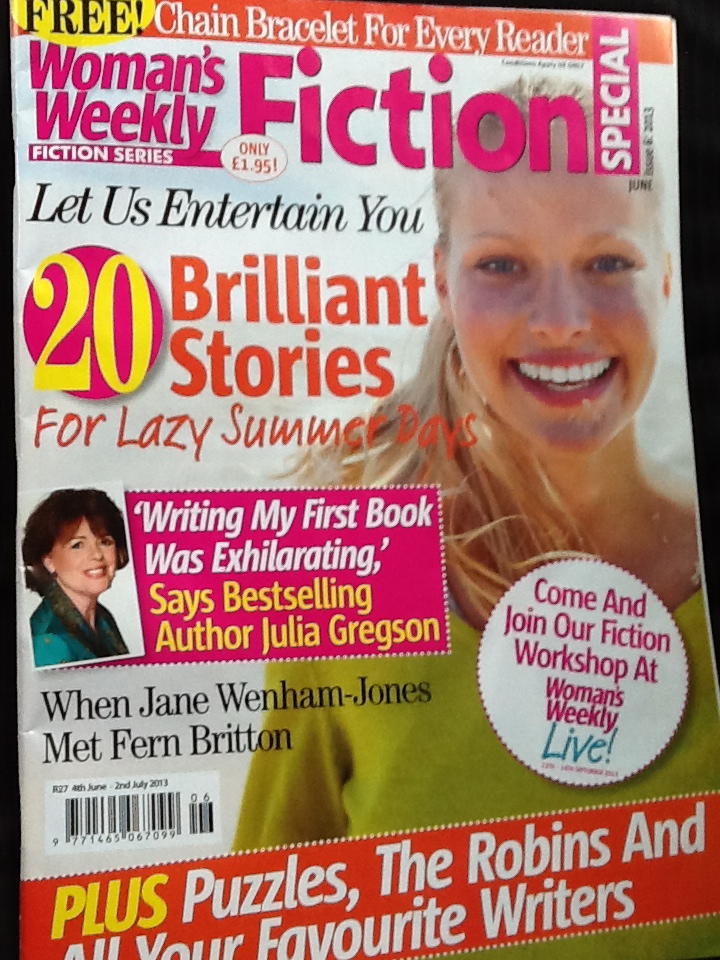
Next week we’ll look at plotting the longer short story.

Happy writing.

The Wednesday Writing Spot. Tips on Winning Short Story Competitions

This is the first of four posts about various aspects of short story writing, which will go out over the next four Wednesdays, in my new Wednesday Writing Spot. I hope they are helpful.

I have spent a fair bit of time judging short story competitions, and I have been asked to judge two more this year, I’m judging the short story award for the Wells Festival of Literature, more details here and also the H E Bates Short Story Competition, more details here so I thought it would be a good plan if we started with some tips on winning competitions.

So what do I look for when I judge a competition?  How exactly do stories lift themselves to the top of the pile?

These elements are in no particular order.

A good title

This helps attract my attention although if the story doesn’t work – it won’t be enough on its own.

Good writing

This always attracts my attention. And by good writing, I mean that the story is well crafted. There will be good sentence construction, no clichés or tired lines. There will be an intriguing opening, probably a few particularly good lines – I often point out examples of these in my individual comments, if I’m doing critiques too.

The story works

This means that the whole story has to work – from beginning to end.  There must be a good strong premise, which is developed throughout the story and the ending must be satisfactory. By satisfactory I mean that it should work for that story. It should tie up with the beginning without being predictable. It shouldn’t be obscure or too obvious.

Originality

It helps if I haven’t seen the plot line before – this is tricky because I’ve seen hundreds. If I have seen it before it helps if there is a new angle – maybe humour, or a different structure.

Believable characters

They must be believable and not cardboard cut outs.  Characterisation is probably one of the most important things in a short story – or any story, come to that.  If I get the sense that these characters could actually exist that is a great start. In many of the stories I read I find that the characters are not fully developed, which means that often they are not quite believable.

Character motivation

This is strongly tied up with believable characters. Would they really do that?  Ask yourself when you are creating a character if their actions are likely. If a character’s actions strike me as unbelievable I tend to lose interest in the story. Characters can do unlikely things in a story, but you have to make me believe they would do them.

Emotional involvement

Again this is strongly tied up with believable characters and character motivation. Am I involved with these characters? Do I care what happens to them, or are they so insipid and unbelievable that I’m not that bothered? The acid test here, is do you care about them? Really care, I mean? Are you moved when you write about them or are they just a means to get your plot on the page?

An intriguing plot/dilemma

Do I want to keep reading? Is there enough of a hook which starts at the beginning and draws me through. It’s quite hard to do this in a short story, but if you can do it, you are likely to succeed.

Good dialogue

It’s hard to achieve but good dialogue (where everyone doesn’t speak in exactly the same way) goes a long way to making characters believable.

An unusual setting

The more competitions I judge the more I think that this is important. An unusual well drawn setting can make your story stand out from the rest.

A point

Yes, stories should be entertaining but they should also have a point.  This is a fact I overlooked when I first started writing short stories.  Think about your story’s overall message. Is there one? Or are you just writing about an incident that is actually quite slight – and may have been amusing when you thought about it, but isn’t really enough to hold a reader’s interest?  Stories that are too slight can come across as anecdotal.

Good presentation, grammar etc

This is not the be all and end all. If you have written an excellent story and it’s badly presented you may still get placed. (If the judge sees your story) But bear in mind you probably won’t get past the first reader in a national competition.

Something very important to remember

When you enter a competition where there are hundreds of entries and only three or so prizes the initial readers will be looking for a reason to throw your story out of the pile. Don’t give them one.

And, one last thing, most entries arrive on the deadline in a competition. This is fine, as long as you haven’t written it the day before in a panic because if you have, then you won’t have had a proper cooling off period in which to edit it. Write your story in good time, then put it aside for a week or so, then edit it. You are much more likely to produce a polished piece of work.

Good luck.

And if you’d like any more advice on writing short stories, please check out my two writing guides. How to Write and Sell Short Stories published by Accent Press and The Short Story Writers’ Toolshed published by Soundhaven.com
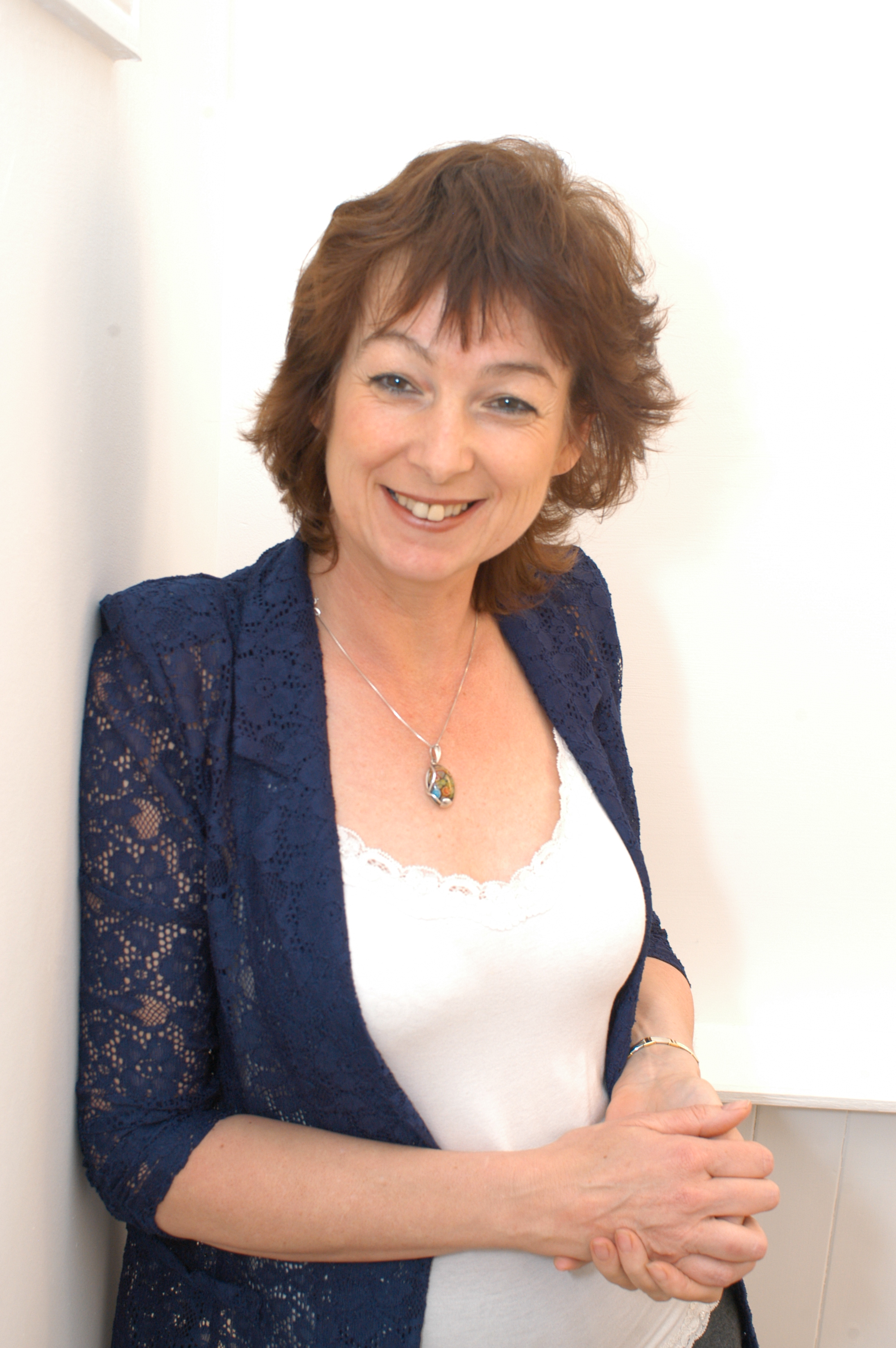
Next week we will take a look at story arcs.

PS Below is the update on entries received so far for the Wells Festival of Literature Competition.

Total On-line Entries so far this year:

Poetry: 17
Short Stories: 29
Crime Novels: 4

We have also received a similar number of entries using the traditional pen and paper method.

Goals, writing a bestseller and the law of attraction

If you are a regular follower of my blog you will know I’m quite keen on goals. I set goals for my writing: I set annual goals, which get broken down into weekly, monthly and daily goals. I come from a managerial background. Before I was writing full time I worked with targets both for myself and my staff.  (I wish I had staff now, ones that did housework and cooked dinner, sigh…). And goals transfer well to writing. They keep me motivated and help me to plan my work.

Today I was talking to Helen, a very wise, and very good friend of mine, about one of her favourite subjects, the law of attraction. If you haven’t heard of this before, it is the process of attracting things, people, money, and – well virtually anything you like really – into your life, effortlessly.

“You could do it,” Helen said, with a huge smile. “What would you like to attract into your life right now?”

“What I would like most,” I said, after a few minutes thought – OK, three seconds thought – “Is for my novel, Ice and a Slice, to be a bestseller.”

“Right,” she said, “You’ve just taken the first step. You’ve thought about what you would like.”

“How many steps are there?” I asked.

“Four,” she informed me cheerily.

So step one: Think about what you would like to happen. 

“What’s step two?” I asked.

“Form a clear intention about exactly what that means. Write it down.”

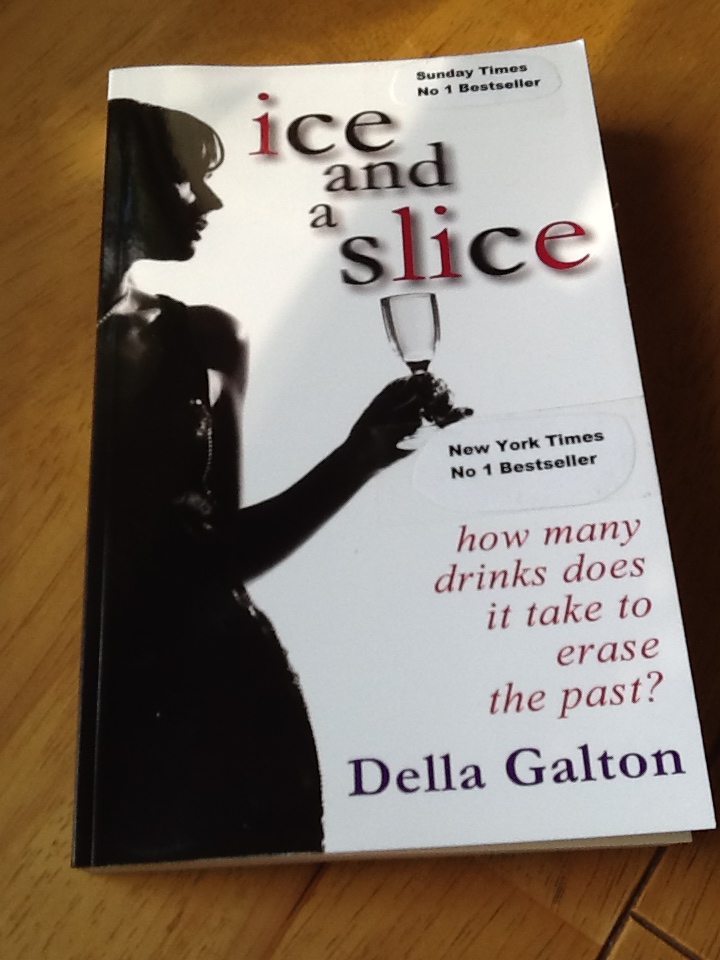
I had a think.  “Hmmm, well, I think I would like Ice and a Slice to be on the New York Times Bestseller List, oh and it would be quite nice if it was a Sunday Times Bestseller too. That would be pretty cool.”

Step two: Be specific. Identify a very clear goal and write it down somewhere you will see it often.

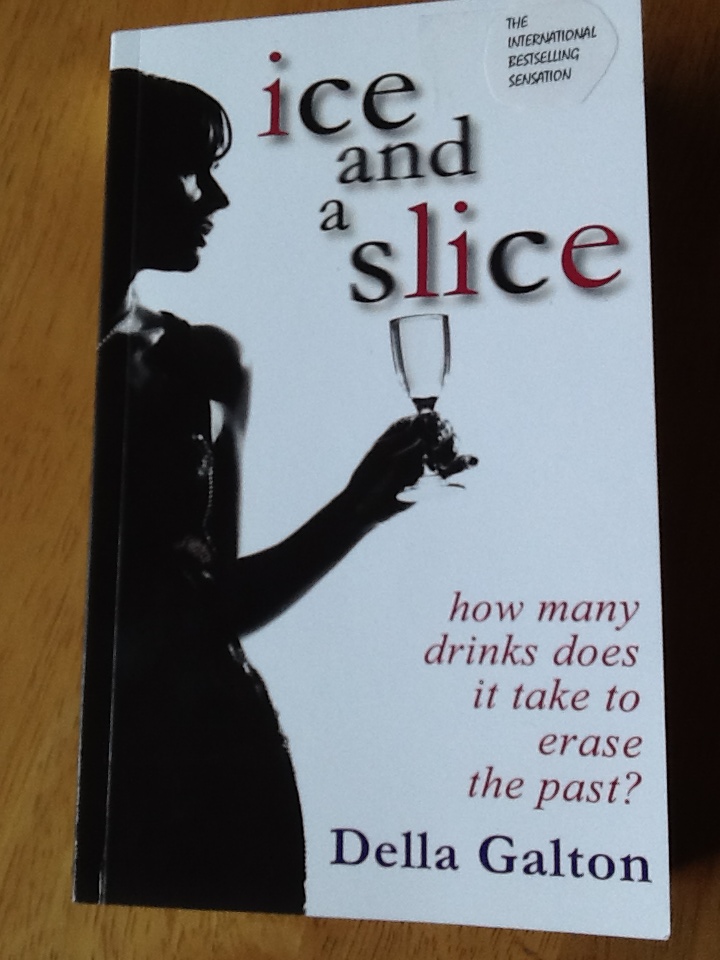
I thought it might be quite a fine plan to write it on the cover of my novel. Which was excellent fun. I recommend this. See picture.

“Step three,” Helen continued, “Is to take action.  Think about your goal (what it actually means) and then identify the actions you need to take to make your goal happen.”

Step three: Take Action.

That was pretty easy. If I want my novel to be a bestseller I need to sell a lot of copies. How exactly do I go about that? Well, I need to tell people about it for starters. Ideally, it would be good if I could get an advert on prime time television – in between the first and second half of Corrie would be excellent, or maybe Britain’s Got Talent.  However, I think this may require slightly more of a budget than I’ve got at my disposal 🙂

So what’s Plan B?

I can tell people about it.  Hence this blog – well you are reading it aren’t you?  Did I mention that Ice and a Slice is now out in paperback and it’s available here. You may find your copy doesn’t have quite the same cover as the copy above, but it’s close. It’s also available for Kindle enabled devices here.

“So is step four, to sit back and watch your plan, come to fruition?” I asked Helen with a wink.

“No, it is not,” she said, wagging a finger. “Step four is a ‘results step’ you are right there, but it does not involve sitting around doing nothing.” (I had a feeling that would be the case!)

“As you continue to carry out the actions that will make your goal a reality you will grow both personally and spiritually. But you must persevere. You must carry out these actions with passion. You must never, ever give up. It is in the process of action, action and more action that you will grow spiritually, and you will also inspire other people.”

Step four: Persevere. Never give up, which will result in both personal spiritual growth and will also inspire other people.

I decided to have another go at the cover. Just to be sure – this one’s slightly different. Check out the top right hand corner. I really do recommend you do this with your own bestseller projects by the way.  It’s excellent fun.

Does it work? I have no idea. But I have a great deal of respect for my friend, Helen.

Watch this space!

What I can confirm, however, is that if you are feeling low about anything, whether it is writing related or anything else, trying these four steps really does cheer you up. So it’s worth doing it just for that reason. I would really love to hear your thoughts. Please do comment.

Famous Authors and Other Stuff

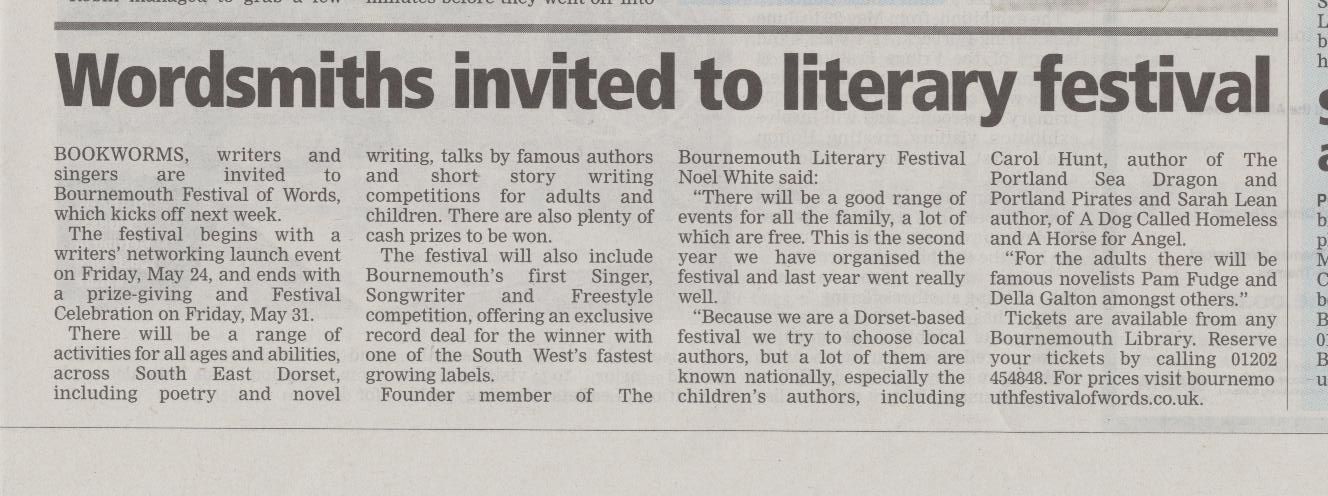
Well, first of all, I have to say this now because it might never happen again. I am famous. Look – it says so in the Bournemouth Echo. OK so it’s in very small print, in column four, halfway down, but it does say it – it really does say famous author 🙂  I’m still waiting for the ‘rich’ bit to kick in. But one out of two isn’t bad. And it’s my birthday today, so a nice day for it to happen!

This article arose because Pam Fudge and I are teaching ‘How to Write Your First Novel’ at Bournemouth Library on Saturday 25th May. Do come along and join us if you fancy it. We are both really looking forward to it. It’s at 10.00 till 4.00 and costs £30.00, which is pretty good value because you’ll get two ‘famous authors’ for the price of one!

While I’m on the subject of Saturday courses, if you’ve ever fancied writing a memoir – I’ll be teaching How to Write Your Memoir/autobiography (or biography for someone else) on the 15th June. That’s at Kinson Community Centre in Bournemouth, also 10.00 till 4.00. £35.00. (please email me if you’d like to book).

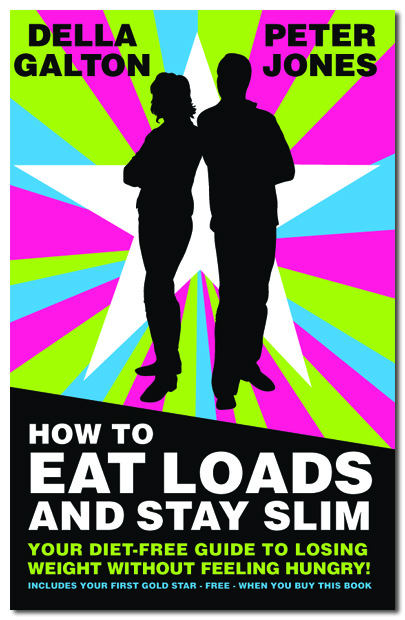
Saturday 25th is also the day my book, co written with Peter Jones is coming out. That’s called How to Eat Loads and Stay Slim. So the 25th is a red letter day for me. Gosh, showing my age there, red letter day is quite old fashioned, isn’t it.

How To Eat Loads and Stay Slim isn’t a diet book. Not in the traditional sense.

It’s  a mixture of hard science (eg. how hunger really works), quick ‘cheats’ (eg. how to make zero fat chips), psychological techniques (eg. why focusing on your food as you eat is really important), ingenious strategies (eg. how to cut down on sugar without going cold turkey), and easy peasy recipes (eg. Peter’s roast potato & egg smashup breakfast or Della’s apple ginger clafouti) – all served up in an easy-to-digest, humourous read from authors who’ve been where you are now.

Each of thought provoking, scientifically-provable, idea has a STAR RATING. There are fifty four stars available. You get one just for buying the book! Collect enough and you’ll steadily increase your chances of being able to eat loads AND stay slim. Collect enough stars (thirty or more would be a good target to have) and we personally guarantee that a slim figure, coupled with a healthy but satiated appetite, are yours for the taking. No dieting required.

And most excitingly of all, my new novel, Ice and a Slice is coming out in paperback in June. How exciting is that. Ice and a Slice is already out for Kindle enabled devices and has 22 five star reviews. Here’s the latest one.

I hesitate to add yet another 5 star review to Ice and a Slice but I can’t help myself. Here is a novel which captured me after the first few pages – I just had to know whether the key character would end up in life’s gutter or if she would manage to climb out of the pit of despair. The surrounding characters, too, all slotted in perfectly; I occasionally loathed or loved them. But, of course, from reading her previous works I know Della Galton is blessed with the ability to take the reader on an emotional roller-coaster. It’s a ride well worth taking.

DeeJaye

I know I am blowing my own trumpet today (but it is my birthday). And to be honest, life has been pretty tough lately on a personal level. So it’s nice to have something good to report. Please forgive me. Writing has been my salvation, my escape and the one really good and consistent thing in my life this last year.  Where would I be without it? To be honest I really don’t want to answer that question. I certainly wouldn’t be very sane.

And I have enough friends reading this blog, who I know have been through some very tough personal stuff too, and have found writing to be a golden thread. So let’s hope this year is going to be a brilliant one for us all.

Thank you for reading. And happy writing. 🙂

Four Myths About Writing Short Stories for Magazines

Writing stories for magazines is easy – right?

Er – no – we all know that’s a myth. If you’re reading my blog, then chances are, you’ll know it from personal experience.

Once you have sold a few stories to magazines, they just buy everything you send – right?

Er – no – they still only buy the ones they think are perfect for them.

If an editor asks you to rewrite a story, they will then buy the resulting rewrite, won’t they?

Er – no – they wont, not unless it’s perfect for them second time round, or third, or fourth.

Once you break in there’s loads of money in it.

Er – no!

Just to illustrate these four points – and one more very important point I thought I would share with you the journey of a magazine story I wrote. Out of courtesy I’m not going to name the actual magazines mentioned in the following examples. I will give them pseudonyms, so please don’t think there are four new magazine markets out there you haven’t heard of -there aren’t – but the actual facts are true.

On 8 December 2011 I wrote a story (let’s call it A Special Day) and sent it to that ‘well known magazine’ Women Everywhere. On 20 January 2012, their editor sent it back saying they liked the story but not the ending, could I possibly rewrite it and they’d take another look.

“Of course,” I said, and offered them A Special Day mark two on 26 January, 2012. A week later they sent it back saying, sorry, we’re not keen on this ending, please could you try again.

“Of course,” I said, and offered them A Special Day mark three on 17 February 2012. A week later they sent it back saying, sorry, we’re not keen on this ending either. Thanks for trying.

“Thank you for giving me the opportunity,” I said, and (not to be deterred) on 12 March 2012 I sent mark three of my story to another well known magazine called Women Worldwide.  

They ignored it for several months. I didn’t chase it, but on 24 January 2013 I sent a different version (mark two) to Women Worldwide, with a note mentioning they’d had a previous version, but this was new and improved. A month later they sent back the new and improved version with a polite rejection.

Not to be deterred – I’m quite stubborn, me – I looked at all my versions and decided that the mark two version was the best and I sent it to another well known magazine, let’s call them, Universal Woman.  A week or so later they sent it back with the comment, we enjoyed this but it’s not for us.

Again, not to be deterred – did I mention I was stubborn? – I sent the mark two version to yet another magazine called All Women on 5 March, 2013. On 8 May, 2013 they sent it back with the comment, “We quite like this, but could you change the end?”

“Of course,” I said, and rewrote the end for the fourth time (yes there was actually an ending I hadn’t thought of yet) and I resubbed it on the morning of the 15 May, 2013.  On the evening of the 15 May, their editor came back to me and said, “Yes please, we’ll buy that one.”

“Thank you very much,” I said. “That’s excellent news.”

Alleluia might have been a more accurate description of what I was feeling at that moment. That story had started life in December 2011, had been given four rewrites and finally sold in May 2013.

This kind of thing doesn’t happen all that often, thankfully, but it’s not unheard of, and I think illustrates quite well what I mentioned earlier. Writing for magazines is not easy, it doesn’t matter how many they’ve bought from you before it doesn’t mean they will buy your next one, and they won’t necessarily buy your 2nd or 3rd rewrite, even if they ask you to do them. And – no I did not get paid a fortune for the story when I finally sold it. But I did get paid!

I would like to end on a note of hope. If you really do think a story has got what it takes, then don’t give up on it.  There is every chance you will sell it eventually. And it is – I have to say – very, very very satisfying when you do!

If you would like to know more about writing and selling short stories – please do check out my book, The Short Story Writer’s Toolshed here.

Me, a Mic and a Darkened Room!

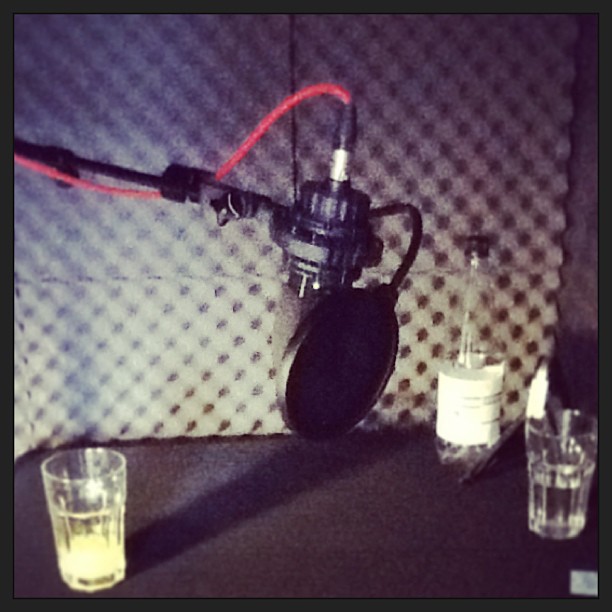
A little while ago I was lucky enough to get the chance to record my own book, How to Eat Loads and Stay Slim, for Audible.co.uk. Wow, what an experience that was! It took place in the tiny windowless studio you see in the picture. Just me, a mic and an iPad – oh and a glass of apple juice – more of that later.

Let’s start from the beginning. It seems an awfully long time ago that Peter Jones and I decided to write How to Eat Loads and Stay Slim. It was one of those books where we actually started with the title. We were chatting on the phone one day, Peter was telling me about his How to Do Everything and Be Happy book, and I said, what a great title. It could only be better if it was called How to Eat Loads and Stay Slim. And there you have it, the conception of a book. So we wrote it.

Anyway, back to the recording. We were lucky enough to get offered a contract from Audible, the world’s largest provider of spoken word entertainment. And we were also lucky enough to be asked to record it. (It’s a dual viewpoint book – I do the sensible stuff – Peter does the – er – whackier stuff.) So we both went along to Rushforth Media’s studios, in London where it all happens.

We were assigned a studio and an editor each. The editors were in separate studios, but connected to you by microphone. Mine was called Alice and she was lovely. How it works is that as you read, your editor listens, and if you stumble or miss out a word she stops you and asks you to go back. Reading your own book should be easy as pie (note the fitting simile, tee hee) but it isn’t of course. Because you know you are being recorded it’s scary as anything! Suddenly your tongue feels too big for your mouth and you have this urge to pant (with fear) which wouldn’t be good on an audio book, well at least not on the type we were doing. And,then there is the ongoing thought of, did this sentence I wrote really need to be this long?

We’d hardly got started when Alice said, “Sorry, Della, your throat is clicking.”
“My throat is what?”
“It’s clicking. Quite normal. Apple juice will sort it out. I’ll just get you some.”
“Um, thanks.”

Now for the uninitiated (as I was) throat clicking is something that we can all do sometimes when we’re speaking. Mostly it’s inaudible, but it can be heard on a sensitive mic – and – apparently apple juice sorts it out. And it did. You learn something new every day!

Once the throat clicking was resolved and I got going I was quite relaxed. The only other hold ups we had were extraneous noises, such as a door slamming somewhere in the building – or me moving too far from the mic – whereupon Alice would stop me and we would just re-record that line. Or occasionally I would come across a word I didn’t know how to pronounce. This is an occupational hazard I find with writing – I’m much better at writing our language than speaking it. Does bechamel have a ‘ch’ or a ‘sh’ in the middle? Yes, I know now, thanks, it’s besh-a-mel. Alice used pronunciation websites to check any queries. Interestingly, there were often several ‘right’ ways to pronounce words – which was quite reassuring.

Anyway, the book got recorded – it took less than a day – which is fast apparently. And Peter and I were exhausted by the end of it. But we both agreed it was a brilliant experience. We wouldn’t have missed it for anything. We can’t wait to hear the finished result. Especially the bits where Peter and I argue a point – as we both had to record our halves of the argument without the benefit of hearing the other person.

But we will have to wait to hear it. Although not that long because How to Eat Loads and Stay Slim comes out in audio on 24 May 2013. It will also be published in ebook format on 25 May. How exciting. Here’s the link to check it out.

And finally, just to add, if you ever get the chance to record your own book – then go for it. It’s a wonderful experience that I feel very privileged to have had. And being paid to do it was the icing on the cake – so to speak!


Writing Your Memoir – is it worth it?

One of the questions I get asked a lot – both by my students, and via my Dear Della page in Writers’ Forum – is I’ve written a memoir, or I want to write my memoir, how easy is it to get it published?

The short answer is that it’s almost impossible to get a memoir published unless you are:

a) a celebrity

b) have an extraordinary story to tell (this incidentally needs to be along the lines of, my dad came from the planet Zog and my mother was a unicorn.)

OK, I was being rather tongue in cheek about that example, but you really must have an extraordinary story these days, at least you must have if you want to get the attention of a big publisher.

If you just have an ordinary life with a few extraordinary events thrown in, it’ll be tough to interest a publisher.  However – and this is a big however – in my experience writing your memoir or autobiography is one of the most satisfying, wonderful and cathartic things you can do.

So to answer the question I posed in the title of this blog. Yes it’s worth it.

Write it for the joy of writing it. Write it for yourself and your family.  Write it for love. And if you do find a publisher then great. And if you don’t and you really want it to be published, then it’s not hard, these days, to publish it yourself.

That’s my take on writing a memoir and autobiography anyway.  And if you would like to learn more. I am doing a Saturday Course on how to get started. How to Write Your Memoir/Autobiography is on 4 May, 13 in Bournemouth.

Please do email me or post a comment for further details. And happy writing!


Tell your friends!

© Della Galton All rights reserved.
Powered by Cloudbase Media