Welcome to Della Galton’s website

The Elements of a Short Story

I often get asked if there is any sort of checklist for writing a short story.  And yes, I think there is.  Here is what I think a short story should include:

A character who has a problem/conflict which must be resolved by the end of the piece in an unexpected way.

In fact this definition could, very roughly, be applied to all fiction.  If one or more of the elements are missing the story won’t quite work. Don’t take my word for it.  If you have a story that doesn’t work, try running this checklist against it. Are the following elements in place?

  • Character
  • Conflict
  • Change
  • Resolution
  • Surprise

If a story isn’t working, I very often find that one of the last two is missing. Another common problem (oh the irony) is that there simply isn’t enough conflict, i.e. the character doesn’t have a big enough problem for the length of the piece.

Don’t take my word for it. If you have a story that doesn’t quite work, apply the checklist and see if you can fix the missing element and get the story to work.

Happy Editing!

Della xx

PS if you would like some more help with identifying what’s gone wrong with a short story I’m running two summer workshops in Bournemouth on Saturday 21 July and Sunday 26 August.  You can bring along a story of up to 2000 words for detailed feedback.

  • Venue: Kinson Community Centre
  • Time 10 till 4.00
  • Cost £40
  • Email me via this website to book.


Writing The End First – Do you write chronologically? Or not?

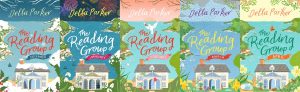
I can’t believe how long it is since I wrote a post! It’s been mad lately. I’ve been writing the last part of my series, The Reading Group.  Part Five was the Summer Holiday. Blimey, that was definitely the trickiest. Partly because this novella had more than one viewpoint. Partly because it was the culmination, as well as being a standalone novella, of the series. The deadline is in two days time. I’ve just sent it off to my agent and publisher, simultaneously. I managed to mess up my shoulder with RSI towards the end of the novella. I was so immersed in the work that I didn’t realise I was hurting my shoulder until it had practically seized up.  Top Tip, take regular breaks.

Anyway, that’s not what this is about. How do you write your stories? Long or short? I have always written chronologically, but I did something different on this one. I wrote the beginning, then I wrote the ending.  I wrote the middle last.   This had some advantages that had never occurred to me before.

  • Because I knew the ending, I knew the relevance of every single scene prior to it.  Usually I don’t know this until I’ve finished. Then I go back and revise. I think this made the middle much sharper. It was a bit like doing a jigsaw. I had the framework so the middle was much easier to write.
  • I think it was probably slightly quicker.
  • It also gave me a lot more time to reflect on the ending. Because as I built towards it, my subconscious, which I rely on so heavily, was busy enhancing bits of it. So by the time I got there for the second time I knew exactly what needed editing.

Will I do it again? Yes, I think I might. Do I recommend it? Yes.

Reading Group - Bookends 2

The Reading Group January, February and March are all out now. I would love to know what you think of them if you’ve read them.

I’d also love to know how you write. Chronologically, or not? Please do comment.

Ideas – a poem that inspires a story

Recently, a lady wrote in to my Dear Della column in Writers’ Forum and asked me about turning a poem she had written into a story.  She wanted to know how to go about it. This is something I’ve done several times. I don’t generally use my own poems. I’m more inspired by other people’s. So this blog is about how one of the lovely James Nash’s poems became a Della Galton story. Both are published. The Promise in James’ book, and my story in Woman’s Weekly. But James has kindly agreed to let me reproduce his wonderful poem, The Promise, here.

The Promise by James Nash

We sit outside in the garden, you flat out on my knee, arms flailing at the Pyrex moon.
Honeysuckle hangs in the crab apple tree and feeds the night air as you fix me with a wondering amiable eye, gummy with sleep and half dried tears.
Inside the house she sleeps, lights blazing and every window flung open in a fragment of coma.
Breath heavy and exhausted, one breast leaks through cotton while her still rounded belly is pregnant only with hope.
A hope I share.
For your coming both completes me and shows me my lack of completion. I have never known my parents and look again and again into the faces of strangers for something of myself.
I can trace our contributions in your face, your form and your moonstone fingernails.
Though seasons and times may not always be sweet for you, I hope that you will know, as I did not this whispered long term guarantee of love.

Isn’t it wonderful!

I then asked James if I could base a story on his poem and being the lovely man he is, he agreed. Beneath the story I explain how I used the elements of the poem to create the story. Just in case anyone else would like to try this.

Here’s the story:

Evidence by Della Galton
The drive back from the hospital was both an ending and a beginning. Richard’s hands gripped the steering wheel, not with fear any more, nor with any of the nightmare tension of the preceding weeks, but with a care born of his new responsibilities.
On the back seat Jess sat close to their precious cargo. Richard was torn between keeping his eyes on the road and looking in the rear view mirror. He could see the curve of Jess’s cheek, the glow of happiness on her exhausted skin, the smile that never left her lips. It was the day they had thought would never come: the day they took their baby son home.
For the last few weeks the fragile pendulum of his son’s life had swung between hope and despair. Other emotions had been there too: the helplessness of being reliant on hospital staff, on machines, on God; the anger that this should be happening to them. Why them?
More than once he and Jess had stood by the incubator, having been summoned to say goodbye, and had held each other very tightly and wept. They had named their son, Douglas – after Jess’s father, a stocky, flame haired Scotsman. They had named him without knowing if he would survive. But Douglas, showing a fair bit of the hot headed stubbornness of his namesake had rallied. Each time the doctors thought he would not he had decided to live another night, his tiny heart beating strong, refusing to give up, proving everyone wrong.
On that first day back home they sat in the garden. It was late June. They sat on loungers beneath the shade of an ancient horse chestnut. Upstairs the yellow nursery with its frieze of smiley suns waited. The white cot with its softness of covers, the tiniest of specially made prem-baby clothes, the bottle in its steriliser – all of these things waited. And Richard swallowed the hugest of lumps in his throat and thought that all their baby really needed was a blanket, Jess’s breasts and a whole shedload of love.
And also on that first day and on every day since Richard had searched his son’s face for something he recognised of himself.
The Scottish lineage was evident. His son already had the hot red hair of the last three generations and his mother’s fierce little mouth. But Richard could see nothing of his genes. Deep inside him an ache was growing. An ache he hardly dared acknowledge or bring out into the light.
All through those long nights at the hospital he had prayed only for Douglas to live. He had watched the rise and fall of his chest, he had listened to the machines, he had held tight to Jess’s damp clenched fingers, and he had never dared ask for more than for his son to live. Now he felt ungrateful. He felt as though he should be thanking someone – God, the universe, destiny – for the miracle of his son’s life. He should not be looking for evidence of his own genes.
And besides, perhaps it was a good thing Douglas took after his mother – why would he want the tall gangly limbs of his father, the thinning hair, the anxious grey eyes? Why would he want any of these things?
‘He has his grandfather’s lungs,’ Jess said one Saturday afternoon when they were in the lounge and Douglas was yelling at the top of his voice.
‘Let me take him.’ Richard held out his arms. ‘Why don’t you go to bed for a while, love. Get your head down.’
‘I doubt I’d sleep.’ She laughed as she held their son up in front of her while he screwed up his face and bawled. ‘We haven’t got soundproof doors.’
‘I’ll take him out,’ Richard said. ‘We’ll walk to the park. It’s a lovely day.’
She yawned. ‘Go on then. And thanks.’

It was in the park that it happened. And it probably wouldn’t have happened but for the old lady with the pink and yellow walking stick. He admired it as he walked past and she smiled at him and said. ‘Do you like it? I got it because it reminded me of the sticks of rock I had as a child. Sugar candy colours.’ She leaned into the pram. ‘What a fine looking young man.’
He stopped – of course he stopped – he was radiating pride.
‘You can’t always tell,’ she said, ‘when they’re that little, but he’s an unmistakeable boy. Look at that strong little jaw.’ She glanced up at him. ‘Just like yours. And he has your long fingers too, doesn’t he, bless him. Does he have long toes?’
‘Yes,’ Richard said, feeling a glorious sense of recognition sweep through him. ‘Yes, yes, he does.’
‘You must be so proud.’ She cooed into the buggy. ‘You’re going to be even taller than your daddy, aren’t you, my darling? Is Mummy tall too?’
‘No,’ Richard said. He didn’t even mind her over-familiar use of “my darling”. He wanted to hug her. He wanted to punch his fist up to the heavens. He wanted to jump up and down. How come it had taken a stranger to point out what should have been so obvious?
Not evidence that Douglas was his – he knew that without a shadow of a doubt – the love he and Jess shared was the most solid thing in his life. But evidence of himself, his own genes – maybe he hadn’t spotted it because he just hadn’t known where to look.
He had never known his own parents. He’d grown up in the care system. His birth parents had registered a wish that he never get in touch. But that hadn’t stopped him searching. When he was out with his foster carers in supermarkets, on buses, on day trips to the seaside, he had scanned the faces of passers by. He had searched for something he recognised, something of his own, some sense of history, of roots, of belonging.
Richard reached into the pram and Douglas gripped tight to his finger. ‘My son,’ he whispered, oblivious now to the old woman and her sugar candy walking stick, oblivious to the fact he was in a public place and there were tears rolling down his face.
‘My son,’ he said again, feeling – for the first time in his life – utterly complete.

How I went about it

  • I decided to write the story in male viewpoint – as it’s primarily about a man. Richard, my main character, was born.
  • Interestingly, in the poem, the character’s ‘problem’ is that he’s adopted and he didn’t have the stability of genetic parents. The denouement is that he promises his son that he WILL have a long term guarantee of love.
  • To make my story work I felt I needed a further problem. I made Richard’s son, Douglas, a fragile baby who’s only just come out of hospital when the story begins. Also there are hints that Richard can’t see himself in his son’s face. I want the reader to think that Richard is worried about his son’s parentage. So I misdirect them.
  • I also decided to withhold the adoption strand from the reader in order to create a mini twist. We do not find out until near the end that Richard is adopted and this is why he searches his son’s face for something of his lineage.
  • This conclusion also needed the introduction of a new character, so we have the addition of the old lady with the pink and yellow walking stick in the park.
The best thing about writing a story based on a poem is that the emotion that you feel from the poem should inspire you to write the story.  I’d be really interested to hear about other people’s experiences. Have you tried this method of writing stories. Or indeed, has anyone ever tried doing it the other way round?

Thank you very very much to James Nash. You can check out James and his work here

Also you can visit his Amazon page here. The Promise is published in the book Coma Songs.
The Wednesday Writing Spot – Plotting the longer Short Story

Plotting was the bane of my life when I started writing. It still trips me up now occasionally, particularly when I’m changing lengths, for example from 1000 to 2000 words. So here are some tips for writing the longer short story.  They are very popular in fiction specials.

This advice also works well when trying to reduce your longer stories to short ones. Just reverse it.

What’s the difference between 1000 words and 2000 words in plot terms?

There is not as much difference between the two as I thought when I first started writing.  I assumed that if I needed one or two main characters with a problem to solve in a 1000 word story, then I’d probably need more characters and more of a problem for a 2000 or 3000 word story.

I soon discovered that this was not the case. You won’t necessarily need more characters or more plot for a longer short story, but you will need more development of both.  This is usually achieved by writing more scenes.

Very short stories

In a 1000 word short story you won’t have room for more than a couple of scenes, probably three at the most and that might be pushing it.  We will probably join your character at the point of change or conflict. For example, let’s assume your character is worried about a forthcoming appointment she has the following day. Your story might go something like this:

Scene one

Your character is discussing her worries with friend or partner.

Scene two

Your character goes for the appointment.

Scene three

Resolution and possibly a twist.

If you did follow the format above for a 1000 word short story, then you’d have to make your scenes extremely short – you’d have just over 300 words to devote to each one.

If you had more space to play with, you might also have a flashback of exactly why your character was so worried about her forthcoming appointment. Your story might then go something like this:

Scene one

Your character is discussing her worries with friend or partner.

Scene two

Flashback in your character’s viewpoint to show a previous occasion when she had to go to an appointment and it didn’t work out – hence meaning the stakes for today are higher and we (hopefully) care about it more.

Scene three

Your character at the appointment.

Scene four

Resolution and twist

The number of characters and the plotline are the same, but the story is longer and has more depth because we have more development of both.

This helped me so much when I first got it. Hope it helps you too.  And if you’d like any more advice on writing short stories, please check out my two writing guides. How to Write and Sell Short Stories published by Accent Press and The Short Story Writers’ Toolshed published by Soundhaven.com

The Wednesday Writing Spot – Plotting the Short Story

Plotting a short story is something that many writers, both new and experienced, find difficult.  I include myself in this.  It is not always easy, and I say not always, because occasionally we all have those magical days when it is.

For the days when it isn’t, I have outlined some techniques below that should hopefully help.

Starting from Scratch

Give your character a dilemma to solve. Preferably make it the sort of dilemma that will force your character to re-evaluate his life or his attitudes.  In this way he will have changed before the end of the story.

Be as nasty as you like.  The tougher the problem that your character has to face, the more drama you’ll be able to create.

Make sure the resolution to the dilemma is credible, but also make it as unexpected as you can.  This is the tricky bit.  Knowing you have to provide a resolution to the story before you start can be very off putting for some writers (it is for me!).

Starting Halfway through

Now, this might sound strange, but I find this is by far the easiest way to plot.  By starting halfway through I am saying that you should just start writing.  Certainly give your character a dilemma to solve, but don’t worry about the rest.

For example :  I once sold a story  of 1000 words called The Best Laid Plans, which I’d started the previous year and got stuck on.  My original idea was as follows:

The story opens with Katie in bed in hospital on her 25th wedding anniversary, which is not quite how she planned to spend it. Since she married Paul most of their anniversary plans have gone wrong. On bad days she thinks they’re jinxed and on good days she thanks her lucky stars they ever got this far. This was a light hearted story and the humour was provided by flashback (the story is in Katie’s viewpoint) to previous disastrous anniversaries.

I got stuck at the 750 word point, which I frequently do.  I couldn’t think how to resolve this story.   This is where the plotting bits come in.  Because the story is already half written, there are only so many options.

  1. They could have a late anniversary celebration which could go wrong
  2. As above, but it doesn’t go wrong.
  3. They could split up (not very satisfactory for Woman’s Weekly)
  4. They could decide not to celebrate on the actual day itself, but at other times in the year, after all a marriage isn’t about just one day a year.

I stopped here because I’d found my solution.  I used a mixture of number 1, 2 and 4.

Plotting is actually just a chain of events that leads your character to a satisfactory resolution and that resolution will largely be determined by market.

Problems Finishing

When you’re stuck on a resolution – this is another problem I have frequently, then I suggest you ask yourself the following questions:

  1. What is it that I am actually trying to say?
  2. What is this story about?

The Best Laid Plans was a humorous story, designed to entertain, but it did have a serious underlying message – a universal truth, if you like.   A wedding anniversary is the day that couples celebrate on, but the other 364 days of their marriage were just as important.  They could also laugh about the things that went wrong.

The answer is in what you’ve already written

The seeds you’ve sown early in the story will provide you with the ending.  Look at what you’ve set up carefully and then explore every possible option.  One of them will be the right one.

The Title

Another quite useful thing I’ve learned is that the title should underline the theme, as in The Best Laid Plans – so if you are the type of writer who knows the title before they begin, then this can be very helpful.

And if you’d like any more advice on writing short stories, please check out my two writing guides. How to Write and Sell Short Stories published by Accent Press and The Short Story Writers’ Toolshed published by Soundhaven.com

Next week we’ll look at plotting the longer short story.

Happy writing.

To Plot or Not

When you write a novel, one of the first decisions you need to make is how you are going to undertake to write it.  Will you

a)  Plan out each chapter in detail so that you know exactly what is going to happen from beginning to end.

Or

b) Simply place your characters in a difficult situation and see what they do to resolve it, hence allowing the plot to evolve through the actions of the characters.

These are the two extremes and you might decide to do a little of both, but there are advantages and disadvantages of both working methods and it might help to know them before you start.

The planned approach – Advantages

A detailed plot will cut down your writing time considerably because you will always know exactly what you are going to write next.

You are also unlikely to get stuck or run out of steam halfway through.

Planning in detail means that you can also keep an eye on the structure as you work.  You will probably know how many words each scene will take and so can keep an eye on balance as you write.  I.e. make sure that one or two characters don’t run away with the action.

Planning also means that you don’t have to write the novel in chronological order.  You know what is going to happen, for example, two thirds of the way through, so therefore, you could, if you wished, write that bit first.

Disadavantages

If you know exactly what is going to happen all the way through your novel, there is a danger that you might become bored and stop writing it.

There is also a danger that you might write all the exciting scenes first and leave the slower scenes until later – with the same result.

The Unplanned Approach – Advantages

There is nothing more exciting when writing than not knowing what your characters are going to do or say next, so you might well end up with some unexpected twists and turns of the plot that are less likely to come from a strictly planned approach.

Disadvantages

There is a very real danger that you will get stuck because your characters have been backed into a corner from which there is no way out.

On a similar note, you might find that you get about halfway through your novel and find that you have run out plot.

If this happens, then you can often put it down to one of two reasons.

a)      You didn’t have enough plot in the first place.

b)      You haven’t developed the plot you already have.

Want to know more? Come along to How to Write Your First Novel on Saturday 13th April, in Bournemouth. Cost, just £35.00. Please email me if you’d like any more details.


How To Get An Original Idea

One of the things short story competition judges bemoan the most is that they hardly ever see an original story, or a really original idea.   Yet being original is one of the fastest ways to get into the shortlist.  Providing you can also write well, of course!

Is there actually such a thing as an original idea?

Maybe not.  But there are a lot of things you can do to make your story stand out from the crowd. Especially if the competition has a theme.  Here are my tips for finding an idea that’s different:

For the purpose of this exercise we’ll assume the theme of our imaginary competition is Loss.

So the first thing you should do is to write down all the ideas that spring to mind when you think of the theme loss.  These are mine. Some of them might be yours too.

Loss of job

Loss of spouse

Loss of child

Loss of house

Loss of pet

Loss of life

Loss of bag

There is a good chance that everyone else will think of these ideas too, so unless you have a really original slant, move on and list some more.

Loss of limb, finger, toe, eye

Loss of liberty

Loss of memory

Maybe we’re getting a few ideas that are a bit more lateral.  But let’s go on.

Loss of an identity (Alzheimer’s or another reason)

Loss of a parrot – or another unusual pet, think snake or hippo, or how about something mystical, a unicorn

Loss of a generation

Loss of a culture

Loss of a precious artefact

Hopefully there won’t be many stories with the above losses and I’m sure you can think of lots more. But let’s make it a bit more unusual.

What if you used a different structure as well? What if you used a diary structure, for example. I read a brilliant story recently (in a competition I was judging) where the author had used a diary structure, but, just as in the Time Traveller’s Wife the dates weren’t chronological.

Or you could tell your story entirely through taste, or smell, or perhaps dual viewpoint.

Or you could link the scenes with the same setting, for example the sea.

The diary story won the competition I was judging by the way!

Food for thought!

Tell your friends!

© Della Galton All rights reserved.
Powered by Cloudbase Media