I had a letter recently via my Dear Della page in Writers’ Forum from a lady who was anxious about the layout of a novel when submitting to publishers. I know there’s a wealth of information out there about writing, but sometimes the basic stuff is overlooked. And the hardest questions to ask are the ones we feel we ought to know already.
So here are some basic presentation guidelines for writers who are interested in how to present a novel to publishers.
How you lay out your manuscript can vary from publisher to publisher, for example, Mills & Boon have very specific requirements (these are laid out in detail in their guidelines). So do check if this applies to individual publishers. However, as a general rule, use the following guidelines:
Use double line spacing and an easy to read font. Times New Roman size 12/14 is an industry standard.
Left and right hand margins should be approximately 1inch.
There should be a title page which should include your name and address, (phone number and e mail address optional) the title of the story and the approximate number of words.
The title and page number should also appear on every page of the manuscript. It’s usual to put them in the header and footer. This will also prevent your pages going awry if you later alter your document.
Each chapter should begin on a new page.
Dialogue is indented, as are new paragraphs. There should not be a double space between paragraphs.
A double space to indicate scene breaks is only necessary if it’s not clear there’s a scene break without one, for example if there is a time gap or a change of viewpoint.
Text following a gap (including dialogue) is not indented.
If you’re interested in writing short stories – or novels – please check out The Toolsheds. Both are in paperback and are available for kindle.
Just a very short blog today because I am doing National Novel Writing Month (Nanowrimo) You know – the challenge where you have to write a 50,000 word novel in the month of November. There’s no prize for succeeding, although I think you may get a virtual badge.
I discovered recently that I’m a nano rebel. Because – OK – time to fess up, I’m not writing a novel at all. I’m writing short stories. Writing 50,000 words worth of short stories would be far more use to me than writing a novel, I decided. But was it in the rules? Would I still qualify? Would I get my badge? I like getting badges! Anyway, apparently it’s fine to write short stories but I really am a Nano rebel (who knew?) If you want to find out if you’re a nano rebel click on the link below.
So how am I doing with the writing? Well, I started on the 1st November and so far I’ve written 11,953 words, which equates to 1992 per day apparently. And means I’m on target to finish my 50,000 words by November 26th. Oo-er! Mind you, that’s if I don’t have a day off, which I think is unlikely as I might end up dead from exhaustion – being as I also have to teach writing classes, do my other scheduled work and sleep occasionally.
I’ve written 6 short stories so far. They are not all finished, I hasten to add. Some of them are nearly finished. Some of them are not so nearly finished and may never reach that exalted state because I don’t know how to end them. Although I might do, one day!
Two of them – both 1000 words – are finished. I hooked them out of my Nano document, edited them and submitted them to magazines yesterday.
The acid test is whether or not they sell. I will keep you posted.
Am I enjoying the experience?
I am – immensely. It is very freeing just writing without editing as I go along – which is the essence of doing Nano.
Would I have usually written two stories since Friday and subbed them to magazines?
Possibly. But I wouldn’t have had another four draft stories (two of which, I think will work well) waiting in the wings. And hey, we’re only six days in.
Is it worth doing Nano?
Well it definitely is for me!
If you’re interested in writing short stories – or novels – please check out The Toolsheds. Both are in paperback and are available for kindle.
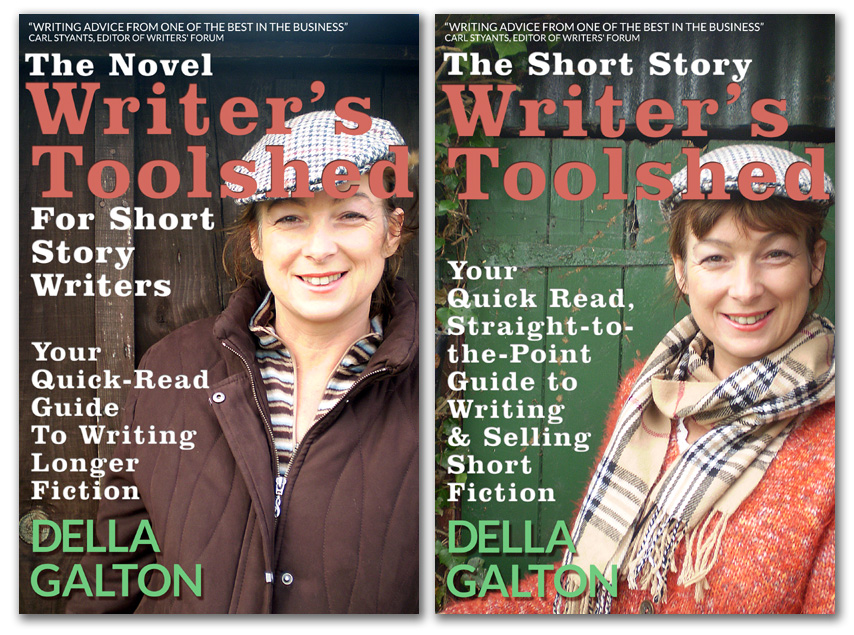
As I think I may have mentioned (once or twice) I now have two Writer’s Toolshed books in existence. Apparently there has been some confusion and a few people think there is still only one. So in the interests of setting the record straight, no, there really are two. And to prove it here they both are side by side. (in the same room!)
The Toolshed Collection
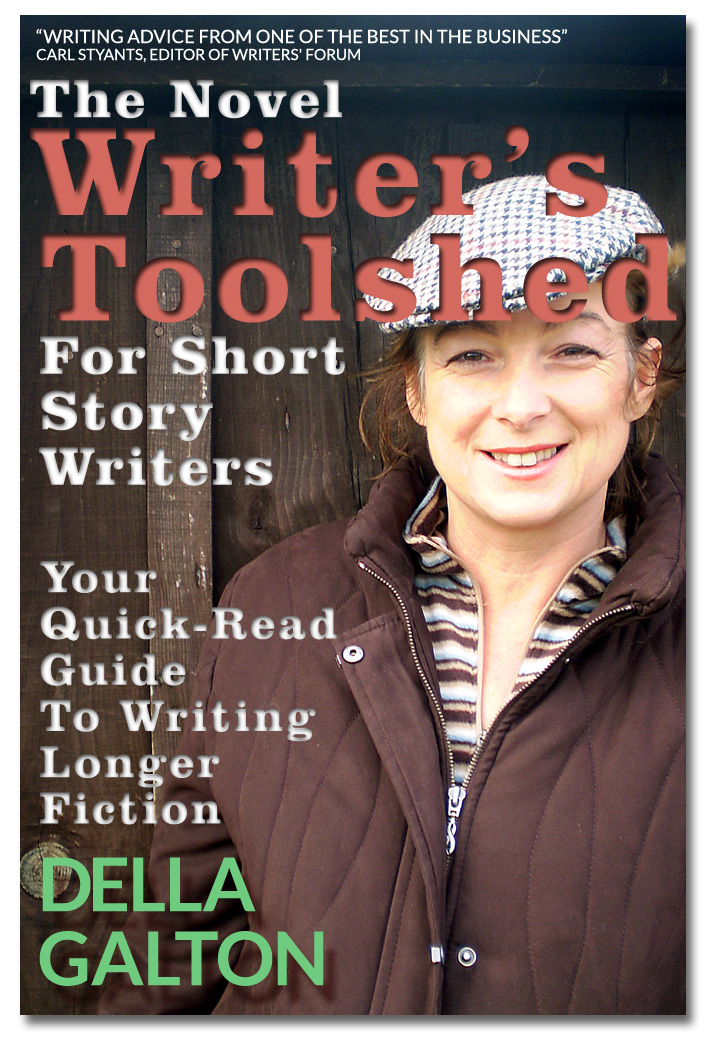
The Short Story Writer’s Toolshed is about writing short stories. And The Novel Writer’s Toolshed is – oddly enough – about writing novels – BUT The Novel Writer’s Toolshed is for writers who usually write short stories. It would actually be just as useful for novelists who fancy writing short stories instead because it’s specifically about the differences between the two forms. Phew! That was complicated. Hope it makes sense?
Tell you what – why don’t I reproduce the beginning of The Novel Writer’s Toolshed here – just in case anyone would like to check it out. Here it is:
Short Stories Versus Novels What’s the Difference?
Making the transition between writing short stories and writing your first novel isn’t as simple as you might think. Or at least it wasn’t for me. I’d had a fair amount of success with my short stories and I didn’t think that writing a novel would present too much of a problem. Surely it was just a short story with more words, more characters and more plot, wasn’t it?
No doubt, some of you are already sniggering at my naivety, and I was naïve. I made a lot of mistakes before I managed to write a publishable novel. Many of them were down to assumptions I had that simply weren’t true.
Yes, there are similarities between the short story and the novel and yes many of the techniques used for one can be transferred successfully to the other, but there are an awful lot of differences too.
The object of this book is to help you avoid some of the mistakes I made. Let’s take a quick look at some of the differences before we go into more detail about what’s in the toolshed, and hopefully this will make your transition a little smoother than mine was!
Length
This is probably the most obvious difference. Not many short stories are longer than about 5,000 words and even a short novel is at least ten times longer than that. The average length for a novel – if there is such a thing – is somewhere between about 50,000 and 120,000 words, depending on the type of novel and the publisher’s requirements.
Unlike a short story, which can be written and edited in a few days, a novel is going to take a substantial amount of time and work, which brings me on to my next point nicely.
Subject
What you write is always a fairly important question – time is our most precious commodity – but it’s not quite as important when you’re choosing what your next short story is about. After all, writing a short story takes significantly less time than writing a novel. We can afford to experiment a bit more. However, if you are going to spend a great deal of your precious time and energy on your novel – which you will if you’re going to do it properly – then it isn’t a bad idea to choose something you are passionate about. There are two main reasons for this:
1) If you are enjoying the writing, you are more likely to finish it.
2) If you don’t end up selling it then at least you will have enjoyed its creation and hence won’t feel your time would have been better spent doing cross stitch or playing golf!
I have no idea of the statistics on unfinished novels, but I bet there are thousands of them, languishing in desks or on computers across the country. They are started in a flash of inspiration and then the author finds they peter out at around 27,000 words, or perhaps worse, are finished in 27,000 words.
The percentage of first novels that are published is also very small. I have heard various figures quoted, but I won’t depress you with them. Besides, who really knows? A great many writers don’t even send their first novels out to publishers and a great many more are told by their publishers that although this is the eighth book they’ve actually written, it will be marketed as their debut novel.
This is not intended to put you off, far from it. Write your novel, keep an eye on the market, but primarily do it for the love of it.
My first novel, incidentally, which was written when I was about twenty, is somewhere in our loft, along with the other three novels I wrote before I managed to write one that was publishable!
Right then, let’s have a quick look at what’s on each of the shelves, whist keeping the differences between short story and novel in mind.
Planning, plotting, pace and timescale
A short story plot, by its nature, needs to be kept fairly simple. There isn’t enough room for it to be complicated. Generally a short story will tend to focus on a single event or theme.
If you are writing several thousand words you will need a much more developed plot, or perhaps one main plot and some interlinking subplots to sustain the length. Whereas a short story can follow a single idea, longer fiction tends to need more than one.
There isn’t room to hang around too much in a novel either, but you do need to have a very good control of pace. Contrary to what I thought when I started my novel writing journey, there is no room for waffle. Every word must still count. For many short story writers, pace is the hardest thing to adjust to when they begin to write longer fiction.
Setting
Setting in a novel is much more important than it is in a short story. In certain types of novels, for example regional sagas, it is equally as important as character. I will cover setting in detail under Shelf Two. All I want to say here is that you need to show setting through the eyes of your viewpoint characters – do not paste it into your novel in blocks or your reader will probably skip it!
Characters and viewpoint
A short story of a thousand words almost certainly won’t have more than two or three characters, one of whom will be the main character. There is a lot more room for characters in a novel although that doesn’t mean you should attempt to have a cast of hundreds! You will still need to know whose story it is – this is perhaps even more important in a novel than a short story as it’s much easier to lose focus – and all of your characters must be essential.
In a short story there is often only room for one viewpoint. In a novel there is room for more. Using the viewpoint of more than one character can add a great deal of depth to a novel if done with skill.
Dialogue
In a short story your reader will probably forgive you if your characters don’t have recognisable and individual voices. In a novel, they probably won’t. So character voice is one of the most important things to work on in longer fiction.
The first page and beyond
It’s vital to get your first page right. It is just as vital not to get stuck on it. I have a personal theory that it’s difficult to write the first page of your novel until you’ve written the rest of it. When I’m writing a short story I find the ending is the most difficult part. When I’m writing a novel I find it’s the opposite. It’s easy to write the last page, but very difficult to write the first.
Development, author voice and endings
Developing a story is fairly easy. The middle follows on naturally from the beginning – and so it is with novels, only it’s much easier to end up with a saggy middle in a novel – this can be solved by careful control of pace and also, I think by strong author voice. Thankfully, while ending a short story is tricky, bringing a novel to a satisfactory conclusion is much easier.
Structure and flashback
How will you structure your novel? Deciding before you begin to write can help you to plan it. Structure is a short story writer’s friend, but it’s a novelist’s best friend because there are far more options.
Your novel might have a prologue. It might be split into parts and it will probably have chapters. You’re not limited to flashback. You can use flash forward too! It is great fun to play with time in a novel.
Editing and revision
The main difference between editing and revision of the two forms is time. A short story can be edited in a morning or an afternoon. A novel is much more unwieldy. Using a plan can help.
The Title, the synopsis, the blurb
A good title is always important, but it’s more vital for a novel than a short story, as it’s one of your key selling points. A great title can sell a novel. A bad one can cause it to sink without trace.
Most novelists I have spoken to hate writing a synopsis. This is something you rarely have to do for short stories but which is an essential part of a novelist’s job. Or is it?
These days it’s probably more important to be able to write a blurb. Has the synopsis taken over from the blurb? What’s the difference? On Shelf Nine you’ll find some examples of both.
Finding an Agent – Do you need one?
The short answer is no. You have never needed an agent for short stories and you don’t necessarily need an agent for novels either, these days, but is it worth going alone? If you do want to look for an agent or a publisher, Shelf Ten, will show you how to proceed.
So there you have it – a little taster of what the Novel Writer’s Toolshed is about.
if you would like to know more, do please check out The Novel Writer’s Toolshed which is available for Kindle £1.88 and in paperback £4.99.
The Short Story Writer’s Toolshed is currently available for Kindle £1.88. Paperback coming very soon.
And if you just fancy a bit of light reading (pun intended), Ten Weeks to Target, my new novella is available as a Kindle book too for just £1.53 🙂
If you’ve ever tried to write a novel and you’re on social media – particularly around this time of year – you have probably heard of National Novel Writing Month (NaNoWriMo for short). It’s simple, you write a novel in a month. You start it on 1st November and you finish on the 30th November.
Of course you can do that any month of the year but the idea of signing up for NaNoWriMo is that you do it in November and you don’t do it alone. Thousands of other people around the globe do it alongside you. In 2012 341,375 people signed up for the challenge!
Once you have registered with NaNoWriMo, click here, i.e. made a commitment (very motivating – and quite scary) you upload your daily word count to the site. You can even scramble your words – look at their Frequently Asked Questions to find out how – that’s if you’re worried about someone plagiarizing your potential best seller 🙂
To qualify as having written a novel in 30 days you have to write a total of 50,000 words 1666 words a day. Simples!
Well, we all know it isn’t simple, but clearly it is doable and actually the ethos behind NanWriMo is that you just write and you don’t stop to edit and beat yourself up over whether it’s perfect. This is great if you’re a procrastinator like I am.
Some Frequently Asked Questions (Della style)
Why would I want to do it?
Well, for the challenge, for fun? (depending on your definition of fun). Or maybe just to see if you can. That’s why I’m going to do it. I’ve been writing less and less fiction lately and I want to get back into the swing of it. I want to focus on my fiction writing and this seems like a great way to do it.
Where do I find the time?
I’m not sure. Other writers I’ve spoken to say they give up television, or social media (yikes) or they get up an hour earlier or go to bed an hour later. How you do it is up to you. The point is that you do it – and it’s only for a month. So it’s not such a huge sacrifice.
What if I fail?
Do you know, I’ve already made up my mind that I can’t really fail. Because even if I don’t complete 50k I will sure as hell have a lot more words than I’d have had if I didn’t commit myself to writing 1600 words a day. There’s a very good chance I’m going to at least begin the challenge. So failing isn’t actually going to be a factor.
I usually write short stories – how do I write a novel?
This last question is in fact a shameless excuse to tell you about my new writing guide, The Novel Writer’s Toolshed (for short story writers).
This is the book I wish I’d had when I moved from writing short stories to writing novels. It’s available for kindle, just £1.88. Click here. A week from now it will be available in paperback. (Don’t panic – I’ll remind you)
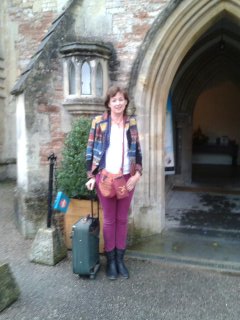
Me outside the Bishop's Palace where I'm about to teach
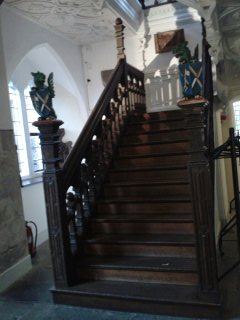
Just a little bit of feedback from me this week regarding the Wells Literature Festival where I did a workshop on Writing and Selling Short Stories on Sunday 13 October. I hadn’t realised I’d be teaching in the Bishop’s Palace. Wow! I felt quite intimidated when I saw the building. But on the other hand, what an inspiring place to work! Here are some pictures I thought you might like.
These are the stairs to my classroomAnd we're inside the palace - what an inspiring place to write
My group of 21 students wrote an opening paragraph and then read it out for feedback. I think they enjoyed it as much as I did. At four pm I gave out the prizes to the first, second and third prizewinners of the short story competition. Well, actually I didn’t, as none of them were there. So if you did enter, and you didn’t go to the prizegiving you may well be in for a lovely surprise. Do check out the results which should be on the website here any day now. My lips are sealed until the festival has updated its website.
And in the meantime, thanks to the students who came to my workshop. I hope to see you all in print very soon.
The Problem – A Satisfactory End This problem has nothing to do with writers’ bottom by the way, or pigs for that matter – this is a different problem entirely – I am talking about achieving a satisfactory ending to your short story. I have always had trouble getting, what is to my mind, a satisfactory ending. And I was reminded this week that I’m clearly not the only writer who struggles with this. I’ve just judged the Wells Festival of Literature Short Story Competition. I can’t say too much, because to date they have only announced the short list, but here are just three of the problems I came across. And they all involve unsatisfactory endings. Please forgive my tongue in cheek headings.
The ink ran out
These are the kind of endings which stop dead. Once or twice I actually found myself looking for another page. The stories often begin beautifully and have great writing, but then just stop. Nothing is resolved, nothing is explained, we are just left wondering what happened. Now, don’t get me wrong, I am all in favour of endings that are enigmatic – or even a little open ended (as long as they work). But they must still be endings. It must be clear we have reached the end – and the writer hasn’t just wandered off for a coffee and is coming back in a bit to write the last sentence.
Obvious from the outset
These are the opposite end of the scale. With a couple of the stories I guessed from the outset where we were going. And I was proved right. Which was disappointing. Again, these stories were often beautifully written, but it isn’t enough to take me on a journey from A to B if I can see the destination from the outset. Sometimes it may be enough if I am deeply moved by the journey, but not often to be honest. I need more. These are the stories that tend to read more like anecdotes or accounts. And anecdotes or accounts of an event, however moving, aren’t stories.
Yeah, but so what?
These are the ones where I reached the end and thought, yeah, but so what? Once again, some of these were fantastic ideas – but a fantastic idea isn’t enough to carry a short story, not without a fantastic ending to complete it. Sorry – there were quite a few of these.
Solutions
If it was easy, I suspect we wouldn’t have such problems with this, but here are some of the solutions that have worked for me. I hope they may be helpful for you too.
The ink ran out
These endings usually require a little more thought. Often the writer believes they have written a satisfactory ending because it is clear to them what happened – but this hasn’t come across on the page. (I am guilty of this myself) I just had a story returned to me which had exactly this problem. The solution, I realised, as I read through it was to underline the theme and make sure that it tied up with the ending. Make sure you know exactly what your story is about. And make sure the reader does too. Don’t spell it out, but do give your ending power and resonance. I believe this can be done most successfully when the theme is crystal clear in the writer’s mind.
Obvious from the outset
This one’s a little easier to resolve. Almost always it just means that some of the information you have given us up front needs to be withheld – so that there ARE some surprises. I’m not saying there has to be a twist, but there does have to be something that the reader doesn’t know at the outset. A theme here works well too. Your surprise could be tied up with the theme.
Yeah, but so what?
I found that these type of endings broke into two types. Both of them were to do with not caring enough. Either I didn’t care enough about the character so that when he/she got his happy ending (or not) I didn’t care much anyway. This one can be resolved by making him more likeable/believable/interesting.
Or… I didn’t care because the plot, while often absolutely fascinating, didn’t seem to have a point. For example, a lot of amazingly intriguing stuff happened and then we found out why, but there didn’t seem to be any real rhyme or reason to it. I think these work brilliantly if the writer can slide in a universal truth at the end. An example of this would be – and I’m moving away from short stories here to novels – the Boy in the Striped Pyjamas. This is a great book and has the most fabulously resonant closing lines I’ve ever read. I won’t spoil it if you haven’t read it but it actually ends with a beautiful ironic statement which outlines a universal truth about humanity. (well it does in my humble opinion) It doesn’t get much bigger than that. And as this is a blog post about endings, I had better just add a closing paragraph, hadn’t I! The ending of your story is the last thing a competition judge/editor sees. Get it right. A perfect ending will get you noticed. 🙂
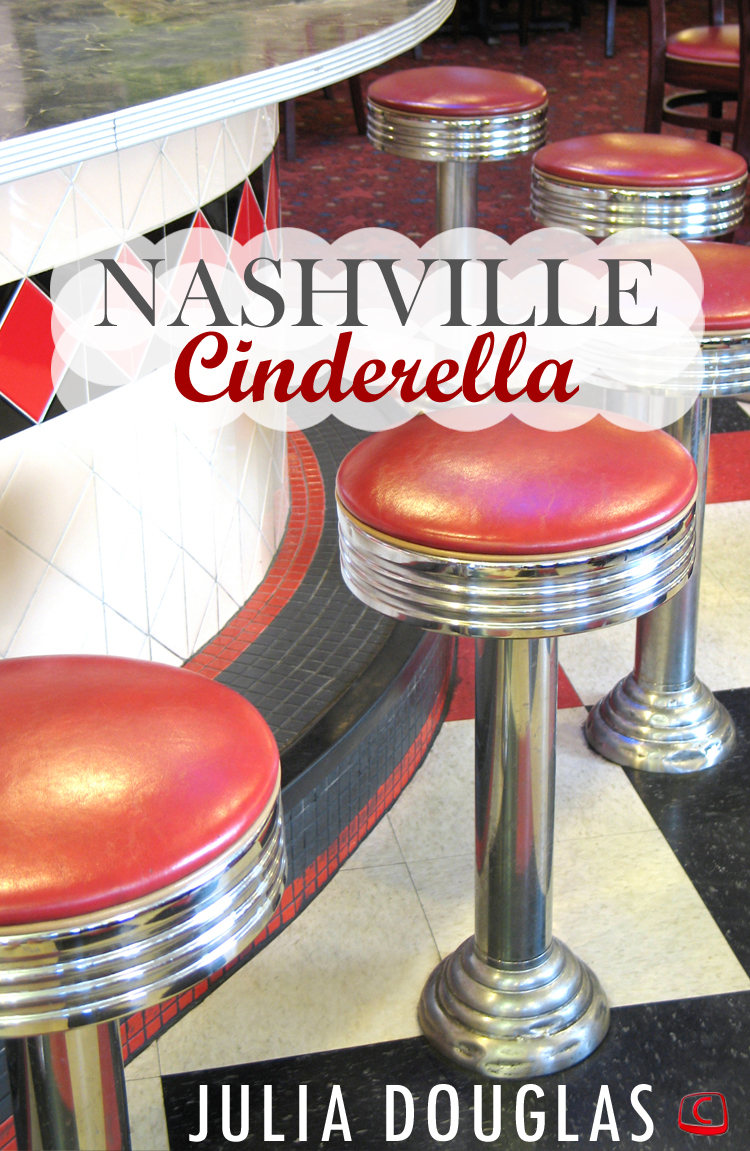
This Wednesday I am delighted to welcome the lovely Douglas McPherson. He has written a number of romances including The Showman’s Girl, Closer!, and the country music based Nashville Cinderella under the pen name, Julia Douglas. I have to say the cover is absolutely beautiful, Douglas, or should I say, Julia? Over to you…
And actually we’re over to Cindy Coin. Because in this special guest post, the author interviews one of his characters – Cindy Coin, the country-singing heroine of Nashville Cinderella to pick five songs that would be on the sound-track if the book was made into a movie.
(“I guess Carrie Underwood could play me,” says Cindy, “And Taylor Swift could play Katie. As for Hank, Brad Pitt, definitely!”)
Jolene by Dolly Parton
Cindy says: “Dolly is my all-time heroine. I’ll never forget the day my mom and dad took me to one of her shows when I was five-years-old. We stood in line for hours afterwards to meet her and she was so gracious. Sadly, that’s one of the last memories I have of mom and dad. They were musicians and were killed in a tour bus wreck soon afterwards. I guess maybe that’s why I’ve always wanted to be a singer, to kinda feel closer to them.”
I Want Your Body Cowboy by Katie Carnegie
Cindy says: “Katie is the new kid in town and Hank, her manager and my ex, reckons she’s gonna be the biggest star in the world. I really hope she will be, because she’s a great friend of mine. But I can’t help remembering Hank saying the same thing about me – and I’ve been in Nashville for five years now, and I’m still waiting tables. The song was written by Tony, who’s the chef at Lulu’s, the diner where we both work on Lower Broadway. Tony and I share a house in East Nashville, the cheap side of town where all the musicians live, but it’s a strictly best-of-friends arrangement. Tony is like the brother I never had. Sometimes I think he’s more like one of my girlfriends than a guy. In fact, I teased him about how come he wrote such a girly song!”
On The Road Again by Willie Nelson
Cindy says: “Willie is such a sweetheart – the biggest star in the world, but so encouraging. Every year he blows through town and asks if I’ve got a record deal yet. “It’ll happen,” he keeps telling me, “Just remember, it all comes down to the song.” I wish I believed him, but sometimes when I see people like Katie and Hank getting on with their careers while I’m still working in Lulu’s, I feel I’ve been left behind, like a Nashville Cinderella.”
Missing You Miles by Texan Jack Dallas
Cindy says: “Tex is the Next Big Thing. He’s like Elvis and Johnny Cash rolled into one. Katie has fallen for him so bad, but the guy lives on a tour bus and when he’s away he never calls her. He asked me to sing duet with him on this song. It’s so obvious he wrote it about Katie, so why doesn’t he just come out and tell her how he feels? But, as Tony told me, if love ran smooth, who’d need country songs?”
What I’d Give by Cindy Coin
Cindy says: “Tony and Tex wrote this song and asked me to sing the demo. There’s a line that goes, ‘What I’d give to have a guy like that,’ and for some reason, without even knowing it, I sang, ‘What I’d give to have you back.’ I guess I was thinking about Hank, not that I’d ever admit that, but suddenly the tears were streaming down my face as I was singing. Tony and Tex kinda looked at each other and said, ‘You just turned this song into a hit.’ I thought they meant a hit for Katie, because she needs songs her album. But Tony was like, ‘No, Cindy, this is your hit.’ After all these years, it’s almost scary to get my hopes up, so I guess we’ll have to wait and see.”
Thank you very much, Douglas for a refreshingly different guest post.
Nashville Cinderella by Julia Douglas is available to borrow from local libraries in a large print paperback edition (Linford) or to download as an ebook from Amazon and all major online bookstores.
By the time you read this I’ll be on my way to Manchester. I’m teaching short story workshops with Gaynor Davies and Jane Wenham Jones at the Woman’s Weekly Live Show. Click on the link for more details of the programme and how to get tickets. Last year we did the same thing and it was fabulous. We’re teaching workshops between 10.00 and 4.00 Thurday 12th, Friday 13th (oo-er) and Saturday 14th September. Jane is doing How to Kick Start Your Writing, Gaynor is doing Writing Short Stories and Serials for Woman’s Weekly and I’m doing 21st Century Romance – Writing with Passion. We are also doing one to ones – so you can bring your stories along for a (brief) critique.
So, if you do happen to be in the vicinity of Event City Manchester on any of the three days, please pop by and say hello. It will be great to see you.
It’s a fabulous show, plenty to see and do from cookery demonstrations to fashion displays.
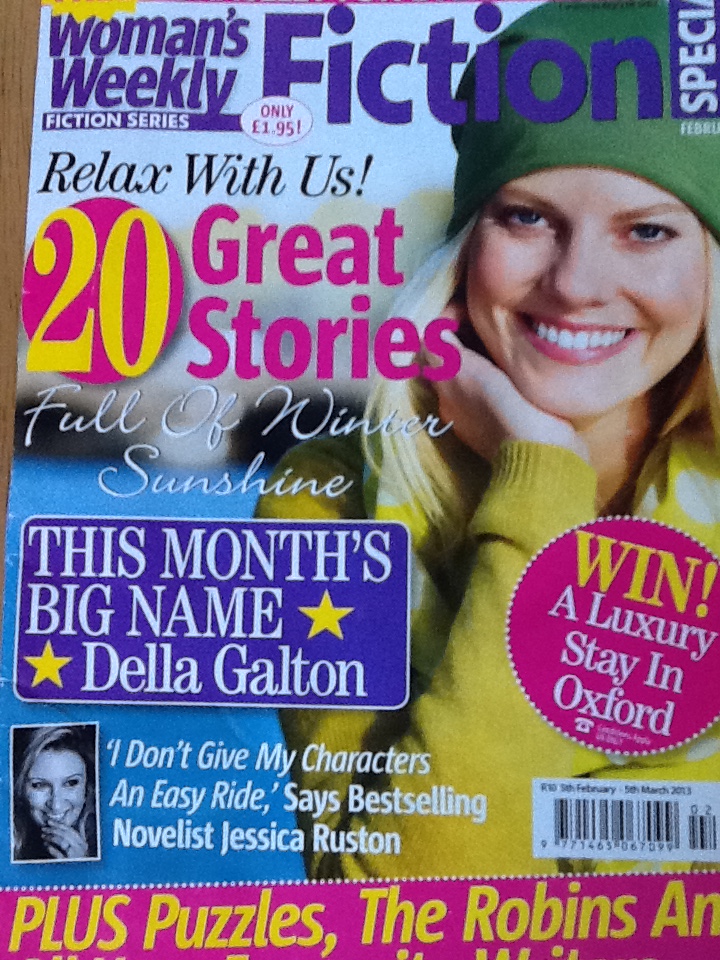
Oh, and by the way, if you fancy reading one of my stories, writtten especially for Woman’s Weekly, I have two in the current issue (September – issue 9) of the Woman’s Weekly Fiction Special. (not the one pictured). On sale now. It’s the one that mentions Woman’s Weekly Live on the cover at the top.
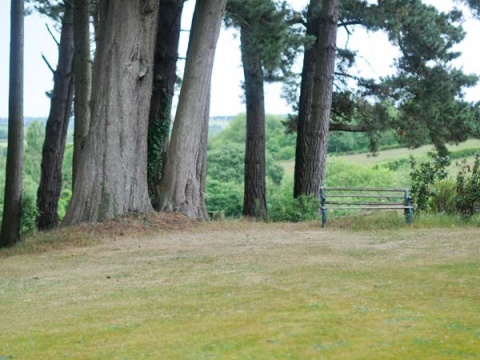
This is a big one for me. I didn’t realise how big until I took a week off and went to Devon last week, where I had hired a cottage to write the beginning of my new novel. I deliberately hired a cottage with no internet signal so I would not get side-tracked on Facebook, Twitter etc. Incidentally, there was barely any phone signal either so I couldn’t phone anyone up to chat without going out into the adjoining field.
Here’s the view from the cottage.
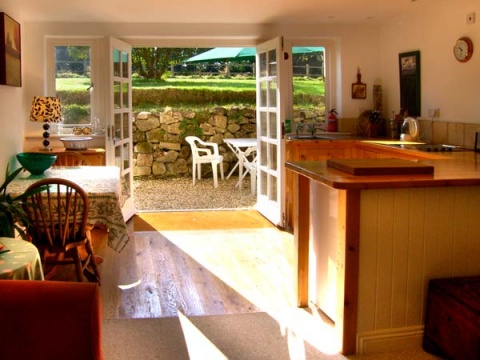
The picture below is the room I worked in. Glorious isn’t it.
So – did this work? Did I do loads of writing?
Yes and no. I did do a lot of writing, but not quite as much as I planned. (I had planned to write three chapters of my new novel as a minimum). I actually came away with three chapters – but one was already mostly written – does that count? Hangs head in shame. No, not really, I know!
So what did I actually do? Well, I found other ways to procrastinate. Here are the writing ways:
Writing ways of procrastination
(Be particularly wary of these – because you probably think you are still working)
I planned out my entire novel in bullet point form. (I don’t usually do this).
I got side-tracked finishing a short story – well when I say finished, I still haven’t quite finished it.
I did a lot of editing of the chapters I’d already written.
Non writing ways of procrastination
I talked to the owners of the cottage about writing, tee hee – why is talking about it so much easier than doing it? They were thrilled I was ‘writing’ on location and wanted me to mention it in my next book!
I went on lots of walks with my dog, Maggie.
I caught up on a lot of reading – I read a novel for an author friend and gave them my editing suggestions.
I watched DVDs.
I – um – went on a couple of interesting expeditions; I went to a chilli farm, for one thing. Excellent writing material (if I ever have time!).
I bought presents for friends.
Oh and there was cooking and messing about and sunbathing.
The Solution
When you have time to write, set a timer and just start writing. (I’m going to do that in a minute – honestly).
Do this at the start of the day before doing a single other thing.
Arrange to read out what you have written to another writer.
Number 3 works the best. Do this first and then do the other two. And you will write, I promise. You’ll have to – or you won’t have anything to read.
I am so glad my weekly writing classes begin again next week. I teach writing classes. I set homework. Most of my students agree that the class – and knowing they’ll have to read something out in it – is what motivates and inspires them to get something done. It works for me too because I occasionally take in a manuscript I’m having problems with and my wonderful class help.
My classes are on Thursday evenings (writing fiction and non fiction) and Friday mornings (writing for the terrified) at Kinson Community Centre in Bournemouth – in case you are interested. They start on Thursday September 5th or Friday September 6th. Please do email me for term dates or further details. If Bournemouth is too far away from you, why not try and join a class near you.
Just as soon as I’ve finished this blog I’m going to get back to writing. Did I mention that blogging is a great procrastination device too? If you’d like any more advice on writing short stories, (I am quite good at them when I actually start!) please check out my two writing guides. How to Write and Sell Short Stories published by Accent Press and The Short Story Writers’ Toolshed published by Soundhaven.com
I have to confess that this post doesn’t have a lot to do with writing, unless you count avoiding writer’s bottom 🙂 I suddenly realised that I should really have put this post out on Monday, and Monday’s post should have gone out today. So apologies in advance.
But if you are interested in avoiding Writer’s Bottom – and who isn’t! Then please read on.
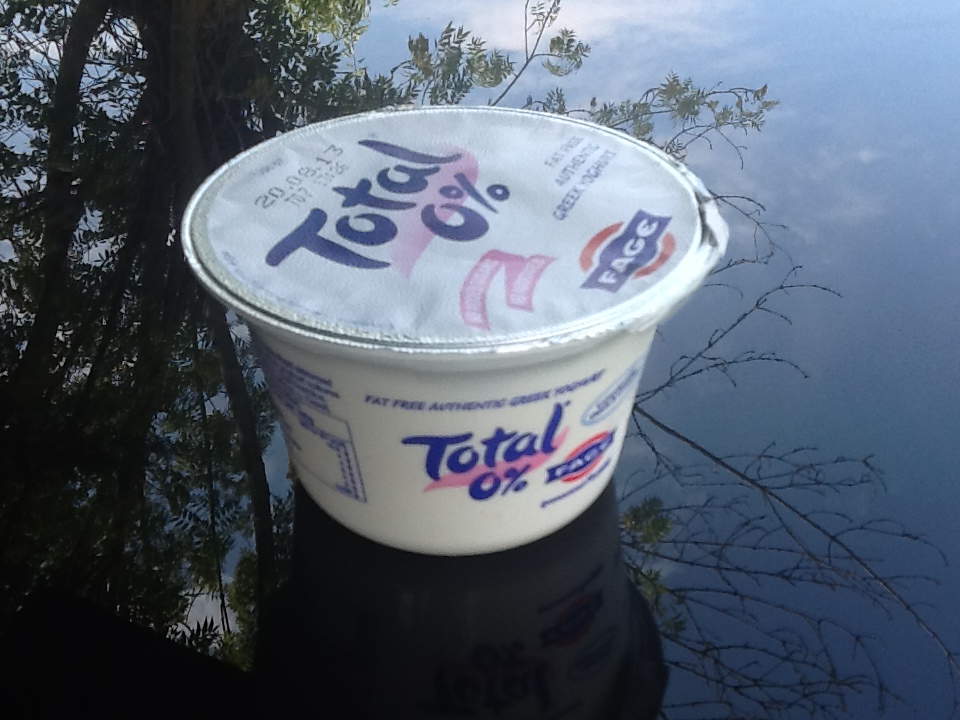
Here are three yummy uses of 0% Total Yoghurt, which is fat free. (just in case you are interested!)
Stir a very heaped teaspoon of Nutella through it, then dollop over a sliced banana. Awesome and pretty saintly.
Use it to dollop over hot beef chilli (instead of full fat yoghurt) it’s better. Nice flavour.
Use it instead of cream on fresh fruit salad. (you can wear a halo while doing this as it’s positively saintly)
And no, I am not on commission. Unfortunately. Just feeling rather peckish.
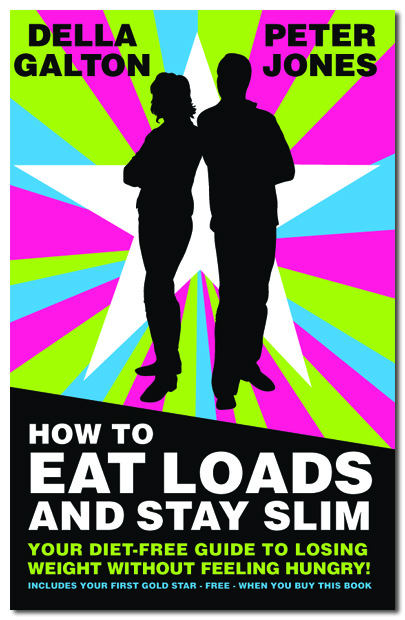
If you are interested in more ideas to do with eating loads and staying slim, please check out our book too. Click here to buy.