Welcome to Della Galton’s website
My Inspiration for writing Sunshine Over Bluebell Cliff
Boldwood Books recently published my latest novel, Sunshine Over Bluebell Cliff, which is the beginning of a series of four. I thought you might like to know some of the truth behind the fiction.
For twenty years my parents owned and ran a seaside hotel called the Marlborough. It was a beautiful Art Deco style building within a pebble’s throw of Boscombe Pier, which is around two miles from Bournemouth Pier. Not that the beach in between has very many pebbles, just glorious golden sand.So maybe it was just a matter of time until my writing would feature a seaside hotel.
The Bluebell Cliff Hotel was inspired by the Marlborough. But then fiction took over. The Bluebell Cliff is a hotel with a unique USP. It’s a venue where guests go to live out their dreams, however daft or whacky these dreams might be!
If you want to propose to your girlfriend by climbing up a lighthouse (Milk Tray Man style) or you want to break a Guinness World Record then the Bluebell is the place for you!
My fictitious hotel has a different location too. When I was younger I loved long distance running and on Sunday morning, myself and a couple of other OTT runners, most of whom were fitter than myself, did a seventeen mile run that began in Wareham Forest and took in Studland bay and climbed up Ballard Down to the top which is the piece of the Jurassic coastline that juts out over Old Harry Rocks. It was a long hard run across road, forest tracks, soft sand and grass and I think I was probably hallucinating with overtiredness by the time we finally crested Ballard Down. But oh the joy of achievement of being on top of the world. I have memories of the most beautiful scenery in Dorset, no doubt coloured by endorphins and exhaustion.
Much later when I wrote Sunshine Over Bluebell Cliff the idea popped into my head, what if there was a hotel up on Ballard Down? A hotel perched on a clifftop that stared out over the sea. What if there was a lighthouse too?
It’s odd isn’t it, how reality creeps into fiction. I don’t think much of it has to do with our conscious mind. Little pieces of reality mingle with little pieces of fantasy and fiction is the result.
I adore Dorset. I have a deep affinity with the landscape: the fields, the forest, the sea. I feel as though my roots are buried deep in the very earth itself. In fact Sunshine Over Bluebell Cliff isn’t the first novel I’ve set in the Purbecks. Neither will it be the last. I have just completed the second novel in this series.
There’s a lighthouse in my novel. Lighthouses are hugely evocative. I think I really am quite an old romantic at heart.
And of course there is romance, although not of the slushy variety – I like the kind of romance that is threaded through with dry humour.
My characters are quirky. They range from the mysterious Mr B who is a brilliant chef at the Bluebell Cliff, as well has being a conspiracy theorist who won’t tell anyone his actual name in case they steal his identity.
Then there is Clara King who is the new manager and has been left in sole charge for the hotel’s first season. Clara has a passion for dogs (rather like myself) and a penchant for designer handbags and pastel suits (not so much like myself!).
There are also the Brothers Grim, Adam and Nick Greenwood who own the neighbouring Hotel to the Bluebell and see it as a competitor.
There is Phil Grimshaw, maître D and part time actor. There is Clara’s warm but flawed family full of strong matriarchal women.
There is Foxy the three-legged dog.
And let’s not forget the mysterious saboteur who wants to put the Bluebell Cliff out of business.
I do love a bit of mystery. I do love quirky characters.
I do love a page turner.
I am told that Sunshine Over Bluebell Cliff has all of these elements.
I had the best fun writing it. I hope you have the best fun reading it too.
Sunshine Over Bluebell Cliff is out now in audio, print and digital formats. Digital version is available HERE.
My New Newsletter for Writers – Social Media Itis
Hi
It’s been such a long time since I wrote a post and for that I apologise. I seem to have succumbed to social media-itis. This is a technical term for having too many social media sites to update regularly. Oh and I did recently sign a 4 book contract with Boldwood Books, which is hugely exciting and hard work and is keeping me busy!
While I’m not saying I will never blog on here again, if you are still interested in any of the following:
- Tips for Writers.
- Writing Courses.
- News about what I’m getting up to!
- Then pleases subscribe to my quarterly newsletter. A subscribe box should come up on this website when you visit. If it doesn’t then please email me.
Alternatively, or as well as! Please follow me on Twitter. @DellaGalton
Or check out my NEW You Tube channel for my 60 second videos on writing. Search Della Galton.
And my next writing courses in case you are interested are:
Write Your Novel Today – Three Part Workshop
Sat 8th March 2020
Gillingham, Dorset
10.00am – 4.00pm
So you want to write a novel but it’s difficult to get uninterrupted time away from family or commitments… Why not treat yourself to this three-part guided workshop with local author and experienced tutor, Della Galton?
Course Content
Workshop One – Write your first page.
Very often starting is the hardest part so in this workshop we will focus on writing your first page – 30 minutes writing followed by feedback from Della and the group.
Workshop Two – Write that tricky scene.
Do you have a tricky scene you’ve been putting off writing? Dive into the middle and start writing. 30 minutes writing followed by feedback from Della and the group.
Workshop Three – write your last page. You may not be a plotter – you may not know how you are going to get there but if your last page is written, you will know where you’re heading. 30 minutes writing followed by feedback from Della and the group.
Cost: £35.00
Venue: Conversion Studio, Woolfields Farm, Milton on Stour, Gillingham, North Dorset.
To book please email Della via this website.
Thank you so much for your support.
All best wishes
Della x
Is it possible to make a full time living writing for magazines?
Is it possible to make a full time living writing for magazines? If so, how?
I started writing for womags after joining an Adult Education class called Writing for Profit and Pleasure. The teacher was Jean Dynes (she writes as Barbara Dynes – see her column in Writers’ Forum.) In that first class, back in September 1987, Jean asked if there was any news.
A girl in the row in front, put up her hand and said, ‘I’ve just sold my 27th story this year to Loving Magazine.’
Wow, I thought. I want to sell a story. Just one would do. (ho ho, little did I know how addictive it was). But how was it done?
By researching the markets, I learned, which meant reading the magazine. So off I went to buy a copy of Loving, which I read from cover to cover, several times. They bought the 3rd story I sent. Then the 4th, then the 5th. I was on the verge of giving up the day job when they rejected the 6th, 7th, 8th and 9th.
We all know how it works. There are far more rejections in this business than successes
It’s always been like that for me. It still is. And blimey the market is much harder than it was. Back in 1987 there were 100 plus womags that carried fiction. In 2000, which was when I did finally give up the day job to write full time, there were 21 markets. Everyone said it was impossible to write short stories for a living.
It wasn’t! But back to my original question.
Is it impossible now? When there are a handful of magazines that still take stories from writers (who aren’t on their list). I think sadly that it may be. There are just too many of us out here. I know so many fabulous writers who get their stories rejected because there are only so many slots. So can we still follow the dream of being a full time writer?
I once heard a brilliant quote from Linda O Byrne, who at the time was fiction editor of Bella magazine. She said, ‘Don’t give up. There is always a market for excellence.’
I think she was right.
I’ve been a full time writer for 17 years. Here’s how I do it. I write short stories for the remaining markets. I am the agony aunt for Writers’ Forum. I have several self published books on Amazon which earn me £200 plus a month. I do some journalism. I do the odd spot of teaching. I write novels. Last year I struck lucky. The Reading Group was published by a huge publisher (Quercus is part of the Hachette Group) but I wasn’t paid a huge advance to write it which meant I wrote it in addition to not instead of my usual work.
In short, I diversify. My income is made up of lots of bits of writing related work. Lots and lots of bits which means I work lots and lots of hours. Often 60 hours plus a week.
I live in hope of having a best selling novel that will mean I don’t have to worry about money so much.
The bottom line is that I love writing. I can’t stop. I won’t stop. I think Linda O Byrne’s advice still holds true. Don’t give up. There is always a market for excellence. I don’t think I’ve quite reached excellence yet – but I shall never, ever give up aiming for it.
The Reading Group is published by Quercus. For most of November it is 99p. Not bad for 500 plus pages! Click here to buy/find out more. And if you do like it please leave me a review. Until Sunday 19 November you can win a copy of the paperback by going to www.oapschat.co.uk
£7.99 (paperback) £3.99 (kindle)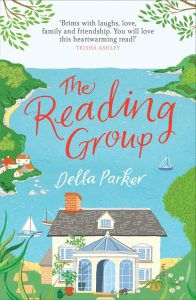
The Long and Winding Road – to a Book Deal!
‘Whatever the struggle – continue the climb – it may only be one step to the summit.’
Diana Westlake
This is a quote I keep over my desk – because blimey it’s so true of writing.
The road to success is littered with rejection slips as we all know. I could paper St Paul’s Cathedral with mine! I still get dozens. Yet I had my first short story acceptance letter in 1987 – I can’t believe that was almost 30 years ago and I had no idea back then that it would one day be my career. Not just my career, but also one of the best things in my life. My raison d’être if you like and yes it really is that important.
I’m writing this on the train. I’m about to go and meet my agent, my new publisher and my publicist for lunch. I’ve just been signed by a major publisher, Quercus, who are owned by Hachette. In the interests of being ‘cool’ I was going to try and pretend this isn’t as exciting as it sounds, but I can’t because it wouldn’t be true. I have dreamed of this day happening for thirty years.
To be signed with a big publisher was, and always has been, my number one goal.
I have four novels out there, several books on writing, ten or so novellas, even a memoir about a dog, oh and a fair few short stories too. I’ve been making a living from writing for 16 years. It’s been hard work. According to Malcolm Gladwell you have to practice a craft for 10,000 hours before you can become a master of it. I’ve certainly done that. But for many years my number one goal eluded me.
So how did it come about?
Earlier this year my first agent, Judith Murdoch got in touch. I’d just sent her another manuscript.
“Not this one,” she said on the phone, “but I’ve got a proposition for you. One of my editors is looking for a writer. Can you write to order?”
“I can do backward somersaults at the same time if they like?” I said.
I wrote a sample chapter.
They loved it.
I wrote the rest of the novel – or as it turned out, three linked novellas.
They loved them.
So here I am on the train to London.
Was it luck? Was I just in the right place at the right time?
Yes, a little bit of luck, I think. But it wouldn’t have happened if I’ve ever given up trying. Would it? So that’s my very top tip for writers.
Never Give Up. Whatever the struggle, continue the climb, it may be only one step to the summit
Lunch was brilliant by the way. Nothing beats a publisher quoting scenes from your book that made them laugh. The penne arrabiata was nice too!
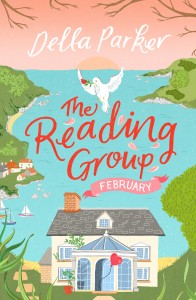
The novellas that I wrote will be published under the overall title of The Reading Group. The first three, January, February and March will be out on 1 December 2016. They are available for pre order now. But if you’d like to get a little better acquainted with the characters before deciding whether to buy then why not download the FREE short story (December) and see what you think.
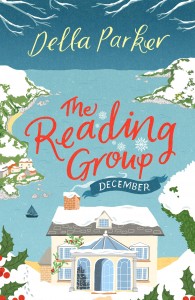
Here are the first three covers. So far there are six in the series. I think they’re beautiful. What do you think?
The Short Story Writer’s Toolshed
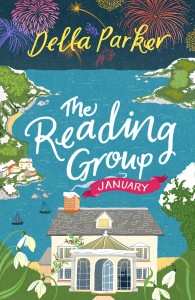
The Short Story Writer’s Toolshed was first published as a series in Writer’s Forum. I later decided to compile it into a handy little book. Here is an extract I thought you might like.
How The Toolshed Works
Every writer has certain tools at their disposal. We all in fact use the same tools when it comes to writing short stories, but we’re not necessarily that adept when we set out. This book is a little like an instruction manual, which I’m hoping might save you some time.
So, what exactly do we have in our toolshed? Well this particular toolshed is divided into shelves and on the shelves you will find the following tools:
Shelf one: ideas and getting started; shelf two: plot; shelf three: characters and viewpoint; shelf four: dialogue; shelf five: structure; shelf six: time span, pace and theme; shelf seven: flashback; shelf eight: cutting and editing; shelf nine: putting it all together; shelf ten rejection and motivation.
If you like you can work through the entire toolshed, or you might prefer to go straight to the relevant shelf. But to begin let me take you on a whistle-stop tour of the toolshed. Let’s examine what a short story actually is, as well as having a quick look at some of the available tools.
A Look Around The Toolshed
What is a short story?
This might seem like an odd question to ask in an ebook for writers. We all know what a short story is, don’t we? It’s a story that’s short; it’s less than the length of a novel; it has a beginning, middle and end and gives the reader the chance to spend a brief time with some interesting characters. Simple enough, you might think. But actually no, it’s not that simple at all.
It’s shorter than a novel, yes, but there’s so much more to writing a successful short story than size. The techniques used, the tools if you like, are exactly the same as the tools for writing a novel. Except they are used differently!
In this ebook which I hope will be useful to both beginners and more experienced writers alike we will look at how to use the tools we have at our disposal.
We will look at not just what makes a story work, but also examine the reasons why some stories which on the surface have all the right ingredients don’t work.
To my mind, writing a short story is like painting in miniature. It should have all the depth and colour that a full size canvas allows, but there is no room for waffle. Don’t make the mistake of thinking they are easy to write. Many successful novelists will tell you that short stories are one of the hardest forms of writing. They are a craft.
Length
The length of a short story changes with the fashion. If you are writing to sell, then your market will dictate what length you should aim for, be it magazine or podcast or radio. If you are writing for a competition then the rules will dictate the length. Even if you are writing for your own pleasure and have no desire to see your work in print, it is wise to set yourself a word limit. This is because length is relevant to the elements of a short story. For example, you’ll have trouble writing a story of 1000 or 2000 words if you have a cast of ten or twelve characters.
They’ve got shorter than they used to be. A quick search of the internet will reveal short story competitions that start with a length as short as 60 words. In fact, I even found one which had a word limit of 6 words. But most short story competitions these days have a maximum word length of around 5000 and this is probably on the long side. The vast majority of competitions ask for short stories of between 1000 and 3000 words.
Magazine lengths are similar. Podcasts may go a bit longer. So even if you are not setting out to place your work, then it might be as well to limit yourself to a saleable length just so you can get into the feel of writing something shorter. If you find your stories feel stretched at 3000 words then you might want to reduce it, but the best way to find out is to write a few. See if the pace suits you. Find the length you are comfortable with and then stick to it until you feel you have mastered the art of fitting your plot and characters into that space.
Characters
You won’t have room for dozens of characters. In my experience one or two main characters are usually enough. You may of course need supporting characters, but look at them as bit part characters who don’t necessarily need to be fully developed or even named. That doesn’t mean they should be stereotypes. There are many ways of making minor characters spring to life with very few words.
We will look at this in more detail when we get to characterisation. Your main character or characters must be fully developed though. If they are not the reader won’t care about them. If she doesn’t care about them and cannot emotionally engage with them, there’s a good chance she won’t read on.
Interestingly, to return to the subject of length for a moment, when I first started writing stories longer than 1000 words I assumed I’d need more characters to get the extra length, but I quickly realised that it wasn’t about adding characters it was about developing the ones I already had. This is one of the most important things I’ve ever learned about short story writing. I later realised it applied to serials and novels as well.
So to summarise, if you are writing a short story of 1000 – 2000 words you probably won’t need more than a couple of main characters and one of them should be main, which takes us nicely on to viewpoint.
Viewpoint
I’m not going to go into the different types of viewpoint at great length here. I will cover those in the viewpoint section (or should I say on the viewpoint shelf). But just in case you’re new to writing, viewpoint simply means whose eyes we are experiencing the story through.
For example, let’s assume we are writing a story about a marriage break up where the wife has had an affair and left her husband. There are three characters in this story: the wife, her lover and the husband. The story might be told through the eyes of any of them, if it is the wife, then she will be the viewpoint character. Not only will we see the action of the story through her eyes, but the story will be coloured by her viewpoint.
It is traditional in a short story to stick to one viewpoint, although you may change if you have a good reason. The viewpoint character also tends to be the main character. There are certain things that should happen to a main character in a short story, one of them being that they should experience some kind of change.
Dialogue
Dialogue is fictional speech. It is very important. It characterises and moves on the plot and gives life to a story. It’s possible to write a short story without it but again you should have a good reason – and by this I mean a reason linked to the story, not just because you don’t fancy the idea of writing dialogue!
When you are working within the very tight framework of a short story, dialogue is even more important. You can, for example, start a short story with dialogue and throw the reader straight into the action and also set up what your story is actually about.
Let’s take the example of the wife, husband, lover story. You might start it like this:
“I’m leaving you, John. I’m sorry, but it has to be like this.” Kathy knew her voice was calm, but inside she was shaking.
“You’re not going anywhere.” He took a step towards her and she was glad the table was between them. “If you think I’m going to let you walk away with that scumbag you’re more of an idiot than I thought.”
This is not particularly subtle, but it’s a swift way of setting up a scene. Already we have a glimpse of the couples’ history as well as what is happening now. Kathy is obviously afraid of her husband and it looks as though she has good reason. You can show a lot of information through dialogue that would take considerably longer in narrative.
Plot
A short story is a snapshot, a glimpse into a character’s life but that doesn’t mean it shouldn’t have a plot. Without one it will probably be too slight. A plot is basically a series of events and in a short story it tends to start with the main character experiencing a problem, which by the end he or she will have resolved. There should be some surprises along the way; otherwise you’ll end up with a linear sequence of events. For example, a basic crime story might be: crime is committed, crime is solved. This is not a plot. In order for it to be a plot, there must be surprises along the way.
Maybe the person committing the crime is not who we thought, or maybe we learn along the way their reasons are not selfish but altruistic. Either of these scenarios would turn a sequence of linear events into a plot.
Setting
You won’t have room for reams of description, but you must have a setting. Your characters cannot interact with each other in a vacuum. Setting needs to be skilfully interwoven. To go back to our husband, wife story, the mention of a table indicates that the story is taking place indoors, possibly in a kitchen. Further snippets of setting would need to be given.
Pace and time span
The pace of a short story is swift. There isn’t time for lengthy set up; the reader should be dropped straight into the action, which must be relevant. Then the story will proceed quickly to its conclusion. A short story by its nature will often only cover a short time-span in the life of the character, say an afternoon, or possibly a few days.
Flashback
Just because your story takes place over a short time span doesn’t mean that you can’t bring in past events, via flashback.
Structure
Structure, pace and time-span are linked. For example, let’s assume you’re using a diary structure. You could divide your story into a series of sections, each headed up as a different diary entry. In this way the story can move seamlessly over a longer period of time.
Theme
For me, the theme is the glue that holds the story together. A theme dictates what the story is about. Is it loneliness, revenge, healing? If you know before you begin, then it will help you to stick to the point and only include what is relevant. Theme is a great help when it comes to cutting and editing. It will help you ensure your work is tightly written.
***
This is the end of the extract. If you would like to read more of the Short Story Writer’s Toolshed you can purchase it for your Kindle for £1.99 here.
If you are reading this between 12th and 19th April, 2016 you can get it at a bargain price of 99p. Here.
If you prefer a ‘real’ copy. It is also available in paperback for £4.99, Here.
Happy writing.
Very best wishes
Della xx
Happy Christmas and a Present from Me!
I haven’t written a post in a while as I’ve been moving house. Now I’m semi settled – as this house is rented and temporary – I thought I would just say a very Happy Christmas to you all and thank you for your support.
Seamus, my hound is very settled though. As long as there’s a sofa he can sneak up on to, he’s happy. Note his startled expression! Should dogs be allowed on settees? No – but he’s a hard hound to refuse!
And if you are thinking of snuggling up on a settee over Christmas – with or without a dog! You might want to download my novella Shadowman to read. It’s FREE for the next five days, 24th to 28th December 2015 and is a cosy crime mystery, the perfect antidote to too much TV.
Happy reading. And happy Christmas from me and from Seamus. Several of my books are on special offer in January so do pop back if you’re in the vicinity 🙂
All the very best.
love Della x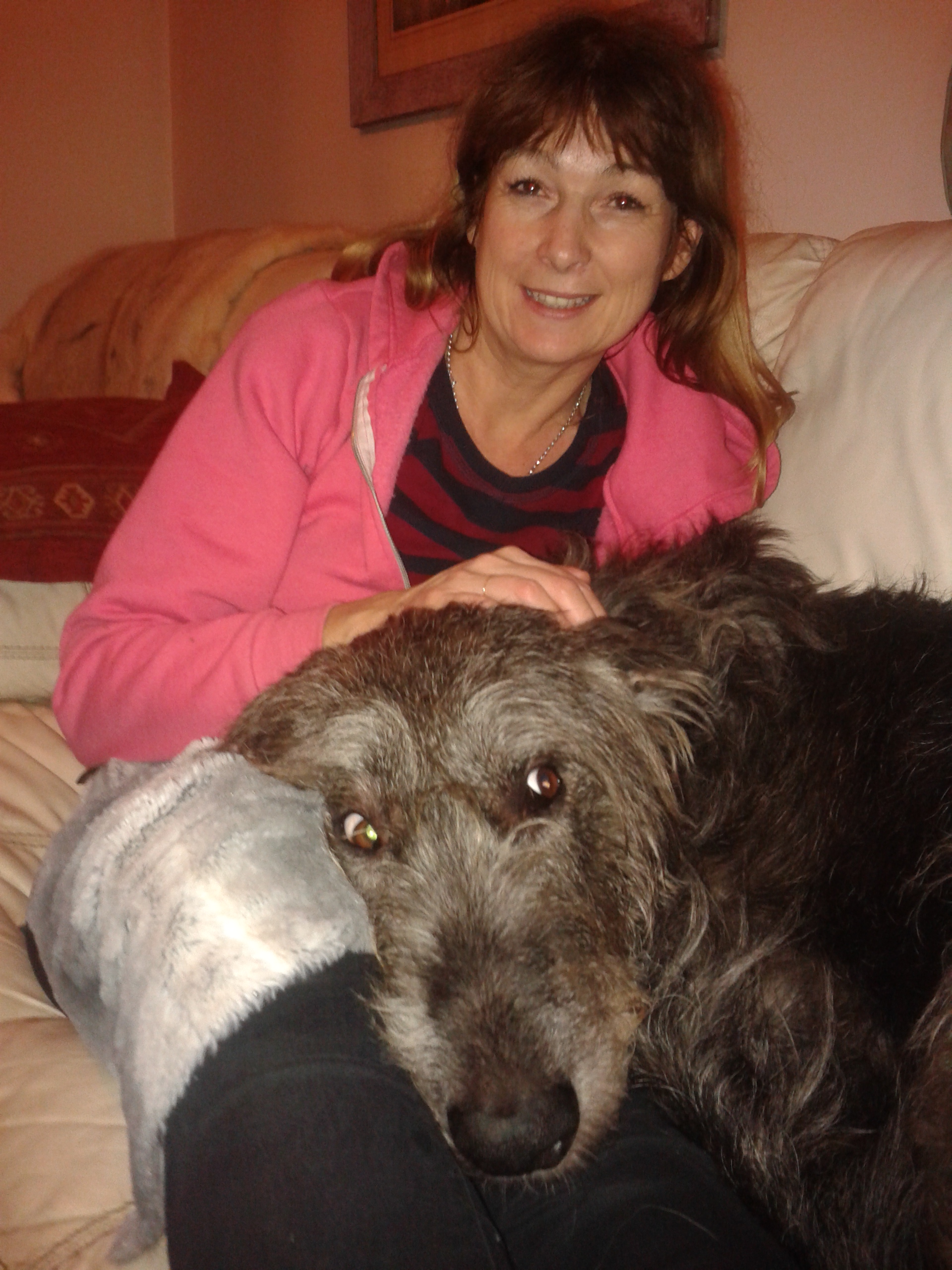
PR for Authors – The Final Frontier Guest Blog By Sarah E. England
PR is a subject which can strike horror into the hearts of authors everywhere. Some love it, some hate it. Personally I quite like it but it’s hard work and very time consuming. I’m always fascinated to hear how other writers handle it. So today I’m absolutely delighted to welcome the very lovely Sarah E. England to my blog to give us her take on PR for authors. Over to you, Sarah.

****
Well I thought learning how to write good quality fiction was a long, hard learning curve – what with all those magazine rejections over the years – so twelve years on, with over 160 short stories, several serials and two books published with the small press, I really did think I could do it. Publish my first supernatural horror novel, that is. On my own. Yes – research, writing, editing (many times), proof-reading, formatting, cover art and the publishing! So much to learn. But actually, just at the point I thought I’d cracked it, I began to realise that was the easy bit.
Since then – a month ago – I have discovered just what it means to try and get your new book in front of readers, because without them writing novels is a luxury for most of us. Now I don’t know about you but I really squirm at self-promotion. However, as I had to it anyway with the online publishers I was with, my thinking was – I’ll do it myself and that way I’ll a) get the book out more quickly, and b) have more control over presentation, promotion and price. I have a background in sales and marketing so how hard can it be? Hmmm – well the answer to that is very! Very hard indeed! So this is what I’ve learned and I hope it helps or at least invites discussion!
First you will need to correct all the mistakes you’ve made in terms of proof-reading, cover art, and basic presentation on Amazon – if you’re like me and didn’t pay anyone to do it for you originally! For this you can approach people like Laurence O’Brian of BooksGoSocial… he pointed out my cover title was too small and my own name too big. He advised on the Amazon book page presentation, plus the inclusion of review quotes at the top. Of course, I now realise big publishers will have those reviews ready on day one! And yes, they are important – you have, apparently, 3 seconds to hook a potential reader! And top publishers know this.
Next you have to get your book onto the virtual bookshelf. It isn’t in the shops on the first shelf a potential reader will go to, nor is it on the front page of the genre in which you feature on Amazon. Unless a reader is actually looking for your book or knows you on face book – they don’t know the book is there. So yes, a launch party and your family and friends will catapult you into the top 100 in your genre on day one. But then you could well have to watch a nosedive into oblivion. Unless you do something.
In the past I’ve done blog tours and guest spots and tweeted until I’m hoarse… and it’s got me reviews and a few sales keeping the book in the midlist for a while. But still the wider readership does not know it’s there. So here’s what the big publishers do to get their own books noticed: apart from doing deals with bookstore chains and buying shop front space, they pretty much have to do the same thing in the virtual world of amazon and nook and kobo etc So what do they do?
Spend… a lot!
First there are the top promotional channels like Bookbub and ENT who email out to hundreds of thousands of readers specifying the genre they are interested in. These not only cost serious money per day, but also specify high review ratings and lots of them – not easy to get quickly if you haven’t had your book mailed out to reviewers prior to release, and it’s not easy to get top reviewers quickly either – more on that later. Ideally a cut price deal on the book is required, and even more ideally, a layering approach to your marketing – ie lots of promotional channels all on the same day – right across their mailing lists, social media and websites. So already we’re talking in the high hundreds and that’s just for one day.
Next – advertising in the media. For example The Publishers Weekly is one I subscribed to and which sends out its beautifully presented recommendations every week. So I looked at what a spot in ‘We Love This Book’ would cost me… thousands! Yes thousands, and again – for one day or even just a morning’s circulation. Imagine how a reader on these mailing list buys a book… they will look in the genre they are interested in, pick out something that grabs them, click and buy! Great. If you’re a reader. But try getting onto that list at those prices regularly enough and with a big enough space to attract that 2-3 second attention span a busy person will give you. Without big money….
So now let’s look at radio and TV shows. I now know how writers get to be invited on there! PR companies cost thousands too. And they work for the big publishers. Handshakes on the golf course again?
Lastly, reviews, as I said, are crucial. Why? Well I now know that reviews from the media, beta readers, bloggers, and well-known book reviewers hold great sway with the readers who follow them and trust them – after all no one wants to waste their money. And this is what spreads in the end – recommendations engender trust which in turn engenders more readers.. And promotional companies take notice, eventually believing that the product is of good enough quality to be included on their mailing lists… at a cost of course!
Highlighting this very fact is the recently opened Amazon store in Seattle. They bought books on the basis of reviews not on what they were told to stock by big publishers because that’s what a handful of marketing people decided they would push. So all power to the people… there’s a way forward in this – just not sure what it is yet. Needs shaking up though, doesn’t it?
A note on Father of Lies. I’d been writing for magazines for ten years, and had a background in psychiatry (nursing and then medical sales/marketing) when I met a lady with what used to be called multiple personality disorder and it broke my heart hearing her story and what she suffered. I already had an unhealthy interest in the occult and from that point on I started to do some serious research into demonology and even exorcisms – the books were so scary I had them burnt afterwards because I couldn’t keep them in the house! Anyway, having lived in a haunted mill at one time, up on the bleak but very beautiful Derbyshire moors, Father of Lies soon began to take shape. It took a long time to write, and even longer to prepare for publication …and all I wanted to do was bring it to the readers….sound of sobbing…
To this end a group of us have formed Authors Reach – it’s a day old as I write – but the aim is to bring a diverse group of genres to the reading public and encourage interaction. The one problem I can see regarding independent authors is quality. There are literally thousands of books out there that are really and truly awful. (Why do people think they can just write a book? Another subject …) At least agents and publishers do usually ensure good quality. Usually. In my view it’s very much a closed shop and more upcoming authors need a look in, BUT the issue remains – how does a reader know a book is going to be worth their money? Reviews. Lots of them. Endorsements. Hard work building up a fan base via social media and writers working to help each other. This really does have to be for love, doesn’t it?
Anyway, never one to miss an opportunity – if you love horror and you fancy being scared witless (actually when you know a lot of this is based on a true story it only adds to the horror).. Here’s a little about Father of Lies, and thank you for reading. Please hook up with me on social media too… it will be interesting to know what you think!
*********************
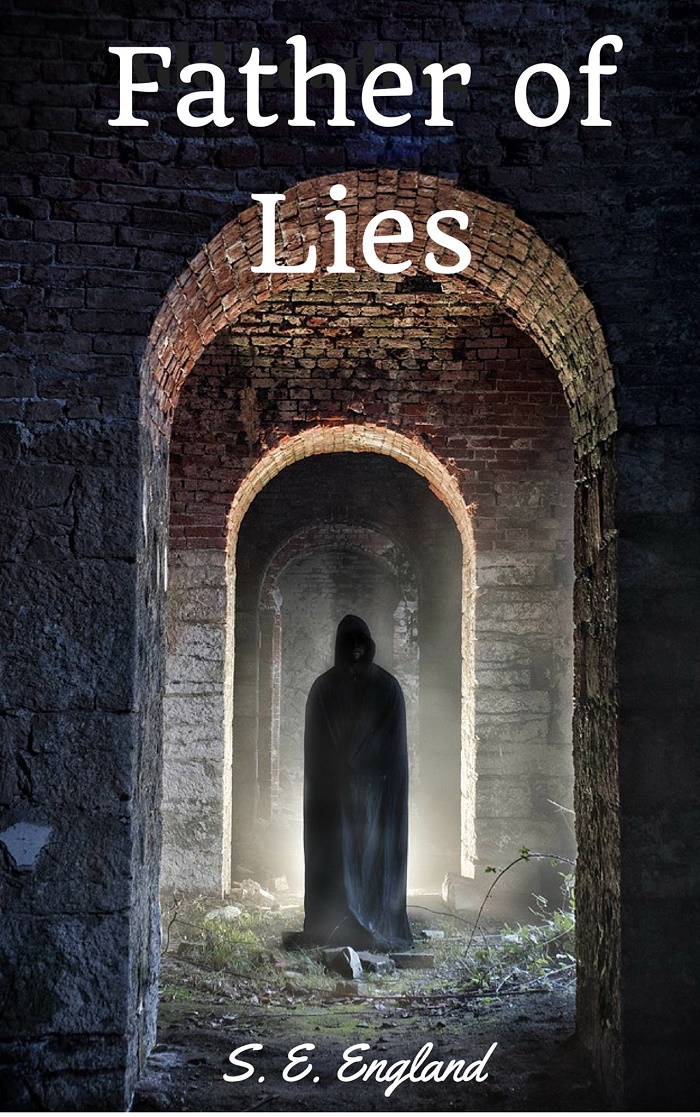 Father of Lies
A Supernatural Horror Novel by S. E. England
Ruby is the most aggressively disturbed patient ever admitted to Drummersgate High Security Forensic Unit, on the bleak Derbyshire moors in England. With no improvement after almost two years, psychiatrist Jack McGowan, finally decides to take a risk and hypnotises her . With devastating effects.
A horrific, dark force is now unleashed on the entire medical team, as each in turn attempts to unlock Ruby’s shocking and sinister past. Who is this girl? And how did she manage to survive such evil when no one else can?
Set in a desolate northern mining village, where secrets remain secrets and intruders are hounded from their homes, soon enough their questions lead to a haunted mill, the heart of darkness…and The Father of Lies.
Sleep tight!
http://www.amazon.co.uk/dp/B015NCZYKU
http://www.amazon.com/dp/B015NCZYKU
https://www.facebook.com/sarahenglandauthor
http://www.sarahengland.yolasite.com
http://www.twitter.com/sarahengland16
*****
Thank you so much, Sarah. I love the cover by the way. Shivery stuff. And great tips on PR and marketing. Yes, it’s the hard bit, I agree. Writing a book suddenly seems relatively easy, doesn’t it!
Short stories for Nanowrimo update – one week in!
This year, as I mentioned in my last blog, I’m attempting to write 50,000 words of short stories during the month of November for Nanowrimo. We are 7 days in. I thought you might like to know how I’m getting on.
Statistics
- I’ve written 14,000 words so far in 7 days.
- I’ve started ten stories.
- I’ve finished eight of them in first draft.
- So far I’ve edited two and sent two out.
Yay, so it feels like I am achieving something.
Inspiration
My week started with a bang. Last weekend I was on a roll. The words flowed. I wrote one longish story (2700 words), quite emotional, good structure that I liked a lot. Then another two pager (2000 words) which was lighthearted and fun. Quite liked this one too.
The next story I started, which was supposed to be a very short one pager decided it might quite like to be a serial. That’s one of the ones I haven’t finished, it’s about 2000 words currently.
Then came the one pagers, two of which are finished, edited and sent. The rest all need editing and I’m not sure I’m happy with the endings. I rarely am happy with my endings straight off.
It’s harder some days than others. It’s pretty full on writing like this. And I find it quite tiring.
Enjoyment Factor
Mostly, however, I am having a wonderful time. I think I mentioned that before. It’s incredibly freeing. I’m not obsessing over any of the stories or worrying about them. I can’t even remember exactly what I’ve written.
Grass roots
It takes me back to when I began writing short stories. I used to write at speed then. When I started to write full time, I wrote three stories a week. Every week. One on Monday morning, one on Monday afternoon, one on Tuesday morning. The remainder of the week was spent editing these three, teaching my five writing classes and editing any rewrites/rejections that came back in. I don’t do that any more. There seems to be far more PR and publicity work to do. Oh and I don’t think there was much social media then either.
The Down Side
Is there one? Yes, possibly.
- A part of me really really wants to edit as I go. It’s hard to resist that. It’s difficult to discipline myself not to look at yesterday’s story.
- It also means I had to cancel virtually everything else I do in November. Apart from prebooked essentials, for example, tomorrow I’m teaching at Woman’s Weekly all day. I will leave my house at 5.45 a.m. and get back about 10.00 pm. I won’t be writing any Nano tomorrow. Mind you, if I was going on the train I would have done!
- I’ve had to virtually give up social media. (is that a down side!) Oh, and answering emails.
- My friends think I’m dead!
- Oh, and I’m also moving house, which is slightly stressing me out. Haven’t packed much!
Week Two
This may be harder as I have 3 other commitments this week. I will report back. How is everyone else getting on? Don’t forget, if you need any help with short stories, The Short Story Writer’s Toolshed is quite good. Even if I do say so myself! 🙂
Nanowrimo 2014. 50k of short stories in a month!
It’s coming up to Nanowrimo again isn’t it? That’s National Novel Writing Month for the uninitiated. That’s when you sign up to write a 50,000 word novel in the month of November. Or 50,000 words worth of short stories in my case. It works out at about 1660 words a day. I love it. I love deadlines. Even if they are self imposed ones!
I’ve done it for the last two years. I thought you might be interested in some stats. I do love stats! This is what I did last year.
- 25 stories written.
- 17 of those sold to date.
- 5 still circulating.
- 3 still need work so not out there yet.
- Income from stories to date £2985.00
Not bad for a months work. It wasn’t of course really a month’s work because I edited a lot of them in December although I did edit about five in November as well as write them.
But what I really love about Nano is the freedom to just start a new story each day without worrying about the previous day’s. Because I’m writing so many I don’t worry if one doesn’t work out – who cares? I just start again the following day. It’s very liberating.
Am I going to do it again this November? You bet I am. The way I see it you can’t lose. Even if you don’t complete the target – I fell short in 2013 by about 14k – you still end up writing more than you would have done anyway. So who’s in? Will you be doing Nano this year?
And while we’re on the subject of short stories can I just mention that one of my books on writing short stories, The Short Story Writer’s Toolshed, is only 99p for kindle from now (assuming you’re reading this on Sunday 25 October 2015) until 31st October 2015. Just in case you need any inspiration. 🙂
Happy writing!
Winter Reading for 99p
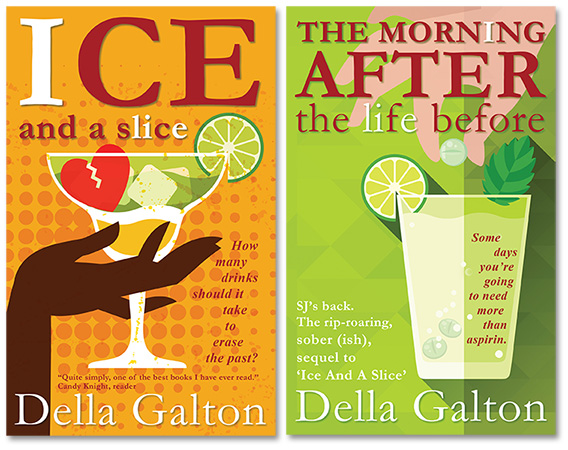 Just Thought I’d pop in and mention that The Morning After The Life Before is 99p till this Thursday (22 October 15). So if you fancied reading the sequel to Ice and a Slice, now’s your chance 🙂
Nothing like curling up with a good book and a glass of mulled wine – you might want to drink the mulled wine first, tee hee!
