Welcome to Della Galton’s website

Tag: endings

Writing The End First – Do you write chronologically? Or not?

I can’t believe how long it is since I wrote a post! It’s been mad lately. I’ve been writing the last part of my series, The Reading Group.  Part Five was the Summer Holiday. Blimey, that was definitely the trickiest. Partly because this novella had more than one viewpoint. Partly because it was the culmination, as well as being a standalone novella, of the series. The deadline is in two days time. I’ve just sent it off to my agent and publisher, simultaneously. I managed to mess up my shoulder with RSI towards the end of the novella. I was so immersed in the work that I didn’t realise I was hurting my shoulder until it had practically seized up.  Top Tip, take regular breaks.

Anyway, that’s not what this is about. How do you write your stories? Long or short? I have always written chronologically, but I did something different on this one. I wrote the beginning, then I wrote the ending.  I wrote the middle last.   This had some advantages that had never occurred to me before.

  • Because I knew the ending, I knew the relevance of every single scene prior to it.  Usually I don’t know this until I’ve finished. Then I go back and revise. I think this made the middle much sharper. It was a bit like doing a jigsaw. I had the framework so the middle was much easier to write.
  • I think it was probably slightly quicker.
  • It also gave me a lot more time to reflect on the ending. Because as I built towards it, my subconscious, which I rely on so heavily, was busy enhancing bits of it. So by the time I got there for the second time I knew exactly what needed editing.

Will I do it again? Yes, I think I might. Do I recommend it? Yes.

Reading Group - Bookends 2

The Reading Group January, February and March are all out now. I would love to know what you think of them if you’ve read them.

I’d also love to know how you write. Chronologically, or not? Please do comment.

Five Tips to Stay Inspired With Your Writing

  1. Got an idea for a story? Write more than one opening paragraph – it takes the pressure off having to get it perfect. Keep writing openings until you feel the inspiration kick in.  This can sometimes take me a while.
  2. Don’t edit your beginning until you’ve completed the story. It’s very easy to focus so much on perfecting an opening paragraph that you never get to the end.
  3. Don’t end the section you’re writing at the end of a scene break. Stop mid scene, mid paragraph or even mid sentence if you’ve got a good memory! It’s much easier to pick it up again.
  4. We tend to spend much less time on the end of a story.  The right ending can take time. Write more than one closing paragraph.  Then leave the story a week or so before coming back and seeing which one feels right.
  5. When you have a complete first draft. Leave the story another week before you do your final edits.  A student I once taught likened it to putting your story in the ‘naughty cupboard’. When you go back to them they will tell you everything they did wrong. This is so true. Mistakes will leap out after a gap of time that it’s impossible to see when you’re close to your work.

Happy Ever After – or is it? How do you get a good end?

For me, endings have always been the most difficult thing to get right.  But a bad ending can ruin an otherwise excellent story. There are all sorts of bad endings. You probably recognise most of these. They don’t really need explaining.

  • Is that it?
  • So what?
  • Where’s the rest?
  • I worked that out in Paragraph One.
  • Did I miss something?
  • What happened to Harry?
  • You’ve got to be joking!

So – how do you make sure your ending doesn’t fall into these categories?  Here’s a list of types of endings and tips that might help to make them work:

  1. Circular stories – link the beginning with the end, often by time or place, for example we end up when and where we began.
  2. Twist – as it sounds. Spring a surprise on the reader, but do give them the clues to work it out.
  3. Surprise – these are a little bit gentler than a twist. Usually a surprise means some piece of information is withheld from the reader. An agent I once had called it the after eight mint effect.
  4. Straight ending – these don’t contain twists or surprises but they often contain a universal truth. They are often poignant. Can also be amusing.
  5. Link the title with the end – these are often stories with a theme, for example, a story called Faith, turns out in the last paragraph to be about ‘faith’.
  6. Motifs – you might have  a running motif through the story, for example a recurring sentence, or a recurring phrase that ties up with the end.
  7. An off the page end. You finish with a pointer as to where the story/characters will go next. Things aren’t neatly tied up but there’s an indicator that the characters will be ok.

It’s worth remembering the following too:

An ending must resolve the problem you initially set up.

It must be relevant to the beginning.

If you’re stuck for an ending, look at what you’ve written so far.  The clues to the end will always be in what you’ve already written.

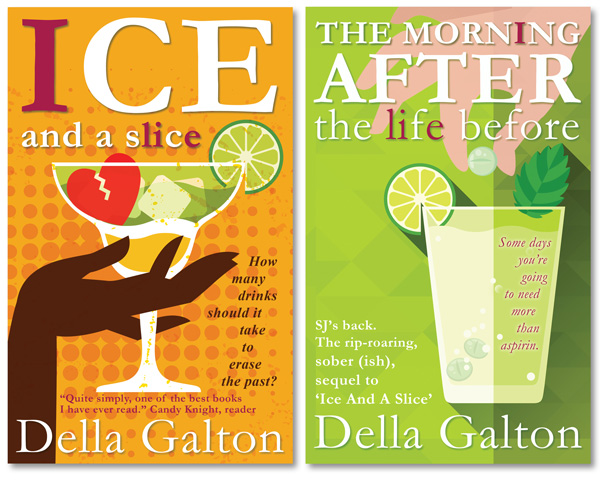
And while we’re on the subject of endings, did I mention the sequel to Ice and a Slice is out this week. Yay! The Morning After The Life Before is my latest novel and I’m very proud of it. SJ doesn’t quite get the Happy Ever After  she thought she was heading for! Nice matching cover for Ice and a Slice too – Can you spot the hidden message in these two covers?

The fabulous covers were designed for me by Peter Jones. Find out more about his book cover designing service here.

The Morning After The Life Before comes out on 5 February 2015 and is available for pre-order here.  Ice and a Slice with its funky new cover is available here. They are both £1.99, less than the price of a glass of Chardonnay!


Wednesday Writing Spot – Writing Problems and Solutions, part two.

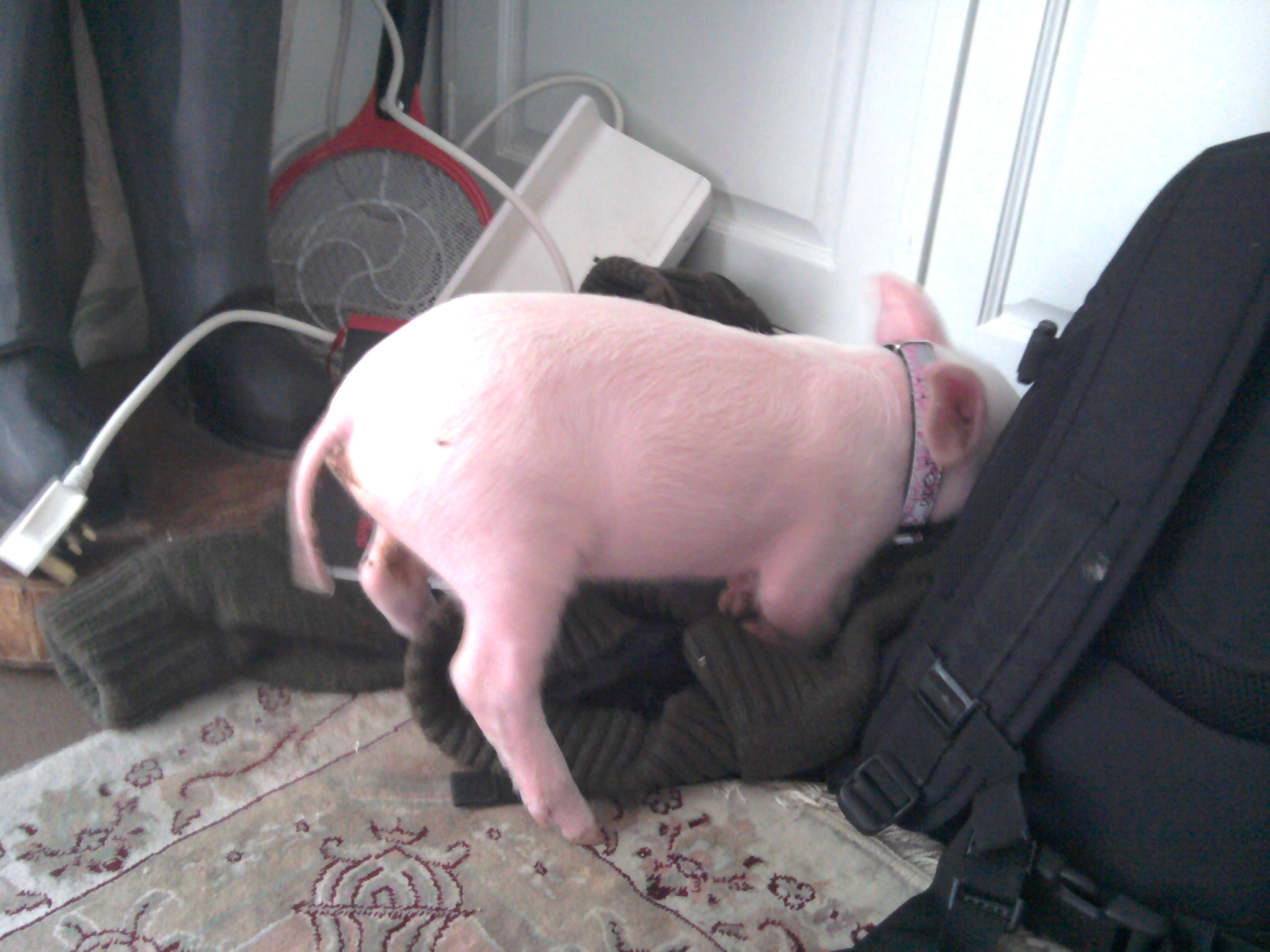
The Problem – A Satisfactory End This problem has nothing to do with writers’ bottom by the way, or pigs for that matter – this is a different problem entirely – I am talking about achieving a satisfactory ending to your short story. I have always had trouble getting, what is to my mind, a satisfactory ending. And I was reminded this week that I’m clearly not the only writer who struggles with this. I’ve just judged the Wells Festival of Literature Short Story Competition. I can’t say too much, because to date they have only announced the short list, but here are just three of the problems I came across. And they all involve unsatisfactory endings. Please forgive my tongue in cheek headings.
The ink ran out

These are the kind of endings which stop dead. Once or twice I actually found myself looking for another page. The stories often begin beautifully and have great writing, but then just stop. Nothing is resolved, nothing is explained, we are just left wondering what happened.  Now, don’t get me wrong, I am all in favour of endings that are enigmatic – or even a little open ended (as long as they work). But they must still be endings. It must be clear we have reached the end – and the writer hasn’t just wandered off for a coffee and is coming back in a bit to write the last sentence.

Obvious from the outset

These are the opposite end of the scale. With a couple of the stories I guessed from the outset where we were going. And I was proved right. Which was disappointing. Again, these stories were often beautifully written, but it isn’t enough to take me on a journey from A to B if I can see the destination from the outset. Sometimes it may be enough if I am deeply moved by the journey, but not often to be honest. I need more. These are the stories that tend to read more like anecdotes or accounts. And anecdotes or accounts of an event, however moving, aren’t stories.

Yeah, but so what?

These are the ones where I reached the end and thought, yeah, but so what?  Once again, some of these were fantastic ideas – but a fantastic idea isn’t enough to carry a short story, not without a fantastic ending to complete it.  Sorry – there were quite a few of these.

Solutions

If it was easy, I suspect we wouldn’t have such problems with this, but here are some of the solutions that have worked for me. I hope they may be helpful for you too.

The ink ran out

These endings usually require a little more thought. Often the writer believes they have written a satisfactory ending because it is clear to them what happened – but this hasn’t come across on the page. (I am guilty of this myself) I just had a story returned to me which had exactly this problem. The solution, I realised, as I read through it was to underline the theme and make sure that it tied up with the ending. Make sure you know exactly what your story is about. And make sure the reader does too. Don’t spell it out, but do give your ending power and resonance. I believe this can be done most successfully when the theme is crystal clear in the writer’s mind.

Obvious from the outset

This one’s a little easier  to resolve. Almost always it just means that some of the information you have given us up front needs to be withheld – so that there ARE some surprises. I’m not saying there has to be a twist, but there does have to be something that the reader doesn’t know at the outset. A theme here works well too. Your surprise could be tied up with the theme.

Yeah, but so what?

I found that these type of endings broke into two types.  Both of them were to do with not caring enough. Either I didn’t care enough about the character so that when he/she got his happy ending (or not) I didn’t care much anyway. This one can be resolved by making him more likeable/believable/interesting.

Or… I didn’t care because the plot, while often absolutely fascinating, didn’t seem to have a point.  For example, a lot of amazingly intriguing stuff happened and then we found out why, but there didn’t seem to be any real rhyme or reason to it. I think these work brilliantly if the writer can slide in a universal truth at the end. An example of this would be – and I’m moving away from short stories here to novels – the Boy in the Striped Pyjamas. This is a great book and has the most fabulously resonant closing lines I’ve ever read. I won’t spoil it if you haven’t read it but it actually ends with a beautiful ironic statement which outlines a universal truth about humanity.  (well it does in my humble opinion) It doesn’t get much bigger than that. And as this is a blog post about endings, I had better just add a closing paragraph, hadn’t I! The ending of your story is the last thing a competition judge/editor sees. Get it right. A perfect ending will get you noticed. 🙂

While you’re here, please check out my two writing guides. How to Write and Sell Short Stories published by Accent Press and The Short Story Writers’ Toolshed published by Soundhaven.com

And if you’d like to know more about the Wells Festival of Literature which takes place from the 11th to 19th of October, click here.

Tell your friends!

© Della Galton All rights reserved.
Powered by Cloudbase Media