Welcome to Della Galton’s website

Tag: ideas

Creating Characters – How well do you know your imaginary people?

Sometimes a character comes into my head fully formed. Sometimes they are shadowy. Sometimes they are shy like real people and I have to get to know them slowly.  Interviewing them is good.

These 21 questions are one of my favourite ways of interviewing them. I may not know the answers, but the character often will. Does that sound mad? Probably, but I’ve never claimed to be completely sane.  I’ve used these questions, or variations of them, with dozens of students.  So I thought I’d reproduce them here. Hope it’s helpful.

  1. Name, age & sex.
  2.  Brief physical appearance. List 3 things.
  3.  Job.
  4. What is your character’s current problem?
  5. Personality type – extrovert, introvert bossy etc.
  6. Where does your character live? Flat, house, rural, city etc.
  7. What, if anything, would make your character laugh or cry?
  8. What is your character’s soft spot/weakness?
  9. What is your character really good at?
  10. What is your character afraid of?
  11. What would make your character furious?
  12. If your character had one wish, what would it be?
  13. How does your character view money?
  14. Does your character have any prejudices? If so, what?
  15. What are your character’s main qualities?
  16. What are your character’s main faults?
  17. Does your character get on with their parents? Siblings? Friends? Neighbours?
  18. What is your character’s biggest secret?
  19. What is the most defining experience your character has ever had?
  20. Who is the last person your character argued with and why?
  21. Summarise your character in a sentence. Pick 3 significant things. E.g. Dora is 82, wears mismatching clothes on purpose and likes to shock her rather pompous son.

One of my favourite things about this particular character sheet is that it doubles up as a plot creation tool. For example Q4 is the basis of a short story or longer piece of fiction.

Q18 is quite good too, when it comes to plotting. Q19 is one of my favourites when it comes  to novels and getting the psychology right.

If you can do Q21 you will probably know your character pretty well.

Happy Writing.

***

My next course, How to Write and Sell Short Stories is at a new venue. Shaftesbury, Dorset. The course will be small – a maximum of 10. (The venue is small.)  It will run on Saturday 12 November between 10.00 and 4.00 and costs £45.  This course is suitable for beginners as well as experienced writers and I hope students will go away with the beginning of a short story, the ending of a short story, (hopefully the same one!) and a good idea of how to develop the middle. Please email me via this website (or leave a comment) if you would like to book a place.

If you would like to know more about writing short stories, please check out my book, The Short Story Writer’s Toolshed. £2.49 for Kindle. £4.99 in paperback.
The Biggest Occupational Hazard of Being a Writer!

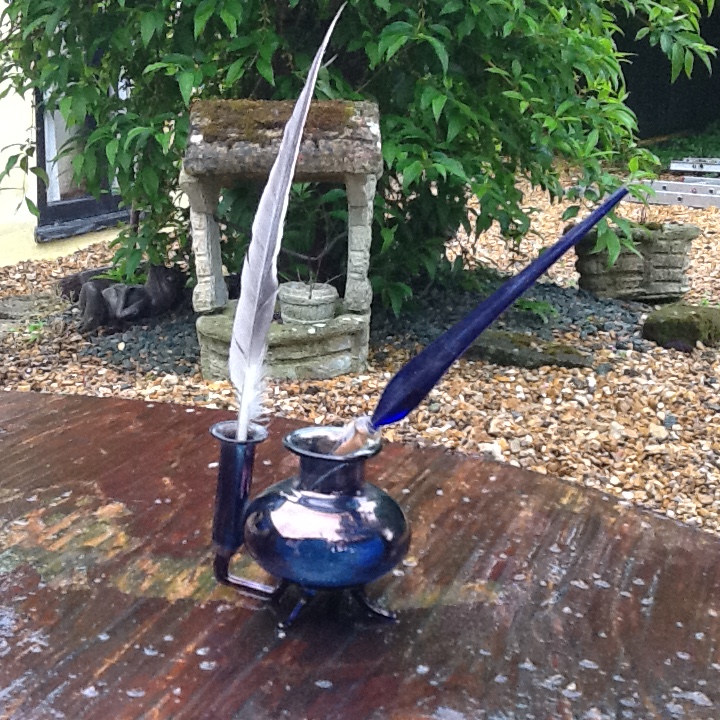
thoughtful pen mineToday I’m writing about the biggest occupational hazard of being a writer.  No, I’m not talking about writer’s bottom! Although that is a hazard, I have to say. Especially when combined with Easter and all the chocolate I’ve recently consumed!
But today I’m talking about the other HUGE occupational hazard. I mean that moment when someone you’ve just met asks what you do and you tell them you’re a writer and they say…  “I’ve got a good idea for a book/story/novel you could write.” Then they tell you what it is – in full technicolour detail and – if you’re still awake – they add those immortal words. “Maybe you could write it and we could share the profits.”

“Maybe,” you say, nodding politely.

Which got me to thinking what percentage of a story is ‘the idea’ and what is hard graft. Just supposing you were going to split it like this. Would it be 20 per cent idea and 80 per cent hard graft of doing the actual writing? Or would it be 50/50 or would it be even a smaller percentage for the idea, say 10 per cent? Or would it be idea 70 per cent and writing 30 per cent?

I think this might well depend on individual writers. For me the idea is about 20 per cent of the whole product. Most of the work is in the writing. So if I was going to pay for ideas – supposing there was a handy little ideas shop somewhere I think the most I’d pay for a £100 story idea would be £20. Actually, having just written that down I think it would be more like £10.00.  Although I might be prepared to pay more for an actual plot. One that had an end. And if it had a brilliant twist ending. I might pay a fraction more.

One of my novelist friends did actually give me a complete short story plot the other day which worked superbly, thank you Nancy. Just in case you happen to be reading this blog. My ramblings are not aimed at you.

So my questions today are:

  1. How much would you pay for an idea?
  2. What percentage of the finished product is idea and what is the actual writing?

While I’m on, I’m running a course soon. How to Write and Sell Short Stories is on 28th May in Bournemouth.  £45.00 I suspect there will be a few ideas floating around there! Please do email me for details if you’re interested in that one. Max numbers 12. I think there are 4 places left.

Bye for now.

Della x

Is Your Writing Smelly Enough?

Using the senses in your writing, especially the sense of smell, really helps to take the reader into your story.  However, it’s just as easy  to be cliché with smells as with any other writing so choose carefully and be current.   For example, do today’s hospitals really smell of disinfectant and boiled cabbage? Maybe they do, but they smell of a lot of other things too. I asked my writing students to come up with something different. Here are the results.

Hospital smells

  • Antiseptic hand wash.
  • Floor polish.
  • The colognes of visiting relatives.
  • Stale air.
  • Mass produced food.
  • Body odour.
  • Fear.
  • Fresh air and rain on the clothes of visitors.

We did the same thing with beaches.

Beach smells

  • Donkeys .
  • Coconut suntan lotion.
  • Burger vans.
  • Fish and chips.
  • Candyfloss.
  • Cigarette smoke.
  • Diesel generators from fast food stalls.
  • Ozone.
  • Rotting seaweed.
  • Fresh air.
  • Smoke from Bbqs.

I have a post it note stuck over my desk.  Smells, touch, taste.  I tend to use the other senses anyway but it’s easy to forget these three, especially the sense of smell.

A rose by any other name!

For more tips please check out my books on writing.

The Short Story Writer’s Toolshed

The Novel Writer’s Toolshed.

How to Write and Sell Short Stories.

Moving on From Short Story to Novel. 

I am also running a course in Bournemouth on Saturday 28 May – How to Write and Sell Short Stories. 10.00 am till 4.00 pm. £45.00. Please email me via this website if you’d like more details.

Happy writing!


The Wednesday Writing Spot – Getting Ideas – Guest Post from Patsy Collins

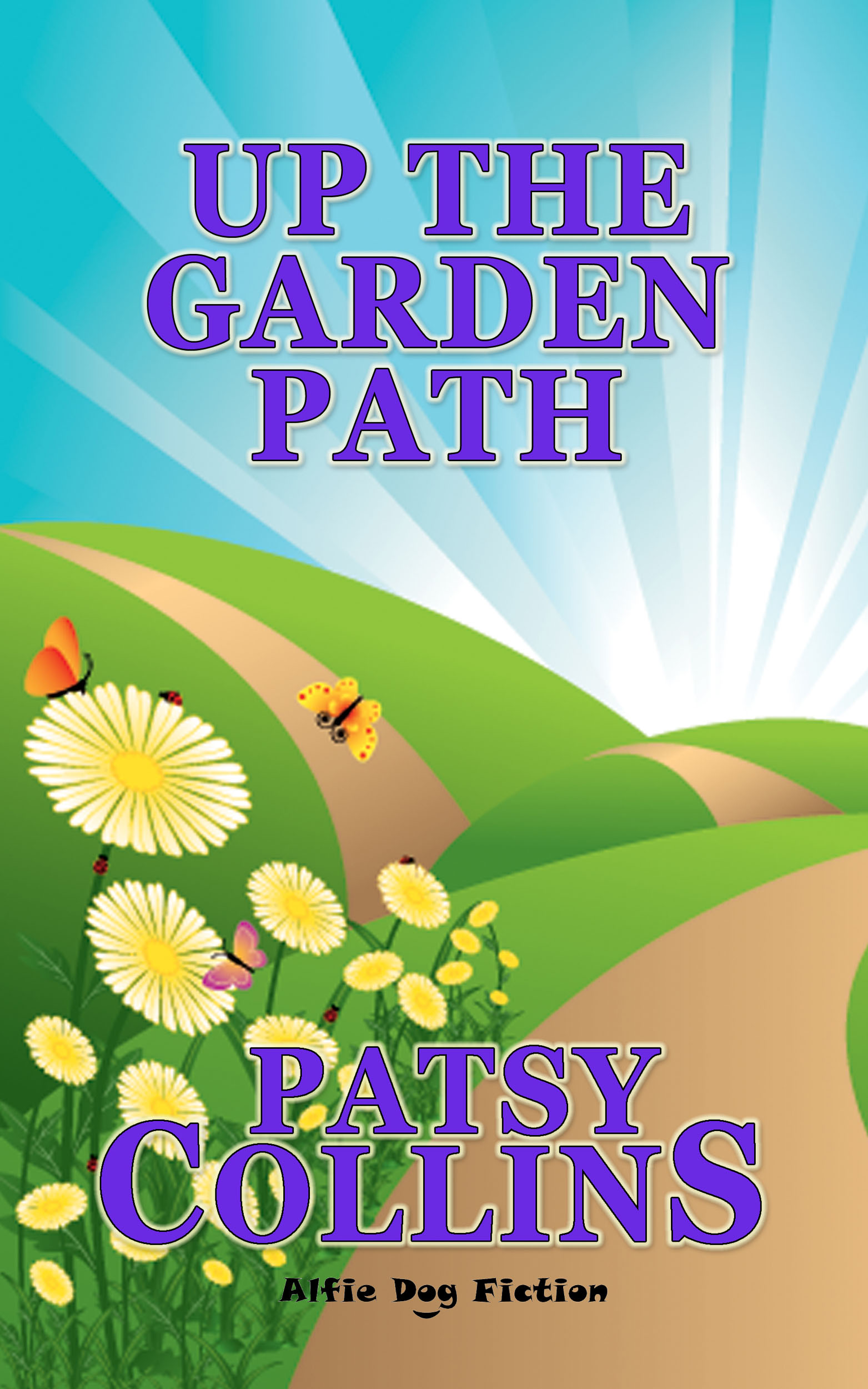
This week on the Wednesday Writing Spot, I am delighted to welcome writer, Patsy Collins, who is talking about where she gets her ideas from and her fabulous new short story collection, which is called Up The Garden Path. It’s lovely to have you here, Patsy. Now it’s over to you…

As writers we are often asked where we get our ideas from. It seems such a reasonable question but it’s very hard to give a satisfactory answer. Each writer will get their inspiration in a different way to that of their colleagues and they’ll probably draw on a number of resources. Ideas are everywhere you see. That’s both good and bad. We don’t have to wait for the ideas shop to open, but those little story sparks don’t come neatly labelled ‘romance novel suggestion’ or ‘ghost story premise’ so we need to train ourselves to spot them.

My new short story collection contains twenty four short stories and each is the result of a different stimulus. It’s a bit like picking wild mushrooms, really. If you want nice, safe mushrooms you need to know what they look like or you’ll end up with something toxic, or hallucinogenic or bitter. Of course if you actually want to poison someone you’ll need to be on the lookout for something different (pale gills and skinny stalks are a good sign in this case). ‘Write what you know’ is good advice. That’s what I did for ‘A Piece of Pink Ribbon’ which is set on a farm and ‘Coming Home’ which is about separation when someone is away at sea. It also explains why all the stories in the collection have a horticultural theme – I’m nearly as keen on gardening as eating cake. Real life events can be a great source of story ideas, but the truth often needs adapting. Weirdly when we write something strange, funny or touching that really happened it often doesn’t feel believable. ‘Watchdog’ is based on a real event (although not one which happened to me) but to make it work I had to change reality. Whenever I come across an unusual name eg ‘Mrs Dalrymple’ overhear an interesting comment such as ‘Your Granddad is Stuck Up a Tree Again’ or want revenge on an annoying boss (‘Blooming Talent’) I make a note in a computer file. Sometimes the prompt is as simple as the smell of ‘Strawberry Jam’ and at others it’s as complex as family politics (I’m admitting nothing!). It doesn’t matter where the ideas come from, it’s what you do with them that counts. I hope you like what I’ve done with those which resulted in ‘Up the Garden Path’. The book is available here – or here.

Tell your friends!

© Della Galton All rights reserved.
Powered by Cloudbase Media