Welcome to Della Galton’s website

Tag: inspiration

How do I become a full time writer? I want to give up my day job.

This is a question I get asked a lot.  Both through my column for Writers’ Forum and also by strangers (and friends) who know what I do. Mostly the people who ask me want to write fiction.  (it’s much easier, incidentally to do it if you write non fiction.)

I asked this question of an author 30 years ago and their first reaction was to say, ‘Don’t do it.’  I ignored this slightly tongue in cheek advice and went ahead! Incidentally, it didn’t take long before I had to get another day job in order to pay my mortgage.

The next time I attempted it in 2000 I was more prepared. Preparation is essential, and will make the difference between success and failure. Everyone’s circumstances are different, of course, but here are my top tips for making the switch

  • You will need to be already established as a paid writer of fiction (or non fiction if that’s your chosen path). Doing both is a good plan I have found. Getting established takes time so it’s important to build up relationships with editors and publishers before you quit your day job.  I had been getting paid for my writing for 13 years before I gave up my day job the second time.
  • If possible, don’t give up your day job until your earnings as a writer equal your salary, or come close. Be prepared to live on half your income for a while. If this is impossible, don’t attempt it.
  • In the beginning you will need an alternative form of income as well. Then you will have at least some guaranteed income a month (important for bills, mortgage etc). This could be a part time job. It could be savings. It could be a pension. (I had savings and a part time job.)
  • Work out exactly what you will need to earn each month. Then work out exactly what you will need to sell each month in order to achieve it. Then write approximately double the amount of pieces that you will need to sell to allow for misses.You are bound to have some.
  • Pick a date and hand in your notice. You can always go back if things don’t work out.

This may all sound a little like a tale of caution. So I will add one more thing. Even though I work longer hours than I did while employed, even though it’s very hard at times and I never feel economically secure, writing for a living is still my dream job. I absolutely LOVE it.

Good luck with your journey.

PS if you want to know if your short stories are publishable, (or even if you just want to make them better) why not come along to my course on Sun 26 August and get some feedback on your story.

Venue: Kinson Community Centre, Bournemouth

Time: 10 till 4.00

Cost £40.00

(email me if you’d like further details)


Four Reasons We Don’t Write – and What to Do About Them!

Motivation – one of my favourite subjects. Motivating yourself to write should be easy, shouldn’t it? After all, we want to write. Don’t we? So why is it so difficult to get started? Recognise any of these excuses – er hem, I mean REASONS?

Time: I’d like to write but I never seem to have the time.

If that’s you, ask yourself a question. Is it really true?  Do you really not have time? Or are you just not prioritising writing?  Possibly because you don’t feel you deserve the luxury of having time to write when there are so many other things to do, for example, work, friends and family.

Well, if writing is what you really want to do, then don’t you deserve to carve out some time for it?  If you were to allocate half an hour three times a week you could probably write a short story in a month (perhaps even two). Little and often really is the key.

Focus: I don’t know what I want to write.

Many people set off with the idea of writing a novel.  This is very commendable; don’t let me stop you if that’s your burning passion. But there are many other forms. Here are some less time intensive ones:

  • A blog
  • A short story
  • A poem
  • Morning pages
  • A feature for a magazine

Why not experiment until you decide what’s for you. Better still why not pick one of the above and set a deadline to complete it.

Confidence: I’m not good enough to be published.

How do you know until you try? Not many people are good enough to be published until they’ve done some market research and learned what works and what doesn’t.  Writing is a little like learning the piano I think – we wouldn’t expect to be concert pianists without a fair bit of practice.

Laziness: It just feels too much like hard work a lot of the time.

Newsflash – it is! Believe me, I know it is. I write a lot and some days (actually there are quite a lot of them) I would much rather be doing something else. Some days it feels as though I’m wading through sludge.

Usually when this happens, I just carry on. (I have to, it’s my day job).  Very often it’s because I’ve got to a tricky bit. So my top tip for this is that it’s much better to finish writing when I’m really enjoying myself – then I’ll be all the keener to go back to it again. This really does work. Trust me.

If you’re really stuck I once heard a novelist say she used to handcuff her ankle to the desk to make herself sit still until she’d done her allotted amount of words. I can’t say I’ve tried this one – but I’m not ruling it out!

Happy writing

Della xxx

PS I’m running a course in Bournemouth this Saturday. 23 October. Write a Short Story in a Day (Hopefully the title is self explanatory but if you’d like further details please do leave a comment or email me.)

WRITING GOALS and the Rule of Three!

Do you, by any chance, have a New Year Resolution that involves writing? This idea might help you to keep it.

The Rule of Three is one of the most powerful principles I have ever learned. With thanks to Jack Canfield who is a motivational speaker in the US. All you’ll need is a notepad and pen, did you get one for Christmas? If you didn’t, a reporter’s notepad from the newsagents will do. Or just flip up a new document on your word processor.

  • Take a blank page and write your goal at the top of it – which can be anything. Make sure it’s specific though. For example, write a piece of Flash Fiction and send it to a competition. Or, get a feature published in a magazine. Or perhaps you’re thinking big and your goal is to write a 90,000 word psychological thriller. It doesn’t matter: Just commit your goal to paper.
  • Underneath your goal write the next three steps you will take towards it. For example if you want to write Flash Fiction. 1: find a flash fiction competition. 2: Read previous winners. 3: Make a list of possible subjects to write. Or, in the case of the feature. 1: Buy a copy of publication you are aiming for. 2: Establish which features are written by freelancers. 3: Work on a proposal for your feature and send it to the editor.
  • Next, split your piece of paper into days of the week. Under each day, write the next three things you will do to move your goal forward.   As it’s a writing goal many of them will be doing the actual writing. So you may find your later goals look like this. 1. Write the opening paragraph, 2. make a list of possible titles. 3. Edit previous day’s work. Etc.
  • Commit to doing the 3 tasks you’ve set for yourself for at least ONE WEEK. This can take you a considerable way on small goals. Probably past completion. On bigger goals you may be motivated enough to carry on.

Top Tip to help you make this work

Don’t overstretch yourself. Don’t commit to writing 1000 words of your novel every day for a week if you know you don’t have time. Your rule of three can be tiny things. On a busy day your three things may be to write three paragraphs that day. Or three sentences if you like! The point is that you MUST do the three thing you’ve written in your notepad daily. A continual, concerted daily effort is incredibly powerful. The most magnificent castle begins with the laying of a single brick! OK, this picture isn’t a castle, it’s the Fishguard BayHotel in Pembrokeshire! But it’s certainly a castle for writers twice a year. See The Writer’s Holiday. which I highly recommend by the way!

Where was I?fishguard

Ah yes, I use the rule of three on a regular basis in all of my work. It’s brilliant for writing projects. Small and large. It’s also brilliant for promotional work if you’re trying to promote a book, for example.

My January goal in case you’re interested, is to write the next novella in the series of The Reading Group, which is my current project. I will write 2000 words a day, weekdays, 1000 words at weekends, until I have a first draft.  My commitment is to start at 8.00 a.m. and do nothing else until the 2000 words are done. This is how I wrote the rest of the series.

December, January & February are out now. March is out on 1 January 2017. Yikes, I’d better crack on and write the next one! Do let me know how you get on with your goal too.

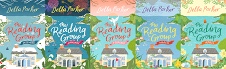
The Reading Group, all covers

The Long and Winding Road – to a Book Deal!

‘Whatever the struggle – continue the climb – it may only be one step to the summit.’
Diana Westlake
This is a quote I keep over my desk – because blimey it’s so true of writing.

The road to success is littered with rejection slips as we all know. I could paper St Paul’s Cathedral with mine! I still get dozens. Yet I had my first short story acceptance letter in 1987 – I can’t believe that was almost 30 years ago and I had no idea back then that it would one day be my career. Not just my career, but also one of the best things in my life. My raison d’être if you like and yes it really is that important.

I’m writing this on the train. I’m about to go and meet my agent, my new publisher and my publicist for lunch. I’ve just been signed by a major publisher, Quercus, who are owned by Hachette. In the interests of being ‘cool’ I was going to try and pretend this isn’t as exciting as it sounds, but I can’t because it wouldn’t be true. I have dreamed of this day happening for thirty years.
To be signed with a big publisher was, and always has been, my number one goal.

I have four novels out there, several books on writing, ten or so novellas, even a memoir about a dog, oh and a fair few short stories too. I’ve been making a living from writing for 16 years. It’s been hard work. According to Malcolm Gladwell you have to practice a craft for 10,000 hours before you can become a master of it. I’ve certainly done that. But for many years my number one goal eluded me.

So how did it come about?

Earlier this year my first agent, Judith Murdoch got in touch. I’d just sent her another manuscript.
“Not this one,” she said on the phone, “but I’ve got a proposition for you. One of my editors is looking for a writer. Can you write to order?”
“I can do backward somersaults at the same time if they like?” I said.
I wrote a sample chapter.
They loved it.
I wrote the rest of the novel – or as it turned out, three linked novellas.
They loved them.
So here I am on the train to London.
Was it luck? Was I just in the right place at the right time?
Yes, a little bit of luck, I think. But it wouldn’t have happened if I’ve ever given up trying. Would it? So that’s my very top tip for writers.

Never Give Up. Whatever the struggle, continue the climb, it may be only one step to the summit

Lunch was brilliant by the way. Nothing beats a publisher quoting scenes from your book that made them laugh. The penne arrabiata was nice too!

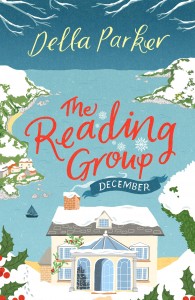
The novellas that I wrote will be published under the overall title of The Reading Group.  The first three, January, February and March will be out on 1 December 2016. They are available for pre order now.  But if you’d like to get a little better acquainted with the characters before deciding whether to buy then why not download the FREE short story (December) and see what you think.

December
December

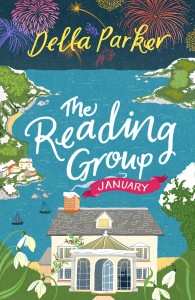
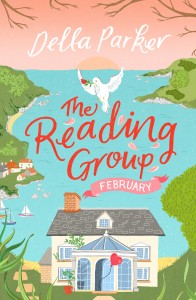
Here are the first three covers. So far there are six in the series. I think they’re beautiful. What do you think?

January
January
March
February

Creating Characters – How well do you know your imaginary people?

Sometimes a character comes into my head fully formed. Sometimes they are shadowy. Sometimes they are shy like real people and I have to get to know them slowly.  Interviewing them is good.

These 21 questions are one of my favourite ways of interviewing them. I may not know the answers, but the character often will. Does that sound mad? Probably, but I’ve never claimed to be completely sane.  I’ve used these questions, or variations of them, with dozens of students.  So I thought I’d reproduce them here. Hope it’s helpful.

  1. Name, age & sex.
  2.  Brief physical appearance. List 3 things.
  3.  Job.
  4. What is your character’s current problem?
  5. Personality type – extrovert, introvert bossy etc.
  6. Where does your character live? Flat, house, rural, city etc.
  7. What, if anything, would make your character laugh or cry?
  8. What is your character’s soft spot/weakness?
  9. What is your character really good at?
  10. What is your character afraid of?
  11. What would make your character furious?
  12. If your character had one wish, what would it be?
  13. How does your character view money?
  14. Does your character have any prejudices? If so, what?
  15. What are your character’s main qualities?
  16. What are your character’s main faults?
  17. Does your character get on with their parents? Siblings? Friends? Neighbours?
  18. What is your character’s biggest secret?
  19. What is the most defining experience your character has ever had?
  20. Who is the last person your character argued with and why?
  21. Summarise your character in a sentence. Pick 3 significant things. E.g. Dora is 82, wears mismatching clothes on purpose and likes to shock her rather pompous son.

One of my favourite things about this particular character sheet is that it doubles up as a plot creation tool. For example Q4 is the basis of a short story or longer piece of fiction.

Q18 is quite good too, when it comes to plotting. Q19 is one of my favourites when it comes  to novels and getting the psychology right.

If you can do Q21 you will probably know your character pretty well.

Happy Writing.

***

My next course, How to Write and Sell Short Stories is at a new venue. Shaftesbury, Dorset. The course will be small – a maximum of 10. (The venue is small.)  It will run on Saturday 12 November between 10.00 and 4.00 and costs £45.  This course is suitable for beginners as well as experienced writers and I hope students will go away with the beginning of a short story, the ending of a short story, (hopefully the same one!) and a good idea of how to develop the middle. Please email me via this website (or leave a comment) if you would like to book a place.

If you would like to know more about writing short stories, please check out my book, The Short Story Writer’s Toolshed. £2.49 for Kindle. £4.99 in paperback.

Six tips for writing shorts for Nanowrimo

As I mentioned in my last blog I’m busy doing Nanowrimo this month. But as usual I’m writing 50k of short stories in November not a novel. This is more useful for me, being as shorts are my day job. I thought I’d share some of how I work with you – in case it’s helpful. Here are my top tips.

  1. Keep them all in one document. I call mine Short Story Bonanza 2015 (Nano likes a title). And it’s easier to keep a word count if they are all in one place. I do start a new page for each story and I head it up with the date. (I don’t often have a title when I start a story.)
  2. I don’t necessarily start a new story each day.  I try to finish the one from the day before. After all, the object of doing Nano is that I write saleable stories and they have to be finished at some point. So I finish as many as I can in draft. But there might still be the odd one unfinished. And that doesn’t matter. Very freeing.
  3. Make Nano the first thing you do. I tend to get up early at least every other day and start at 6 ish. That way my words are often done by nine and I can get on with the rest of my day. I can’t tell you how good that feels!
  4. Use prompts to get going. I love A Writer’s Book Of Days by Judy Reeves. It has a prompt for every day of the year. Fabulous.  I’m not a plotter. I never have been. I sit at my desk, and I start typing. I trust the process. The main thing which stops us writing is us. Our lack of confidence. Our internal editors. Switch off these negatives and just write. You can do it.
  5. Do not use any Nanowrimo time for editing. Always do your daily word count first. Edit later. I edit most of my Nano stories in December. I like editing and it’s a lovely thing to do in December.  I do edit some of the Nano shorts in November. But I take them out of the main document and save them as a new document. I’m always cutting when I’m editing so I don’t want to be cutting any of my nano words, do I?
  6. Nano with a friend. I’ve got a writing friend coming over later today and we’re going to have a go at writing a story each, using the same theme. This makes it so much more fun. And it’s inspiring. And we can get feedback straight away should we want to edit the story and send it out before the end of Nano.
  7. Oh and one last bonus tip.Make sure you’re stocked up on coffee or biscuits! Or whatever you need to reward yourself! (cake in my case). We deserve it.

And if you’d like any help with writing short stories, please do check out my book, The Short Story Writer’s Toolshed. £2.49 for kindle or £4.99 for the paperback.

Happy Writing!


Tips on writing emotion

Writers are in the business of selling emotion.  I don’t remember who said that, but it’s spot on. If a reader doesn’t emotionally connect with a character they won’t care about them and they won’t read on. So getting emotion – whether it is sadness, humour, or a feeling of poignancy or tension – into your writing, is critical.

The million dollar question is how do you do it?

In order to ascertain what constitutes emotion, myself and a group of students brought in a selection of prose & poetry extracts which we considered emotional and set about analysing them to see if there was any common ground. Here are our findings:

It’s easier to get emotion from very emotional events. It sounds obvious but it’s worth mentioning. If you pick a subject that we all understand and have experienced, you’ll have a head start. Here are some universal emotional subjects.

  • Love – especially unrequited.
  • Death.
  • Loneliness.
  • Old age.
  • Loss of a person, pet, job, home.
  • Illness.
  • Darkness.
  • Fear – especially of a universal threat – from earthquakes to terrorism, spiders to flying.
  • Humiliation – fear of looking a fool or being left out.
  • Not fitting in.

Sensory detail is key in every type of emotional writing. So have your character hearing, touching, tasting and smelling her surroundings. Don’t forget temperature.

Setting is very important too. Setting puts emotion in context. We need to know where your character is when they are experiencing emotional events.

Be very specific. Don’t say ‘it was a dark night’. Say, ‘It was a cold moonless night.’

Viewpoint is vital. We need to be inside the character’s head – not watching them from a distance. First person present tense works particularly well.

Pace is also very important. Particularly when setting up tension and when writing humour.

Interestingly if you are writing a very sad scene you can understate what you write. In fact you should understate to avoid mawkishness (imo). But if you’re writing humour you need to go OTT. Really milk the situation.  Don’t miss a single opportunity. Humour and pace are strongly linked – as every stand-up comic knows.

Finally – if you feel it when you write it – the reader will feel it when they read it. What comes from the heart goes to the heart. Be authentic. Don’t hold back. Make yourself cry, laugh or feel afraid and your audience will be right there with you.

Ten Inspiring Quotes About Writing

writing Inspiration

1. Talent is not as important as authenticity.

2. Editing makes it perfect but raw is sometimes better. Don’t polish out the sparkle.

3. The best way to find your voice is to write more.

4. What comes from the heart goes to the heart. If the author feels it when she writes it – the reader will feel it when she reads it.

5. Write what you are passionate about, but don’t preach.

6. Never forget we are in the entertainment business.

7.  The question should be not, what can I sell to this market? but what can I give to this market?

8. Without character, plot is nothing.

9. Life is the stuff of which novels are made. You have to live it to write it.

10. Never give up. You may be only one rejection from that book deal.

Ideas – a poem that inspires a story

Recently, a lady wrote in to my Dear Della column in Writers’ Forum and asked me about turning a poem she had written into a story.  She wanted to know how to go about it. This is something I’ve done several times. I don’t generally use my own poems. I’m more inspired by other people’s. So this blog is about how one of the lovely James Nash’s poems became a Della Galton story. Both are published. The Promise in James’ book, and my story in Woman’s Weekly. But James has kindly agreed to let me reproduce his wonderful poem, The Promise, here.

The Promise by James Nash

We sit outside in the garden, you flat out on my knee, arms flailing at the Pyrex moon.
Honeysuckle hangs in the crab apple tree and feeds the night air as you fix me with a wondering amiable eye, gummy with sleep and half dried tears.
Inside the house she sleeps, lights blazing and every window flung open in a fragment of coma.
Breath heavy and exhausted, one breast leaks through cotton while her still rounded belly is pregnant only with hope.
A hope I share.
For your coming both completes me and shows me my lack of completion. I have never known my parents and look again and again into the faces of strangers for something of myself.
I can trace our contributions in your face, your form and your moonstone fingernails.
Though seasons and times may not always be sweet for you, I hope that you will know, as I did not this whispered long term guarantee of love.

Isn’t it wonderful!

I then asked James if I could base a story on his poem and being the lovely man he is, he agreed. Beneath the story I explain how I used the elements of the poem to create the story. Just in case anyone else would like to try this.

Here’s the story:

Evidence by Della Galton
The drive back from the hospital was both an ending and a beginning. Richard’s hands gripped the steering wheel, not with fear any more, nor with any of the nightmare tension of the preceding weeks, but with a care born of his new responsibilities.
On the back seat Jess sat close to their precious cargo. Richard was torn between keeping his eyes on the road and looking in the rear view mirror. He could see the curve of Jess’s cheek, the glow of happiness on her exhausted skin, the smile that never left her lips. It was the day they had thought would never come: the day they took their baby son home.
For the last few weeks the fragile pendulum of his son’s life had swung between hope and despair. Other emotions had been there too: the helplessness of being reliant on hospital staff, on machines, on God; the anger that this should be happening to them. Why them?
More than once he and Jess had stood by the incubator, having been summoned to say goodbye, and had held each other very tightly and wept. They had named their son, Douglas – after Jess’s father, a stocky, flame haired Scotsman. They had named him without knowing if he would survive. But Douglas, showing a fair bit of the hot headed stubbornness of his namesake had rallied. Each time the doctors thought he would not he had decided to live another night, his tiny heart beating strong, refusing to give up, proving everyone wrong.
On that first day back home they sat in the garden. It was late June. They sat on loungers beneath the shade of an ancient horse chestnut. Upstairs the yellow nursery with its frieze of smiley suns waited. The white cot with its softness of covers, the tiniest of specially made prem-baby clothes, the bottle in its steriliser – all of these things waited. And Richard swallowed the hugest of lumps in his throat and thought that all their baby really needed was a blanket, Jess’s breasts and a whole shedload of love.
And also on that first day and on every day since Richard had searched his son’s face for something he recognised of himself.
The Scottish lineage was evident. His son already had the hot red hair of the last three generations and his mother’s fierce little mouth. But Richard could see nothing of his genes. Deep inside him an ache was growing. An ache he hardly dared acknowledge or bring out into the light.
All through those long nights at the hospital he had prayed only for Douglas to live. He had watched the rise and fall of his chest, he had listened to the machines, he had held tight to Jess’s damp clenched fingers, and he had never dared ask for more than for his son to live. Now he felt ungrateful. He felt as though he should be thanking someone – God, the universe, destiny – for the miracle of his son’s life. He should not be looking for evidence of his own genes.
And besides, perhaps it was a good thing Douglas took after his mother – why would he want the tall gangly limbs of his father, the thinning hair, the anxious grey eyes? Why would he want any of these things?
‘He has his grandfather’s lungs,’ Jess said one Saturday afternoon when they were in the lounge and Douglas was yelling at the top of his voice.
‘Let me take him.’ Richard held out his arms. ‘Why don’t you go to bed for a while, love. Get your head down.’
‘I doubt I’d sleep.’ She laughed as she held their son up in front of her while he screwed up his face and bawled. ‘We haven’t got soundproof doors.’
‘I’ll take him out,’ Richard said. ‘We’ll walk to the park. It’s a lovely day.’
She yawned. ‘Go on then. And thanks.’

It was in the park that it happened. And it probably wouldn’t have happened but for the old lady with the pink and yellow walking stick. He admired it as he walked past and she smiled at him and said. ‘Do you like it? I got it because it reminded me of the sticks of rock I had as a child. Sugar candy colours.’ She leaned into the pram. ‘What a fine looking young man.’
He stopped – of course he stopped – he was radiating pride.
‘You can’t always tell,’ she said, ‘when they’re that little, but he’s an unmistakeable boy. Look at that strong little jaw.’ She glanced up at him. ‘Just like yours. And he has your long fingers too, doesn’t he, bless him. Does he have long toes?’
‘Yes,’ Richard said, feeling a glorious sense of recognition sweep through him. ‘Yes, yes, he does.’
‘You must be so proud.’ She cooed into the buggy. ‘You’re going to be even taller than your daddy, aren’t you, my darling? Is Mummy tall too?’
‘No,’ Richard said. He didn’t even mind her over-familiar use of “my darling”. He wanted to hug her. He wanted to punch his fist up to the heavens. He wanted to jump up and down. How come it had taken a stranger to point out what should have been so obvious?
Not evidence that Douglas was his – he knew that without a shadow of a doubt – the love he and Jess shared was the most solid thing in his life. But evidence of himself, his own genes – maybe he hadn’t spotted it because he just hadn’t known where to look.
He had never known his own parents. He’d grown up in the care system. His birth parents had registered a wish that he never get in touch. But that hadn’t stopped him searching. When he was out with his foster carers in supermarkets, on buses, on day trips to the seaside, he had scanned the faces of passers by. He had searched for something he recognised, something of his own, some sense of history, of roots, of belonging.
Richard reached into the pram and Douglas gripped tight to his finger. ‘My son,’ he whispered, oblivious now to the old woman and her sugar candy walking stick, oblivious to the fact he was in a public place and there were tears rolling down his face.
‘My son,’ he said again, feeling – for the first time in his life – utterly complete.

How I went about it

  • I decided to write the story in male viewpoint – as it’s primarily about a man. Richard, my main character, was born.
  • Interestingly, in the poem, the character’s ‘problem’ is that he’s adopted and he didn’t have the stability of genetic parents. The denouement is that he promises his son that he WILL have a long term guarantee of love.
  • To make my story work I felt I needed a further problem. I made Richard’s son, Douglas, a fragile baby who’s only just come out of hospital when the story begins. Also there are hints that Richard can’t see himself in his son’s face. I want the reader to think that Richard is worried about his son’s parentage. So I misdirect them.
  • I also decided to withhold the adoption strand from the reader in order to create a mini twist. We do not find out until near the end that Richard is adopted and this is why he searches his son’s face for something of his lineage.
  • This conclusion also needed the introduction of a new character, so we have the addition of the old lady with the pink and yellow walking stick in the park.
The best thing about writing a story based on a poem is that the emotion that you feel from the poem should inspire you to write the story.  I’d be really interested to hear about other people’s experiences. Have you tried this method of writing stories. Or indeed, has anyone ever tried doing it the other way round?

Thank you very very much to James Nash. You can check out James and his work here

Also you can visit his Amazon page here. The Promise is published in the book Coma Songs.

Tell your friends!

© Della Galton All rights reserved.
Powered by Cloudbase Media