Welcome to Della Galton’s website

Tag: short stories

The Elements of a Short Story

I often get asked if there is any sort of checklist for writing a short story.  And yes, I think there is.  Here is what I think a short story should include:

A character who has a problem/conflict which must be resolved by the end of the piece in an unexpected way.

In fact this definition could, very roughly, be applied to all fiction.  If one or more of the elements are missing the story won’t quite work. Don’t take my word for it.  If you have a story that doesn’t work, try running this checklist against it. Are the following elements in place?

  • Character
  • Conflict
  • Change
  • Resolution
  • Surprise

If a story isn’t working, I very often find that one of the last two is missing. Another common problem (oh the irony) is that there simply isn’t enough conflict, i.e. the character doesn’t have a big enough problem for the length of the piece.

Don’t take my word for it. If you have a story that doesn’t quite work, apply the checklist and see if you can fix the missing element and get the story to work.

Happy Editing!

Della xx

PS if you would like some more help with identifying what’s gone wrong with a short story I’m running two summer workshops in Bournemouth on Saturday 21 July and Sunday 26 August.  You can bring along a story of up to 2000 words for detailed feedback.

  • Venue: Kinson Community Centre
  • Time 10 till 4.00
  • Cost £40
  • Email me via this website to book.


How to Judge a Short Story Competition

Firstly, apologies from me! I haven’t written a blog for too long. I’ve been writing a novel and it was all consuming. It’s now winging its way to publishers via my agent, who loved it. So fingers crossed.

More on that soon. But here’s a question that came through to Dear Della recently, which might be of interest to you.

Q: I have been asked to judge a short story competition, having been a winner more than once in previous years.  I am thrilled to be asked, but also nervous.  Do you have a set criterion when you judge short story competitions yourself?

A: Yes I do.  The following is my own personal criterion for judging a short story competiton.

  1. Is it a short story and not just an extract or anecdote?
  2. Does it begin well – was I hooked?
  3. Are the characters believable and convincing?
  4. Do I care about the story or do I get to the end and think, ‘so what!’?
  5. Is the dialogue realistic and/or convincing?
  6. Does the plot work or is it contrived and/or predictable?
  7. Is the ending satisfying or does it tail off or feel contrived or predictable?
  8. Does the title add to the story?
  9. Is the pace right or does it feel rushed or drawn out?
  10. Does this story have the X Factor?

As you can see most of my points are measurable.  They will encompass factors like quality of writing, language and grammar. Number 10 is the one I use when I am trying to decide on a winner.  If a story has the X Factor it can sometimes be forgiven other minor faults. It’s difficult to pin down whether a story has the X Factor. They are the ones that send a shiver down my spine – or prompt me to say, ‘Wow.’  I wish I’d written that.  They might be clever or funny or poignant. And yes it’s a personal thing – one judge’s X factor may be another judge’s ‘not in a million years.’ But that is what makes a judge unique.

Have you ever judged a competition? I’d love to know your top tips.

Also on the subject of short stories – my next course is on Saturday 23 June, 2018 in Bournemouth.

Write a Short Story in a Day.

Venue: Kinson Community Centre.

Cost: £45

Please email me for further details.

Last but not least, you can unsubscribe from this email at any time by pressing the unsubscribe button or emailing me and I will unsubscribe you.  Many thanks for reading.

All best wishes

Della


Is it possible to make a full time living writing for magazines?

Is it possible to make a full time living writing for magazines? If so, how?

I started writing for womags after joining an Adult Education class called Writing for Profit and Pleasure. The teacher was Jean Dynes (she writes as Barbara Dynes – see her column in Writers’ Forum.)   In that first class, back in September 1987, Jean asked if there was any news.

A girl in the row in front, put up her hand and said, ‘I’ve just sold my 27th story this year to Loving Magazine.’

Wow, I thought.   I want to sell a story. Just one would do. (ho ho, little did I know how addictive it was). But how was it done?

By researching the markets, I learned, which meant reading the magazine. So off I went to buy a copy of Loving, which I read from cover to cover, several times. They bought the 3rd story I sent. Then the 4th, then the 5th. I was on the verge of giving up the day job when they rejected the 6th, 7th, 8th and 9th.

We all know how it works. There are far more rejections in this business than successes

It’s always been like that for me. It still is. And blimey the market is much harder than it was. Back in 1987 there were 100 plus womags that carried fiction. In 2000, which was when I did finally give up the day job to write full time, there were 21 markets. Everyone said it was impossible to write short stories for a living.

It wasn’t! But back to my original question.

Is it impossible now? When there are a handful of magazines that still take stories from writers (who aren’t on their list). I think sadly that it may be. There are just too many of us out here. I know so many fabulous writers who get their stories rejected because there are only so many slots. So can we still follow the dream of being a full time writer?

I once heard a brilliant quote from Linda O Byrne, who at the time was fiction editor of Bella magazine. She said, ‘Don’t give up. There is always a market for excellence.’

I think she was right.

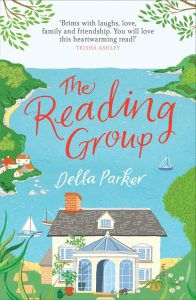
I’ve been a full time writer for 17 years. Here’s how I do it. I write short stories for the remaining markets. I am the agony aunt for Writers’ Forum. I have several self published books on Amazon which earn me £200 plus a month. I do some journalism. I do the odd spot of teaching. I write novels.  Last year I struck lucky. The Reading Group was published by a huge publisher (Quercus is part of the Hachette Group) but I wasn’t paid a huge advance to write it which meant I wrote it in addition to not instead of my usual work.

In short, I diversify. My income is made up of lots of bits of writing related work. Lots and lots of bits which means I work lots and lots of hours. Often 60 hours plus a week.

I live in hope of having a best selling novel that will mean I don’t have to worry about money so much.

The bottom line is that I love writing. I can’t stop. I won’t stop. I think Linda O Byrne’s advice still holds true. Don’t give up. There is always a market for excellence. I don’t think I’ve quite reached excellence yet – but I shall never, ever give up aiming for it.

The Reading Group is published by Quercus. For most of November it is 99p. Not bad for 500 plus pages! Click here to buy/find out more. And if you do like it please leave me a review.  Until Sunday 19 November you can win a copy of the paperback by going to www.oapschat.co.uk

£7.99 (paperback) £3.99 (kindle)

WRITING GOALS and the Rule of Three!

Do you, by any chance, have a New Year Resolution that involves writing? This idea might help you to keep it.

The Rule of Three is one of the most powerful principles I have ever learned. With thanks to Jack Canfield who is a motivational speaker in the US. All you’ll need is a notepad and pen, did you get one for Christmas? If you didn’t, a reporter’s notepad from the newsagents will do. Or just flip up a new document on your word processor.

  • Take a blank page and write your goal at the top of it – which can be anything. Make sure it’s specific though. For example, write a piece of Flash Fiction and send it to a competition. Or, get a feature published in a magazine. Or perhaps you’re thinking big and your goal is to write a 90,000 word psychological thriller. It doesn’t matter: Just commit your goal to paper.
  • Underneath your goal write the next three steps you will take towards it. For example if you want to write Flash Fiction. 1: find a flash fiction competition. 2: Read previous winners. 3: Make a list of possible subjects to write. Or, in the case of the feature. 1: Buy a copy of publication you are aiming for. 2: Establish which features are written by freelancers. 3: Work on a proposal for your feature and send it to the editor.
  • Next, split your piece of paper into days of the week. Under each day, write the next three things you will do to move your goal forward.   As it’s a writing goal many of them will be doing the actual writing. So you may find your later goals look like this. 1. Write the opening paragraph, 2. make a list of possible titles. 3. Edit previous day’s work. Etc.
  • Commit to doing the 3 tasks you’ve set for yourself for at least ONE WEEK. This can take you a considerable way on small goals. Probably past completion. On bigger goals you may be motivated enough to carry on.

Top Tip to help you make this work

Don’t overstretch yourself. Don’t commit to writing 1000 words of your novel every day for a week if you know you don’t have time. Your rule of three can be tiny things. On a busy day your three things may be to write three paragraphs that day. Or three sentences if you like! The point is that you MUST do the three thing you’ve written in your notepad daily. A continual, concerted daily effort is incredibly powerful. The most magnificent castle begins with the laying of a single brick! OK, this picture isn’t a castle, it’s the Fishguard BayHotel in Pembrokeshire! But it’s certainly a castle for writers twice a year. See The Writer’s Holiday. which I highly recommend by the way!

Where was I?fishguard

Ah yes, I use the rule of three on a regular basis in all of my work. It’s brilliant for writing projects. Small and large. It’s also brilliant for promotional work if you’re trying to promote a book, for example.

My January goal in case you’re interested, is to write the next novella in the series of The Reading Group, which is my current project. I will write 2000 words a day, weekdays, 1000 words at weekends, until I have a first draft.  My commitment is to start at 8.00 a.m. and do nothing else until the 2000 words are done. This is how I wrote the rest of the series.

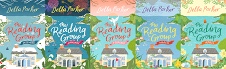
December, January & February are out now. March is out on 1 January 2017. Yikes, I’d better crack on and write the next one! Do let me know how you get on with your goal too.

The Reading Group, all covers

Creating Characters – How well do you know your imaginary people?

Sometimes a character comes into my head fully formed. Sometimes they are shadowy. Sometimes they are shy like real people and I have to get to know them slowly.  Interviewing them is good.

These 21 questions are one of my favourite ways of interviewing them. I may not know the answers, but the character often will. Does that sound mad? Probably, but I’ve never claimed to be completely sane.  I’ve used these questions, or variations of them, with dozens of students.  So I thought I’d reproduce them here. Hope it’s helpful.

  1. Name, age & sex.
  2.  Brief physical appearance. List 3 things.
  3.  Job.
  4. What is your character’s current problem?
  5. Personality type – extrovert, introvert bossy etc.
  6. Where does your character live? Flat, house, rural, city etc.
  7. What, if anything, would make your character laugh or cry?
  8. What is your character’s soft spot/weakness?
  9. What is your character really good at?
  10. What is your character afraid of?
  11. What would make your character furious?
  12. If your character had one wish, what would it be?
  13. How does your character view money?
  14. Does your character have any prejudices? If so, what?
  15. What are your character’s main qualities?
  16. What are your character’s main faults?
  17. Does your character get on with their parents? Siblings? Friends? Neighbours?
  18. What is your character’s biggest secret?
  19. What is the most defining experience your character has ever had?
  20. Who is the last person your character argued with and why?
  21. Summarise your character in a sentence. Pick 3 significant things. E.g. Dora is 82, wears mismatching clothes on purpose and likes to shock her rather pompous son.

One of my favourite things about this particular character sheet is that it doubles up as a plot creation tool. For example Q4 is the basis of a short story or longer piece of fiction.

Q18 is quite good too, when it comes to plotting. Q19 is one of my favourites when it comes  to novels and getting the psychology right.

If you can do Q21 you will probably know your character pretty well.

Happy Writing.

***

My next course, How to Write and Sell Short Stories is at a new venue. Shaftesbury, Dorset. The course will be small – a maximum of 10. (The venue is small.)  It will run on Saturday 12 November between 10.00 and 4.00 and costs £45.  This course is suitable for beginners as well as experienced writers and I hope students will go away with the beginning of a short story, the ending of a short story, (hopefully the same one!) and a good idea of how to develop the middle. Please email me via this website (or leave a comment) if you would like to book a place.

If you would like to know more about writing short stories, please check out my book, The Short Story Writer’s Toolshed. £2.49 for Kindle. £4.99 in paperback.

Tips on Writing Flash Fiction

writing Inspiration
writing Inspiration

Flash Fiction is a term that can be applied to anything under 1000 words but more usually it’s shorter. For the purposes of this blog let’s say between 300 and 500 words.

It shouldn’t be anecdotal, i.e. it should still have the elements of a short story (see definition) but I often see Flash that is quite anecdotal so clearly this will depend on the judge. If possible check the previous winners for hints.

My definition of a short story is: a character with a problem, which is resolved by the end in an unexpected way. The character should change in some way by the end of the story.

Flash Fiction must be strong. The following all work well in flash:

  • Twist endings.
  • Very strong characters, especially in a slice of life story.
  • Powerful emotion.
  • Humour if it’s established swiftly and from the outset.
  • Tales with a moral, for example, criminal gets come-uppance.
  • Strong structures that help to carry the story, for example, the story may be headed up in sections such as a diary format or winter, summer, autumn, spring.
  • Strong themes – such as revenge, hope, loss, love.

What doesn’t work?

  •  Anything that’s too complicated. Plots should be simple with one main thread.
  • Too many characters dilute the story. One central character is good.
  • Very long time spans are hard to pull off.
  • A lot of dialogue is hard to fit in. Snippets are good.
  • Likewise too much scene setting won’t work. There isn’t room.
  • Multi viewpoint is hard to pull off. Stick to one character or use a narrative viewpoint.

Flash must have a good hook and it must have a strong end. It’s usually better to write over your target word length and then cut back. It is very good practice for building both your short story skills and editing skills.

Not to mention great fun.

By the way The Morning After the Life Before is 99p today and tomorrow. That’s the sequel to Ice and a Slice, it doesn’t go on promo very often so grab it if you want it.

Thanks for reading.

Della xxx


The Short Story Writer’s Toolshed

The Short Story Writer’s Toolshed was first published as a series in Writer’s Forum. I later decided to compile it into a handy little book. Here is an extract I thought you might like.

How The Toolshed Works

Every writer has certain tools at their disposal. We all in fact use the same tools when it comes to writing short stories, but we’re not necessarily that adept when we set out. This book is a little like an instruction manual, which I’m hoping might save you some time.

So, what exactly do we have in our toolshed? Well this particular toolshed is divided into shelves and on the shelves you will find the following tools:

Shelf one: ideas and getting started; shelf two: plot; shelf three: characters and viewpoint; shelf four: dialogue; shelf five: structure; shelf six: time span, pace and theme; shelf seven: flashback; shelf eight: cutting and editing; shelf nine: putting it all together; shelf ten rejection and motivation.

If you like you can work through the entire toolshed, or you might prefer to go straight to the relevant shelf. But to begin let me take you on a whistle-stop tour of the toolshed. Let’s examine what a short story actually is, as well as having a quick look at some of the available tools.

A Look Around The Toolshed

What is a short story?

This might seem like an odd question to ask in an ebook for writers. We all know what a short story is, don’t we? It’s a story that’s short; it’s less than the length of a novel; it has a beginning, middle and end and gives the reader the chance to spend a brief time with some interesting characters. Simple enough, you might think. But actually no, it’s not that simple at all.

It’s shorter than a novel, yes, but there’s so much more to writing a successful short story than size. The techniques used, the tools if you like, are exactly the same as the tools for writing a novel. Except they are used differently!

In this ebook which I hope will be useful to both beginners and more experienced writers alike we will look at how to use the tools we have at our disposal.

We will look at not just what makes a story work, but also examine the reasons why some stories which on the surface have all the right ingredients don’t work.

To my mind, writing a short story is like painting in miniature. It should have all the depth and colour that a full size canvas allows, but there is no room for waffle. Don’t make the mistake of thinking they are easy to write. Many successful novelists will tell you that short stories are one of the hardest forms of writing. They are a craft.

Length

The length of a short story changes with the fashion. If you are writing to sell, then your market will dictate what length you should aim for, be it magazine or podcast or radio. If you are writing for a competition then the rules will dictate the length. Even if you are writing for your own pleasure and have no desire to see your work in print, it is wise to set yourself a word limit. This is because length is relevant to the elements of a short story. For example, you’ll have trouble writing a story of 1000 or 2000 words if you have a cast of ten or twelve characters.

They’ve got shorter than they used to be. A quick search of the internet will reveal short story competitions that start with a length as short as 60 words. In fact, I even found one which had a word limit of 6 words. But most short story competitions these days have a maximum word length of around 5000 and this is probably on the long side. The vast majority of competitions ask for short stories of between 1000 and 3000 words.

Magazine lengths are similar. Podcasts may go a bit longer. So even if you are not setting out to place your work, then it might be as well to limit yourself to a saleable length just so you can get into the feel of writing something shorter. If you find your stories feel stretched at 3000 words then you might want to reduce it, but the best way to find out is to write a few. See if the pace suits you. Find the length you are comfortable with and then stick to it until you feel you have mastered the art of fitting your plot and characters into that space.

Characters

You won’t have room for dozens of characters. In my experience one or two main characters are usually enough. You may of course need supporting characters, but look at them as bit part characters who don’t necessarily need to be fully developed or even named. That doesn’t mean they should be stereotypes. There are many ways of making minor characters spring to life with very few words.

We will look at this in more detail when we get to characterisation. Your main character or characters must be fully developed though. If they are not the reader won’t care about them. If she doesn’t care about them and cannot emotionally engage with them, there’s a good chance she won’t read on.

Interestingly, to return to the subject of length for a moment, when I first started writing stories longer than 1000 words I assumed I’d need more characters to get the extra length, but I quickly realised that it wasn’t about adding characters it was about developing the ones I already had. This is one of the most important things I’ve ever learned about short story writing. I later realised it applied to serials and novels as well.

So to summarise, if you are writing a short story of 1000 – 2000 words you probably won’t need more than a couple of main characters and one of them should be main, which takes us nicely on to viewpoint.

Viewpoint

I’m not going to go into the different types of viewpoint at great length here. I will cover those in the viewpoint section (or should I say on the viewpoint shelf). But just in case you’re new to writing, viewpoint simply means whose eyes we are experiencing the story through.

For example, let’s assume we are writing a story about a marriage break up where the wife has had an affair and left her husband. There are three characters in this story: the wife, her lover and the husband. The story might be told through the eyes of any of them, if it is the wife, then she will be the viewpoint character. Not only will we see the action of the story through her eyes, but the story will be coloured by her viewpoint.

It is traditional in a short story to stick to one viewpoint, although you may change if you have a good reason. The viewpoint character also tends to be the main character. There are certain things that should happen to a main character in a short story, one of them being that they should experience some kind of change.

Dialogue

Dialogue is fictional speech. It is very important. It characterises and moves on the plot and gives life to a story. It’s possible to write a short story without it but again you should have a good reason – and by this I mean a reason linked to the story, not just because you don’t fancy the idea of writing dialogue!

When you are working within the very tight framework of a short story, dialogue is even more important. You can, for example, start a short story with dialogue and throw the reader straight into the action and also set up what your story is actually about.

Let’s take the example of the wife, husband, lover story. You might start it like this:

“I’m leaving you, John. I’m sorry, but it has to be like this.” Kathy knew her voice was calm, but inside she was shaking.

“You’re not going anywhere.” He took a step towards her and she was glad the table was between them. “If you think I’m going to let you walk away with that scumbag you’re more of an idiot than I thought.”

This is not particularly subtle, but it’s a swift way of setting up a scene. Already we have a glimpse of the couples’ history as well as what is happening now. Kathy is obviously afraid of her husband and it looks as though she has good reason. You can show a lot of information through dialogue that would take considerably longer in narrative.

Plot

A short story is a snapshot, a glimpse into a character’s life but that doesn’t mean it shouldn’t have a plot. Without one it will probably be too slight. A plot is basically a series of events and in a short story it tends to start with the main character experiencing a problem, which by the end he or she will have resolved. There should be some surprises along the way; otherwise you’ll end up with a linear sequence of events. For example, a basic crime story might be: crime is committed, crime is solved. This is not a plot. In order for it to be a plot, there must be surprises along the way.

Maybe the person committing the crime is not who we thought, or maybe we learn along the way their reasons are not selfish but altruistic. Either of these scenarios would turn a sequence of linear events into a plot.

Setting

You won’t have room for reams of description, but you must have a setting. Your characters cannot interact with each other in a vacuum. Setting needs to be skilfully interwoven. To go back to our husband, wife story, the mention of a table indicates that the story is taking place indoors, possibly in a kitchen. Further snippets of setting would need to be given.

Pace and time span

The pace of a short story is swift. There isn’t time for lengthy set up; the reader should be dropped straight into the action, which must be relevant. Then the story will proceed quickly to its conclusion. A short story by its nature will often only cover a short time-span in the life of the character, say an afternoon, or possibly a few days.

Flashback

Just because your story takes place over a short time span doesn’t mean that you can’t bring in past events, via flashback.

Structure

Structure, pace and time-span are linked. For example, let’s assume you’re using a diary structure. You could divide your story into a series of sections, each headed up as a different diary entry. In this way the story can move seamlessly over a longer period of time.

Theme

For me, the theme is the glue that holds the story together. A theme dictates what the story is about. Is it loneliness, revenge, healing? If you know before you begin, then it will help you to stick to the point and only include what is relevant. Theme is a great help when it comes to cutting and editing. It will help you ensure your work is tightly written.

***

This is the end of the extract. If you would like to read more of the Short Story Writer’s Toolshed you can purchase it for your Kindle for £1.99 here.

If you are reading this between 12th and 19th April, 2016 you can get it at a bargain price of 99p. Here.

If you prefer a ‘real’ copy. It is also available in paperback for £4.99, Here.

Happy writing.

Very best wishes

Della xx
The Biggest Occupational Hazard of Being a Writer!

thoughtful pen mineToday I’m writing about the biggest occupational hazard of being a writer.  No, I’m not talking about writer’s bottom! Although that is a hazard, I have to say. Especially when combined with Easter and all the chocolate I’ve recently consumed!

But today I’m talking about the other HUGE occupational hazard. I mean that moment when someone you’ve just met asks what you do and you tell them you’re a writer and they say…  “I’ve got a good idea for a book/story/novel you could write.” Then they tell you what it is – in full technicolour detail and – if you’re still awake – they add those immortal words. “Maybe you could write it and we could share the profits.”

“Maybe,” you say, nodding politely.

Which got me to thinking what percentage of a story is ‘the idea’ and what is hard graft. Just supposing you were going to split it like this. Would it be 20 per cent idea and 80 per cent hard graft of doing the actual writing? Or would it be 50/50 or would it be even a smaller percentage for the idea, say 10 per cent? Or would it be idea 70 per cent and writing 30 per cent?

I think this might well depend on individual writers. For me the idea is about 20 per cent of the whole product. Most of the work is in the writing. So if I was going to pay for ideas – supposing there was a handy little ideas shop somewhere I think the most I’d pay for a £100 story idea would be £20. Actually, having just written that down I think it would be more like £10.00.  Although I might be prepared to pay more for an actual plot. One that had an end. And if it had a brilliant twist ending. I might pay a fraction more.

One of my novelist friends did actually give me a complete short story plot the other day which worked superbly, thank you Nancy. Just in case you happen to be reading this blog. My ramblings are not aimed at you.

So my questions today are:

  1. How much would you pay for an idea?
  2. What percentage of the finished product is idea and what is the actual writing?

While I’m on, I’m running a course soon. How to Write and Sell Short Stories is on 28th May in Bournemouth.  £45.00 I suspect there will be a few ideas floating around there! Please do email me for details if you’re interested in that one. Max numbers 12. I think there are 4 places left.

Bye for now.

Della x

Short stories for Nanowrimo update – one week in!

This year, as I mentioned in my last blog, I’m attempting to write 50,000 words of short stories during the month of November for Nanowrimo. We are 7 days in. I thought you might like to know how I’m getting on.

Statistics

  • I’ve written 14,000 words so far in 7 days.
  • I’ve started ten stories.
  • I’ve finished eight of them in first draft.
  • So far I’ve edited two and sent two out.

Yay, so it feels like I am achieving something.

Inspiration

My week started with a bang. Last weekend I was on a roll.  The words flowed. I wrote one longish story (2700 words), quite emotional, good structure that I liked a lot. Then another two pager (2000 words) which was lighthearted and fun. Quite liked this one too.

The next story I started, which was supposed to be a very short one pager decided it might quite like to be a serial. That’s one of the ones I haven’t finished, it’s about 2000 words currently.

Then came the one pagers, two of which are finished, edited and sent. The rest all need editing and I’m not sure I’m happy with the endings. I rarely am happy with my endings straight off.

It’s harder some days than others. It’s pretty full on writing like this. And I find it quite tiring.

Enjoyment Factor

Mostly, however, I am having a wonderful time. I think I mentioned that before. It’s incredibly freeing.  I’m not obsessing over any of the stories or worrying about them. I can’t even remember exactly what I’ve written.

Grass roots

It takes me back to when I began writing short stories.  I used to write at speed then. When I started to write full time, I wrote three stories a week. Every week. One on Monday morning, one on Monday afternoon, one on Tuesday morning. The remainder of the week was spent editing these three, teaching my five writing classes and editing any rewrites/rejections that came back in.  I don’t do that any more. There seems to be far more PR and publicity work to do. Oh and I don’t think there was much social media then either.

The Down Side

Is there one? Yes, possibly.

  • A part of me really really wants to edit as I go. It’s hard to resist that. It’s difficult to discipline myself not to look at yesterday’s story.
  • It also means I had to cancel virtually everything else I do in November. Apart from prebooked essentials, for example, tomorrow I’m teaching at Woman’s Weekly all day. I will leave my house at 5.45 a.m. and get back about 10.00 pm. I won’t be writing any Nano tomorrow. Mind you, if I was going on the train I would have done!
  • I’ve had to virtually give up social media. (is that a down side!) Oh, and answering emails.
  • My friends think I’m dead!
  • Oh, and I’m also moving house, which is slightly stressing me out. Haven’t packed much!

Week Two

This may be harder as I have 3 other commitments this week. I will report back. How is everyone else getting on?  Don’t forget, if you need any help with short stories, The Short Story Writer’s Toolshed is quite good.  Even if I do say so myself! 🙂

Six tips for writing shorts for Nanowrimo

As I mentioned in my last blog I’m busy doing Nanowrimo this month. But as usual I’m writing 50k of short stories in November not a novel. This is more useful for me, being as shorts are my day job. I thought I’d share some of how I work with you – in case it’s helpful. Here are my top tips.

  1. Keep them all in one document. I call mine Short Story Bonanza 2015 (Nano likes a title). And it’s easier to keep a word count if they are all in one place. I do start a new page for each story and I head it up with the date. (I don’t often have a title when I start a story.)
  2. I don’t necessarily start a new story each day.  I try to finish the one from the day before. After all, the object of doing Nano is that I write saleable stories and they have to be finished at some point. So I finish as many as I can in draft. But there might still be the odd one unfinished. And that doesn’t matter. Very freeing.
  3. Make Nano the first thing you do. I tend to get up early at least every other day and start at 6 ish. That way my words are often done by nine and I can get on with the rest of my day. I can’t tell you how good that feels!
  4. Use prompts to get going. I love A Writer’s Book Of Days by Judy Reeves. It has a prompt for every day of the year. Fabulous.  I’m not a plotter. I never have been. I sit at my desk, and I start typing. I trust the process. The main thing which stops us writing is us. Our lack of confidence. Our internal editors. Switch off these negatives and just write. You can do it.
  5. Do not use any Nanowrimo time for editing. Always do your daily word count first. Edit later. I edit most of my Nano stories in December. I like editing and it’s a lovely thing to do in December.  I do edit some of the Nano shorts in November. But I take them out of the main document and save them as a new document. I’m always cutting when I’m editing so I don’t want to be cutting any of my nano words, do I?
  6. Nano with a friend. I’ve got a writing friend coming over later today and we’re going to have a go at writing a story each, using the same theme. This makes it so much more fun. And it’s inspiring. And we can get feedback straight away should we want to edit the story and send it out before the end of Nano.
  7. Oh and one last bonus tip.Make sure you’re stocked up on coffee or biscuits! Or whatever you need to reward yourself! (cake in my case). We deserve it.

And if you’d like any help with writing short stories, please do check out my book, The Short Story Writer’s Toolshed. £2.49 for kindle or £4.99 for the paperback.

Happy Writing!


Tell your friends!

© Della Galton All rights reserved.
Powered by Cloudbase Media