Welcome to Della Galton’s website

Tag: short stories

How do I stop my romances becoming predictable?

A rose by any other name!

Here’s another question from a recent postbag at Writers’ Forum. This one comes up quite a bit.  We’re talking fictional ones by the way!

Q A common cause for the rejection of short stories (I know, because I’ve received many!) is that “the story line was too predictable”. I find this very hard to avoid particularly when writing a romantic story for the women’s magazine market, when the maximum number of recommended characters is only three or four. What can be done to stop the reader from working out that the boy and girl who meet at the beginning of the story are not inevitably going to end up in each other’s arms?

A First of all, I emphasize with you. I agree that writing a romantic short story for a magazine is one of the hardest genres to crack, for exactly the reasons you state.  Here are some tips that I hope may help:

  • While the romance is likely to be a little bit predictable, other aspects of the story needn’t be.  You might want to try a unique setting. I’ve sold more than one story which featured a wedding or romance set somewhere unusual, for example an ice hotel. Think about setting your romances somewhere unique or unlikely.
  • You can also experiment with viewpoint. It’s a common misconception to think that romances need to be told solely from the female perspective. They don’t. A romance told from the male perspective, or possibly even a child’s perspective (providing it isn’t the child having the romance) can work just as well and make your story a little different. You might also want to consider dual viewpoint, a romance told from both the hero and the heroine’s viewpoint. I’ve sold a few of these.
  • The romance needn’t be your main plot line either.  It could actually be a subplot. Perhaps consider writing a family story, where the romance is relevant to more than one generation or a cosy crime story where the romance underlays the solving of a crime.
  • Also, don’t forget that it’s possible for the writing itself to be predictable. The use of language and a slightly different style can give romance a new freshness. As can a slightly different structure, i.e. a monologue or diary format.

There’s actually a very fine line between predictable and unpredictable. And actually it’s always an editor’s perception, there’s a little bit of luck involved too.

So I wish you good luck.

Do all stories need conflict? and How do unknown writers get published?

A couple more question from my post bag at Writers’ Forum 🙂

Q: Do all stories have to feature conflict, resolution and growth, with false hopes and disappointments along the way? I appreciate that a straightforward happy little narrative would be largely purposeless and therefore unengaging, but I find it hard to accept that all stories should follow the ‘story arc’.

A You are absolutely right when you say that a straightforward, happy narrative might be unexciting to read. I call stories like this linear, i.e. a piece of writing that moves in a straight line with no surprises to a conclusion that is largely predictable. I think that there should be a story arc, but that can mean many different things.  My personal definition of a story is a piece of writing where a character begins with a problem or conflict, which is resolved by the end in a satisfying, but unexpected way. The character should change in some way by the end. This provides the main arc of the story. I don’t think this can be too formulaic.

It’s not a case of putting in complications or ups and downs for the sake of it (as I thought when I first started writing stories).  They all have to be relevant, both to the initial problem, and also to the character. There is huge scope in this. You can use different structures, you can use flashback, and you should use emotion, which for me, means writing from the heart. You can create twists by the use of misdirection. You can create surprises by withholding information from the reader.

Much depends on the length of the story. It’s difficult to have a big story arc in a flash fiction piece of say 500 words or even 1000. But there should still be some kind of story arc or progression. I hope this helps to clarify.

***

Q This magazine seems to be full of advice for writers who have already ‘made it’ and had their work published. However, there are still many of us who are trying to ‘make it’ and from our side of the fence getting published can sometimes feel like an impossible feat. From here, it seems that to sell your work and be published, you already need to have been published previously. But what if, like me, you don’t have any previous examples or clippings to show? How do you then sell your work and get published?

A Let me reassure you that you don’t have to have been published to get published. We all have to start somewhere. The key to getting published is to write what publishers and editors want. So first you need to know what that is. And you can find out by doing your own market research. Here are my top tips on market research.

  1. If you want to write for a particular magazine then first of all make sure they accept freelance submissions. If they don’t you’ll be wasting your time approaching them. Whether it’s fiction or features you want to write, ask for their contributor’s guidelines.
  2. Buy several copies of the magazine and look at house style. Is it chatty, or more serious and/or literary?
  3. Check the lengths of fiction/features they publish, 1000 words, 2000 words etc. (writing outside of these lengths will result in automatic rejection because they won’t have the slots to put your work.)
  4. Check the target reader they are aiming for, including age, sex, type of person. Adverts and letter pages are a good guide to this.
  5. Check their house style – do they prefer first person viewpoint or third, male or female etc.
  6. Make sure you are writing for their target reader.
  7. Make sure you send your submission to the right person and in the right format, e.g. via email or by snail mail.

If you are writing features you should send a query letter/email first. Head up your query with an eye catching title or question. I highly recommend Solange Hando’s book, Be a Travel Writer, Live your Dreams, Sell your Features: Travel Writing Step by Step. This is a book about selling travel features, but its excellent advice applies to selling all features.

Here’s an example of a query letter sent to a dog lovers magazine, which resulted in me being commissioned to write the feature.

Dear Debbie,

Feature query – Ten ways to help your local dog sanctuary

I was wondering if you’d be interested in a feature about the above. As you know, many sanctuaries, especially those that rescue dogs are in dire straits, thanks to the credit crunch. And the small ones tend to get hit the hardest.

Since June this year, myself and four friends have raised nearly £1000 for DAWG (Dorset Animal Workers Group).

The feature would cover various simple ways of raising money, i.e. what we did – and how we did it. Plus other things dog lovers can do to help their local rescue centre. I can provide illustrating pictures.

I’ll look forward to hearing what you think.

It is possible for a writer with no credits to be commissioned to write a feature. You just have to write what is wanted. Once you have been commissioned, make sure you supply the feature promptly. Be professional. You will usually have to try more than once. Perseverance in all types of writing for publication is the key.  I hope this helps. Good luck.
Tips on writing emotion

Writers are in the business of selling emotion.  I don’t remember who said that, but it’s spot on. If a reader doesn’t emotionally connect with a character they won’t care about them and they won’t read on. So getting emotion – whether it is sadness, humour, or a feeling of poignancy or tension – into your writing, is critical.

The million dollar question is how do you do it?

In order to ascertain what constitutes emotion, myself and a group of students brought in a selection of prose & poetry extracts which we considered emotional and set about analysing them to see if there was any common ground. Here are our findings:

It’s easier to get emotion from very emotional events. It sounds obvious but it’s worth mentioning. If you pick a subject that we all understand and have experienced, you’ll have a head start. Here are some universal emotional subjects.

  • Love – especially unrequited.
  • Death.
  • Loneliness.
  • Old age.
  • Loss of a person, pet, job, home.
  • Illness.
  • Darkness.
  • Fear – especially of a universal threat – from earthquakes to terrorism, spiders to flying.
  • Humiliation – fear of looking a fool or being left out.
  • Not fitting in.

Sensory detail is key in every type of emotional writing. So have your character hearing, touching, tasting and smelling her surroundings. Don’t forget temperature.

Setting is very important too. Setting puts emotion in context. We need to know where your character is when they are experiencing emotional events.

Be very specific. Don’t say ‘it was a dark night’. Say, ‘It was a cold moonless night.’

Viewpoint is vital. We need to be inside the character’s head – not watching them from a distance. First person present tense works particularly well.

Pace is also very important. Particularly when setting up tension and when writing humour.

Interestingly if you are writing a very sad scene you can understate what you write. In fact you should understate to avoid mawkishness (imo). But if you’re writing humour you need to go OTT. Really milk the situation.  Don’t miss a single opportunity. Humour and pace are strongly linked – as every stand-up comic knows.

Finally – if you feel it when you write it – the reader will feel it when they read it. What comes from the heart goes to the heart. Be authentic. Don’t hold back. Make yourself cry, laugh or feel afraid and your audience will be right there with you.

Short Story Writing Courses

Just a couple of forthcoming courses to tell you about today.

10th – 12th April 2015

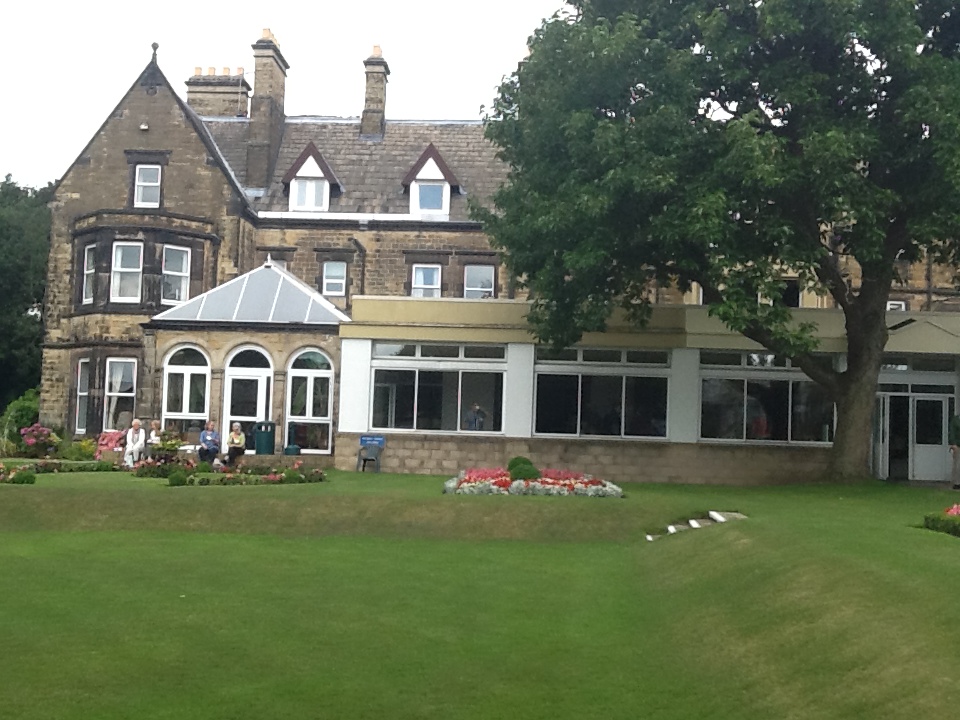
‘Write a Short Story in a Weekend’ at the Royal Agricultural University – Cirencester (above)

A step by step guide to writing a short story in beautiful surroundings with expert tuition – well with me anyway! I’ve sold one or two short stories!

£240 all inclusive fee

e-mail loisbm@outlook.com or me via this website for more details or check www.malagaworkshops.co.uk

6th June 2015 – 10 – 4.00

How to Write and Sell Short Stories (with me again) at Kinson Community Centre, Pelhams Park, Milhams Road, Kinson, Bournemouth.

This course will focus on what a short story is and how you can sell it.  We will look at existing short story markets (including magazines) and up to date information on what those markets require.  We will also be looking at other paying short story markets (including podcasts) and what they require. Advice will be given on house style and how to find ideas to suit your intended market. Courses are run on an informal lecture/discussion group basis. £45.00

Wednesday Writing Spot – A Short Story Anthology – Guest Blog from Helen Yendall

Today, I am talking to the lovely Helen Yendall about her venture into self publishing an anthology called Paperchase. And it’s a subject close to my heart, short stories. Isn’t it a fabulous cover. So without further ado…

Q: Why did you decide to publish an e-book of short stories?

Well, it certainly wasn’t for fame and fortune! I’ve had some success with published articles, poetry and short stories but not had a book of any kind published. It’s almost unheard of for unknown writers to have collections of short stories published in the traditional way, so I thought I’d go down the self-publishing route. It was fun and very satisfying to see the end result. Although, I must admit, when I pressed ‘publish’, it was rather a nerve-wracking moment.

Q: Why Nerve-Wracking?

When you’re published by, say, a magazine, you’re very protected. All the necessary editing, checking, illustrations and marketing is done by someone else, so I suddenly felt very ‘exposed’. What if no-one bought or liked my book? What about typos, complaints or bad reviews? And – importantly – how was I going to promote it so that people would even know it existed?

Q: Do the stories in ‘Paperchase and other stories’ have a theme?

Yes. I don’t write many traditional boy-meets-girl romance stories, so although my theme is definitely ‘love’ it’s not simply that, rather it’s ‘finding love in unexpected places and in unexpected ways’.  At train stations, on a bus, in the middle of a field, through a knitting circle… my stories touch on love for our neighbours, children, parents, friends and grandchildren. I hope the stories are uplifting and life-affirming and that if you have a tear in your eye at the end of one or two, it’s because the story’s moved you, not because it’s upset you!

Q: Do you have a favourite story in the collection?

Ooh, that’s like asking a mother to choose her favourite child! But if I’m pushed, I have to say that ‘The Curse of The Sheep Baby’ is a particular favourite of mine. I wrote it several years ago, when I was doing a Creative Writing course at Birmingham University. We were put into groups of 7 and had to come up with a fitting theme and each write a story on that theme. We chose the 7 deadly sins and I was given ‘envy’.  The story I came up with was prompted by a newspaper article I’d just read about women in China who didn’t want to give birth in the year of the Sheep (which, incidentally, we are just about to enter again, when the new Chinese Year starts on February 19th). I liked the story but it spent many years being rejected by magazines and coming nowhere in competitions until, finally, it was placed in a competition in Writers Forum magazine and published, with a beautiful photograph of a Chinese baby. It’s nice to be able to get the story ‘out there’ again by including it in this collection.

Q: Your cover is very striking. What was the inspiration behind that?

Thank you. I wanted the book to have a snappy title and ‘Paperchase’ is the only story in the collection with a one-word title, so it seemed the obvious choice.  Then it was a case of working with the illustrator to create a design that not only reflected that story but some of the other stories too. On reflection, the cover is perhaps a little too dark and spooky (none of the stories are gothic in any way!) so perhaps I should have gone for some brighter colours but overall, I’m really pleased with the cover.

Thank you so much for inviting me to be a guest on your blog today, Della!

Paperchase and Other Stories is available here as an e-book, priced at £1.99

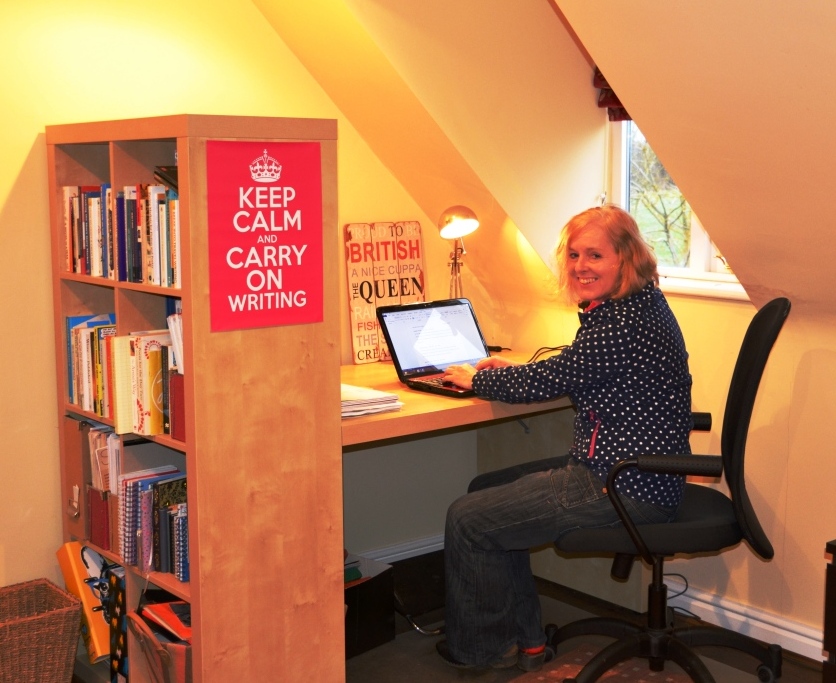
It’s a pleasure to have you, Helen. I think the cover is fabulous. And I love your writing room. 

Happy Ever After – or is it? How do you get a good end?

For me, endings have always been the most difficult thing to get right.  But a bad ending can ruin an otherwise excellent story. There are all sorts of bad endings. You probably recognise most of these. They don’t really need explaining.

  • Is that it?
  • So what?
  • Where’s the rest?
  • I worked that out in Paragraph One.
  • Did I miss something?
  • What happened to Harry?
  • You’ve got to be joking!

So – how do you make sure your ending doesn’t fall into these categories?  Here’s a list of types of endings and tips that might help to make them work:

  1. Circular stories – link the beginning with the end, often by time or place, for example we end up when and where we began.
  2. Twist – as it sounds. Spring a surprise on the reader, but do give them the clues to work it out.
  3. Surprise – these are a little bit gentler than a twist. Usually a surprise means some piece of information is withheld from the reader. An agent I once had called it the after eight mint effect.
  4. Straight ending – these don’t contain twists or surprises but they often contain a universal truth. They are often poignant. Can also be amusing.
  5. Link the title with the end – these are often stories with a theme, for example, a story called Faith, turns out in the last paragraph to be about ‘faith’.
  6. Motifs – you might have  a running motif through the story, for example a recurring sentence, or a recurring phrase that ties up with the end.
  7. An off the page end. You finish with a pointer as to where the story/characters will go next. Things aren’t neatly tied up but there’s an indicator that the characters will be ok.

It’s worth remembering the following too:

An ending must resolve the problem you initially set up.

It must be relevant to the beginning.

If you’re stuck for an ending, look at what you’ve written so far.  The clues to the end will always be in what you’ve already written.

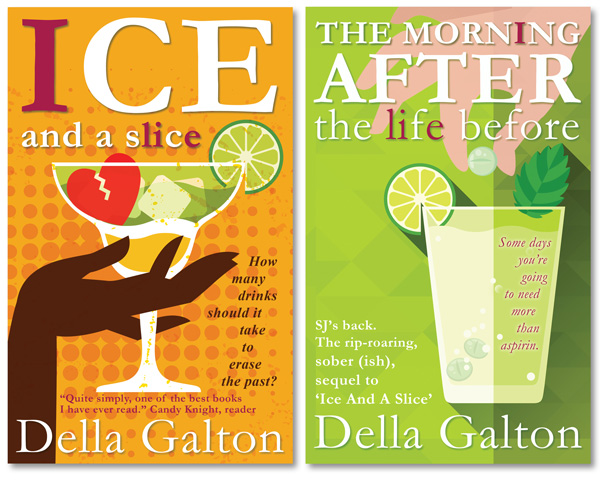
And while we’re on the subject of endings, did I mention the sequel to Ice and a Slice is out this week. Yay! The Morning After The Life Before is my latest novel and I’m very proud of it. SJ doesn’t quite get the Happy Ever After  she thought she was heading for! Nice matching cover for Ice and a Slice too – Can you spot the hidden message in these two covers?

The fabulous covers were designed for me by Peter Jones. Find out more about his book cover designing service here.

The Morning After The Life Before comes out on 5 February 2015 and is available for pre-order here.  Ice and a Slice with its funky new cover is available here. They are both £1.99, less than the price of a glass of Chardonnay!


Ten Stories NOT to send to Woman’s Weekly

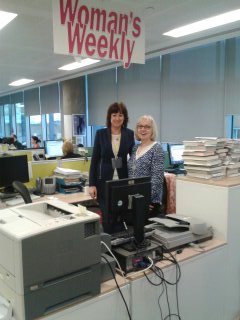
Woman’s Weekly at Blue Fin Buildings

I was lucky enough to be teaching with the very lovely Gaynor Davies at Woman’s Weekly last Monday. Here are a list of stories she currently does NOT WANT because a) they have too many already or b) they’d been done to death. So PLEASE DON’T DO THESE. hot off the press.

  1. Stories about weddings.
  2. Stories about funerals.
  3. Stories about women finding themselves by doing a bungee jump (who’d have thunk it!)
  4. Woman looking after neighbour’s cat/dog/budgie and coincidentally finding the man of her dreams! (Damn!)
  5. You think it’s a child’s first day at school (told from viewpoint of mum) but it’s actually a man leaving a woman. (that’s one I haven’t even thought of!!!).
  6. Retired husband getting under wife’s feet.
  7. Stories about adoption – mother finding child or child finding mother.
  8. Stories about infidelity – how many actual endings are there? Either she forgives him or she doesn’t.
  9. Stories in letter format. Or any other story structure that you have sold them a few times. (It was good the first time – but not quite so original on the third outing!).
  10. Children persuading elderly parents to downsize.

So what else is left? We asked Gaynor this. Here’s what she said. Stories about people, warm stories, quirky stories, believable stories. Stories with ends that do not read like the punchline to a joke. Maybe a bit of something sensual – but still within the Woman’s Weekly boundaries. These can stretch further than you think.

They  are always short of 1000 words (900-1000) and 2000 words (1800 to 2000) and also 8000 words for the Fiction Specials. Happy Writing.


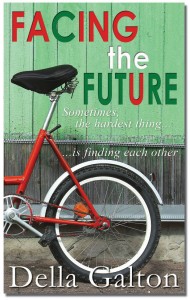
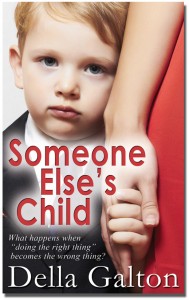
And did I mention I have two new novellas out – both previously published as Serials for Woman’s Weekly – in case you’d like a feel for what they DO like 🙂

Someone Else’s Child. Click here for a closer look.

Facing The Future. Click here for a closer look.

My novel, Ice and a Slice, is also on promotion from November 1st. 99p for a full length novel. Click here for a closer look.
Thank you for reading.

What Do Your Short Story characters Look Like?

Characterisation is the means by which you make your fictional characters appear to be real people. It is probably the most important part of any piece of fiction. If the reader doesn’t care about your character, he or she won’t read on.

Your characters reveal their personalities in much the same way as real people
i.e. via what they look like, what they do and say and what they feel.

Appearance
It’s not usually necessary to describe your character at length in a short story (unless their appearance is critical to the plot). All of the following examples come from 1000 word stories. The briefest touches can bring a character to life.

Example one (A City Girl at Heart – People’s Friend)
‘So…how are you settling in?’ I asked Andy when he phoned me the weekend after he’d moved into the cottage.
‘Fine, thanks. Absolutely fine.’
I sensed a note of unease beneath his cheery words. ‘But..?’ I prompted.
‘I keep hitting my head on doorways.’

Example two (Brief Encounter – Woman’s Weekly)
Jonathon wasn’t her usual type. He wore his hair in a ponytail. He wasn’t over tall, but he had big hands and feet, there was a comforting solidity about him. She could imagine herself snuggled up and protected in his arms.
“I build racing cars for a living,” he’d told her as they’d gone through all the polite introductions stuff. “How about you?”
“I’m a nurse. I probably treat people who’ve injured themselves in your cars.”

As you can see, these are very brief physical descriptions, but they are enough to brush stroke a character’s appearance. We know Andy is tall. Jonathan has long hair and is big boned.

But now for a story where appearance is critical to the plot.

Example Three (Mirror Mirror – Take A Break)
“I look fat in it, don’t I?”
Kath could clearly hear the girl’s voice in the next cubicle along. She was talking to her friend, another teenager. Kath had seen them coming in to the changing rooms earlier, both tall and leggy and beautiful.
But not as confident as they looked, she thought now, as she glanced appraisingly in the mirror of her own cubicle. Now she’d taken her top off she could see the slight bulge over her waistband and the tops of her arms weren’t as trim as they’d been only a couple of years ago. She gave a wry little smile.
‘You don’t know what you’ve got till it’s gone.’ Never was there a truer saying than that.

(Extract taken from later in Mirror Mirror)
Kath slipped the dress over her head and smoothed its cashmere softness down over her ample hips. It was Granny Smith green.
She could probably pass as an apple crumble in her Granny Smith dress with her newly highlighted hair. She giggled. A couple of weeks ago she’d have tugged the dress off and found something more staid, more fitting of her middle aged self, but that was a couple of weeks ago.
Everything had changed since yesterday.
For a moment she let her eyes linger on the perfect symmetry of her breasts. Earlier on she’d bought a new bra from Marks and Sparks. She got measured up because she hadn’t bought one for ages. There had been a time when she’d thought she might not need to buy a bra ever again.

Ah, so now we know why Kath’s appearance is important, why we had so much of it – the theme of the story relies on it. She has just had the All Clear from breast cancer and she is celebrating her body still being whole.

But you can see the difference, both in the amount and the focus of description needed.

Thank you for reading. For more tips on characterisation, please see my book, The Short Story Writer’s Toolshed. Currently on sale at Amazon for just 99p.

Writing for The Friend

Last week I was lucky enough to listen to a talk – as well as have a chat with – Shirley Blair, Fiction ed of The People’s Friend.  Fascinating stuff.  Here are ten things you may or may not know about writing for The Friend.

  1. They buy 633 short stories a year – 641 if you count long reads. That’s 17 a week. Which makes them the biggest consumer of women’s short fiction and a very good market to try.
  2. They read everything they receive because they never know when they will find the next diamond.
  3. They are traditional and have a hardcore of readers who are easily offended – the ones who express dismay that consuming alcohol has become commonplace in fiction.
  4. Hence, they like to offer in their fiction, escapism, comfort, the feel good factor rather than the harsher edges of reality. Think reality in soft focus.
  5. This does not mean they want boring and same old.
  6. They like young romances.
  7. They like feel-good.
  8. They like to be entertained.
  9. They like a positive outcome.
  10.  Stories they see too much of are:
    1. Old lady who is scared of young people. Really???
    2. New widow thinking about sheltered housing, even though she is only 60.
    3. Empty nester seeing daughter off to university.

So, there you have it? Think you could write for The Friend. They have a website and a blog and are very active on Facebook and Twitter. Why not give them a go. And please give my love to Shirley.

And here’s a quick cheeky plug for my book about writing short stories. The Short Story Writer’s Toolshed. Click here to check it out. 🙂


Writing a Winning Opening Paragraph. Three Top Tips.

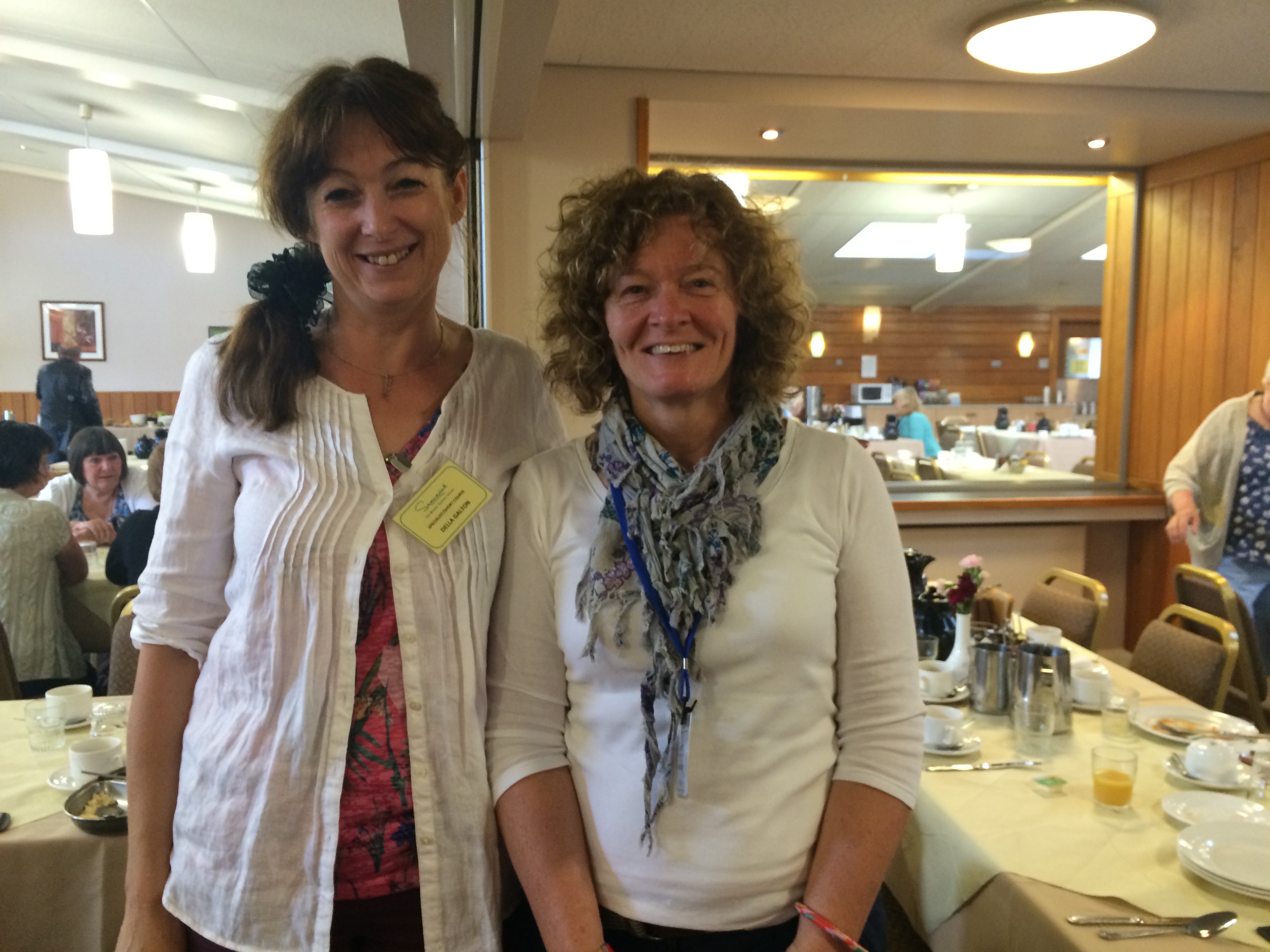
Last week I was lucky enough to be teaching at the Writers’ Summer School at Swanwick in Derbyshire. Beautiful place if you haven’t been there. One of my courses was about winning writing competitions. Just for fun we had an opening paragraph competition, which was won by Tony Greenfield. He was kind enough to let me reproduce his winning paragraph.

But first, here are my three top tips for writing an excellent opening paragraph.

  1. The paragraph must have a good hook – and be intriguing enough to make a judge want to read on.
  2. The writing must be original and strong.
  3. We need to care about the character.

Many Congratulations to Tony for getting all of these things right – in a ten minute workshop, I might add. And many thanks to everyone else who entered. There were 50 entries. There wasn’t a bad one among them.

Here is Tony’s winning paragraph:

Eulogies can be wrong

Thank you for coming to my funeral last week. Hundreds of people were there but the only two I knew were you and George. I knew George was there because he spoke a eulogy. He said many good things about my life. My life, he said, had been ordered and planned to succeed. He was wrong. I always ran from plans.


Tell your friends!

© Della Galton All rights reserved.
Powered by Cloudbase Media