I often get asked if there is any sort of checklist for writing a short story. And yes, I think there is. Here is what I think a short story should include:
A character who has a problem/conflict which must be resolved by the end of the piece in an unexpected way.
In fact this definition could, very roughly, be applied to all fiction. If one or more of the elements are missing the story won’t quite work. Don’t take my word for it. If you have a story that doesn’t work, try running this checklist against it. Are the following elements in place?
Character
Conflict
Change
Resolution
Surprise
If a story isn’t working, I very often find that one of the last two is missing. Another common problem (oh the irony) is that there simply isn’t enough conflict, i.e. the character doesn’t have a big enough problem for the length of the piece.
Don’t take my word for it. If you have a story that doesn’t quite work, apply the checklist and see if you can fix the missing element and get the story to work.
Happy Editing!
Della xx
PS if you would like some more help with identifying what’s gone wrong with a short story I’m running two summer workshops in Bournemouth on Saturday 21 July and Sunday 26 August. You can bring along a story of up to 2000 words for detailed feedback.
Motivation – one of my favourite subjects. Motivating yourself to write should be easy, shouldn’t it? After all, we want to write. Don’t we? So why is it so difficult to get started? Recognise any of these excuses – er hem, I mean REASONS?
Time: I’d like to write but I never seem to have the time.
If that’s you, ask yourself a question. Is it really true? Do you really not have time? Or are you just not prioritising writing? Possibly because you don’t feel you deserve the luxury of having time to write when there are so many other things to do, for example, work, friends and family.
Well, if writing is what you really want to do, then don’t you deserve to carve out some time for it? If you were to allocate half an hour three times a week you could probably write a short story in a month (perhaps even two). Little and often really is the key.
Focus: I don’t know what I want to write.
Many people set off with the idea of writing a novel. This is very commendable; don’t let me stop you if that’s your burning passion. But there are many other forms. Here are some less time intensive ones:
A blog
A short story
A poem
Morning pages
A feature for a magazine
Why not experiment until you decide what’s for you. Better still why not pick one of the above and set a deadline to complete it.
Confidence: I’m not good enough to be published.
How do you know until you try? Not many people are good enough to be published until they’ve done some market research and learned what works and what doesn’t. Writing is a little like learning the piano I think – we wouldn’t expect to be concert pianists without a fair bit of practice.
Laziness: It just feels too much like hard work a lot of the time.
Newsflash – it is! Believe me, I know it is. I write a lot and some days (actually there are quite a lot of them) I would much rather be doing something else. Some days it feels as though I’m wading through sludge.
Usually when this happens, I just carry on. (I have to, it’s my day job). Very often it’s because I’ve got to a tricky bit. So my top tip for this is that it’s much better to finish writing when I’m really enjoying myself – then I’ll be all the keener to go back to it again. This really does work. Trust me.
If you’re really stuck I once heard a novelist say she used to handcuff her ankle to the desk to make herself sit still until she’d done her allotted amount of words. I can’t say I’ve tried this one – but I’m not ruling it out!
Happy writing
Della xxx
PS I’m running a course in Bournemouth this Saturday. 23 October. Write a Short Story in a Day (Hopefully the title is self explanatory but if you’d like further details please do leave a comment or email me.)
I can’t believe how long it is since I’ve blogged. So big apologies. Where has the year gone? I think it’s summer isn’t it, although it doesn’t actually feel like it in deepest Dorset right now! It’s all wind and rain! Anyway, here’s a question that came into my postbag for Dear Della in Writers’ Forum recently so I’ve reproduced it here. It’s an interesting one and I’m sure we’d all have different answers.
Q: How much research should you do before you write a novel? How do you know when enough is enough? One of the writers in my local group says she does hers afterwards, but I don’t see how this can work. How can you write a novel if you don’t know the facts that you are writing about? Please advise.
A: The amount of research you need to do will vary, depending on your subject and how much you know already. I’d say that more is generally better – definitely don’t skimp because it will show. But if you like research it’s easy to get carried away too.
Paradoxical as it may seem, I think that very often you can do your research after you’ve written the novel. How do you know what you need to research until you get to that point? There are pros and cons for both before and after.
Here are some pitfalls for doing it in advance. You might do a whole pile of research that later turns out to be unnecessary for your story and hence a waste of time. Or you might be tempted to put in every bit of research whether you need it or not just because you’ve done it. I’m sure we’ve all read novels where this has been the case. And finally, and most dangerously, you might never start the writing because you are having far too much fun researching.
On the other hand if you leave it all until after you’ve written the story you run the risk of having to rewrite huge chunks in the light of information you didn’t know previously. So my advice would be to research facts and information before the writing if major plot points hang on it.
It probably also depends on how much you plot in advance. If you plot everything out to the nth degree you may well know all the fine points of what you need to research. If you’re more of a panster (as I am) then you won’t. There’s no hard and fast rule. It may just come down to a matter of what works for you.
***
Incidentally the novelist who told me to do the research after the writing was the late Frederick E Smith, author of the 633 Squadron novels. I respected him very much, we had many a long chat at the Riverside Pub, sitting outside in summer overlooking the river and putting the world to rights. So thank you, Fred. Invaluable advice which I still follow.
I’d be interested to hear what others do. Happy writing everyone.
Della xx
I’m running a course on How to Write Your First Novel in Bournemouth on Saturday 24 June 2017. 10 till 4.00. Cost £45.00. Do contact me via this website or on Twitter or Facebook if you’re interested.
Publishers and agents like to categorise novels into genre. Partly so they know which shelf to put your book on at the library/bookshop. Genre refers to the type of story you’re writing. Here are some of the most popular genres and some very ballpark figures on how long they are.
Romance: quite a broad spectrum, ranging from Mills & Boon category romance (Approx 55,000 words) to more mainstream romance. (Approx 90,000).
Historical: Period stories. (Can be 120,000 plus).
Sagas: Multigenerational stories. (Can be 120,000 plus).
Fantasy/Sci fi: Includes other worlds, past, present and future. (Can be 120,000 plus).
Timeslip: (Can be 120,000 plus).
Erotica: Includes all genres, from mainstream to niche. (55,000 plus).
Literary: (practically any length – depending on publisher).
Commercial Women’s Fiction: a catch all for anything that doesn’t come under another category. (80,000 plus).
I should also mention children’s and YA which isn’t a genre exactly but is a law unto itself. Length depends on age group and publisher.
The above list is not exhaustive. It’s simply meant as a very general guide. Publishers will usually state what lengths and genre types they are interested in receiving.
Digital publishing means that there is a great deal more flexibility than there used to be because the cost of printing doesn’t govern the length of a novel. Many publishers today will consider novels from 55,000 upwards and this was once thought to be too short (except for category romance).
It’s usually easier to sell a novel that fits into a genre because publishers see the market as being more defined. Readers of sci-fi like to read sci-fi. Readers of crime like to read crime. However there are, of course, elements of romance in most of the other categories. It’s hard to avoid as it’s so much a part of the human condition!
A true cross genre novel, for example, a psychological thriller cross fantasy tends to be much harder to sell.
Also, interestingly, although publishers don’t want to buy them, it’s very often a cross genre novel that will become an out of left field bestseller. Fifty Shades of Grey was (in my opinion) category romance plus bondage! Jonathan Strange & Mr Norrell by Susanna Clarke was historical plus magic/fantasy.
As writers it’s probably better to know our genre and try to stay somewhere within it. However, I also think that we should write what we feel most passionate about and not follow too many rules. Phew! Did I mention it was complicated!
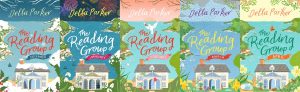
I can’t believe how long it is since I wrote a post! It’s been mad lately. I’ve been writing the last part of my series, The Reading Group. Part Five was the Summer Holiday. Blimey, that was definitely the trickiest. Partly because this novella had more than one viewpoint. Partly because it was the culmination, as well as being a standalone novella, of the series. The deadline is in two days time. I’ve just sent it off to my agent and publisher, simultaneously. I managed to mess up my shoulder with RSI towards the end of the novella. I was so immersed in the work that I didn’t realise I was hurting my shoulder until it had practically seized up. Top Tip, take regular breaks.
Anyway, that’s not what this is about. How do you write your stories? Long or short? I have always written chronologically, but I did something different on this one. I wrote the beginning, then I wrote the ending. I wrote the middle last. This had some advantages that had never occurred to me before.
Because I knew the ending, I knew the relevance of every single scene prior to it. Usually I don’t know this until I’ve finished. Then I go back and revise. I think this made the middle much sharper. It was a bit like doing a jigsaw. I had the framework so the middle was much easier to write.
I think it was probably slightly quicker.
It also gave me a lot more time to reflect on the ending. Because as I built towards it, my subconscious, which I rely on so heavily, was busy enhancing bits of it. So by the time I got there for the second time I knew exactly what needed editing.
Will I do it again? Yes, I think I might. Do I recommend it? Yes.
The Reading Group January, February and March are all out now. I would love to know what you think of them if you’ve read them.
I’d also love to know how you write. Chronologically, or not? Please do comment.
Do you, by any chance, have a New Year Resolution that involves writing? This idea might help you to keep it.
The Rule of Three is one of the most powerful principles I have ever learned. With thanks to Jack Canfield who is a motivational speaker in the US. All you’ll need is a notepad and pen, did you get one for Christmas? If you didn’t, a reporter’s notepad from the newsagents will do. Or just flip up a new document on your word processor.
Take a blank page and write your goal at the top of it – which can be anything. Make sure it’s specific though. For example, write a piece of Flash Fiction and send it to a competition. Or, get a feature published in a magazine. Or perhaps you’re thinking big and your goal is to write a 90,000 word psychological thriller. It doesn’t matter: Just commit your goal to paper.
Underneath your goal write the next three steps you will take towards it. For example if you want to write Flash Fiction. 1: find a flash fiction competition. 2: Read previous winners. 3: Make a list of possible subjects to write. Or, in the case of the feature. 1: Buy a copy of publication you are aiming for. 2: Establish which features are written by freelancers. 3: Work on a proposal for your feature and send it to the editor.
Next, split your piece of paper into days of the week. Under each day, write the next three things you will do to move your goal forward. As it’s a writing goal many of them will be doing the actual writing. So you may find your later goals look like this. 1. Write the opening paragraph, 2. make a list of possible titles. 3. Edit previous day’s work. Etc.
Commit to doing the 3 tasks you’ve set for yourself for at least ONE WEEK. This can take you a considerable way on small goals. Probably past completion. On bigger goals you may be motivated enough to carry on.
Top Tip to help you make this work
Don’t overstretch yourself. Don’t commit to writing 1000 words of your novel every day for a week if you know you don’t have time. Your rule of three can be tiny things. On a busy day your three things may be to write three paragraphs that day. Or three sentences if you like! The point is that you MUST do the three thing you’ve written in your notepad daily. A continual, concerted daily effort is incredibly powerful. The most magnificent castle begins with the laying of a single brick! OK, this picture isn’t a castle, it’s the Fishguard BayHotel in Pembrokeshire! But it’s certainly a castle for writers twice a year. See The Writer’s Holiday. which I highly recommend by the way!
Where was I?
Ah yes, I use the rule of three on a regular basis in all of my work. It’s brilliant for writing projects. Small and large. It’s also brilliant for promotional work if you’re trying to promote a book, for example.
My January goal in case you’re interested, is to write the next novella in the series of The Reading Group, which is my current project. I will write 2000 words a day, weekdays, 1000 words at weekends, until I have a first draft. My commitment is to start at 8.00 a.m. and do nothing else until the 2000 words are done. This is how I wrote the rest of the series.
December,January & February are out now. March is out on 1 January 2017. Yikes, I’d better crack on and write the next one! Do let me know how you get on with your goal too.
Sometimes a character comes into my head fully formed. Sometimes they are shadowy. Sometimes they are shy like real people and I have to get to know them slowly. Interviewing them is good.
These 21 questions are one of my favourite ways of interviewing them. I may not know the answers, but the character often will. Does that sound mad? Probably, but I’ve never claimed to be completely sane. I’ve used these questions, or variations of them, with dozens of students. So I thought I’d reproduce them here. Hope it’s helpful.
Name, age & sex.
Brief physical appearance. List 3 things.
Job.
What is your character’s current problem?
Personality type – extrovert, introvert bossy etc.
Where does your character live? Flat, house, rural, city etc.
What, if anything, would make your character laugh or cry?
What is your character’s soft spot/weakness?
What is your character really good at?
What is your character afraid of?
What would make your character furious?
If your character had one wish, what would it be?
How does your character view money?
Does your character have any prejudices? If so, what?
What are your character’s main qualities?
What are your character’s main faults?
Does your character get on with their parents? Siblings? Friends? Neighbours?
What is your character’s biggest secret?
What is the most defining experience your character has ever had?
Who is the last person your character argued with and why?
Summarise your character in a sentence. Pick 3 significant things. E.g. Dora is 82, wears mismatching clothes on purpose and likes to shock her rather pompous son.
One of my favourite things about this particular character sheet is that it doubles up as a plot creation tool. For example Q4 is the basis of a short story or longer piece of fiction.
Q18 is quite good too, when it comes to plotting. Q19 is one of my favourites when it comes to novels and getting the psychology right.
If you can do Q21 you will probably know your character pretty well.
Happy Writing.
***
My next course, How to Write and Sell Short Stories is at a new venue. Shaftesbury, Dorset. The course will be small – a maximum of 10. (The venue is small.) It will run on Saturday 12 November between 10.00 and 4.00 and costs £45. This course is suitable for beginners as well as experienced writers and I hope students will go away with the beginning of a short story, the ending of a short story, (hopefully the same one!) and a good idea of how to develop the middle. Please email me via this website (or leave a comment) if you would like to book a place.
If you would like to know more about writing short stories, please check out my book, The Short Story Writer’s Toolshed. £2.49 for Kindle. £4.99 in paperback.
Flash Fiction is a term that can be applied to anything under 1000 words but more usually it’s shorter. For the purposes of this blog let’s say between 300 and 500 words.
It shouldn’t be anecdotal, i.e. it should still have the elements of a short story (see definition) but I often see Flash that is quite anecdotal so clearly this will depend on the judge. If possible check the previous winners for hints.
My definition of a short story is: a character with a problem, which is resolved by the end in an unexpected way. The character should change in some way by the end of the story.
Flash Fiction must be strong. The following all work well in flash:
Twist endings.
Very strong characters, especially in a slice of life story.
Powerful emotion.
Humour if it’s established swiftly and from the outset.
Tales with a moral, for example, criminal gets come-uppance.
Strong structures that help to carry the story, for example, the story may be headed up in sections such as a diary format or winter, summer, autumn, spring.
Strong themes – such as revenge, hope, loss, love.
What doesn’t work?
Anything that’s too complicated. Plots should be simple with one main thread.
Too many characters dilute the story. One central character is good.
Very long time spans are hard to pull off.
A lot of dialogue is hard to fit in. Snippets are good.
Likewise too much scene setting won’t work. There isn’t room.
Multi viewpoint is hard to pull off. Stick to one character or use a narrative viewpoint.
Flash must have a good hook and it must have a strong end. It’s usually better to write over your target word length and then cut back. It is very good practice for building both your short story skills and editing skills.
Not to mention great fun.
By the way The Morning After the Life Before is 99p today and tomorrow. That’s the sequel to Ice and a Slice, it doesn’t go on promo very often so grab it if you want it.
Got an idea for a story? Write more than one opening paragraph – it takes the pressure off having to get it perfect. Keep writing openings until you feel the inspiration kick in. This can sometimes take me a while.
Don’t edit your beginning until you’ve completed the story. It’s very easy to focus so much on perfecting an opening paragraph that you never get to the end.
Don’t end the section you’re writing at the end of a scene break. Stop mid scene, mid paragraph or even mid sentence if you’ve got a good memory! It’s much easier to pick it up again.
We tend to spend much less time on the end of a story. The right ending can take time. Write more than one closing paragraph. Then leave the story a week or so before coming back and seeing which one feels right.
When you have a complete first draft. Leave the story another week before you do your final edits. A student I once taught likened it to putting your story in the ‘naughty cupboard’. When you go back to them they will tell you everything they did wrong. This is so true. Mistakes will leap out after a gap of time that it’s impossible to see when you’re close to your work.
Using the senses in your writing, especially the sense of smell, really helps to take the reader into your story. However, it’s just as easy to be cliché with smells as with any other writing so choose carefully and be current. For example, do today’s hospitals really smell of disinfectant and boiled cabbage? Maybe they do, but they smell of a lot of other things too. I asked my writing students to come up with something different. Here are the results.
Hospital smells
Antiseptic hand wash.
Floor polish.
The colognes of visiting relatives.
Stale air.
Mass produced food.
Body odour.
Fear.
Fresh air and rain on the clothes of visitors.
We did the same thing with beaches.
Beach smells
Donkeys .
Coconut suntan lotion.
Burger vans.
Fish and chips.
Candyfloss.
Cigarette smoke.
Diesel generators from fast food stalls.
Ozone.
Rotting seaweed.
Fresh air.
Smoke from Bbqs.
I have a post it note stuck over my desk. Smells, touch, taste. I tend to use the other senses anyway but it’s easy to forget these three, especially the sense of smell.
A rose by any other name!
For more tips please check out my books on writing.
I am also running a course in Bournemouth on Saturday 28 May – How to Write and Sell Short Stories. 10.00 am till 4.00 pm. £45.00. Please email me via this website if you’d like more details.