Welcome to Della Galton’s website

Tag: tips on writing

What Do Your Short Story characters Look Like?

Characterisation is the means by which you make your fictional characters appear to be real people. It is probably the most important part of any piece of fiction. If the reader doesn’t care about your character, he or she won’t read on.

Your characters reveal their personalities in much the same way as real people
i.e. via what they look like, what they do and say and what they feel.

Appearance
It’s not usually necessary to describe your character at length in a short story (unless their appearance is critical to the plot). All of the following examples come from 1000 word stories. The briefest touches can bring a character to life.

Example one (A City Girl at Heart – People’s Friend)
‘So…how are you settling in?’ I asked Andy when he phoned me the weekend after he’d moved into the cottage.
‘Fine, thanks. Absolutely fine.’
I sensed a note of unease beneath his cheery words. ‘But..?’ I prompted.
‘I keep hitting my head on doorways.’

Example two (Brief Encounter – Woman’s Weekly)
Jonathon wasn’t her usual type. He wore his hair in a ponytail. He wasn’t over tall, but he had big hands and feet, there was a comforting solidity about him. She could imagine herself snuggled up and protected in his arms.
“I build racing cars for a living,” he’d told her as they’d gone through all the polite introductions stuff. “How about you?”
“I’m a nurse. I probably treat people who’ve injured themselves in your cars.”

As you can see, these are very brief physical descriptions, but they are enough to brush stroke a character’s appearance. We know Andy is tall. Jonathan has long hair and is big boned.

But now for a story where appearance is critical to the plot.

Example Three (Mirror Mirror – Take A Break)
“I look fat in it, don’t I?”
Kath could clearly hear the girl’s voice in the next cubicle along. She was talking to her friend, another teenager. Kath had seen them coming in to the changing rooms earlier, both tall and leggy and beautiful.
But not as confident as they looked, she thought now, as she glanced appraisingly in the mirror of her own cubicle. Now she’d taken her top off she could see the slight bulge over her waistband and the tops of her arms weren’t as trim as they’d been only a couple of years ago. She gave a wry little smile.
‘You don’t know what you’ve got till it’s gone.’ Never was there a truer saying than that.

(Extract taken from later in Mirror Mirror)
Kath slipped the dress over her head and smoothed its cashmere softness down over her ample hips. It was Granny Smith green.
She could probably pass as an apple crumble in her Granny Smith dress with her newly highlighted hair. She giggled. A couple of weeks ago she’d have tugged the dress off and found something more staid, more fitting of her middle aged self, but that was a couple of weeks ago.
Everything had changed since yesterday.
For a moment she let her eyes linger on the perfect symmetry of her breasts. Earlier on she’d bought a new bra from Marks and Sparks. She got measured up because she hadn’t bought one for ages. There had been a time when she’d thought she might not need to buy a bra ever again.

Ah, so now we know why Kath’s appearance is important, why we had so much of it – the theme of the story relies on it. She has just had the All Clear from breast cancer and she is celebrating her body still being whole.

But you can see the difference, both in the amount and the focus of description needed.

Thank you for reading. For more tips on characterisation, please see my book, The Short Story Writer’s Toolshed. Currently on sale at Amazon for just 99p.
Writing for The Friend

Last week I was lucky enough to listen to a talk – as well as have a chat with – Shirley Blair, Fiction ed of The People’s Friend.  Fascinating stuff.  Here are ten things you may or may not know about writing for The Friend.

  1. They buy 633 short stories a year – 641 if you count long reads. That’s 17 a week. Which makes them the biggest consumer of women’s short fiction and a very good market to try.
  2. They read everything they receive because they never know when they will find the next diamond.
  3. They are traditional and have a hardcore of readers who are easily offended – the ones who express dismay that consuming alcohol has become commonplace in fiction.
  4. Hence, they like to offer in their fiction, escapism, comfort, the feel good factor rather than the harsher edges of reality. Think reality in soft focus.
  5. This does not mean they want boring and same old.
  6. They like young romances.
  7. They like feel-good.
  8. They like to be entertained.
  9. They like a positive outcome.
  10.  Stories they see too much of are:
    1. Old lady who is scared of young people. Really???
    2. New widow thinking about sheltered housing, even though she is only 60.
    3. Empty nester seeing daughter off to university.

So, there you have it? Think you could write for The Friend. They have a website and a blog and are very active on Facebook and Twitter. Why not give them a go. And please give my love to Shirley.

And here’s a quick cheeky plug for my book about writing short stories. The Short Story Writer’s Toolshed. Click here to check it out. 🙂


Writing a Winning Opening Paragraph. Three Top Tips.

Last week I was lucky enough to be teaching at the Writers’ Summer School at Swanwick in Derbyshire. Beautiful place if you haven’t been there. One of my courses was about winning writing competitions. Just for fun we had an opening paragraph competition, which was won by Tony Greenfield. He was kind enough to let me reproduce his winning paragraph.

But first, here are my three top tips for writing an excellent opening paragraph.

  1. The paragraph must have a good hook – and be intriguing enough to make a judge want to read on.
  2. The writing must be original and strong.
  3. We need to care about the character.

Many Congratulations to Tony for getting all of these things right – in a ten minute workshop, I might add. And many thanks to everyone else who entered. There were 50 entries. There wasn’t a bad one among them.

Here is Tony’s winning paragraph:

Eulogies can be wrong

Thank you for coming to my funeral last week. Hundreds of people were there but the only two I knew were you and George. I knew George was there because he spoke a eulogy. He said many good things about my life. My life, he said, had been ordered and planned to succeed. He was wrong. I always ran from plans.


Creating Suspense in Short Stories – Three Top Tips

I used to believe that the art of writing suspense was mostly about technique – short sentences build tension and pace, longer sentences slow it down. But suspense means so much more than this. So what does the word suspense actually mean?

Maybe I won’t tell you yet…

Just kidding, but, according to the Oxford Dictionary, suspense is a noun and it means:

A state or feeling of excited or anxious uncertainty about what may happen

So how do we create this in our writing? Here are my top three tips:

1. Pose questions, but do not answer them. As soon as you answer a question the suspense is gone.

Here is the beginning of A Table for Four, a story I sold recently to My Weekly.

What should I wear? I looked at the clothes laid out on my bed and sighed. There was a part of me that didn’t really want to go to this reunion lunch. I didn’t want to face all that emotion, all that honesty. I didn’t want to be reminded of the past. And it was going to be odd without Alice. It was the first year that we had met without her.

There are several questions in this opening paragraph. What should the narrator wear? What sort of reunion is it? Who’s Alice and why isn’t she there this year?

In order to create suspense – they should not all be answered in paragraph two. In fact, it’s a good rule of thumb to make sure you never answer a question without posing another one.

2. Withhold Information – for as long as you possibly can without being annoying.

Paragraph two of A Table for Four

For a moment I let an image of her face fill my mind. Her sparkly blue eyes, her ever present smile. I’d loved Alice to bits. I don’t think I’d have got through my surgery or those endless hospital visits without her irrepressible brightness.

Cue flashback.

“Chin up, honey,” she’d say if I’d moaned about my hair falling out. “You’re not going to miss a bit of grey hair, are you?”
“It’s not grey, you cheeky mare,” I’d snap, and she’d click her tongue and shake her head. “You’re smiling though!”
It was amazing how you could joke about the darkest of things. It had often surprised people – family and friends – when I’d told them how much laughter there had been on Marshall Ward.
I had to go to the reunion. Besides, I wanted to find out how everyone else was.

So now we know a bit more about Alice – but we still don’t know who she is – or where she is – or exactly what’s going on here, although we are slowly being given more information.

3. Use Foreshadowing

I don’t mean the type where you say, she had no idea that tonight would be the last night of her life. Although that might well create suspense, it’s a bit clunky and amateurish. Instead, set up a scene or situation where you don’t explain something that will crop up later. Here’s a paragraph a little later in A Table for Four.

The waitress came for our order.
“Are you still waiting for someone?” she asked, glancing at the empty space beside me.
I shook my head, but when she moved to clear the surplus knife and fork, I stopped her. “Please could you leave them?”
“Er – yes, sure…” The waitress looked puzzled but no one enlightened her.

In this way although the reader might well guess that the fourth place is for Alice, they won’t know for sure why the others want it left, even though she isn’t coming.

The art of writing a good short story is to keep the reader guessing. Indeed if you’re writing a twist you need to keep them guessing until the very end. It’s the same with all writing. If you’re writing a novel or novella you have the luxury of cliff hangers too – don’t just keep them for chapter endings – use them for scene endings.

At the end of your short story the questions you’ve posed need to be answered. For example at the end of A Table For Four – we find out why a place has been set for Alice, even though she isn’t coming, and where she actually is. And there’s also a little twist. I’m afraid I can’t reveal the end as I don’t think this story has been published yet. If the suspense is really too much – email me privately and I’ll tell you!

PS in other news: my novel, Ice and a Slice is on Kindle Countdown. Between Friday 27th June and Thursday 3rd July it’s only 99p instead of £1.99.

Tips on Entering Writing Competitions – Wednesday Writing Spot

I recently judged the H E Bates Short Story Competition, organised by the Northampton Writers Group. Morgen Bailey is the chair and for today’s Wednesday Writing Spot I’m delighted to welcome Morgen to my blog to give us her tips on entering writing competitions. Over to you, Morgen 🙂

Tips on entering Writing Competitions

Competitions are a great inspiration and not only get me writing something new (certainly for the themed ones) but even if I don’t get anywhere, I still have the story to do something else with, like submitting to women’s magazines here in the UK (although it’s more advisable to write specifically for their markets) or self-publishing to add to my collection of eBooks.

I’d love to give you advice that will guarantee a competition win but it won’t. Sorry about that. There are two reasons for this:

    1. You will never know how the judge will feel when he / she reads your story. He / she could be going through an acrimonious divorce and your divorce story is a painful reminder. I know, judges shouldn’t be personally involved in your writing but that’s the thing with fiction (and non-fiction of course); readers get emotionally involved – you should want them to, and if they do, it means your story ‘works’.
    2.  You will never know whom you’re up against. Yours could be a fantastic story – the best of twenty about unrequited love – but that’s it, it’s one of many on the same theme. It would have more chance of the judge seeing it if it’s the best but it’s the story about a pink tutu-wearing green alien they remember. I’m not saying to write something so way out that you run the risk of… erm, alienating the non-science-fiction-loving judge, but your story needs to ‘pop’. If you’re going to pick a well-worn theme – it is said, after all, that there are only seven plots – you need to find a new angle.

The most important thing? Read the guidelines. I can’t stress that enough. If they want a maximum of 2,000 words, don’t send them 3,000 or even 2,010 (or a 45-line poem when they only want 40). I’ve just finished judging the first ever NLG Flash Fiction Competition and had to disqualify one story because it was 610 words (max 500). We have Word, so we have a word counter – it’s easy to check and catch you out. Your story may be the best thing since sliced granary but no one will know because they won’t get to read it. I didn’t read the 610-word story, although I might go back out of curiosity.

Another usual pre-requisite is to not send a story (or poem) that has been published (online counts as published) or won / shortlisted in another competition. Another NLG story was disqualified because the author notified us saying he / she had submitted the story in error because it had gained second place in another competition. Ironically, it was also my second-place, so my third became second and another story became my third, and eleventh now highly commended. I don’t know who submitted the story (because I’m Head Judge – only our Secretary knows so it’s fair) but editors and judges remember those authors who do such things, so don’t. Keep a list. File your story in a particular folder. Be organised.

Another must is spell and grammar check. It sounds obvious but I spotted a ‘tine’ instead of ‘time’ in one piece and it lost a point because it was a careless error. Unless you’re writing a new story the day before the deadline, give yourself plenty of notice. Write the piece at least a week (the earlier the better) before you have to send it in, leave it for a day (preferably more) then edit it. Read your story out loud – it will sound different to how it sounds in your head and you will spot errors easier (especially if it’s been a while since you wrote / read it last).

Don’t leave it until the last minute. It’s very tempting to send in your story the day the competition ends just in case you want to make any last minute alterations, or so the judge might remember it coming in, but the organisers appreciate it if you’re early. It makes their job easier, as they can send the stories out to the judge/s in batches rather than in one go.

If the competition has a theme, stick to it. If they want a story set in the London Underground, don’t think you’re being clever by setting it in the Paris Metro or New York Subway, unless you’ve come from / are going to the London Underground. Last year’s H.E. Bates competition had (for the first time in its 20-year+ history) a theme; ‘A Walk at Midnight’, and we had a couple of stories which didn’t include a walk or set, at any point in the story, at midnight.

Choose a snappy title. Don’t be lazy and call it The Journey (a title of an old story of mine which I’ve since renamed No White Left). You can certainly use it as a working title but then a phrase might leap out at you when you’re writing it. I write a short story a day for my blog’s 5pm Fiction slot and it’s often what happens to me.

Research your judge. If he or she writes romance, the chances are s/he’d favour a love story over a slasher horror. If it’s the best thing they’ve ever read then you could still do well but again you’re running a risk. With most competitions, the Head Judge (the name advertised) will only see a selection of the stories, so even if you write to their taste, if the competition panel (often a writing group) don’t like it then it will never reach Mr / Mrs Famous Writer. ‘Named’ judges’ time costs money and most competitions can’t afford to pay a famous (or even semi-famous) author to sift through hundreds of entries.

So you want to make your story (or poem) as good as it can be to get through all those people and make the last one go “wow”. You never know it could even be me.

Morgen Bailey

morgen@morgenbailey.com

http://morgenbailey.wordpress.com

http://icanbuildyourwritingblog.wordpress.com


Thank you very much, Morgen, for being my guest today. Some very useful tips :


Wednesday Writing Spot – New Year Resolutions for Writers – all under 1000 words

writing Inspiration

One writing resolution a month. All of them under 1000 words. How hard can it be 🙂

January

In 400 words – Begin with the words, ‘A dream I would like to achieve this year is…’ 

February

In 100 words  – Write the Valentine message you wish you’d had the nerve to send.

March

In 250 words – Describe a winter sea.  Be poetic. Use metaphor and simile.

April

In 700 words -­ Write a story about clocks.

May

In 50 words – What does summer mean to you?

June
In 950 words – Write a crime story with a twist

July
In 400 words – Write a monologue from the point of view of a character you’ve just created. Have them rant about something they care passionately about.

August
In 400 words – Have the character you created previously argue with someone who has an opposing point of view.

September
In 150 words – Write a letter to Writers’ Forum or Writing Magazine. Aim for star letter.

October
In 250 words – Write a blurb for the novel you might one day write.

November
In 250 words – Write the first page of this novel.  Find a title.

December

In 100 words or less – Give us the premise of this novel OR of your next story.

NaNoWriMo So Far

If you’ve read this blog lately, you’ll know I’ve been doing the NaNoWriMo challenge, i.e. I signed up to write a 50,000 word novel during the month of November. Well, actually, I’m a nano rebel. I decided it would be more fun to write 50,000 words of short stories instead of writing a novel.  So that’s what I’ve actually been doing. Here’s how it’s going so far.

I’m behind.  It’s day 22, so I should have written 36,666 words. I have actually written 30,625 words.  But hey, the good news is that I’ve written a whole pile of short stories.  I’ve just had a bit of a tally. So far I’ve completed:

8 stories of approx 1000 words

2 of 3000 words

2 of 2500 words

(The rest of the words are beginnings and ideas that aren’t fully developed – might be interesting to come back to later)

Of the completed 8 short stories, 3 are edited, polished and submitted to mags. 1 is sold. It’s called the Lebkuchen Heart and Take a Break bought it for their New Year issue of Fiction Feast. Yippee. The other short ones are complete (ish) but need editing and polishing.

Both the 3000 word stories are also complete, but need editing and polishing.

1 of the 2500 word stories is polished, edited and submitted. The other I just finished writing today, so still needs an edit and polish.

But that still means I have 12 stories done so far up to at least draft stage.

Plus a pile of beginnings that I may go back to and develop.

Plus a pile of words that may have the nugget of a character or idea in them but that aren’t very structured.

So being behind on my word count isn’t a problem. I am thrilled. I never really expected to do this much. Especially as I’m in the throes of moving house so lots of packing and sorting out is going on.

It’s really inspiring and magical writing short stories every day without having to worry too much if they are a) any good and b) finished.  Some of them I haven’t bothered finishing because they’re not working.  Usually I’d struggle with that and waste loads of time flogging a dead horse – excuse the cliché.  I’ve used all my original phrases in Nano stories 🙂

My top tip for doing Nano – or at least the thing that’s worked best for me, is to do it first thing. I don’t do anything else, not even check emails or go on Facebook or Twitter when I get to my computer. I just open up my Nanowrimo document, type the date, and start on today’s story.  (I don’t – even if I really want to – edit yesterdays. Although I have let myself finish it if I didn’t manage to finish it the day before.)

It’s fantastic.  Wonderfully Liberating.

Better get back to work.  But I’d love to hear about other people’s Nanowrimo experiences. How are you getting on?

Wednesday Writing Spot – Woman’s Weekly Live, Manchester

By the time you read this I’ll be on my way to Manchester. I’m teaching short story workshops with Gaynor Davies and Jane Wenham Jones at the Woman’s Weekly Live Show.  Click on the link for more details of the programme and how to get tickets. Last year we did the same thing and it was fabulous. We’re teaching workshops between 10.00 and 4.00 Thurday 12th, Friday 13th (oo-er) and Saturday 14th September. Jane is doing How to Kick Start Your Writing, Gaynor is doing Writing Short Stories and Serials for Woman’s Weekly and I’m doing 21st Century Romance – Writing with Passion.  We are also doing one to ones – so you can bring your stories along for a (brief) critique.

So, if you do happen to be in the vicinity of Event City Manchester on any of the three days, please pop by and say hello. It will be great to see you.

It’s a fabulous show, plenty to see and do from cookery demonstrations to fashion displays.

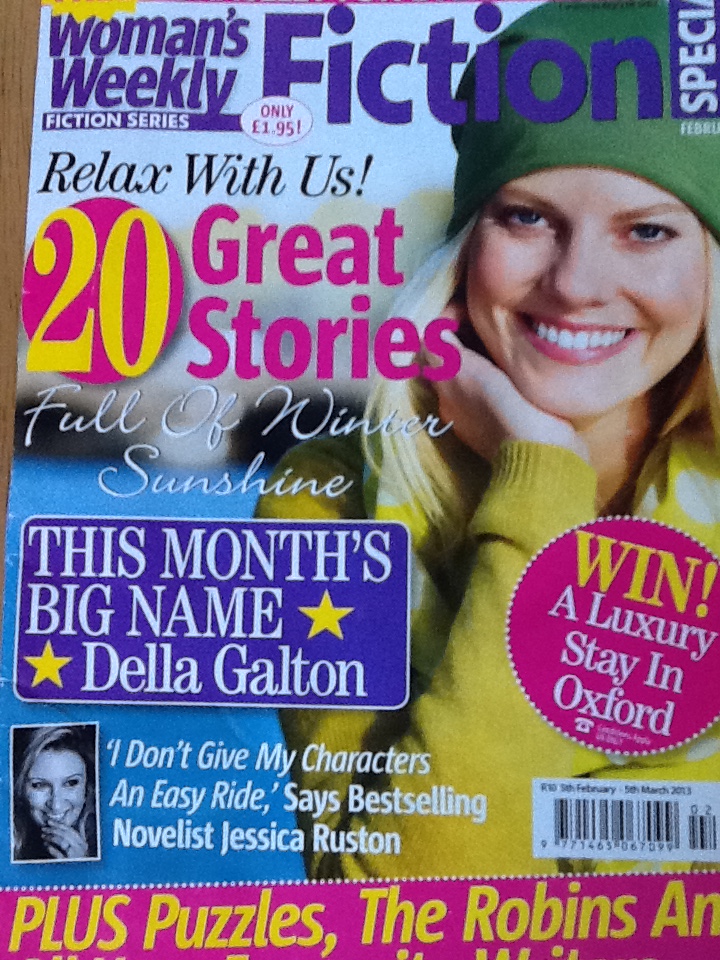
Oh, and by the way, if you fancy reading one of my stories, writtten especially for Woman’s Weekly, I have two in the current issue (September – issue 9) of the Woman’s Weekly Fiction Special. (not the one pictured). On sale now. It’s the one that mentions Woman’s Weekly Live on the cover at the top.

If you’d like any more advice on writing short stories, please check out my two writing guides. How to Write and Sell Short Stories published by Accent Press and The Short Story Writers’ Toolshed published by Soundhaven.com

The Wednesday Writing Spot – Getting Ideas – Guest Post from Patsy Collins

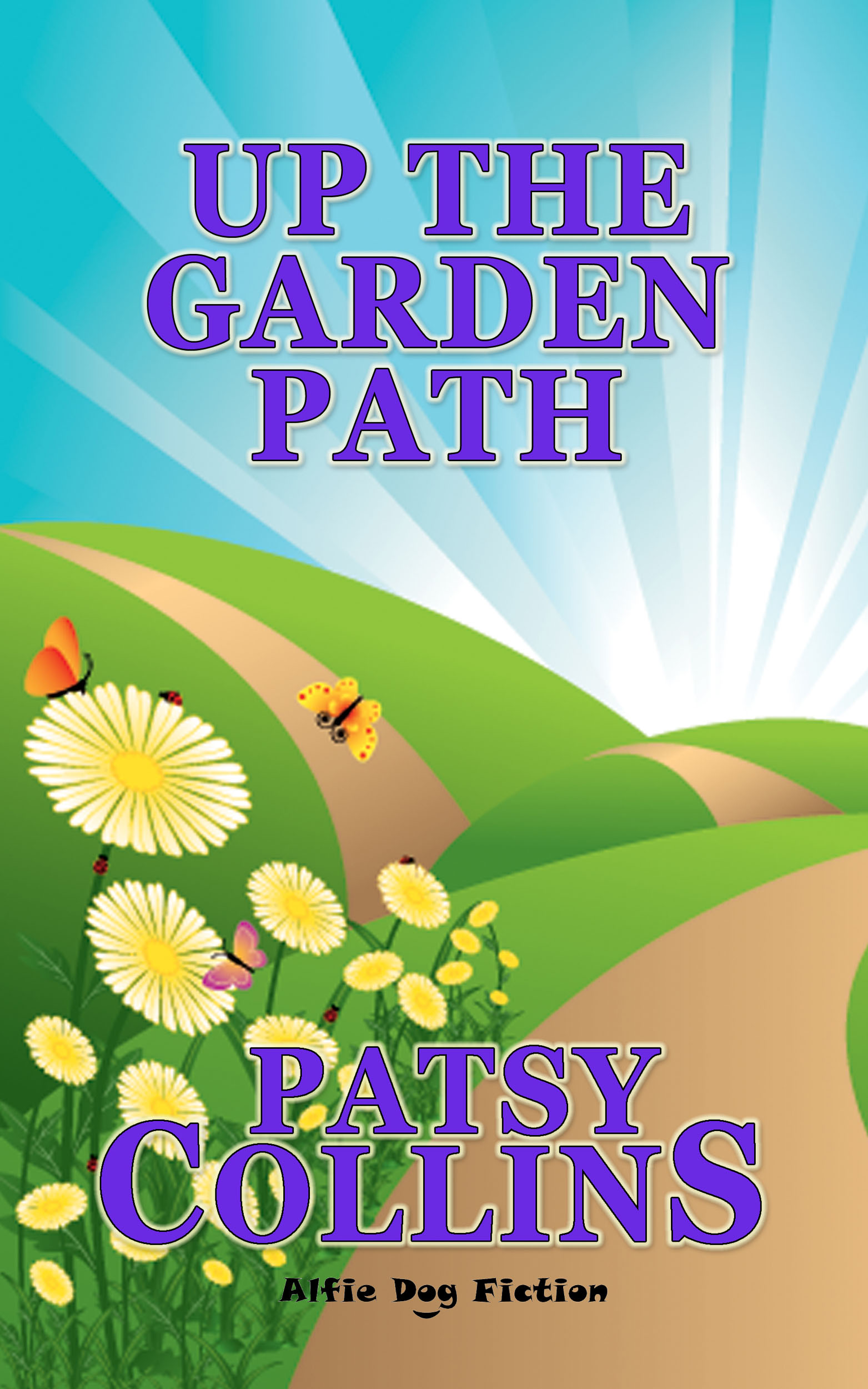
This week on the Wednesday Writing Spot, I am delighted to welcome writer, Patsy Collins, who is talking about where she gets her ideas from and her fabulous new short story collection, which is called Up The Garden Path. It’s lovely to have you here, Patsy. Now it’s over to you…

As writers we are often asked where we get our ideas from. It seems such a reasonable question but it’s very hard to give a satisfactory answer. Each writer will get their inspiration in a different way to that of their colleagues and they’ll probably draw on a number of resources. Ideas are everywhere you see. That’s both good and bad. We don’t have to wait for the ideas shop to open, but those little story sparks don’t come neatly labelled ‘romance novel suggestion’ or ‘ghost story premise’ so we need to train ourselves to spot them.

My new short story collection contains twenty four short stories and each is the result of a different stimulus. It’s a bit like picking wild mushrooms, really. If you want nice, safe mushrooms you need to know what they look like or you’ll end up with something toxic, or hallucinogenic or bitter. Of course if you actually want to poison someone you’ll need to be on the lookout for something different (pale gills and skinny stalks are a good sign in this case). ‘Write what you know’ is good advice. That’s what I did for ‘A Piece of Pink Ribbon’ which is set on a farm and ‘Coming Home’ which is about separation when someone is away at sea. It also explains why all the stories in the collection have a horticultural theme – I’m nearly as keen on gardening as eating cake. Real life events can be a great source of story ideas, but the truth often needs adapting. Weirdly when we write something strange, funny or touching that really happened it often doesn’t feel believable. ‘Watchdog’ is based on a real event (although not one which happened to me) but to make it work I had to change reality. Whenever I come across an unusual name eg ‘Mrs Dalrymple’ overhear an interesting comment such as ‘Your Granddad is Stuck Up a Tree Again’ or want revenge on an annoying boss (‘Blooming Talent’) I make a note in a computer file. Sometimes the prompt is as simple as the smell of ‘Strawberry Jam’ and at others it’s as complex as family politics (I’m admitting nothing!). It doesn’t matter where the ideas come from, it’s what you do with them that counts. I hope you like what I’ve done with those which resulted in ‘Up the Garden Path’. The book is available here – or here.

The Wednesday Writing Spot – Plotting the longer Short Story

Plotting was the bane of my life when I started writing. It still trips me up now occasionally, particularly when I’m changing lengths, for example from 1000 to 2000 words. So here are some tips for writing the longer short story.  They are very popular in fiction specials.

This advice also works well when trying to reduce your longer stories to short ones. Just reverse it.

What’s the difference between 1000 words and 2000 words in plot terms?

There is not as much difference between the two as I thought when I first started writing.  I assumed that if I needed one or two main characters with a problem to solve in a 1000 word story, then I’d probably need more characters and more of a problem for a 2000 or 3000 word story.

I soon discovered that this was not the case. You won’t necessarily need more characters or more plot for a longer short story, but you will need more development of both.  This is usually achieved by writing more scenes.

Very short stories

In a 1000 word short story you won’t have room for more than a couple of scenes, probably three at the most and that might be pushing it.  We will probably join your character at the point of change or conflict. For example, let’s assume your character is worried about a forthcoming appointment she has the following day. Your story might go something like this:

Scene one

Your character is discussing her worries with friend or partner.

Scene two

Your character goes for the appointment.

Scene three

Resolution and possibly a twist.

If you did follow the format above for a 1000 word short story, then you’d have to make your scenes extremely short – you’d have just over 300 words to devote to each one.

If you had more space to play with, you might also have a flashback of exactly why your character was so worried about her forthcoming appointment. Your story might then go something like this:

Scene one

Your character is discussing her worries with friend or partner.

Scene two

Flashback in your character’s viewpoint to show a previous occasion when she had to go to an appointment and it didn’t work out – hence meaning the stakes for today are higher and we (hopefully) care about it more.

Scene three

Your character at the appointment.

Scene four

Resolution and twist

The number of characters and the plotline are the same, but the story is longer and has more depth because we have more development of both.

This helped me so much when I first got it. Hope it helps you too.  And if you’d like any more advice on writing short stories, please check out my two writing guides. How to Write and Sell Short Stories published by Accent Press and The Short Story Writers’ Toolshed published by Soundhaven.com

Tell your friends!

© Della Galton All rights reserved.
Powered by Cloudbase Media