Welcome to Della Galton’s website

Tag: writing

Writing Courses – are they worth it?
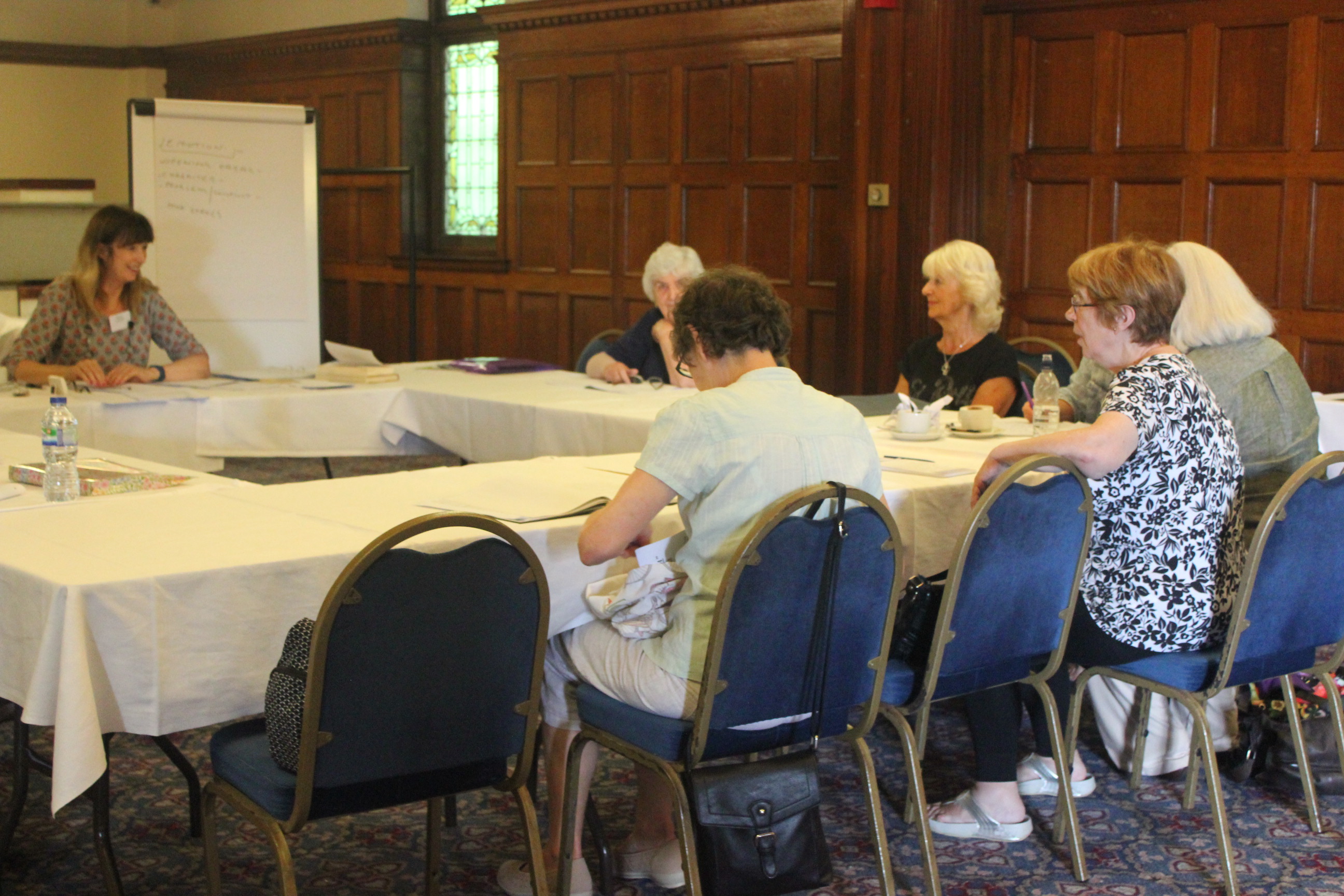
teaching at fishguard
Teaching at Fishguard Writers’ Holiday

There are so many writing courses around these days. Universities run them, publishers run them, magazines run them. In fact every Tom, Dick and Harry (if you’ll excuse the cliche) runs writing courses. Even the smallest town has a literary festival. But are they worth spending your hard earned cash on?

In my opinion, that depends on what you hope to gain. So before you begin, establish what you want and choose the right course for you.

I started my writing career by joining an Adult Education Class called Writing for Profit and Pleasure back in 1987. My tutor knew about getting published. Jean Dynes,who currently writes a column for Writers’ Forum as Barbara Dynes, was already well published.

  • Top Tip Number One: Choose Credibility
  • If you want to get published, get someone to teach you who is well published themselves. It helps if their students are too. I was inspired by another student in the class who had got published since joining (she’d just sold her 27th short story that year).
  • Top Tip Number Two: Choose Expertise
  • If you’re aiming to get published in a magazine and they run a course about getting published in their magazine, then go. They are the best people to teach you. I teach for Woman’s Weekly Magazine in London, Manchester and Glasgow, alongside their fiction editor, Gaynor Davies.
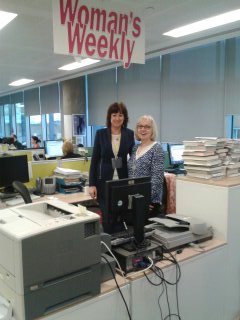
    Woman's Weekly at Blue Fin Buildings
    At Woman’s Weekly with Fiction Editor, Gaynor Davies.
  • Top Tip Number: Three Choose longevity.
  • I’ve just come back from the Writers’ Holiday at Fishguard, which is run by the lovely Anne and Gerry Hobbs. This year’s Writers’ Holiday was their 30th! They have a huge repeat rate of students, who can’t resist their courses because they are well organised, the food is fabulous, the locations (Fishguard, Pembrokeshire) is wonderful and the tutors are all working and well published writers. Top marks Anne and Gerry.
  • Anne and Gerry also run a weekend course at Fishguard in February. I’d advise booking as soon as possible if you fancy it because places are limited. I’m teaching the short story course in February 2017  by the way.
  • More information about Anne and Gerry’s courses can be found at Writers’ Holiday.
  • More information about Woman’s Weekly Courses can be found at. Woman’s Weekly Courses. (incidentally that photograph is not of me, but a much fatter imposter, tee tee).
  • More information about my courses is usually on my website, or you can email me. Next week I am running a day course (Saturday 6 August 2016.) Write a short story in a day. (£29 summer special offer, they’re usually £45). Venue Kinson Community Centre. Please email me if you’d like to book. Or leave a comment and I’ll get back to you.

Happy Writing!

How do I stop my romances becoming predictable?

A rose by any other name!

Here’s another question from a recent postbag at Writers’ Forum. This one comes up quite a bit.  We’re talking fictional ones by the way!

Q A common cause for the rejection of short stories (I know, because I’ve received many!) is that “the story line was too predictable”. I find this very hard to avoid particularly when writing a romantic story for the women’s magazine market, when the maximum number of recommended characters is only three or four. What can be done to stop the reader from working out that the boy and girl who meet at the beginning of the story are not inevitably going to end up in each other’s arms?

A First of all, I emphasize with you. I agree that writing a romantic short story for a magazine is one of the hardest genres to crack, for exactly the reasons you state.  Here are some tips that I hope may help:

  • While the romance is likely to be a little bit predictable, other aspects of the story needn’t be.  You might want to try a unique setting. I’ve sold more than one story which featured a wedding or romance set somewhere unusual, for example an ice hotel. Think about setting your romances somewhere unique or unlikely.
  • You can also experiment with viewpoint. It’s a common misconception to think that romances need to be told solely from the female perspective. They don’t. A romance told from the male perspective, or possibly even a child’s perspective (providing it isn’t the child having the romance) can work just as well and make your story a little different. You might also want to consider dual viewpoint, a romance told from both the hero and the heroine’s viewpoint. I’ve sold a few of these.
  • The romance needn’t be your main plot line either.  It could actually be a subplot. Perhaps consider writing a family story, where the romance is relevant to more than one generation or a cosy crime story where the romance underlays the solving of a crime.
  • Also, don’t forget that it’s possible for the writing itself to be predictable. The use of language and a slightly different style can give romance a new freshness. As can a slightly different structure, i.e. a monologue or diary format.

There’s actually a very fine line between predictable and unpredictable. And actually it’s always an editor’s perception, there’s a little bit of luck involved too.

So I wish you good luck.

Wednesday Writing Spot – Cindy’s Jukebox

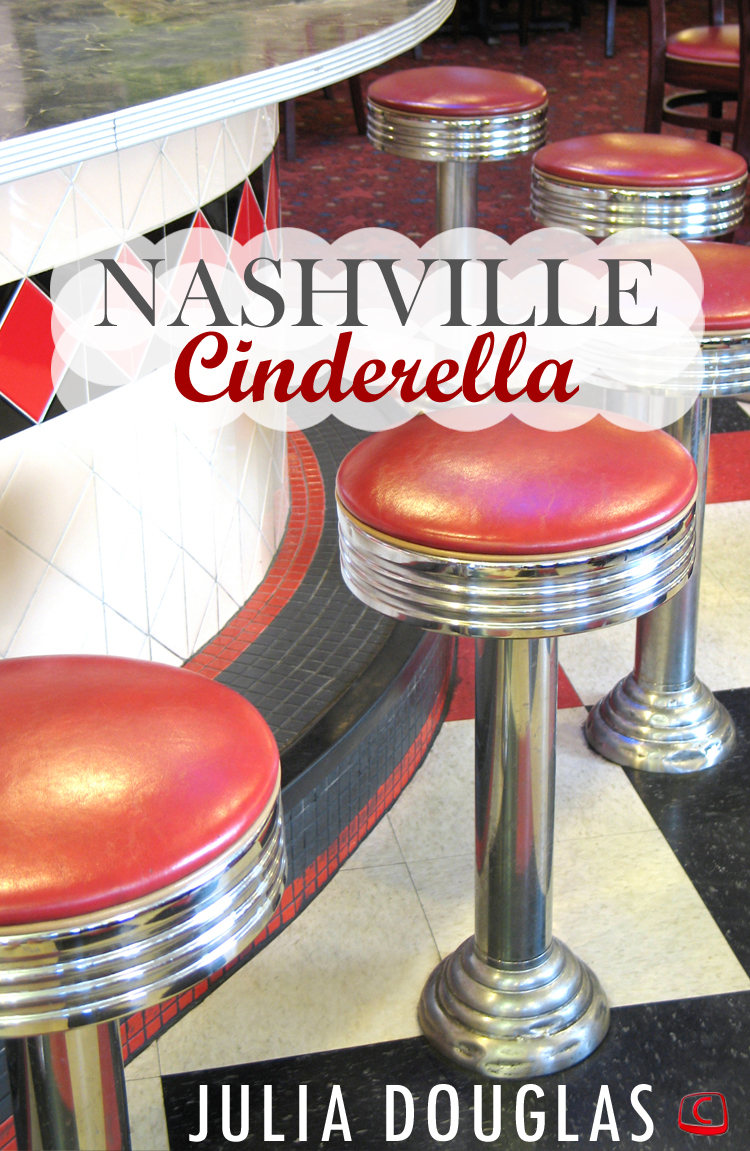
This Wednesday I am delighted to welcome the lovely Douglas McPherson. He has written a  number of romances including The Showman’s Girl, Closer!, and the country music based Nashville Cinderella under the pen name, Julia Douglas. I have to say the cover is absolutely beautiful, Douglas, or should I say, Julia? Over to you…

And actually we’re over to Cindy Coin. Because in this special guest post, the author interviews one of his characters – Cindy Coin, the country-singing heroine of Nashville Cinderella to pick five songs that would be on the sound-track if the book was made into a movie.

(“I guess Carrie Underwood could play me,” says Cindy, “And Taylor Swift could play Katie. As for Hank, Brad Pitt, definitely!”)

Jolene by Dolly Parton

Cindy says: “Dolly is my all-time heroine. I’ll never forget the day my mom and dad took me to one of her shows when I was five-years-old. We stood in line for hours afterwards to meet her and she was so gracious. Sadly, that’s one of the last memories I have of mom and dad. They were musicians and were killed in a tour bus wreck soon afterwards. I guess maybe that’s why I’ve always wanted to be a singer, to kinda feel closer to them.”

I Want Your Body Cowboy by Katie Carnegie

Cindy says: “Katie is the new kid in town and Hank, her manager and my ex, reckons she’s gonna be the biggest star in the world. I really hope she will be, because she’s a great friend of mine. But I can’t help remembering Hank saying the same thing about me – and I’ve been in Nashville for five years now, and I’m still waiting tables. The song was written by Tony, who’s the chef at Lulu’s, the diner where we both work on Lower Broadway. Tony and I share a house in East Nashville, the cheap side of town where all the musicians live, but it’s a strictly best-of-friends arrangement. Tony is like the brother I never had. Sometimes I think he’s more like one of my girlfriends than a guy. In fact, I teased him about how come he wrote such a girly song!”

On The Road Again by Willie Nelson

Cindy says: “Willie is such a sweetheart – the biggest star in the world, but so encouraging. Every year he blows through town and asks if I’ve got a record deal yet. “It’ll happen,” he keeps telling me, “Just remember, it all comes down to the song.” I wish I believed him, but sometimes when I see people like Katie and Hank getting on with their careers while I’m still working in Lulu’s, I feel I’ve been left behind, like a Nashville Cinderella.”

Missing You Miles by Texan Jack Dallas

Cindy says: “Tex is the Next Big Thing. He’s like Elvis and Johnny Cash rolled into one. Katie has fallen for him so bad, but the guy lives on a tour bus and when he’s away he never calls her. He asked me to sing duet with him on this song. It’s so obvious he wrote it about Katie, so why doesn’t he just come out and tell her how he feels? But, as Tony told me, if love ran smooth, who’d need country songs?”

What I’d Give by Cindy Coin

Cindy says: “Tony and Tex wrote this song and asked me to sing the demo. There’s a line that goes, ‘What I’d give to have a guy like that,’ and for some reason, without even knowing it, I sang, ‘What I’d give to have you back.’ I guess I was thinking about Hank, not that I’d ever admit that, but suddenly the tears were streaming down my face as I was singing. Tony and Tex kinda looked at each other and said, ‘You just turned this song into a hit.’ I thought they meant a hit for Katie, because she needs songs her album. But Tony was like, ‘No, Cindy, this is your hit.’ After all these years, it’s almost scary to get my hopes up, so I guess we’ll have to wait and see.”

Thank you very much, Douglas for a refreshingly different guest post.

Nashville Cinderella by Julia Douglas is available to borrow from local libraries in a large print paperback edition (Linford) or to download as an ebook from Amazon and all major online bookstores.


The Wednesday Writing Spot. Tips on Winning Short Story Competitions

This is the first of four posts about various aspects of short story writing, which will go out over the next four Wednesdays, in my new Wednesday Writing Spot. I hope they are helpful.

I have spent a fair bit of time judging short story competitions, and I have been asked to judge two more this year, I’m judging the short story award for the Wells Festival of Literature, more details here and also the H E Bates Short Story Competition, more details here so I thought it would be a good plan if we started with some tips on winning competitions.

So what do I look for when I judge a competition?  How exactly do stories lift themselves to the top of the pile?

These elements are in no particular order.

A good title

This helps attract my attention although if the story doesn’t work – it won’t be enough on its own.

Good writing

This always attracts my attention. And by good writing, I mean that the story is well crafted. There will be good sentence construction, no clichés or tired lines. There will be an intriguing opening, probably a few particularly good lines – I often point out examples of these in my individual comments, if I’m doing critiques too.

The story works

This means that the whole story has to work – from beginning to end.  There must be a good strong premise, which is developed throughout the story and the ending must be satisfactory. By satisfactory I mean that it should work for that story. It should tie up with the beginning without being predictable. It shouldn’t be obscure or too obvious.

Originality

It helps if I haven’t seen the plot line before – this is tricky because I’ve seen hundreds. If I have seen it before it helps if there is a new angle – maybe humour, or a different structure.

Believable characters

They must be believable and not cardboard cut outs.  Characterisation is probably one of the most important things in a short story – or any story, come to that.  If I get the sense that these characters could actually exist that is a great start. In many of the stories I read I find that the characters are not fully developed, which means that often they are not quite believable.

Character motivation

This is strongly tied up with believable characters. Would they really do that?  Ask yourself when you are creating a character if their actions are likely. If a character’s actions strike me as unbelievable I tend to lose interest in the story. Characters can do unlikely things in a story, but you have to make me believe they would do them.

Emotional involvement

Again this is strongly tied up with believable characters and character motivation. Am I involved with these characters? Do I care what happens to them, or are they so insipid and unbelievable that I’m not that bothered? The acid test here, is do you care about them? Really care, I mean? Are you moved when you write about them or are they just a means to get your plot on the page?

An intriguing plot/dilemma

Do I want to keep reading? Is there enough of a hook which starts at the beginning and draws me through. It’s quite hard to do this in a short story, but if you can do it, you are likely to succeed.

Good dialogue

It’s hard to achieve but good dialogue (where everyone doesn’t speak in exactly the same way) goes a long way to making characters believable.

An unusual setting

The more competitions I judge the more I think that this is important. An unusual well drawn setting can make your story stand out from the rest.

A point

Yes, stories should be entertaining but they should also have a point.  This is a fact I overlooked when I first started writing short stories.  Think about your story’s overall message. Is there one? Or are you just writing about an incident that is actually quite slight – and may have been amusing when you thought about it, but isn’t really enough to hold a reader’s interest?  Stories that are too slight can come across as anecdotal.

Good presentation, grammar etc

This is not the be all and end all. If you have written an excellent story and it’s badly presented you may still get placed. (If the judge sees your story) But bear in mind you probably won’t get past the first reader in a national competition.

Something very important to remember

When you enter a competition where there are hundreds of entries and only three or so prizes the initial readers will be looking for a reason to throw your story out of the pile. Don’t give them one.

And, one last thing, most entries arrive on the deadline in a competition. This is fine, as long as you haven’t written it the day before in a panic because if you have, then you won’t have had a proper cooling off period in which to edit it. Write your story in good time, then put it aside for a week or so, then edit it. You are much more likely to produce a polished piece of work.

Good luck.

And if you’d like any more advice on writing short stories, please check out my two writing guides. How to Write and Sell Short Stories published by Accent Press and The Short Story Writers’ Toolshed published by Soundhaven.com

Next week we will take a look at story arcs.

PS Below is the update on entries received so far for the Wells Festival of Literature Competition.

Total On-line Entries so far this year:

Poetry: 17
Short Stories: 29
Crime Novels: 4

We have also received a similar number of entries using the traditional pen and paper method.

Tell your friends!

© Della Galton All rights reserved.
Powered by Cloudbase Media