Welcome to Della Galton’s website

Tag: writing problems

The Elements of a Short Story

I often get asked if there is any sort of checklist for writing a short story.  And yes, I think there is.  Here is what I think a short story should include:

A character who has a problem/conflict which must be resolved by the end of the piece in an unexpected way.

In fact this definition could, very roughly, be applied to all fiction.  If one or more of the elements are missing the story won’t quite work. Don’t take my word for it.  If you have a story that doesn’t work, try running this checklist against it. Are the following elements in place?

  • Character
  • Conflict
  • Change
  • Resolution
  • Surprise

If a story isn’t working, I very often find that one of the last two is missing. Another common problem (oh the irony) is that there simply isn’t enough conflict, i.e. the character doesn’t have a big enough problem for the length of the piece.

Don’t take my word for it. If you have a story that doesn’t quite work, apply the checklist and see if you can fix the missing element and get the story to work.

Happy Editing!

Della xx

PS if you would like some more help with identifying what’s gone wrong with a short story I’m running two summer workshops in Bournemouth on Saturday 21 July and Sunday 26 August.  You can bring along a story of up to 2000 words for detailed feedback.

  • Venue: Kinson Community Centre
  • Time 10 till 4.00
  • Cost £40
  • Email me via this website to book.


Four Reasons We Don’t Write – and What to Do About Them!

Motivation – one of my favourite subjects. Motivating yourself to write should be easy, shouldn’t it? After all, we want to write. Don’t we? So why is it so difficult to get started? Recognise any of these excuses – er hem, I mean REASONS?

Time: I’d like to write but I never seem to have the time.

If that’s you, ask yourself a question. Is it really true?  Do you really not have time? Or are you just not prioritising writing?  Possibly because you don’t feel you deserve the luxury of having time to write when there are so many other things to do, for example, work, friends and family.

Well, if writing is what you really want to do, then don’t you deserve to carve out some time for it?  If you were to allocate half an hour three times a week you could probably write a short story in a month (perhaps even two). Little and often really is the key.

Focus: I don’t know what I want to write.

Many people set off with the idea of writing a novel.  This is very commendable; don’t let me stop you if that’s your burning passion. But there are many other forms. Here are some less time intensive ones:

  • A blog
  • A short story
  • A poem
  • Morning pages
  • A feature for a magazine

Why not experiment until you decide what’s for you. Better still why not pick one of the above and set a deadline to complete it.

Confidence: I’m not good enough to be published.

How do you know until you try? Not many people are good enough to be published until they’ve done some market research and learned what works and what doesn’t.  Writing is a little like learning the piano I think – we wouldn’t expect to be concert pianists without a fair bit of practice.

Laziness: It just feels too much like hard work a lot of the time.

Newsflash – it is! Believe me, I know it is. I write a lot and some days (actually there are quite a lot of them) I would much rather be doing something else. Some days it feels as though I’m wading through sludge.

Usually when this happens, I just carry on. (I have to, it’s my day job).  Very often it’s because I’ve got to a tricky bit. So my top tip for this is that it’s much better to finish writing when I’m really enjoying myself – then I’ll be all the keener to go back to it again. This really does work. Trust me.

If you’re really stuck I once heard a novelist say she used to handcuff her ankle to the desk to make herself sit still until she’d done her allotted amount of words. I can’t say I’ve tried this one – but I’m not ruling it out!

Happy writing

Della xxx

PS I’m running a course in Bournemouth this Saturday. 23 October. Write a Short Story in a Day (Hopefully the title is self explanatory but if you’d like further details please do leave a comment or email me.)

Do all stories need conflict? and How do unknown writers get published?

A couple more question from my post bag at Writers’ Forum 🙂

Q: Do all stories have to feature conflict, resolution and growth, with false hopes and disappointments along the way? I appreciate that a straightforward happy little narrative would be largely purposeless and therefore unengaging, but I find it hard to accept that all stories should follow the ‘story arc’.

A You are absolutely right when you say that a straightforward, happy narrative might be unexciting to read. I call stories like this linear, i.e. a piece of writing that moves in a straight line with no surprises to a conclusion that is largely predictable. I think that there should be a story arc, but that can mean many different things.  My personal definition of a story is a piece of writing where a character begins with a problem or conflict, which is resolved by the end in a satisfying, but unexpected way. The character should change in some way by the end. This provides the main arc of the story. I don’t think this can be too formulaic.

It’s not a case of putting in complications or ups and downs for the sake of it (as I thought when I first started writing stories).  They all have to be relevant, both to the initial problem, and also to the character. There is huge scope in this. You can use different structures, you can use flashback, and you should use emotion, which for me, means writing from the heart. You can create twists by the use of misdirection. You can create surprises by withholding information from the reader.

Much depends on the length of the story. It’s difficult to have a big story arc in a flash fiction piece of say 500 words or even 1000. But there should still be some kind of story arc or progression. I hope this helps to clarify.

***

Q This magazine seems to be full of advice for writers who have already ‘made it’ and had their work published. However, there are still many of us who are trying to ‘make it’ and from our side of the fence getting published can sometimes feel like an impossible feat. From here, it seems that to sell your work and be published, you already need to have been published previously. But what if, like me, you don’t have any previous examples or clippings to show? How do you then sell your work and get published?

A Let me reassure you that you don’t have to have been published to get published. We all have to start somewhere. The key to getting published is to write what publishers and editors want. So first you need to know what that is. And you can find out by doing your own market research. Here are my top tips on market research.

  1. If you want to write for a particular magazine then first of all make sure they accept freelance submissions. If they don’t you’ll be wasting your time approaching them. Whether it’s fiction or features you want to write, ask for their contributor’s guidelines.
  2. Buy several copies of the magazine and look at house style. Is it chatty, or more serious and/or literary?
  3. Check the lengths of fiction/features they publish, 1000 words, 2000 words etc. (writing outside of these lengths will result in automatic rejection because they won’t have the slots to put your work.)
  4. Check the target reader they are aiming for, including age, sex, type of person. Adverts and letter pages are a good guide to this.
  5. Check their house style – do they prefer first person viewpoint or third, male or female etc.
  6. Make sure you are writing for their target reader.
  7. Make sure you send your submission to the right person and in the right format, e.g. via email or by snail mail.

If you are writing features you should send a query letter/email first. Head up your query with an eye catching title or question. I highly recommend Solange Hando’s book, Be a Travel Writer, Live your Dreams, Sell your Features: Travel Writing Step by Step. This is a book about selling travel features, but its excellent advice applies to selling all features.

Here’s an example of a query letter sent to a dog lovers magazine, which resulted in me being commissioned to write the feature.

Dear Debbie,

Feature query – Ten ways to help your local dog sanctuary

I was wondering if you’d be interested in a feature about the above. As you know, many sanctuaries, especially those that rescue dogs are in dire straits, thanks to the credit crunch. And the small ones tend to get hit the hardest.

Since June this year, myself and four friends have raised nearly £1000 for DAWG (Dorset Animal Workers Group).

The feature would cover various simple ways of raising money, i.e. what we did – and how we did it. Plus other things dog lovers can do to help their local rescue centre. I can provide illustrating pictures.

I’ll look forward to hearing what you think.

It is possible for a writer with no credits to be commissioned to write a feature. You just have to write what is wanted. Once you have been commissioned, make sure you supply the feature promptly. Be professional. You will usually have to try more than once. Perseverance in all types of writing for publication is the key.  I hope this helps. Good luck.

Tips on writing emotion

Writers are in the business of selling emotion.  I don’t remember who said that, but it’s spot on. If a reader doesn’t emotionally connect with a character they won’t care about them and they won’t read on. So getting emotion – whether it is sadness, humour, or a feeling of poignancy or tension – into your writing, is critical.

The million dollar question is how do you do it?

In order to ascertain what constitutes emotion, myself and a group of students brought in a selection of prose & poetry extracts which we considered emotional and set about analysing them to see if there was any common ground. Here are our findings:

It’s easier to get emotion from very emotional events. It sounds obvious but it’s worth mentioning. If you pick a subject that we all understand and have experienced, you’ll have a head start. Here are some universal emotional subjects.

  • Love – especially unrequited.
  • Death.
  • Loneliness.
  • Old age.
  • Loss of a person, pet, job, home.
  • Illness.
  • Darkness.
  • Fear – especially of a universal threat – from earthquakes to terrorism, spiders to flying.
  • Humiliation – fear of looking a fool or being left out.
  • Not fitting in.

Sensory detail is key in every type of emotional writing. So have your character hearing, touching, tasting and smelling her surroundings. Don’t forget temperature.

Setting is very important too. Setting puts emotion in context. We need to know where your character is when they are experiencing emotional events.

Be very specific. Don’t say ‘it was a dark night’. Say, ‘It was a cold moonless night.’

Viewpoint is vital. We need to be inside the character’s head – not watching them from a distance. First person present tense works particularly well.

Pace is also very important. Particularly when setting up tension and when writing humour.

Interestingly if you are writing a very sad scene you can understate what you write. In fact you should understate to avoid mawkishness (imo). But if you’re writing humour you need to go OTT. Really milk the situation.  Don’t miss a single opportunity. Humour and pace are strongly linked – as every stand-up comic knows.

Finally – if you feel it when you write it – the reader will feel it when they read it. What comes from the heart goes to the heart. Be authentic. Don’t hold back. Make yourself cry, laugh or feel afraid and your audience will be right there with you.

Wednesday Writing Spot – Writing Problems and Solutions, part one.

The Problem – Procrastination

This is a big one for me. I didn’t realise how big until I took a week off and went to Devon last week, where I had hired a cottage to write the beginning of my new novel.  I deliberately hired a cottage with no internet signal so I would not get side-tracked on Facebook, Twitter etc.  Incidentally, there was barely any phone signal either so I couldn’t phone anyone up to chat without going out into the adjoining field.

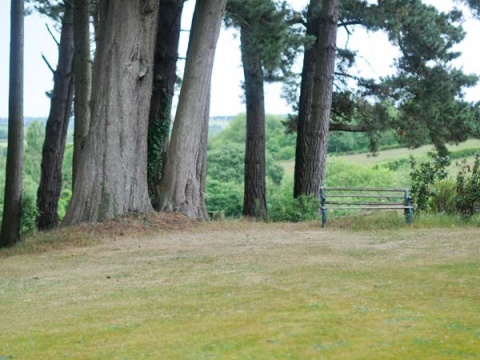
Here’s the view from the cottage.

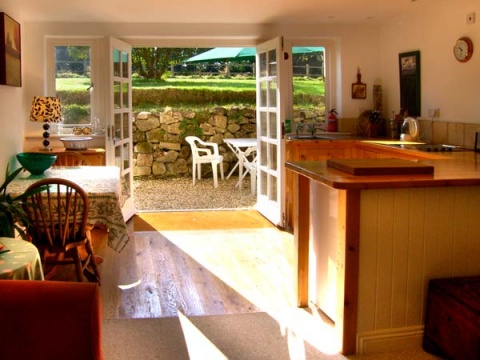
The picture below is the room I worked in. Glorious isn’t it.

So – did this work? Did I do loads of writing?

Yes and no. I did do a lot of writing, but not quite as much as I planned.  (I had planned to write three chapters of my new novel as a minimum).  I actually came away with three chapters – but one was already mostly written – does that count? Hangs head in shame. No, not really, I know!

So what did I actually do?  Well, I found other ways to procrastinate. Here are the writing ways:

Writing ways of procrastination

(Be particularly wary of these – because you probably think you are still working)

  • I planned out my entire novel in bullet point form. (I don’t usually do this).
  • I got side-tracked finishing a short story – well when I say finished, I still haven’t quite finished it.
  • I did a lot of editing of the chapters I’d already written.

Non writing ways of procrastination

  • I talked to the owners of the cottage about writing, tee hee – why is talking about it so much easier than doing it? They were thrilled I was ‘writing’ on location and wanted me to mention it in my next book!
  • I went on lots of walks with my dog, Maggie.
  • I caught up on a lot of reading – I read a novel for an author friend and gave them my editing suggestions.
  • I watched DVDs.
  • I – um – went on a couple of interesting expeditions; I went to a chilli farm, for one thing. Excellent writing material (if I ever have time!).
  • I bought presents for friends.
  • Oh and there was cooking and messing about and sunbathing.

The Solution

  1. When you have time to write, set a timer and just start writing. (I’m going to do that in a minute – honestly).
  2. Do this at the start of the day before doing a single other thing.
  3. Arrange to read out what you have written to another writer.

Number 3 works the best. Do this first and then do the other two.  And you will write, I promise. You’ll have to – or you won’t have anything to read.

I am so glad my weekly writing classes begin again next week.  I teach writing classes. I set homework. Most of my students agree that the class – and knowing they’ll have to read something out in it – is what motivates and inspires them to get something done. It works for me too because I occasionally take in a manuscript I’m having problems with and my wonderful class help.

My classes are on Thursday evenings (writing fiction and non fiction) and Friday mornings (writing for the terrified) at Kinson Community Centre in Bournemouth – in case you are interested. They start on Thursday September 5th or Friday September 6th. Please do email me for term dates or further details. If Bournemouth is too far away from you, why not try and join a class near you.

Just as soon as I’ve finished this blog I’m going to get back to writing. Did I mention that blogging is a great procrastination device too? If you’d like any more advice on writing short stories, (I am quite good at them when I actually start!) please check out my two writing guides. How to Write and Sell Short Stories published by Accent Press and The Short Story Writers’ Toolshed published by Soundhaven.com

Tell your friends!

© Della Galton All rights reserved.
Powered by Cloudbase Media